Is Your NGO or CERT Relevant in a Disaster?
When a disaster strikes, we see the official first responders on the news. But what about your team? Thousands of dedicated NGO volunteers and CERT members show up, ready to work, only to be turned away. It’s a frustrating, all-too-common story. You know your team has the skills, but you’re sidelined or can’t find where you’re needed most. This is more than just a logistical hiccup; it’s a critical challenge to your team’s purpose. True CERT relevance in a disaster isn’t just about having volunteers; it’s about proving your value and impact when it counts.
This is the relevance crisis facing NGOs and CERTs today — and it’s not a question of effort or commitment. It’s a question of coordination, communication, and connection to the real-time disaster response ecosystem.
What is a Community Emergency Response Team (CERT)?
If you’ve ever watched a disaster unfold and felt a powerful urge to help, but had no idea where to start, the CERT program is for you. CERT stands for Community Emergency Response Team, a nationwide initiative designed to teach everyday people how to prepare for and respond to emergencies in their own communities. It’s about empowering citizens with the skills and confidence to act as a crucial first line of support when professional responders are delayed or overwhelmed. Think of CERT as organized, trained, and prepared neighbors helping neighbors.
If you need a plain-language primer on what a CERT team does, start with the role CERT plays before, during, and after activation. The program bridges the gap between a disaster event and the arrival of professional help. When a major incident occurs, emergency services can be spread thin. CERT volunteers are trained to handle immediate, essential tasks safely, manage volunteers, and provide critical information to first responders once they arrive. This organized approach ensures that the goodwill of spontaneous volunteers is channeled effectively, making a real, tangible difference in the crucial hours following a disaster. It’s about creating a more resilient community from the ground up.
The Core Mission of CERT
The core mission of CERT is straightforward: to create a safer, stronger, and more prepared community. The program achieves this by training volunteers in basic disaster response skills. These skills empower them to take care of themselves, their families, and their neighbors during an emergency. Instead of being bystanders, CERT members become an active part of the solution. They learn how to identify and reduce potential fire hazards in their homes and workplaces, apply basic medical aid, and conduct light search and rescue operations safely and effectively.
Why CERT Was Created
The CERT concept was born from the recognition that in the immediate aftermath of a major disaster, the people already on the scene are the first to help. The program was started to organize these volunteers, providing them with a standardized framework for training and deployment. The goal is to ensure that when people step up to help, they can do so in a way that is safe for them and helpful to their community. This structure prevents well-intentioned but untrained individuals from putting themselves or others at further risk and helps professional responders integrate volunteer efforts into the broader emergency plan.
A Brief History and National Scope
The idea for CERT began with the Los Angeles City Fire Department back in 1985. They realized that in a widespread disaster, they would need help from the community to manage the sheer scale of the response. The concept proved so effective that it was adopted and expanded into a national program by FEMA in 1993. Today, CERT programs exist in all 50 states, with thousands of trained volunteers ready to assist their communities. This national scope provides a consistent foundation of training and principles, ensuring that CERT members across the country share a common understanding of disaster preparedness and response.
What Does CERT Training Involve?
Getting involved with CERT means committing to a training program that gives you real, hands-on skills. The curriculum is designed to be accessible to people from all walks of life, regardless of their physical abilities or professional background. The standard training covers a range of essential topics, giving you a well-rounded understanding of how to respond in a crisis. You’ll learn about disaster psychology, how to organize a team, and the basic functions of the Incident Command System (ICS), which is the standardized management structure used by all response agencies.
This training isn’t just theoretical. It involves practical exercises where you’ll get to practice what you’ve learned, from putting out small fires with an extinguisher to safely lifting and carrying debris. The goal is to build muscle memory and confidence so that when a real emergency happens, you can act decisively. The training prepares you to be an asset, not a liability, ensuring you can contribute safely and effectively. It’s a foundational course that turns good intentions into capable actions, making you a reliable resource for your community.
Core Skills for Disaster Response
The heart of CERT training is a set of core skills that are critical in any disaster scenario. According to FEMA, this includes fundamental fire safety, allowing you to suppress small fires before they get out of control. You’ll also learn basic search and rescue techniques, focusing on how to do it safely without becoming a victim yourself. A major component is disaster medical operations, where you’ll learn how to triage injuries and provide basic first aid. Finally, a huge emphasis is placed on teamwork and organization, ensuring that individual efforts are coordinated for maximum impact.
Structured Training and Continuous Learning
CERT isn’t a one-and-done class. It’s a commitment to continuous learning and practice. The initial training provides the essential building blocks, but most CERT programs offer ongoing opportunities to deepen your knowledge and refine your skills. This can include advanced courses, workshops on specific topics like traffic control or animal sheltering, and regular drills. This structure ensures that volunteers remain engaged and that their skills stay sharp. It also allows members to specialize in areas that interest them most, creating a more versatile and capable team.
Online and Specialized Training
To make training more accessible, FEMA offers a variety of free online courses that anyone can take. This includes an “Introduction to CERT” that provides a great overview of the program. For those looking to take on leadership roles, there are also courses on how CERT leaders can use the Incident Command System (ICS) to manage emergencies effectively. These online resources are a fantastic way to get started or to supplement your hands-on training, allowing you to learn at your own pace and on your own schedule.
Key Principles of CERT Operations
Operating as a CERT member is guided by a few simple but powerful principles. These rules are designed to ensure that every action taken is safe, effective, and contributes positively to the overall response effort. The most important principle is to never work alone and to always operate within the scope of your training. CERT members are not meant to replace professional responders; they are trained to be a supporting force. This means knowing your limits and understanding when to call for professional help. It’s about making smart, safe decisions under pressure.
Another key principle is teamwork. CERTs are organized into teams for a reason. Working together ensures that tasks are completed more efficiently and, more importantly, more safely. Effective volunteer coordination is the backbone of a successful response, and modern tools can play a huge role. Platforms like PubSafe help teams stay connected, share information, and coordinate their actions in real-time, turning a group of individuals into a cohesive and powerful response unit.
Safety First: The CERT Mantra
The absolute, number-one rule for any CERT member is safety. The mantra is simple: keep yourself safe first, then your family, and then your community. A CERT member who becomes a victim is one less person available to help and one more person who needs rescuing. This principle guides every aspect of CERT training and operations. You are taught to constantly assess risks, whether it’s the stability of a damaged building or the potential for a fire to spread. This safety-first mindset is non-negotiable and is what allows CERT volunteers to operate effectively in hazardous environments.
The Importance of Drills and Exercises
You can’t expect to perform well in a real crisis if you haven’t practiced. That’s why drills and exercises are a critical part of the CERT program. These simulated events allow volunteers to practice their skills in a controlled environment, test their emergency plans, and identify areas for improvement. Drills can range from a simple tabletop exercise discussing a hypothetical scenario to a full-scale simulation with mock victims and realistic challenges. These exercises are invaluable for building teamwork, testing communication systems, and ensuring that when a real disaster strikes, the team is ready to respond as a well-oiled machine.
The Expanding Role of CERT Volunteers
The role of a CERT volunteer often extends far beyond the immediate aftermath of a disaster. As communities recognize the value of a trained and organized volunteer force, CERTs are being integrated into a wider range of activities. This expanding role makes the team a year-round asset, not just a crisis-response unit. Volunteers are increasingly involved in community preparedness events, helping to educate their neighbors about creating emergency kits or developing family communication plans. They are a visible, trusted presence that helps build a culture of preparedness long before a disaster strikes.
This evolution means CERT members are more relevant than ever. They are not just waiting for the “big one” but are actively making their communities safer every day. This includes everything from assisting with traffic control at local parades to helping staff emergency shelters during a power outage. By using a disaster response platform, teams can manage these non-emergency deployments just as effectively, tracking volunteer hours, assigning tasks, and communicating with members. This makes the team a reliable and versatile resource that local officials can count on for a wide variety of community needs.
Activities Beyond Immediate Response
CERT volunteers are a multi-talented bunch, and their activities reflect that. Beyond immediate response, they are often called upon to help with crucial recovery tasks. This can include conducting preliminary damage assessments, where volunteers go door-to-door to document the extent of the damage in their neighborhoods. Using an app to report an incident or damage directly from the field can feed this information into a central system, giving emergency managers a clear, real-time picture of the situation. Volunteers also play a vital role in supporting shelters, managing donations, and helping to reunite families, providing the human touch that is so essential during a difficult time.
Why CERT Relevance Matters During a Disaster
An NGO or CERT is “relevant” in a disaster when it can:
- Reach the right location at the right time with the right resources
- Communicate with incident command and other organizations
- Contribute verifiable, trackable impact (not duplicate effort already covered)
- Integrate into the broader response without creating logistical chaos
Relevance isn’t about intentions — it’s about operational capability. An organization with 200 trained volunteers and 50 vehicles is irrelevant if its team can’t be located, coordinated, or tasked in real time.
Are These Gaps Hurting Your Disaster Response?
After studying dozens of disaster response operations — from hurricanes to wildfires to floods, including hurricane response strategies for CERTs — a consistent pattern of failure emerges. These aren’t unique to any one organization; they’re systemic gaps that affect the entire volunteer sector.
Gap #1: Unreliable Communication Channels
Traditional radio communications and phone trees collapse under the load of a major disaster. Cell towers go down, channels get congested, and critical coordination messages never arrive. Meanwhile, incident command is making resource allocation decisions without visibility into what NGO and CERT assets are available or where they’re deployed.
The result: volunteer teams wait at staging areas while critical needs go unmet two miles away.
Gap #2: Lack of a Central Coordination Hub
Most NGOs and CERTs operate in silos. They know their own resources and their own teams, but they have no unified picture of the broader response. When a CERT team finishes their assigned task, they may not know where their effort is needed next. When an NGO’s supply truck arrives in the disaster zone, there’s no live map showing which distribution points are overwhelmed and which are understaffed.
This fragmentation multiplies effort, wastes resources, and, in the worst cases, pulls volunteers away from critical needs toward lower-priority tasks simply because those tasks are more visible.
Gap #3: Poor Volunteer Tracking and Accountability
In a fast-moving disaster, volunteers move. They get reassigned verbally, they self-deploy to areas they think need help, or they simply follow other volunteers. Without real-time tracking, the organization loses situational awareness of its own team.
This creates accountability problems — incident command can’t trust the resource counts they’re given, and NGO leadership can’t prove the impact their volunteers delivered. After the disaster, that documentation gap translates into reduced funding, reduced credibility, and a harder fight for inclusion in the next response.
Gap #4: Unverified Identities and Credentials
After Hurricane Katrina, FEMA found that thousands of people arrived claiming to be trained volunteers when they had no credentials at all. In the chaos, it became nearly impossible to distinguish trained CERT members from untrained civilians. Incident command responded by restricting volunteer access — locking out legitimate NGOs along with the unverified crowd.
The lesson has echoed through every major disaster since: if your volunteers aren’t credentialed in a verifiable, digital system, they may not get through the gate.
Using Technology to Bridge the Response Gap
The core problem is information — specifically, the real-time information that incident command and NGO leaders need to make good decisions. Technology designed specifically for disaster response can address every gap listed above.
https://www.youtube.com/watch?v=QEiKLu96xvs
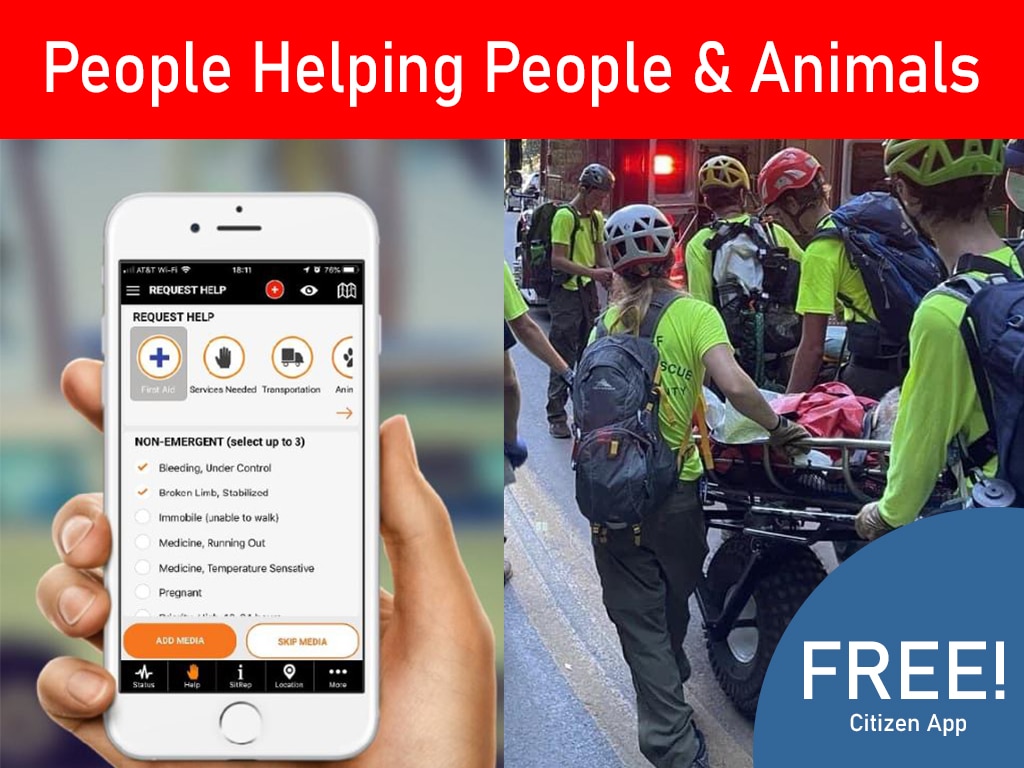
PubSafe is a platform built for exactly this environment. It provides NGOs and CERTs with the tools to stay connected, coordinated, and credible — even when traditional infrastructure is down.
Real-time location and resource sharing: PubSafe allows teams to share live GPS positions, resource inventories, and task status across organizations. Incident command can see all verified NGO assets on a single map, enabling smarter deployment and eliminating duplication of effort.
Resilient communications: PubSafe operates via multiple channels — cellular, WiFi, and peer-to-peer mesh networking — meaning it maintains connectivity even when individual towers or internet connections fail. Critical coordination messages get through.
Volunteer credentialing and accountability: Organizations can pre-register their volunteers in PubSafe, including certifications, training records, and identification. In the field, incident command can verify credentials instantly, and NGO leaders maintain continuous visibility of where their people are and what they’re doing.
Task management and impact documentation: Every completed task is logged with timestamp, location, and assigned team — creating an automatic record of contribution. After the disaster, NGOs can produce accurate after-action reports that support grant applications, donor reporting, and future response planning.
Is Your CERT Ready? A 5-Step Readiness Check
Before the next disaster, every NGO and CERT should work through this assessment. The gaps you find are the gaps that will undermine your relevance when it matters most.
Step 1: Audit Your Communication Plan
Test your communication plan under realistic degraded conditions. Use a disaster plan template for NGOs and CERTs to document backup channels, contacts, and decision authority before the exercise. Assume cell towers are down. Assume your primary radio channel is congested. Can your team still communicate? Do you have a backup protocol, and has it been drilled recently?
Step 2: Evaluate Your Coordination Process
Map the other organizations you expect to work alongside in a disaster. Do you have established communication channels with them? Do you know their resource inventories? Is there a shared platform where you can all see the same operational picture?
Step 3: Review Your Volunteer Management Process
In your last exercise or real deployment, could you account for every volunteer in real time? If you had to report your headcount and deployment locations to incident command in 10 minutes, could you do it accurately? If the answer is no, that’s a credentialing and tracking gap.
Step 4: Examine Your Credentialing and Access Protocols
Does every active volunteer have verified digital credentials that an incident command post could confirm on-site? Are your certifications up to date in a system that external partners can query? If you showed up at a restricted access point, could your volunteers prove their training digitally?
Step 5: Plan Your Post-Disaster Reporting
After your last response, how long did it take to compile an after-action report? How accurate was your impact data? If the answer is “weeks” and “rough estimates,” you need a real-time documentation system before the next event.
Why Your Team is More Critical Than Ever
It’s easy to read this analysis and feel discouraged. The gaps are real, and they’ve caused genuine harm — to disaster survivors who didn’t get help in time, and to organizations that showed up ready to contribute but couldn’t break through the coordination barriers.
But the flip side is equally true: professional response systems simply cannot cover every need in a major disaster. They never have and never will. FEMA itself has consistently acknowledged that community-based volunteer organizations are essential force multipliers in any large-scale event.
The question isn’t whether NGOs and CERTs are needed. The question is whether they show up in a form that incident command can actually use. Organizations that solve the communication, coordination, credentialing, and accountability gaps don’t just survive the next disaster — they become indispensable to it.
Ready to Improve Your Team’s Disaster Readiness?
If your NGO or CERT is serious about closing these gaps before the next disaster, PubSafe is worth a close look. It was built by people who have worked in disaster response and understand exactly the coordination failures described above.
Download the PubSafe app and explore how it can integrate with your existing response protocols. Your volunteers are trained. Your mission is real. The right platform helps you translate that into documented, coordinated, verified impact — the kind that gets your organization a seat at the table when it matters most.
Frequently Asked Questions
What exactly is a CERT and how is it different from professional first responders? A Community Emergency Response Team, or CERT, is a group of trained volunteers from your own neighborhood. Think of them as organized, prepared neighbors. While professional responders like firefighters and paramedics handle the most complex and dangerous situations, CERT members are trained to manage immediate, essential tasks in the crucial hours after a disaster, before professional help can arrive or when services are overwhelmed. They bridge the gap by providing basic medical aid, conducting light search and rescue, and organizing other volunteers safely.
I’m not a first responder. Can I still join a CERT? Absolutely. The CERT program was specifically created for everyday people from all walks of life. You don’t need any prior emergency experience. The training is designed to be accessible and provides you with all the foundational skills you’ll need, from basic fire safety to disaster medical operations. The goal is to empower community members, regardless of their background, to become a capable resource during a crisis.
Is CERT training just a one-time class? The initial training course gives you the core skills, but CERT is really about continuous learning. Most programs offer ongoing training, workshops, and drills throughout the year. These activities keep your skills sharp and allow you to practice working as a team in realistic scenarios. This commitment to practice is what makes CERTs so effective and reliable when a real emergency happens.
My team is trained and ready, so why would we be turned away during a disaster? This is a common and frustrating problem. It usually isn’t about your team’s skills but about coordination and communication. In the chaos of a disaster, incident commanders need to know who is on the ground, what their qualifications are, and where they are located in real time. Without a system to verify credentials and coordinate movements, commanders often restrict access to prevent confusion, which can sideline even the most qualified teams.
How can technology like PubSafe help my team be more effective? Technology addresses the key gaps that often leave volunteer teams on the sidelines. A platform like PubSafe provides a central hub for communication that works even when cell towers are down. It allows your team to share its location and status in real time, so incident command can see you on a map and assign tasks effectively. It also provides a way to digitally verify your volunteers’ credentials, proving your team is trained and ready to help, which ensures you get access to the areas where you’re needed most.
Key Takeaways
- Relevance is about coordination, not just good intentions: Your team’s effectiveness in a disaster depends on your ability to integrate into the larger response effort. This requires reliable communication, a way to coordinate with other agencies, and verifiable credentials for your volunteers.
- Technology bridges critical communication and tracking gaps: Traditional communication methods often fail during emergencies. A disaster response platform provides real-time location sharing, resilient communication channels, and digital credentialing so your team can be found, tasked, and trusted by incident command.
- Proactive readiness is non-negotiable: Don’t wait for a disaster to discover weaknesses in your plan. Regularly audit your communication protocols, volunteer tracking systems, and reporting processes to ensure your team is prepared to provide verifiable, coordinated impact when it matters most.