Thank you for reading this post, don't forget to install the free PubSafe mobile app and subscribe!
A disaster plan is incomplete if it protects people but leaves animals without a safe way out. Floods, wildfires, severe storms, and extended outages can separate pets from their families, disrupt familiar landmarks, and limit access to shelters. Preparation should cover both the household and the wider community response.
That planning starts with a clear view of what your animals may need before, during, and after an emergency. The first step is understanding the practical decisions that turn a general intention into a reliable plan.
What Does Pet Emergency Preparedness Actually Involve?
Pet emergency preparedness means identifying likely local hazards, including pets in the family evacuation plan. Assembling food, water, medications, records, and secure travel equipment, and confirming pet-friendly shelter options. Identification and a neighbor buddy system add protection if you are separated or unable to evacuate. Community reporting tools can support reunification when many households are affected.
Pet emergency preparedness means planning for your animal before a disaster forces a quick decision. Start by including every pet in the family emergency plan, rather than treating pet care as an afterthought. A written plan should cover evacuation, temporary care, transportation, identification, and where your pet can stay.
Leaving pets behind can leave them lost, injured, or worse, according to Ready.gov. Planning ahead also reduces stress and worry when an emergency requires immediate action. Review the disasters most likely in your area, then ask your local emergency management office, animal shelter, or animal control office for specific guidance.
Conditions can remain confusing after the immediate danger passes. Changed landmarks and familiar scents may cause pets to become confused or lost, according to the CDC. Keep identification current and plan how you will monitor or recover your pet if separated.
Pet emergency preparedness protects your animal before, during, and after evacuation.
What Should Be in a Pet Emergency Kit?
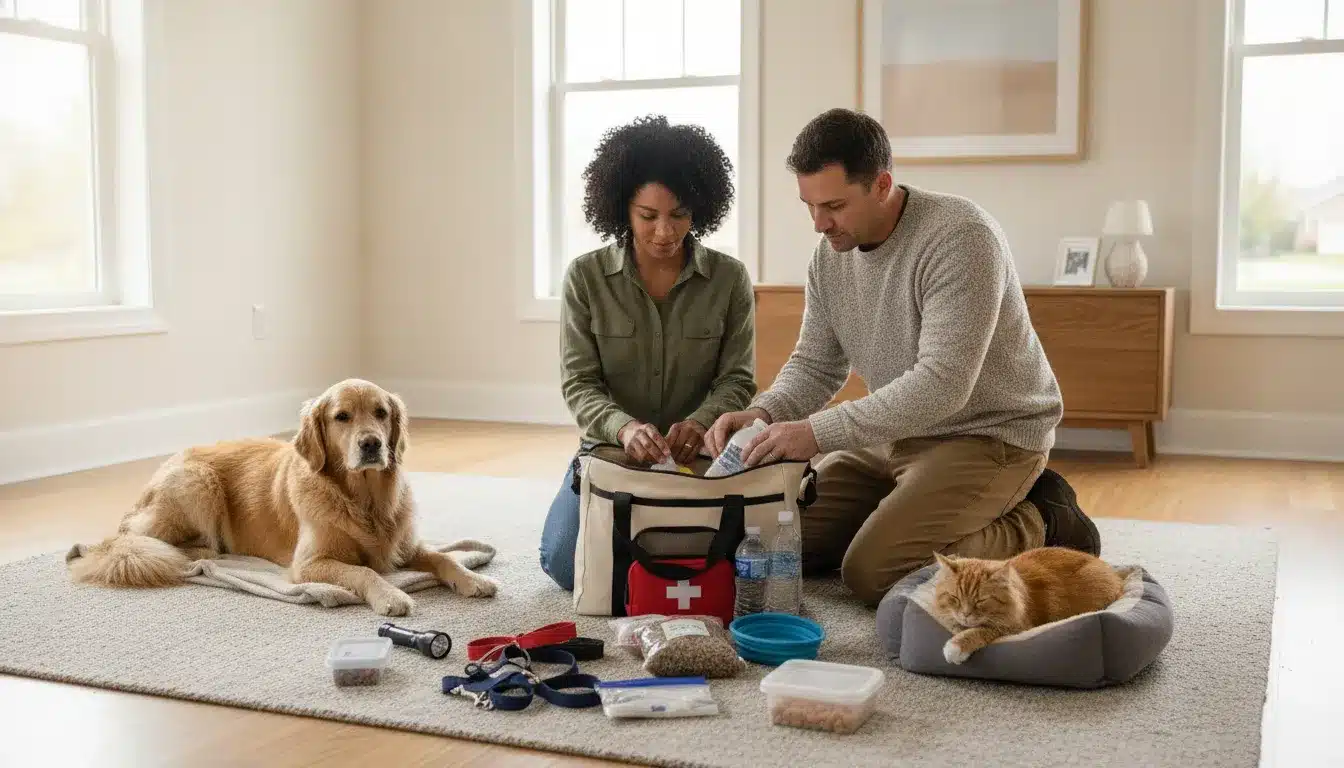
A well-prepared kit keeps essential supplies together when evacuation decisions must happen quickly. The CDC notes that a pet disaster kit can help evacuation go smoothly for the entire family.
- Veterinary records and medications: Pack copies of veterinary records, current prescriptions, and any required medical supplies. Ask your veterinarian which records your pet may need. The CDC recommends preparing veterinary records.
- Food and water: Store enough familiar food and clean water for your pet, plus bowls and a manual can opener if needed. Include treats that can support calm handling.
- Safe travel equipment: Keep a carrier, harness, or pet seatbelt where you can reach it quickly. The CDC specifically recommends proper equipment for pets riding in cars, including carriers, harnesses, and pet seatbelts.
- Identification details: Make sure your pet is microchipped and that the registration information is current. Microchipping is one of the best ways to support reunion if you become separated.
- Comfort and care items: Add waste bags, sanitation supplies, a familiar blanket, and a recent photo of your pet. These items can make temporary sheltering less stressful and help others identify your animal.
| Kit Item | Why It Matters |
|---|---|
| Veterinary records and medications | Helps responders provide care and reunites pets with their owners |
| Food, water, bowls and a can opener | Keeps pets fed and hydrated when normal supplies are unavailable |
| Carrier, harness or pet seatbelt | Keeps pets secure and safe during travel |
| Microchip and current ID tags | One of the best ways to reconnect if pets become separated |
| Comfort and sanitation supplies | Reduces stress during temporary sheltering |
Review the kit twice a year. Replace expired food, update medical records, and confirm that carriers and restraints still fit each animal.
How Do You Evacuate Safely With Your Pets?
Use a simple sequence before leaving, then keep your pets secured and calm throughout the journey.
- Confirm identification. Ensure every pet is microchipped and wearing current ID tags before evacuation. Check that your phone number and emergency contact details are accurate. The American Red Cross recommends these steps before evacuation.
- Prepare one carrier for each animal. Choose a pet-friendly carrier that fits each animal safely. Keep carriers accessible, rather than stored behind other supplies. Familiar bedding or a small comfort item can make loading less stressful.
- Secure pets for travel. Use proper car equipment, including carriers, harnesses, or pet seatbelts. Keep this equipment ready before an emergency. Never allow an unrestrained animal to move freely inside a vehicle. CDC guidance covers safe pet travel equipment.
- Keep your behavior calm. Pets can sense anxiety, so use a steady voice and controlled movements. Avoid forcing a frightened animal into a carrier when a slower approach is possible. Once secured, limit unnecessary handling during the trip.
- Follow the evacuation route and instructions. Bring your pet kit, identification records, medications, food, and water. Keep pets with you unless emergency officials direct otherwise. Do not leave animals behind, since they may become lost or injured.
Where Can You Shelter Pets During a Disaster?
Do not assume an evacuation center will accept your animals. Many disaster evacuation centers and public shelters do not allow pets, except service animals, according to the CDC. Many hotels may also prohibit pets, so arranging a destination in advance is essential.
Build a short list of pet-friendly options before an emergency occurs. Ready.gov recommends knowing a safe place for your pets before disaster strikes. Options may include a friend or relative outside the affected area, a pet-friendly hotel, a boarding facility, or an animal shelter that accepts household pets. Confirm current policies, capacity, vaccination requirements, and whether reservations are needed.
Also identify boarding facilities or animal hospitals near your planned evacuation shelter. The CDC recommends this step if you cannot return home immediately. Keep addresses, phone numbers, and backup options with your emergency supplies.
Monitor your local emergency alert system for evacuation notices and changing shelter information. A written plan helps you act quickly when conditions shift.
How Do Communities Track Displaced and Rescued Animals?
When a disaster affects many households, animal reunification depends on shared information. Neighbors may find loose pets, responders may receive rescue updates, and owners may need a reliable way to report where an animal was last seen.
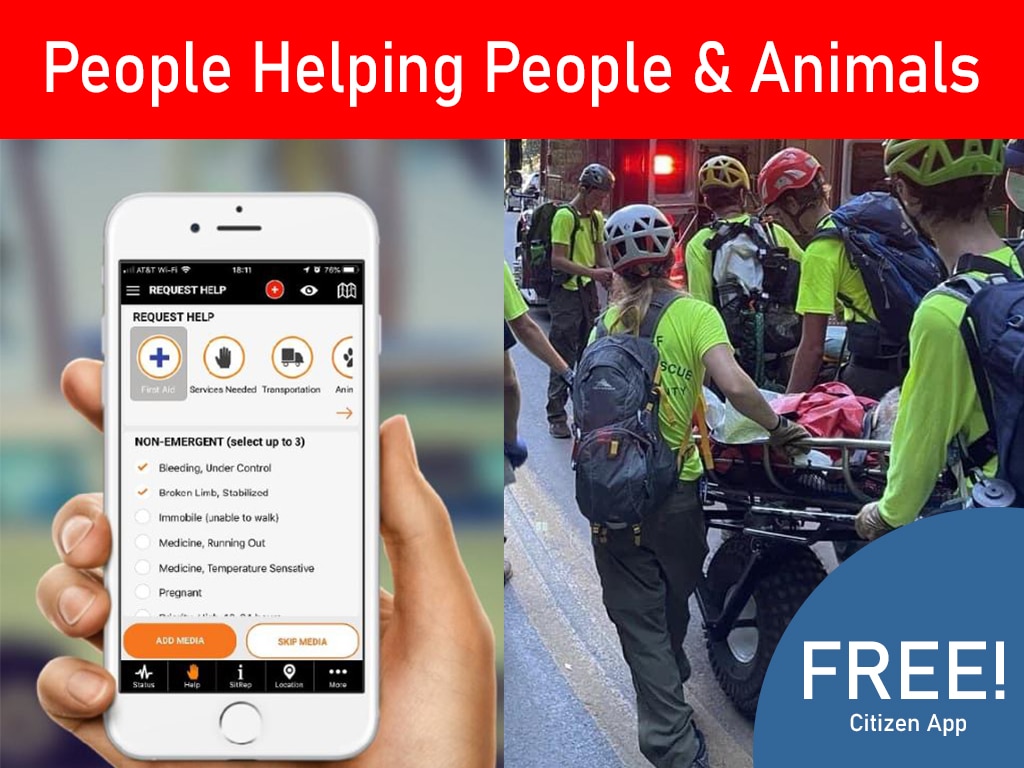
PubSafe supports real-time situational awareness and two-way communication between citizens and responders. A neighbor can report an incident in the app, including useful details about a displaced or rescued animal. Responders can then review incoming information, coordinate follow-up, and share updates with the community.
This approach helps bridge the gap between emergency alerts and real-world response. An alert can tell people that danger is present, but incident reporting helps show what is happening on the ground. That distinction matters when roads change, homes become inaccessible, or animals move beyond familiar areas.
PubSafe coordinates daily operations and disaster response, so communities can build familiarity with the platform before an emergency. As a public benefit company, PubSafe provides a disaster response platform designed to support community coordination. Its resilient coordination layer can unify online and offline disaster tools when normal communication channels become unreliable.
Your Pet Emergency Plan Starts Today
A reliable plan does not need to be complicated. Start with the people, identification, and decisions that will protect your pet when you are unavailable or under pressure.
Build a buddy system. Ready.gov recommends coordinating with neighbors, friends, or relatives who can care for or evacuate your pets if you cannot. Choose someone with access to your home, clear instructions, and knowledge of your pet’s routine. The CDC also recommends asking a trusted neighbor to check on your animals and evacuate them if necessary.
Next, confirm identification before an emergency. Register your pet’s microchip with the manufacturer, then update your contact information whenever it changes. Your pet should also wear a collar and tags with current contact details. These simple steps can help responders reconnect you if your pet becomes separated or confused.
Write down your buddy’s contact information, your veterinarian’s details, and your planned evacuation destination. Share the plan with everyone who may need it. Taking these actions today makes pet emergency preparedness practical, clear, and easier to follow when conditions change.
Review Ready.gov’s pet planning guidance and complete one step before the day ends.
Frequently Asked Questions
What should be in a pet emergency kit?
Pack food, water, medications, medical records, bowls, waste supplies, and comfort items. Keep a carrier, harness, or pet seatbelt accessible for travel. The CDC recommends preparing veterinary records and a pet disaster kit before an emergency. CDC pet emergency preparedness guidance provides additional planning details.
How do I evacuate with pets during a disaster?
Bring every pet with you, secure each animal in a suitable carrier or with appropriate travel equipment, and leave before conditions become dangerous. Confirm that collars and ID tags are current, and make sure microchip information is registered and up to date. A trusted neighbor or friend should also know how to evacuate your pets if you cannot return home.
Where can I take my pets during an evacuation?
Arrange options before an emergency, including pet-friendly hotels, relatives, friends, boarding facilities, and animal hospitals near your planned destination. Do not assume a public evacuation center accepts animals. Many shelters do not allow pets except service animals, so confirm rules and availability with local emergency management or animal control officials. Ready.gov pet planning guidance recommends identifying a safe place in advance.
How can I keep pets calm during a disaster?
Keep pets with familiar people, routines, carriers, and comfort items when possible. Speak calmly and limit exposure to loud activity or unfamiliar surroundings. Pets can sense their owner’s anxiety, so a steady approach can help reduce additional distress. Monitor animals closely because changed scents and landmarks may cause confusion or increase the risk of separation.
Build Your Pet Emergency Preparedness Plan With PubSafe
Your pets depend on you to be ready before a disaster strikes. A clear plan for evacuation kits, identification, microchipping, sheltering, and a trusted neighbor check-in system makes a stressful situation far more manageable.
When a disaster affects many households at once, coordination matters. A community incident-reporting app helps neighbors and responders log displaced, lost, or rescued animals in one shared view, so families are reunited faster.
The free PubSafe app brings your whole neighborhood onto one common operating picture. Neighbors report missing pets, volunteers log rescues, and responders see the full picture in real time.