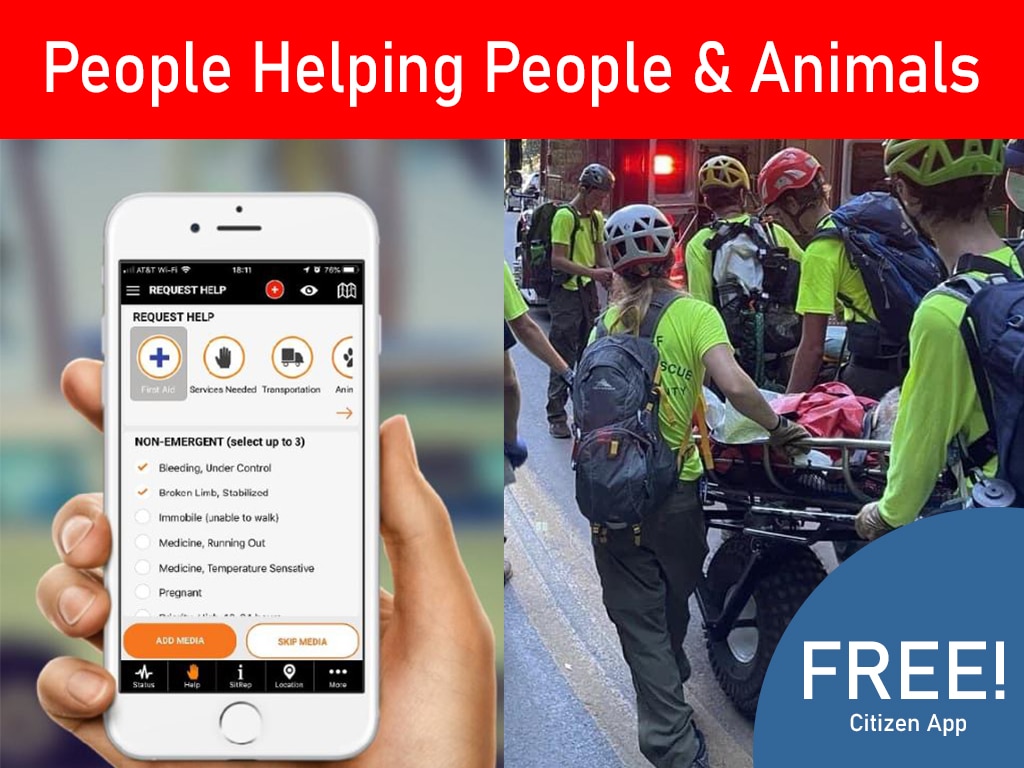
When a flood crests or a winter storm cuts power to thousands of residents, municipalities and counties face a brutal test of coordination. Fire, police, EMS, public works, and often state or federal agencies must converge on a unified response plan… and they must do it fast. Too many communities still rely on siloed radio channels, paper logs, and phone trees that break under pressure. That is where incident management for local government platforms change the outcome.
Incident Management For Local Government: What Does Incident Management Software Do for Local Governments?
Incident management software gives municipal and county emergency managers a single digital environment to coordinate every phase of a crisis. Instead of juggling separate tools for maps, field reports, personnel tracking, and public alerts, the platform consolidates these functions into one real-time operational picture. Teams log into the same system from the field and the Emergency Operations Center (EOC), see the same data, and execute the same Incident Command System (ICS) structure.
The National Incident Management System (NIMS) requires local governments that receive federal preparedness grants to adopt standardized incident management processes. Software that maps directly to ICS roles and reporting lines simplifies compliance and reduces training overhead for new personnel joining a response.
| Capability | What It Means for Your Team |
|---|---|
| Real-time GIS mapping | Track incident perimeters, resource locations, and hazard zones on a live map shared across all agencies. |
| Field reporting | Crews on scene submit observations, photos, and resource requests from a mobile app that feeds directly into the EOC. |
| Personnel accountability | Check-in / check-out tracking for every responder, including mutual aid and volunteer units. |
| ICS-compliant planning | Built-in Incident Action Plan (IAP) templates, organizational charts, and resource assignment logs. |
| After-action reporting | Time-stamped activity logs that export directly into grant reporting and improvement planning. |

What Are the Biggest Coordination Challenges for Local Emergency Managers?
Communication fragmentation is the single most cited failure in after-action reviews. A study from the National Institutes of Health identifies poor inter-agency coordination as a leading cause of operational failures during large-scale incidents. Police may be on one radio band, fire on another, and public works using a third system. When no shared platform bridges these channels, critical updates get delayed or lost.
Terminology mismatches
Even within the same jurisdiction, different agencies use different internal codes. A “Code 3” in one department may mean something entirely different in another. The ICS standard mandates plain language, but without a platform that enforces it, teams default to familiar shorthand. Incident management software provides a structured communication layer that normalizes terminology across all participating agencies.
Freelancing and accountability gaps
In the chaos of a fast-moving incident, unaffiliated responders or untracked units can arrive on scene without checking into the command structure. This phenomenon, known as freelancing, creates safety risks and resource blind spots. A unified platform requires every user to check in through a digital accountability system, giving the Incident Commander a complete personnel roster at all times.
How Does Incident Management Software Support NIMS Compliance?
FEMA ties NIMS adoption to federal preparedness grant eligibility. Local governments that cannot demonstrate NIMS-compliant processes risk losing access to Homeland Security Grant Program funding. Incident management software addresses this requirement by baking ICS structure, resource typing, and standardized reporting into the daily workflow.
The software also generates audit-ready documentation throughout an incident. Every assignment, resource order, and situation report carries a timestamp and user attribution. This documentation satisfies both NIMS compliance reviews and post-incident improvement planning.
What Should You Look for When Evaluating Software?
Not every tool labeled “incident management” meets the operational needs of a local government EOC. Here are the capabilities to prioritize during evaluation.
- Multi-agency access controls. The system should let you grant role-based access to fire, police, EMS, public works, school districts, and mutual aid partners without separate accounts for each organization.
- Offline resilience. Cell towers and internet infrastructure frequently fail during disasters. Look for a platform that maintains core coordination functions through radio, mesh, or satellite fallback when the primary network is down.
- Mobile-first field tools. Crews on the ground need a reliable mobile app for check-in, task assignment, and photo submission. Desktop-only software creates a bottleneck at the EOC.
- Integration with existing systems. The best software works alongside the radio systems, CAD, and alerting tools your team already uses, rather than forcing a complete replacement.
- Scalable pricing. Many vendors charge per-user fees that penalize small municipalities. Look for a model that allows adding mutual aid and volunteer units without budget surprises.
How PubSafe Helps Local Governments Coordinate Response
PubSafe provides a cloud-based incident management platform built specifically for the operational realities of local government. Rather than replacing existing radio and alerting infrastructure, PubSafe acts as the coordination layer that ties those tools together.
- Field teams submit reports. Personnel on scene use a secure mobile app to check in, submit observations, and request resources.
- EOC staff see updates live. Field data populates in real time on a shared GIS map visible to every authorized agency.
- Command tracks every resource. The Incident Commander monitors personnel, equipment, and assignments through a single ICS-compliant dashboard.
- The system logs everything. Time-stamped activity records support after-action reviews, grant reporting, and continuous improvement.
PubSafe’s platform supports both day-to-day operations and large-scale incident response. Teams use the same system for routine fleet tracking, training scheduling, and staff check-in that they activate during a crisis. This continuity means no learning curve when a real event hits. The user-pays pricing model also makes the platform accessible to small towns and counties that cannot absorb the upfront costs typical of enterprise emergency management software.
For emergency communication for local government teams, PubSafe delivers the unified operational picture that turns disjointed multi-agency efforts into a coordinated response. Learn more about how the platform supports municipal disaster response with ICS-aligned tools for every phase of an incident.
Frequently Asked Questions
Is incident management software required for local governments?
Local and state governments must adopt NIMS to qualify for federal preparedness grants through FEMA. Incident management software helps municipalities demonstrate NIMS compliance through standardized ICS workflows, resource tracking, and audit-ready documentation. Without it, meeting compliance requirements becomes a manual, error-prone process.
How does incident management software improve multi-agency coordination?
The software creates a single operational picture that every participating agency views in real time. Fire, police, EMS, and public works teams see the same map, the same resource assignments, and the same incident objectives. This eliminates the communication gaps and terminology mismatches that cause coordination failures in large-scale events.
What happens when cell networks fail during a disaster?
PubSafe is designed to function as a resilient coordination layer that ties together alternative communication channels including radio, mesh networking, and satellite links. Core functions like personnel tracking, task assignment, and situation reporting continue operating even when primary internet infrastructure is down.
Can small towns afford incident management software?
PubSafe uses a user-pays pricing model that eliminates large upfront license fees. Small municipalities and counties can deploy the platform at a fraction of the cost of traditional enterprise emergency management systems. This makes ICS-compliant incident management accessible to communities of any size.
Ready to strengthen your municipality’s emergency response capabilities?
Every minute spent assembling a fragmented response is a minute lost in protecting lives and property. PubSafe’s incident management platform gives your EOC team the tools they need to coordinate confidently from the first alert through recovery. Call (813) 736-1853 to schedule a free demonstration for your local government team.
PubSafe helps streamline coordination across field operations and the EOC with an integrated government emergency communication system.