Reliable Emergency Alert System for Communities
When disaster strikes, communication becomes the most critical lifeline. You need accurate, timely information to keep your community safe, but official alerts are often a one-way street. How do you coordinate volunteers, track needs, and share real-time updates on the ground? This is where a truly reliable emergency alert system moves beyond simple broadcasting. It creates a dynamic, two-way network for active disaster response. But not all platforms are created equal, and choosing the right one is crucial for effective communication when it matters most.
So what actually makes a reliable emergency alert system?
Trust is not built through technology alone, it is earned through consistency, accuracy, accessibility, and coordination. For communities, first responders, and local organizations, a reliable emergency alert system can mean the difference between chaos and coordinated response.
Let’s explore the key elements that define a truly reliable emergency alert system for communities.
A reliable alert program often starts with a mass emergency notification system that can reach residents through multiple channels.
Reliability also depends on whether residents know how to subscribe to local emergency alerts before an incident occurs.
Communities can strengthen reliability with a community alert app that supports two-way updates and incident awareness.
Understanding the Foundation: U.S. Government Alert Systems
To build a truly resilient community, it’s essential to know the tools already at our disposal. The U.S. government operates several established systems designed to push critical information out to the public during an emergency. These platforms form the backbone of our national disaster communication strategy, broadcasting alerts across different channels to reach as many people as possible, as quickly as possible. Think of them as the first official word when a crisis hits. While these systems are powerful and authoritative, they are primarily one-way broadcasts. Understanding how these alerts work is the first step for any community leader, volunteer, or prepared citizen. It helps us see where the official broadcast ends and where community-led efforts can begin to fill the gaps, creating a more interactive and complete response network.
The Integrated Public Alert and Warning System (IPAWS)
The Integrated Public Alert and Warning System, or IPAWS, is the modern engine behind most of the emergency alerts you receive. Managed by FEMA, it acts as a central hub that allows authorized public safety officials—from federal agencies to local and tribal authorities—to write and send a single alert through multiple communication pathways at the same time. This integrated approach is a huge leap forward, ensuring a consistent, authenticated message reaches people on their cell phones, on the radio, and on television simultaneously. The real strength of IPAWS is its ability to unify the alert landscape, so you aren’t getting conflicting information from different sources. It’s also important for local organizations to know that their own emergency managers can use this system to send geographically targeted alerts, making clear and coordinated local messaging absolutely critical during an event.
Wireless Emergency Alerts (WEAs)
You’ve probably seen these pop up on your phone—they’re the text-like messages with a unique sound and vibration that warn of imminent threats. Sent through IPAWS, Wireless Emergency Alerts (WEAs) are geographically targeted to reach mobile phones in a specific area at risk, from a county down to a smaller zone. You don’t have to sign up for them; they are pushed automatically to WEA-capable phones. This makes them incredibly effective for alerting people, including visitors in an area, about urgent dangers like tornadoes, flash floods, or AMBER Alerts. They use a special technology that isn’t affected by network congestion, ensuring the message gets through even when cell service is overloaded.
The Emergency Alert System (EAS)
The Emergency Alert System (EAS) is the familiar alert that interrupts television and radio broadcasts with that distinct, jarring tone. It’s a national system that allows the President to address the entire country within minutes, but it’s most often activated by state and local authorities to broadcast urgent information. Through IPAWS, officials can send alerts about severe weather, AMBER Alerts, and other local emergencies to a broad audience via radio, broadcast TV, and satellite services. While it might seem like an older method, its strength lies in its reliability and wide reach, ensuring that even those without a smartphone can receive critical, life-saving information.
NOAA Weather Radio All Hazards (NWR)
For a dedicated, 24/7 source of information, the NOAA Weather Radio All Hazards (NWR) is a fantastic resource. It’s a nationwide network of radio stations broadcasting continuous weather information directly from the nearest National Weather Service office. Beyond just forecasts, it provides official warnings, watches, and other hazard information for all types of emergencies, including natural, environmental, and public safety threats. Because it operates on a radio frequency, it’s an incredibly reliable tool to have, especially during major storms when power and cell service might go down. Many of these radios are designed to automatically alert you when a watch or warning is issued for your specific area, acting as a smoke detector for hazards.
The FEMA App
FEMA also offers a mobile app designed to help you prepare for and respond to disasters. The app provides real-time weather and emergency alerts from the National Weather Service for up to five locations you choose. It’s a handy tool for getting official alerts and accessing resources, like finding nearby emergency shelters or reading through disaster preparedness tips. It’s a great source of one-way information to keep you informed and aware of official guidance from government agencies.
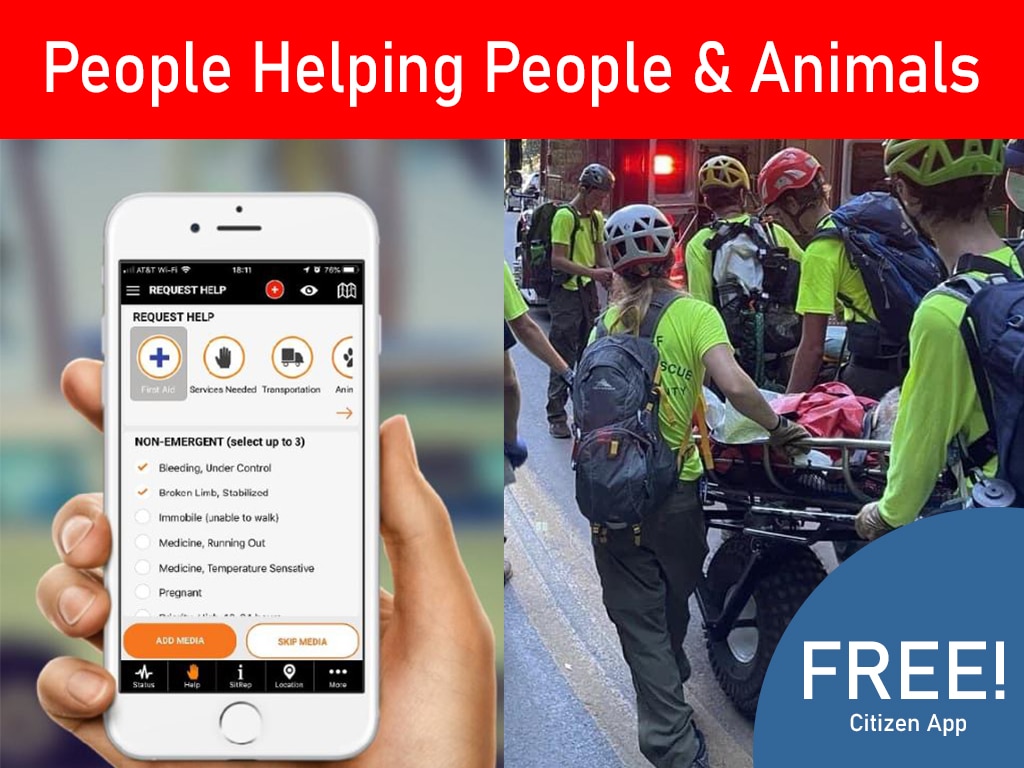
While the FEMA app is excellent for receiving alerts, community response requires more than just information—it requires interaction. This is the gap that a platform like PubSafe is built to fill. Instead of just getting an alert, you can actively participate in the response. With the PubSafe app, you can report an incident you see, share its location on a live public map for others to see, and coordinate directly with volunteer groups and official response organizations. It transforms disaster communication from a one-way street into a collaborative network.
1. Get Fast, Accurate Alerts When It Matters Most
During emergencies, seconds matter. A reliable emergency alert system must deliver notifications instantly across multiple channels, mobile push alerts, SMS, email, and web dashboards.
However, speed without accuracy can create panic and confusion. False alarms or outdated information quickly erode public trust.
- A dependable system must:
- Verify information before broadcast
- Provide real-time updates
- Allow authorized officials to control messaging
- Enable corrections and follow-up alerts
Government systems such as the Federal Emergency Management Agency (FEMA) emphasize the importance of verified, coordinated messaging during crises. Communities benefit most when alerts are both immediate and trustworthy.
2. Reach Everyone, Everywhere, on Any Device
A reliable emergency alert system should never rely on a single communication method. People consume information differently, some rely on mobile apps, others on SMS, email, or social media.
- Best practice systems include:
- Mobile app notifications
- SMS alerts
- Email notifications
- Dashboard or web-based command centers
- Integration with public warning systems
For example, the U.S. Wireless Emergency Alerts (WEA) system demonstrates the power of multi-channel alerts, delivering messages directly to mobile phones without requiring app downloads.
Communities need layered communication redundancy to ensure no one is left out.
How Wireless Emergency Alerts (WEAs) Function
You’ve probably received one before—that loud, distinct buzz from your phone warning you about a flash flood or an AMBER Alert. These are Wireless Emergency Alerts (WEAs), a powerful tool used by government agencies like FEMA and the National Weather Service to send critical information directly to your mobile device. Unlike a text message from a friend, these alerts use a different technology to ensure they reach as many people as possible in an affected area, without needing you to sign up or download anything first. They are a foundational layer of public safety communication, designed for mass notification when time is of the essence.
Automatic, Geo-Targeted Delivery
One of the most effective features of WEAs is their geo-targeting capability. The system sends alerts to all capable cell phones within a specific geographic area, which means you receive warnings relevant to your immediate location. If you’re traveling through a county experiencing a tornado warning, you’ll get the alert even if you live hundreds of miles away. This automatic delivery ensures that warnings are timely and contextually relevant, providing a crucial heads-up without requiring any action from the user. While these broad alerts are a great first step, you can get more granular, community-specific updates or even report an incident yourself using a dedicated platform that connects neighbors and first responders.
Privacy and Opt-Out Information
Privacy is a common concern, but WEAs are designed to protect it. These alerts are not text messages; they are broadcast from cell towers to any phone in range, so the government doesn’t need to know your phone number or track your location. Receiving them is also completely free and won’t count against your text or data plan. While these alerts are vital, you do have some control. Most phones allow you to opt-out of alerts for imminent threats and AMBER alerts through your device settings. However, it’s important to know that you cannot disable Presidential Alerts, which are reserved for national emergencies.
3. Send the Right Message to the Right People
One major flaw in outdated systems is over-broadcasting. When everyone receives alerts that are not relevant to them, alert fatigue develops. Eventually, people stop paying attention.
- A reliable emergency alert system must allow:
- Geographic targeting
- Role-based alerts (citizens, responders, organizations)
- Incident-specific communication
- Tiered escalation levels
Localized targeting increases engagement and preserves credibility. If residents only receive alerts that directly affect them, they are more likely to trust future notifications.

Alerts for Specific, High-Risk Events
When a flash flood warning is issued for an entire county, but you live on a hill miles from the nearest creek, it’s easy to start tuning out notifications. This is called ‘alert fatigue,’ and it’s a major flaw in outdated systems. For specific, high-risk events like wildfires or chemical spills, over-broadcasting is not just an annoyance; it can be dangerous. People need incident-specific communication that tells them exactly what is happening and where. Systems like the government’s Wireless Emergency Alerts (WEA) aim for this by targeting specific geographic areas. A reliable platform must allow for this level of targeting, showing incidents on a public map so messages remain relevant. If residents only receive alerts that directly affect them, they are far more likely to trust and act on future notifications, which is crucial for community safety.
4. Build Trust with Transparent Communication
Trust is strengthened when systems provide visibility into response coordination. A reliable emergency alert system should allow authorized leaders to:
- Share situational updates
- Confirm receipt of alerts
- Track response progress
- Maintain communication logs
Organizations like the International Federation of Red Cross and Red Crescent Societies emphasize transparency in crisis response. Clear, accountable communication prevents misinformation and builds public confidence.
5. The Critical Role of System Testing
You wouldn’t wait for a house fire to test your smoke detector, right? The same logic applies to emergency alert systems. Regular testing is non-negotiable for ensuring a system is reliable when it counts. These drills do more than just check if the technology works; they confirm that all communication channels are ready for immediate use. As emergency management experts highlight, effective testing is essential to prevent system failures during a real crisis. It also plays a vital role in public education. When people see and hear test alerts, they become familiar with the process, which helps build awareness and ensures that when a genuine alert is issued, it’s recognized and acted upon swiftly.
Furthermore, testing is a massive exercise in coordination. As FEMA’s national tests demonstrate, a successful alert requires seamless collaboration between government agencies, broadcasters, and local emergency managers. This process builds trust across the entire response chain. When every stakeholder knows the system works, it creates a foundation of confidence that is critical during a real event. This trust is what allows platforms like PubSafe to effectively coordinate volunteers and manage resources. When citizens and organizations trust the alerts they receive, they are more prepared to engage with the response and recovery efforts that follow, turning information into life-saving action.
5. Hear Back from Your Community in Real-Time
Traditional alert systems are one-directional. They broadcast messages but do not allow citizens to respond.
- Modern communities require more.
- A reliable emergency alert system should enable:
- Citizen reporting
- Resource requests
- Status updates
- Response coordination between organizations
Two-way communication allows communities to shift from passive recipients to active participants in response efforts.
This is especially important during floods, wildfires, and earthquakes where local conditions change rapidly.
6. Can You Use It in a Crisis? Simplicity is Key
In emergencies, complexity becomes the enemy. A reliable emergency alert system must be intuitive for both administrators and end users.
- Key usability factors include:
- Simple dashboard interface
- Clear message formatting
- Easy onboarding for organizations
- Minimal training requirements
- No long-term contracts or heavy infrastructure
When emergency managers can send alerts within seconds — without navigating complicated workflows — response time improves dramatically.

7. A Reliable Emergency Alert That Works Offline
Emergencies often damage infrastructure. Power outages, network interruptions, and overloaded systems are common.
- A reliable emergency alert system must:
- Operate in low-bandwidth environments
- Use cloud-based redundancy
- Provide offline resilience
- Scale during high traffic
During hurricanes and earthquakes, even major alert systems like those coordinated through the National Weather Service rely on redundant communication layers to maintain continuity.
Reliability means the system works when everything else fails.
8. Working Hand-in-Hand with First Responders
An alert system cannot operate in isolation. It must integrate into broader emergency response frameworks.
For example:
- Coordination with local municipalities
- Alignment with national emergency protocols
- Compatibility with disaster management tools
Many communities align their response planning with frameworks such as the United Nations Office for Disaster Risk Reduction (UNDRR) guidelines for disaster risk reduction.
A reliable emergency alert system supports preparedness, mitigation, response, and recovery — not just notification.
Giving First Responders a Head Start with Safety Profiles
In any crisis, information is a first responder’s most valuable asset. This is where safety profiles come in, transforming a simple alert into a detailed briefing. These profiles allow you to voluntarily share critical details about your household—like medical conditions, mobility challenges, or even pets—before an emergency happens. When an incident is reported, this information is instantly available to response teams, giving them a crucial head start. They arrive on the scene already knowing the specific needs of the situation. Modern platforms build this capability directly into their system, empowering citizens to provide this context when they report an incident. This two-way flow of information is a key feature of a truly reliable system, turning passive alerts into active, life-saving intelligence.
9. Is Your Community’s Data Safe and Secure?
In today’s digital environment, security equals trust. Citizens must know their data is protected.
A reliable emergency alert system should include:
- Encrypted communication
- Secure authentication
- Controlled administrative access
- Compliance with data protection standards
Without strong cybersecurity measures, trust deteriorates quickly.
10. How to Get Your Whole Community On Board
Even the most advanced technology fails if no one uses it. A reliable emergency alert system gains strength through widespread community adoption.
Communities should:
-
Educate residents about the platform
-
Encourage organizational participation
-
Run preparedness drills
-
Promote ongoing engagement
You can explore more about community readiness strategies on PubSafe’s internal resources such as:
These examples show how structured communication improves mission coordination across multiple emergency scenarios.
Differentiating Community Platforms from Personal Medical Alerts
It’s important to draw a line between community-wide emergency platforms and personal medical alerts. While both are designed to keep people safe, they serve fundamentally different purposes. A personal medical alert is for an individual’s private emergency, usually health-related, connecting them directly to a monitoring service. Think of it as a personal lifeline. A community platform, on the other hand, is built for public safety during large-scale events like floods, wildfires, or severe storms. It’s a collaborative tool that connects entire neighborhoods with first responders, volunteer groups, and official agencies.
A community platform moves beyond one-way warnings and creates a dynamic network for communication and coordination. For example, a platform like PubSafe is designed to connect citizens, CERT teams, NGOs, and official responders in real-time. It allows people to report incidents they see on the ground, helps organizations manage volunteers, and gives everyone a shared view of what’s happening on a public map. This is a collaborative approach to safety, where the community becomes an active part of the response, not just a passive recipient of information. It’s about working together when it matters most.
How Personal Medical Alert Systems Work
Personal medical alert systems provide a critical support line for individuals, typically through a wearable button that connects to a 24/7 monitoring center. When a person needs help, they press the button, and an operator dispatches emergency services. This one-to-one model is highly effective for individual medical events but isn’t built for community-wide disasters. In contrast, a platform for community response connects many users to many others simultaneously. Instead of one person calling for help, a platform like PubSafe allows a whole network to share information, like reporting a downed power line that becomes instantly visible to utility crews and other residents. It’s about creating shared situational awareness, not just a personal SOS. You can compare features of different personal systems to see how they focus on these individual needs.
Common Features and Costs
The features and costs of these two types of systems are also quite different. Personal alerts offer features like automatic fall detection and GPS tracking, usually for a monthly subscription fee between $25 and $60, plus potential equipment costs. As research on system costs shows, it’s a recurring personal expense. Community platforms, however, operate on a different model. Their features are built for large-scale coordination, with tools for team management, incident mapping, and resource deployment. The cost structure is also distinct; platforms like PubSafe are typically free for individual citizens and volunteers. The goal is to remove barriers to participation and get as many people as possible connected to the safety network, creating a more resilient community for everyone.
Why Every Community Needs a Reliable Emergency Alert System
Climate events are increasing in frequency and severity. Urban populations are growing. Information spreads rapidly — including misinformation.
A reliable emergency alert system serves as:
-
A trusted source of truth
-
A coordination hub for organizations
-
A direct communication line to citizens
-
A resilience tool for communities
Without reliability, alerts become noise. With reliability, alerts become leadership.

PubSafe: Your Partner for a Reliable Emergency Alert System
PubSafe is built to support communities and organizations that require structured, secure, and scalable communication during emergencies. By enabling targeted alerts, multi-channel communication, and coordinated response workflows, PubSafe helps communities strengthen preparedness and operational efficiency.
Rather than replacing existing infrastructure, PubSafe enhances coordination between citizens, organizations, and local leadership — making it easier to build a truly reliable emergency alert system.