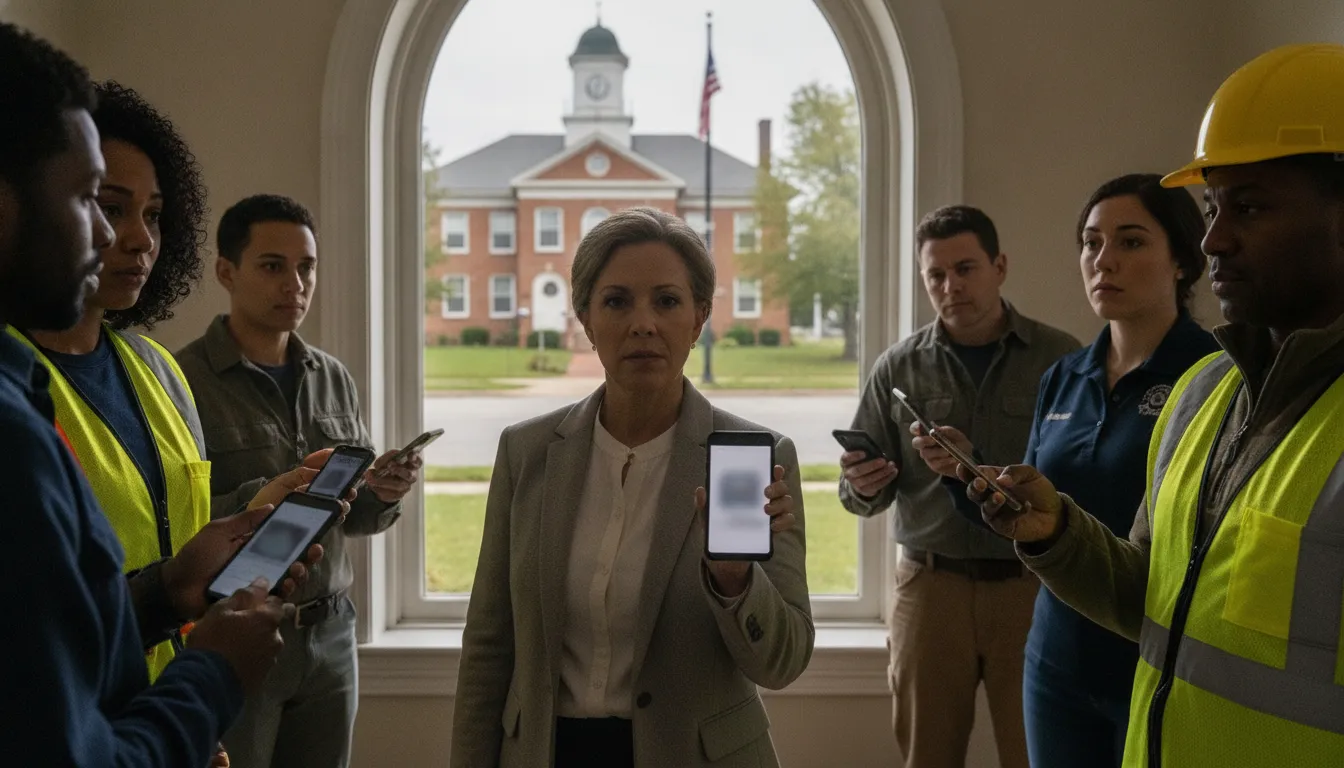
For a small municipality, an emergency can change block by block. A river may threaten one neighborhood while roads remain open elsewhere, or a hazardous-material incident may require immediate action from residents near a specific intersection. Emergency managers need a way to deliver clear instructions quickly without overwhelming the entire community or relying on residents to monitor multiple channels.
An emergency alert app for small towns helps local governments send targeted, street-level warnings while keeping residents connected to ongoing response efforts. The right platform supports timely communication, two-way reporting, and coordination with the people and teams closest to the incident.
That precision matters beyond the first message. When residents receive relevant information for their location and understand how to respond, alerts become part of a dependable relationship with local government. The next step is seeing why broad resident access is essential, even when a town has limited staff, budget, and emergency-management resources.
Contact PubSafe to see how an emergency alert app for small towns can be tailored to your community’s residents.
Why Small Towns Need an Emergency Alert App for Every Resident
Small municipalities face a communication problem that does not shrink with the size of the population. A wildfire, flash flood, hazardous-material incident, or severe storm can affect one neighborhood while leaving another untouched. Residents need clear instructions that match their location, not a generic message that creates confusion or alert fatigue.
A dedicated emergency alert app for small towns gives local officials a direct, targeted way to reach residents on the devices they already carry.
Broadcast warnings cannot provide every detail
Sirens, public broadcasts, social media posts, and email lists each have a role in an emergency plan. None should be expected to carry the entire burden. A siren may tell people that danger is nearby, but it cannot explain which roads to avoid, where to evacuate, or whether an instruction applies to their address. A social post can be missed, and an email may not be read until long after conditions change.
Mobile alerting adds a direct channel. According to Brookings, mobile devices are transforming disaster relief and public safety by helping governments deliver targeted, actionable information to people on their devices. For a small-town emergency manager, that means a warning can be delivered to the affected area without unnecessarily alarming residents outside it. Brookings explains the role of mobile devices in disaster relief and public safety.
Site-specific information helps residents act
Precision matters most when conditions vary across a town. An academic evaluation of the A4alerts mobile application examined the use of site-specific, impact-based flood warnings, reinforcing why mobile apps are increasingly important for timely local alerts. Residents can make better decisions when a message explains the relevant hazard and the action required in their area, rather than simply announcing that an emergency exists.
This approach is already familiar in local government. The City of Annapolis provides its Prepare Me Annapolis mobile app to help residents stay informed and prepared for local emergencies. A small town does not need a large-city footprint to benefit from the same resident-first model. It needs a dependable way to send official updates, organize information, and keep communication connected as an incident develops.
An app also gives residents a consistent place to receive alerts instead of forcing them to search across multiple channels. When officials can pair a location-aware warning with practical instructions, the community gets more than a notification. It gets a clearer path from awareness to action.
Learn how PubSafe can help your town deliver targeted emergency alerts to residents.
What Should a Government Mass Messaging System Deliver for a Small Municipality?
Small municipalities do not need more alerts for the sake of volume. They need a dependable way to send the right instruction to the right people, quickly, even when a small emergency management team is handling several responsibilities at once. A government mass messaging system should make that process precise, repeatable, and simple enough for staff to use under pressure.
That starts with location. Countywide messages are useful for broad threats, but many incidents affect a neighborhood, road corridor, or group of streets. SoCo Alert, operated by Sonoma County’s Department of Emergency Management, demonstrates how street-level emergency alerts can provide specific instructions to residents in affected zones. See how SoCo Alert uses targeted local warnings.
For a small town, the practical requirements are straightforward.
- County and neighborhood precision. Staff can define a broad county area or narrow an alert to a street-level zone, rather than notifying every resident for every incident.
- Multiple delivery channels: Push notifications, text messages, email, and voice calls give residents more than one way to receive urgent information.
- Fast setup: Templates, saved locations, and an uncluttered workflow reduce the time between confirming an incident and sending useful guidance.
- Ease of use for a small staff: Emergency managers should not need a dedicated communications department or extensive technical training to create, target, and monitor an alert.
Multi-channel delivery matters because residents do not all monitor the same source. The CDC’s emergency communication guidance emphasizes that effective communication reaches people where they are, which requires a multi-modal approach rather than dependence on a single channel. An app can be central to that strategy, while text, email, and voice delivery provide additional paths for people who have different devices, habits, or accessibility needs.
Useful alerts also need enough context to support action. A message should identify what is happening, who is affected, what residents should do now, and where to find updates. Precision helps prevent unnecessary alarm, while clear instructions help the people inside the affected zone respond without waiting for a second explanation.
PubSafe’s mass notification system is designed to connect targeted public alerts with broader community coordination. For a small municipality, that means choosing the appropriate geographic scope and communication channel without turning an urgent warning into a complicated technical project.
Contact PubSafe to discuss a practical government mass messaging system for your community and try the free PubSafe app.
How Targeted, Street-Level Alerts Build Resident Trust
Residents do not judge an emergency alert by its technical infrastructure. They judge it by whether the message arrives in time, applies to their situation, and tells them what to do next. A warning about a road closure several miles away may be accurate, but it can still feel irrelevant to a household outside the affected area. Repeated messages that lack local context can lead people to mute notifications or ignore future warnings.
Street-level targeting changes that experience. When an alert identifies the affected neighborhood, road, facility, or geographic zone. Residents can quickly connect the message to their own decisions: shelter in place, avoid a route, check on a vulnerable neighbor, or prepare to evacuate. That relevance is not just a convenience. It is part of the trust-building work local emergency managers must do before, during, and after an incident.
The CDC’s Crisis and Emergency Risk Communication guidance emphasizes three responsibilities: build trust, share information, and facilitate public action across the full emergency lifecycle. Effective crisis communication therefore requires more than sending a high volume of notifications. It requires information residents can understand and use.
Timeliness and trustworthiness reinforce each other
Research on warning systems using emergency apps identifies timeliness, trustworthiness, and situational awareness as critical design goals. Another finding from the same research is directly relevant to local adoption: residents are more likely to use mobile warning systems when they view the application as trustworthy and the warnings as timely. A system that delivers precise information after the decision window has passed is not operationally effective. A fast system that sends vague or inaccurate messages will eventually lose credibility.
Small municipalities can strengthen both qualities through disciplined alert practices. Define geographic boundaries before an incident, maintain current contact and location data, use plain instructions, and explain when a message applies only to a specific zone. If conditions change, issue an update instead of leaving residents to interpret an old warning. Consistency helps residents recognize that alerts reflect current operational information rather than general alarm.
Relevance reduces alert fatigue
Non-targeted alerts place the burden of interpretation on every recipient. Street-level alerts narrow that burden by making the message more useful at the moment it arrives. This precision supports situational awareness for residents while helping emergency managers communicate with the people most likely to need a specific action.
| Alert approach | Audience reached | Main risk | Best use |
|---|---|---|---|
| One-way broadcast | Everyone in the coverage area. | Irrelevant messages cause alert fatigue. | Community-wide threats such as a countywide storm. |
| Targeted street-level app alert | Only the affected neighborhood or zone. | Precision depends on accurate location data. | Road closures, localized flooding, HAZMAT, and evacuation zones. |
| Two-way reporting | Residents plus responders. | Staff must review incoming reports. | Changing or uncertain conditions on the ground. |
An emergency alert system should support this local precision as part of a broader communication plan. Mobile alerts are one channel, not a replacement for every other method. Used alongside established channels, targeted notifications give small-town emergency managers a practical way to make each message more credible, actionable, and worthy of attention.
How Does a Community Alert App Fit With 911 and Emergency Operations?
A community alert app should strengthen the emergency response system already in place, not compete with it. Residents still call 911 when they need immediate police, fire, or medical assistance. Dispatchers still manage urgent calls, and emergency managers still coordinate incidents through established command structures. The app adds a connected layer for information that does not always fit neatly into a 911 call.
Keep emergency command where it belongs
During an incident, emergency managers need to maintain a clear operational picture. A citizen-facing app can help collect reports from residents, volunteers, and community organizations while authorized officials retain responsibility for validating information, setting priorities, and directing the response. That division matters. Residents gain a practical way to share what they are seeing, while the emergency operations team remains in control of the incident flow.
For a small municipality evaluating an emergency alert app for small towns, the goal is not to create a second dispatch center. It is to connect public information, resident reporting, and response coordination in one process. Emergency managers can use incoming information to identify developing conditions, recognize gaps in coverage, and communicate relevant updates to the people affected.
That approach fits naturally with incident management for local government. The alert is only one part of the operation. The larger process includes receiving information, assessing its reliability, assigning action, updating stakeholders, and maintaining a record of what happened.
Make communication bidirectional
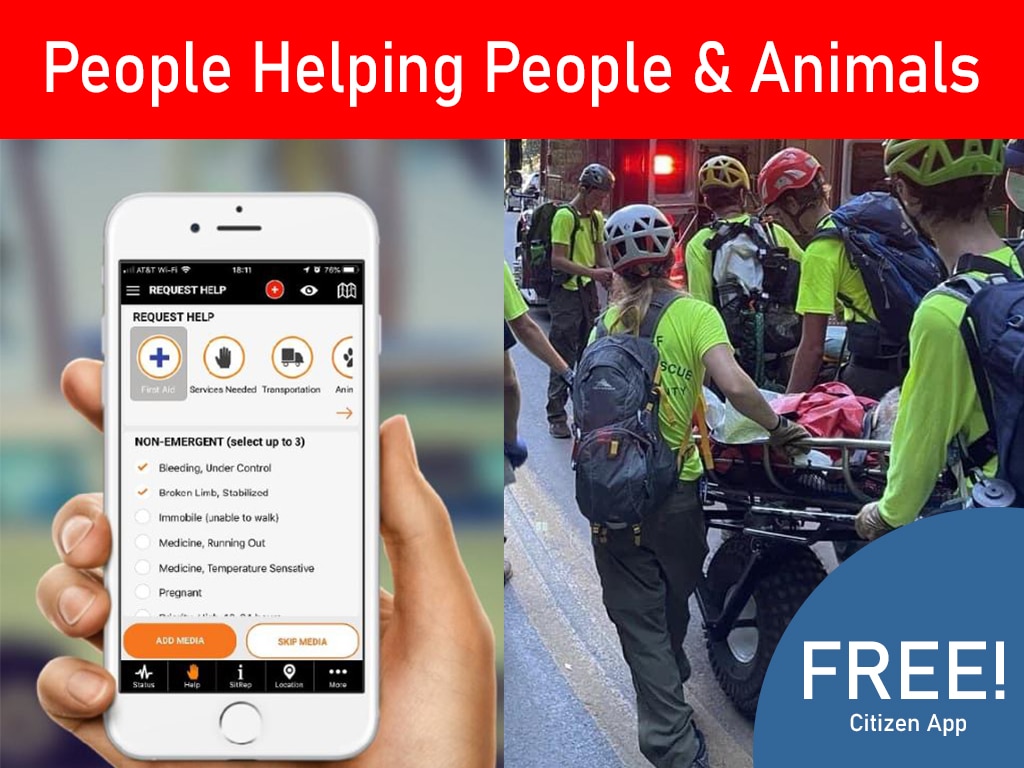
Traditional alerting is often one-way: an agency sends a warning, and residents receive it. That remains valuable, but it does not show whether conditions have changed on the ground. PubSafe supports bidirectional communication, allowing residents and responders to exchange information rather than treating the public as a passive audience.
For example, officials may send a targeted update to a neighborhood, while residents report blocked roads, damaged infrastructure, or changing conditions through the same community channel. Those reports can improve situational awareness and help responders coordinate with CERT teams, NGOs, and other local resources. The app becomes a shared information layer around the official response, not a replacement for 911 or emergency operations.
This coordinated flow is also useful between emergencies. PubSafe is designed for daily operations as well as crisis conditions, so residents and response partners can become familiar with the communication process before an incident occurs. That familiarity can make it easier to move from routine coordination to organized action when conditions deteriorate.
An Emergency Alert App That Works on a Small-Town Budget
Small municipalities should not have to choose between responsible public warning and a system designed for a much larger agency. A practical emergency alert app for small towns should give local officials the reach and precision they need without forcing them into an oversized enterprise deployment. A long implementation cycle, or a price structure that consumes the emergency-management budget.
PubSafe is built for the gap between basic one-way notifications and expensive, complex platforms. It gives municipalities a mobile-centered way to connect with residents, responders, volunteers, and community organizations during both routine operations and emergencies. That matters for small teams, where the same people may be handling preparedness, communications, incident coordination, and public updates.
Pay for useful capability, not unnecessary scale
A small town may need to notify residents about a road closure, a localized flood threat, a missing person, or a severe-weather condition affecting one neighborhood. It may not need every feature, integration, or service layer packaged into a large-agency system. PubSafe’s disruptor model focuses on the capabilities that make communication more actionable: mobile access, real-time coordination, two-way reporting, and targeted outreach.
This approach helps local governments direct limited resources toward preparedness and response instead of paying primarily for infrastructure they will rarely use. It also gives the platform value between incidents. Teams can use it during “blue skies” for coordination and readiness, then rely on the same environment when conditions turn urgent. Familiarity reduces the burden of asking staff and residents to learn a new tool during a crisis.
Precision makes a smaller budget go further
Broad alerts have a place, but sending every message to every resident can create unnecessary anxiety and alert fatigue. PubSafe supports a more precise approach, from county-level communication to neighborhood-focused updates. Think of it as sniper-rifle accuracy rather than a broadcast that scatters information across the entire community. The goal is to reach the people who need to act, with information relevant to their location and situation.
That precision can also improve operational efficiency. Officials can communicate with an affected area while keeping the rest of the community informed without overwhelming them. Residents receive clearer guidance, and emergency managers retain a better view of who needs help or has information to report. For a small department, fewer irrelevant messages and more useful feedback can make a meaningful difference.
To compare the platform’s targeted messaging and two-way reporting capabilities, review PubSafe’s emergency notification software to see how targeted messaging works.
Contact PubSafe to see how an affordable, resilient alert and coordination platform can fit your town’s needs.
Frequently Asked Questions
Can residents receive targeted emergency alerts for their neighborhood?
Yes. A municipality can use location-based alerting to send instructions to residents in an affected street, neighborhood, or other defined area instead of notifying the entire community. That precision helps people understand whether an evacuation, shelter, road closure, or other action applies to them. Sonoma County’s SoCo Alert program illustrates how local governments can use targeted alerts for affected zones: SoCo Alert resources.
How do small towns notify residents during an emergency?
Small towns typically combine several channels, such as a mobile app, text messages, email, phone calls, websites, social media, and public safety partners. The right mix depends on the event and the community. The CDC recommends a multimodal approach because effective emergency communication reaches people where they are: CDC crisis and emergency risk communication manual.
Are emergency alert apps reliable in areas with poor cellular coverage?
An app depends on an available data connection, so it should not be treated as the only emergency communication channel in a rural or outage-prone area. Emergency managers should pair app alerts with other available methods, such as radio, text, email, sirens, and local responders. A resilient plan also gives residents clear instructions about what to do if one channel is unavailable.
What should local governments look for in an emergency notification system?
Look for precise geographic targeting, multiple delivery channels, simple message creation, two-way reporting, and clear coordination with emergency operations. The system should support routine preparedness as well as active incidents, and it should help officials deliver timely, trustworthy information. Those qualities support the core warning-system goals of timeliness, trustworthiness, and situational awareness identified in emergency-app research: warning-system design goals.
Ready to reach residents with targeted alerts?
Small municipalities need practical tools that help emergency managers communicate clearly at the neighborhood level. Contact PubSafe to try the free PubSafe app and explore how targeted government mass messaging can reach residents across your municipality. Contact PubSafe to get started and see whether the platform fits your community’s alerting needs.