.
When a storm, wildfire, or flood activates a community organization, the hardest problem is rarely a single delivery. It is keeping requests, people, locations, assignments, and updates connected as conditions change. Messages spread across texts, email, and group chats can quickly obscure who owns the next action.
A practical workflow does not need an enterprise budget. A nonprofit, faith-based group, or CERT team can start with a shared intake process, an activation roster, defined task statuses, and a reliable situation-update rhythm. The goal is a common operating picture that supports official emergency-management partners without replacing their authority. See how an emergency coordination platform can connect these workflows.
Start by defining what the coordination process must capture from the first request through the final closeout.
What Does Disaster Relief Logistics Coordination Include?
Answer: Disaster relief logistics coordination is the connected work of preparing for needs. Receiving and prioritizing requests, aligning organizations and roles, moving resources and services, sharing status, and confirming completion. It is a lifecycle, not a single delivery transaction.
A delivery answers one question: how does a specific item get from one place to another? Coordination answers the larger operational questions around it. What is needed? Who is responsible? Which location has priority? What other task must happen first? Who needs the update, and what happens if the plan changes?
That broader scope starts before an incident. Teams can identify likely needs, clarify responsibilities, establish partner relationships, and agree on the information that every request should contain. FEMA describes incident support as analyzing emergent threats and providing synchronized logistics and supply chain management through planning before and during disasters. FEMA also facilitates collaborative planning with interagency and state, local, tribal, and territorial partners.
The lifecycle has several connected parts
During activation, coordination turns incoming information into organized work. A request may need a location, priority, owner, assigned team, current status, dependencies, and next action. Those fields help a coordinator see whether a need is waiting for assessment, ready for dispatch, in progress, delayed, handed off, or resolved.
The work also crosses organizational boundaries. A community group may receive a request, a CERT may assess it, a nonprofit may provide volunteers, and a public-safety partner may need the status. The coordinator’s job is not to replace those authorities or perform every task personally. It is to connect the work so that partners can act from the same operational picture.
FEMA’s Emergency Support Function #7 defines this principle at a larger scale: it integrates whole-community logistics incident planning and support for timely and efficient delivery of supplies. Equipment, services, and facilities. The same idea applies to smaller organizations. An emergency coordination platform can help keep requests, people, locations, tasks, and updates connected as work moves from readiness to response and closeout.
Build the Request and Incident Intake Workflow
A reliable intake process turns scattered calls, messages, and observations into work that a coordinator can assign and track. It should be simple enough for a small nonprofit or CERT team to use during readiness planning and clear enough to support disaster relief logistics coordination during an active response. FEMA’s ESF #5 function emphasizes collecting, analyzing, processing, and disseminating incident information, while fieldwork research supports advance preparation and coordination of disaster-response activities. Read the ESF #5 information-management guidance and build your local workflow before an incident.
Use one record for each distinct request or incident. If several reports concern the same location and need, connect them to the original record rather than creating duplicate work. A structured damage assessment form can help capture consistent field details when damage reports are part of the intake process.
- Create a request ID and capture the location. Assign a short, unique request ID as soon as the report arrives. Record the address, landmark, coordinates, or service area, along with the time received and the person or organization submitting it. If the location is uncertain, mark what is known and identify who will verify it.
- Describe the need and set a priority. Write a plain-language summary of what is being requested, who is affected, and what has already happened. Set a priority using definitions your team has agreed on, such as immediate safety concern, urgent operational need, or routine follow-up. Avoid relying on urgency words alone. Record the reason for the priority so another coordinator can review it.
- Assign an owner and team. Name one accountable owner, then identify the team or partner organization responsible for the next step. An owner is not necessarily the person doing every task. Their role is to confirm the request, coordinate the work, and keep the record current.
- List dependencies before dispatch. Note information, approvals, access, transportation, equipment, or partner support needed before work can begin. Dependencies expose blocked requests early and help coordinators sequence effort instead of assigning people to work they cannot complete.
- Set the status and next action. Use a controlled status such as new, validating, assigned, in progress, blocked, resolved, or closed. Every status change should include a specific next action, the person responsible. And a due point or review time. “Follow up” is too vague; “confirm access with site contact” is actionable.
- Record the last update and review the queue. Add a dated last-update entry whenever the owner learns something material or changes the plan. During an activation, review open records on a defined cadence. Escalate items with no owner, stale updates, unresolved dependencies, or a priority that no longer matches conditions.
How Should Community Organizations Assign People and Roles?
People move faster and work more safely when every activation has a clear owner, a defined scope, and a known handoff. A roster should do more than list names. It should show who is available, what each person is prepared to do, which organization they represent, and who can make the next operational decision.
Build the roster before an incident
Maintain a readiness roster for coordinators, team leads, field volunteers, communications support, logistics contacts, and organizational leadership. Include current contact details, availability, relevant training or experience, geographic area, and any limits on assignments. During activation, confirm availability rather than assuming that everyone listed can deploy.
For organizations with recurring volunteer operations, volunteer coordination software can help keep people, assignments, and updates in one operational workflow instead of scattering them across message threads and spreadsheets. The tool should support the process, not replace a coordinator’s judgment or official emergency-management direction.
Give each task one accountable owner
Assign one person to own each request or mission task, even when several people contribute. The owner is responsible for confirming the objective, checking safety conditions, recording the current status, and identifying the next action. Other participants can be listed as support, drivers, subject-matter contacts, or approving authorities. This prevents the common failure mode in which everyone believes someone else is following up.
Use practical role labels that volunteers can understand during pressure: activation lead, intake lead, field lead, communications lead, safety contact, and handoff recipient. A short role guide can clarify who may change a task status, who escalates a hazard, and who confirms completion. For examples of responsibilities that can be adapted to a community group, see this guide to disaster response volunteer roles.
Coordinate across organizations without losing accountability
Disaster relief logistics coordination often crosses nonprofit, faith-based, CERT, public-safety, and private-sector boundaries. FEMA describes NGOs, voluntary organizations active in disaster, the American Red Cross, government, and private-sector partners as part of a coordinated logistics partnership. That partnership model reinforces a useful local rule: each organization can retain responsibility for its people while sharing the information needed to prevent duplicated or conflicting work.
Designate a single focal point for multidisciplinary logistics coordination. FEMA’s logistics operations model uses such a focal point to execute, integrate, and synchronize work across disciplines. In practice, that person does not need to control every task. They need visibility into owners, dependencies, safety concerns, and handoff times, then route decisions to the appropriate organization or authority.
Create Shared Location and Task Visibility
A shared operational picture begins with knowing where requests, teams, and active tasks stand. That does not mean publishing every person’s location to everyone. Set visibility according to the operational need, then give each task a clear owner and next action.
Share location with a defined purpose
Start by deciding who needs location information and why. A field team may need to see the incident point, assigned teammates, and a staging area. A volunteer coordinator may need organization-level visibility without exposing individual movement publicly. Use the narrowest useful setting, review it as the incident changes, and avoid treating live location as a substitute for check-ins or safety procedures.
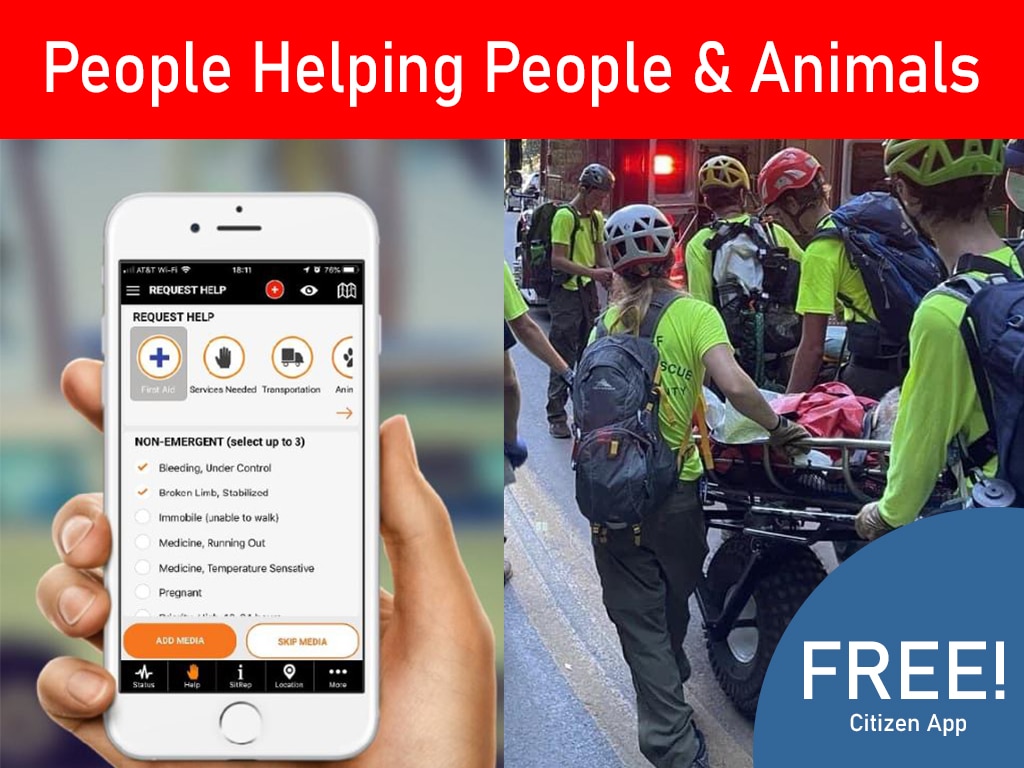
PubSafe documents four location-sharing levels: hidden, team-only, organization-only, and public. That gives coordinators a practical way to match visibility to role and risk. When a response involves multiple organizations, confirm which team owns the location record and which partners need access. PubSafe requires internet connectivity, so teams should also maintain an approved communications fallback for situations when connectivity is unavailable.
Give every task enough information to move
A task board should answer the questions a coordinator faces during a shift change: What is needed? Where? Who owns it? What happens next? Useful fields include:
- Request ID and location: Use a consistent identifier and a precise incident or service area.
- Priority and status: Mark urgency and use defined states such as queued, assigned, in progress, awaiting information, staged, and complete.
- Owner and team: Name one accountable owner, even when several people contribute.
- Dependencies: Record prerequisites, such as access approval, transportation, a safety check, or another task reaching completion.
- Last update and next action: Make stale work visible and state the next concrete move.
Prioritize by consequence, safety, time sensitivity, and whether one task unlocks others. FEMA describes sequencing effort around system interdependencies, a useful principle for avoiding work that looks urgent but cannot progress yet: FEMA logistics guidance.
| Task field | Question it answers |
|---|---|
| Request ID and location | Which need is this, and where is it? |
| Priority and status | How urgent is it, and what stage is it in? |
| Owner and team | Who is accountable for the next move? |
| Dependencies | What must happen before work can proceed? |
| Last update and next action | What changed, and what happens next? |
Use staging to make handoffs visible
Separate work that is requested from work that is ready to dispatch. A staging status can show that a team, vehicle, supply, or approval is assembled but not yet deployed. FEMA also describes incident support bases and federal staging areas as mechanisms for quickly delivering resources. In a community operation, the same concept helps coordinators see what is prepared, what is moving, and what remains blocked.
PubSafe can serve as a documented coordination layer for incident locations, team visibility, and task status. Keep official authority, safety decisions, and final accountability with the responsible organization.
How Do Teams Keep Status Updates Reliable?
Reliable updates are not a stream of messages. They are a shared operating record that helps coordinators make decisions, spot stalled work, and transfer responsibility without losing context. FEMA’s Emergency Support Function #5 describes this discipline as collecting, analyzing, processing, and disseminating incident information. ESF #2 also supports response communications and facilitates information delivery to emergency-management decision makers.
For a small nonprofit, CERT, or public-safety partner, the same principle can be applied with a lightweight SITREP routine. Keep one approved record for each request or task, identify who owns the next action, and make the escalation path explicit. Use the following checklist during readiness exercises and active response:
- Set the cadence before activation. Decide when routine updates are due, such as at a scheduled operational period or after a meaningful change. Record the last update time and the next reporting deadline. If conditions change quickly, shorten the interval rather than relying on informal messages.
- Use a consistent SITREP format. Include the request or incident identifier, current location, operational status, completed action, next action, owner, blockers, and information that decision makers need. Separate confirmed information from reports that still require verification. A concise format makes updates easier to compare and reduces ambiguous handoffs.
- Keep one source of truth. Publish the authoritative status in the designated incident or task record. Use chat, phone, radio, or email to alert people, but copy the decision, assignment, and status change into that record. Do not let parallel spreadsheets or message threads become competing versions of the operational picture.
- Escalate by condition, not frustration. Define triggers in advance, such as a missed reporting deadline, a safety concern, a blocked dependency, a change in priority, or a communications failure. Name the role that receives each escalation and state what decision or support is requested. ESF #2’s communications role underscores why a failed channel should trigger a deliberate alternate path, not silence.
- Close every handoff verbally and in writing. The outgoing owner states what is complete, what remains, what is uncertain, and when the next update is due. The incoming owner acknowledges responsibility and records it. Review the record for missing context before removing the outgoing person from the active workflow.
Plan communications beyond a single channel. Review PubSafe’s guidance on emergency communication backup plans and emergency communication mistakes as part of readiness planning. PubSafe currently requires internet connectivity, so teams should define other communications procedures for periods when that connection is unavailable.
Use a Handoff and Closeout Checklist
A response task is not complete when a vehicle leaves, a request is marked done, or the immediate pressure drops. Closeout gives the next owner a reliable record of what happened, what remains open, and what the organization should change before the next activation. FEMA describes logistics work as including supply chain, warehouse, and transportation operations, while its logistics mission also supports lifelines, critical services, and business continuity. That broader view of logistics is useful for community organizations, too.
- Confirm the ownership transfer. Name the person or team accepting each open request, delivery, transport assignment, facility issue, or follow-up. Record the handoff time, current status, next action, and the escalation contact. If another organization is assuming responsibility, confirm the transfer directly rather than relying on an unacknowledged message.
- Verify completion against the original need. Compare the final status with the request, location, priority, and dependencies recorded at intake. Confirm that the intended recipient or partner received the service or resource, and note any partial completion, changed requirement, access issue, or remaining risk. A closed task should be closed because it was verified, not because the response period ended.
- Document effort and outcomes. Capture volunteer and staff hours, participating organizations, transportation or warehouse activity, key decisions, and the result for the affected location or operation. Keep supporting photos, forms, receipts, and situation updates with the relevant record. This creates a usable operational history and supports future reporting without forcing someone to reconstruct the response from scattered chats.
- Record lessons while details are fresh. Ask what slowed coordination, where ownership was unclear, which dependencies affected sequencing, and what information arrived too late. Separate process improvements from issues outside the team’s control. Assign an owner and due date to each improvement that should be completed before the next activation.
- Reset readiness. Reconcile open tasks, return or reassign equipment, update contact and partner lists, restore normal operating roles, and check that critical lifelines and services have a clear follow-up owner. Archive the closeout record only after the team agrees that no unresolved action has disappeared from view.
Frequently Asked Questions
What does a disaster coordinator do?
A disaster coordinator organizes the response workflow from initial request through closeout. They clarify needs, assign owners, connect partner organizations, monitor locations and task status, maintain a reliable situation picture, escalate risks, and coordinate handoffs. The coordinator supports official emergency-management structures rather than replacing them.
What are the responsibilities of a logistics coordinator?
A logistics coordinator tracks what is needed, where it is needed, who owns the next action, and what dependencies could delay progress. Responsibilities may include confirming requests, sequencing work, coordinating transportation or staging, checking delivery or task completion, documenting updates, and escalating gaps. A shared task record keeps those decisions visible to the team.
What are the four C’s of disaster recovery?
Some organizations use the four C’s as a practical reminder to emphasize communication, coordination, collaboration, and continuity. The exact wording varies by organization. Use the framework to check whether responders are sharing current information, working from clear roles, coordinating across groups, and preserving essential operations during the transition to recovery.
What are the 5 P’s of logistics?
The 5 P’s are commonly used as a planning mnemonic: proper planning prevents poor performance. Apply it by defining requests early, confirming people and locations, identifying dependencies, assigning ownership, and setting the next update before work begins. Treat it as a checklist prompt, not a substitute for incident-specific judgment or official direction.
Contact us to strengthen your response workflow
A clear coordination workflow helps your organization keep requests, responsibilities, locations, and status updates connected from activation through closeout. PubSafe can help you discuss a practical approach that fits the way your team already operates.
Contact PubSafe to discuss a practical coordination workflow for your organization.