A disaster rarely fails because people do not care. It fails when critical information arrives in different inboxes, volunteer availability lives in a spreadsheet, requests for help are recorded on paper, and field teams cannot see what has already been assigned. NGO disaster response software gives coordinators one operational system for turning concern into organized action.
For nonprofit and volunteer-led response organizations, the right platform is not simply a database or a task board. It is a readiness and coordination environment that supports the full mission cycle: prepare people before an incident, receive reports as conditions change, prioritize needs, deploy resources, document work, and maintain accountability through recovery.
Why NGO disaster response software matters
Disaster operations move faster than manual processes. A single severe-weather event can create dozens of resident reports, spontaneous volunteers, shelter needs, welfare checks, debris requests, supply questions, and requests involving pets or livestock. Each item may be valid, urgent, duplicated, incomplete, or dependent on a separate agency response.
Without a shared operating picture, staff must spend valuable time asking basic questions: Who received this request? Has anyone been dispatched? Is the volunteer qualified for that assignment? What resources are available nearby? Has the resident already been contacted? Those delays can create duplicated work, missed needs, responder safety concerns, and frustration for the community.
Purpose-built software creates structure around those questions. It brings people, requests, communications, locations, and status updates into a common workflow. That does not remove the need for experienced incident leadership. It gives leadership better information for making time-sensitive decisions.
The value is especially clear for organizations that operate in both blue-sky and gray-sky conditions. A system used only after a disaster begins will often contain incomplete records, untrained users, and untested workflows. A platform used year-round for training, certifications, volunteer management, exercises, and community engagement is already part of the team’s operational muscle memory when conditions deteriorate.
Build a common operating picture before deployment
A common operating picture should be more than a map with pins. Maps are useful, but a location alone does not tell an operations team who owns the task, whether contact has been made, what skills are required, or whether the issue is resolved.
Effective response software connects the location to the operational record. A hazard report, assistance request, work order, or damage observation should carry relevant details, attachments, timestamps, priority, assigned personnel, and a clear status. Command staff can then see the difference between incoming reports, verified needs, active assignments, and completed work.
This structure helps teams avoid a common failure point: treating every incoming message as an immediate dispatch. Some reports require confirmation. Some belong to another agency. Some are duplicates. Others may reveal an emerging pattern, such as multiple blocked roads, unmet medical needs, or flooded homes in one area. A well-managed intake process preserves every report while helping coordinators triage it appropriately.
Let residents contribute actionable intelligence
Residents are often the first people to see changing conditions. They may notice a washed-out road, a downed tree, a stranded neighbor, a welfare concern, or an area that has not received assistance. Their observations can strengthen situational awareness when they enter the response process through a trusted, structured channel.
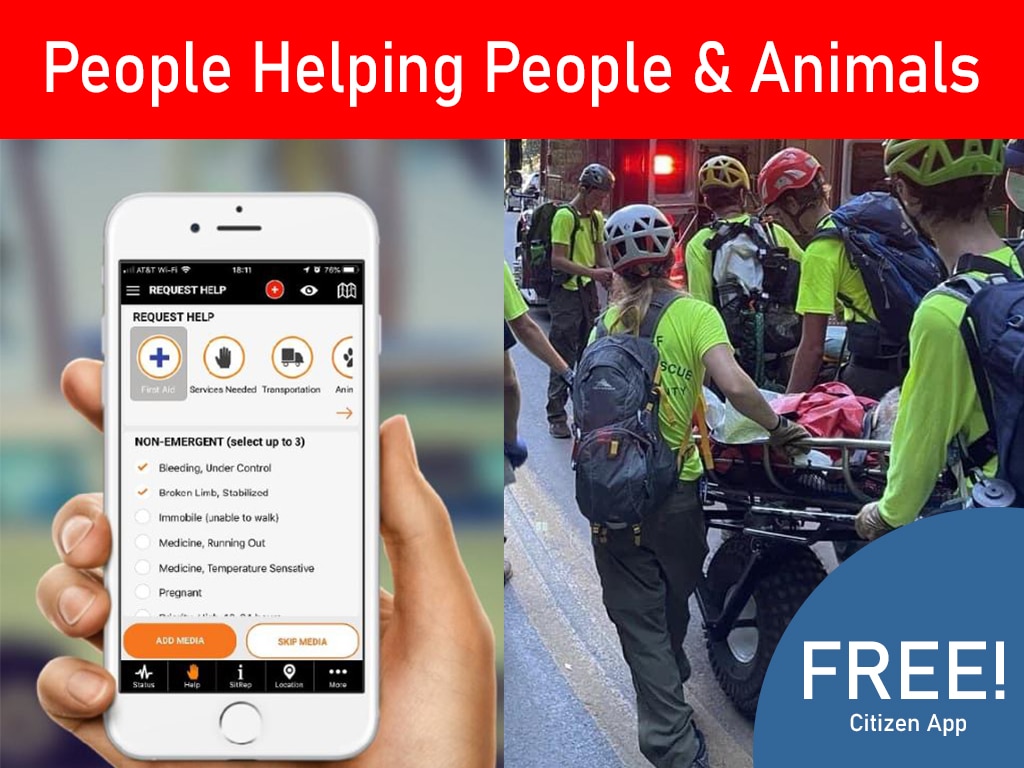
A citizen reporting app should make it easy to submit useful information without exposing sensitive operational details. It should capture the type and location of the issue, supporting notes or photos when appropriate, and contact information if follow-up is necessary. On the organizational side, coordinators need the ability to review, prioritize, assign, and close the report with an auditable record.
Two-way communication also matters. Communities need timely alerts and clear expectations about where to seek help, which services are available, and when conditions change. When residents receive useful information and see that reports are handled professionally, participation becomes a stronger part of local preparedness rather than a source of unmanaged demand.
Coordinate volunteers, staff, and partner agencies
Volunteers expand an NGO’s reach, but only when their deployment is organized. A list of willing people is not the same as a deployable workforce. Coordinators need to know who is available, where they are located, what training they have completed, whether certifications are current, and which roles they are authorized to fill.
Good disaster response workflows connect personnel records to assignments. A volunteer coordinator can identify qualified teams for damage assessment, distribution support, shelter operations, animal assistance, call-center work, or community outreach. Field supervisors can see who is assigned, monitor progress, and document hours or completed work. Leadership gains a clearer view of capacity without relying on a series of phone calls and text chains.
This is also where security and accountability become operational necessities. Relief organizations may handle resident contact details, medical or welfare-related concerns, volunteer records, and sensitive incident information. Access should reflect each user’s role. A volunteer may need to see an assignment and its safety instructions, while command staff may need broader operational visibility. Not every responder should have access to every record.
Partner coordination requires the same discipline. An NGO may work alongside emergency management, public works, law enforcement, faith-based groups, animal welfare organizations, shelters, and community organizations. The platform should help clarify handoffs, document referrals, and reduce the chance that multiple groups unknowingly work the same request while another need goes untouched.
Turn requests into accountable field work
The operational heart of response software is the path from intake to completion. Each request should move through a defined process: received, reviewed, prioritized, assigned, dispatched, in progress, completed, or referred. The exact stages depend on the organization and incident type, but the principle is consistent: every meaningful item needs an owner and a visible status.
Work orders and dispatch records create that chain of accountability. They tell field teams what is needed, where to go, who to contact, and what safety or operational notes apply. They allow supervisors to see whether a task is accepted, delayed, completed, or unable to be completed. They also create documentation that is useful for after-action review, grant reporting, reimbursement support, and future planning.
Consider a neighborhood affected by a tornado. Residents submit reports of damaged roofs, blocked access roads, and elderly neighbors needing welfare checks. The response team can review reports on a live map, group related needs, route road obstructions to the appropriate agency, dispatch qualified volunteers for non-emergency welfare checks, and record outcomes as teams return updates. If a report indicates an immediate life-safety threat, staff can escalate it through established emergency channels rather than treating it as a routine volunteer assignment.
The trade-off is that defined workflows require setup and training. Teams should resist the temptation to create so many required fields that responders cannot enter information quickly in the field. Start with the records necessary for safety, prioritization, assignment, and documentation. Add detail where it improves decisions, not merely because it can be collected.
What to evaluate in a response platform
Generic project-management tools can track tasks, and volunteer applications can store names. For routine administrative work, those tools may be enough. Disaster response introduces different requirements: rapidly changing conditions, geospatial awareness, role-based access, resident reports, dispatch activity, field accountability, and coordination across organizations.
When evaluating NGO disaster response software, look for a platform that supports these connected capabilities:
- Volunteer, member, contact, training, and certification management in the same system used for operations.
- Intake for help requests, hazard reports, incident conditions, and community observations.
- Live mapping that connects locations to operational records and assignment status.
- Work orders, dispatch workflows, alerts, and task tracking designed for field coordination.
- Secure cloud access with role-based permissions and records that remain available for review after the incident.
- Citizen-facing reporting tools that give residents a constructive role without creating an unmanaged communications channel.
The best fit depends on the organization’s mission. A small CERT may prioritize volunteer readiness, resident reporting, and straightforward work orders. A regional nonprofit coordinating multiple teams may need more detailed dispatch visibility and partner workflows. In either case, evaluate the system during normal operations, not during the first major incident.
Make readiness a daily practice
Technology is most effective when it supports practiced procedures. Build sample incidents, run tabletop exercises, verify volunteer records, test notification lists, and let field leaders rehearse how assignments are received and closed. After each drill or event, review bottlenecks: Were reports categorized consistently? Did teams have the information they needed? Could leadership see the status of priority work?
PubSafe brings these functions into one community-focused operations portal, while its free citizen app gives residents a direct way to report conditions and assistance needs. The goal is not to replace professional judgment. It is to give emergency managers, NGOs, volunteers, and residents a more organized way to act on it.
A community does not become resilient because it has more forms, more messages, or more disconnected tools. It becomes more capable when the next report can be seen, assessed, assigned, and followed through by the people prepared to help. Build that operational discipline before the call for help arrives.