A flooded roadway, a blocked evacuation route, an elderly resident without power, a volunteer team ready to deploy – these are not separate issues during an emergency. They are parts of one operational picture. Community disaster response software gives emergency managers, NGOs, CERT teams, and local leaders a structured way to turn incoming information into coordinated action.
The difference is felt long before a major incident. When contact records, training status, volunteer availability, resident reports, work orders, and field activity live in separate systems, coordination slows down at the moment speed matters most. A purpose-built platform brings those moving pieces into a secure, accessible operational environment so teams can respond faster and more effectively.
What Community Disaster Response Software Should Do
Community disaster response software is not simply a messaging tool, a map, or a volunteer database. It is an operations system that supports the full emergency-management cycle: readiness during blue-sky days, coordination during gray-sky operations, and accountable recovery afterward.
At a practical level, the software should help an organization receive reports, assess and prioritize them, assign work, communicate status, document activity, and maintain a shared view of conditions in the field. That shared view matters because incident coordinators, dispatch leaders, volunteer supervisors, and command staff each need different details, but they must work from the same current information.
For example, a resident may report a downed tree blocking access to several homes. The report needs a location, supporting details, and a clear status. A coordinator may need to determine whether it is a life-safety issue, route it to public works, create a work order, and notify the reporting resident that the issue has been received. If a trained volunteer team is assigned, their deployment, check-in, and completed work should also be documented. One report becomes a managed operational workflow rather than a loose message buried in a group chat.
Why General-Purpose Tools Create Gaps
Spreadsheets, email, text chains, and generic project-management platforms can all be useful in limited roles. They are rarely designed for the pace, permissions, and accountability required during disaster operations.
A spreadsheet may track volunteer names, but it does not automatically show who has current certifications, who is available, where they are assigned, or whether they have completed a mission. A shared map may show an incident location, but it may not connect that point to a help request, task assignment, dispatch record, or resident communication. A mass-notification tool can distribute an alert, but it does not necessarily support two-way field reporting or operational follow-through.
The trade-off is clear. Teams can assemble a collection of low-cost tools, but someone must manually connect the information between them. That approach may work for a small event with a few participants. It becomes fragile when requests increase, personnel rotate, internet access is uneven, and leaders need timely, defensible decisions.
Purpose-built software reduces those handoffs by keeping the operational record connected. It also establishes repeatable workflows before an emergency puts those workflows under pressure.
Build Readiness Before the Incident
The strongest response starts with organized readiness. Agencies and volunteer organizations need current records for members, contacts, qualifications, training, certifications, equipment, and roles. They also need a reliable process for onboarding people and confirming who is authorized to perform specific assignments.
This is where a platform should support more than a roster. It should help leaders identify whether a volunteer has completed required training, whether a certification is current, and whether the individual is appropriate for a particular mission. That protects the organization, the volunteer, and the people receiving assistance.
Preparedness workflows should also support exercises, recurring training, operational plans, and contact updates. When a storm warning arrives, coordinators should not have to reconstruct their team structure from outdated files. They should be able to identify available people, notify the right groups, and establish incident operations with confidence.
A better record of who can do what
Credentials are not administrative details. They influence deployment decisions. A volunteer trained in damage assessment, animal shelter support, traffic control, or radio communications may be valuable in very different assignments. Maintaining that information in one secure system allows supervisors to build teams intentionally rather than relying on memory or incomplete lists.
Turn Resident Reports Into Actionable Intelligence
Residents often see conditions before official resources can reach an area. They may observe flooded intersections, damaged structures, stranded neighbors, loose animals, power hazards, or emerging needs in a sheltering community. The challenge is not whether this local knowledge exists. The challenge is receiving it in a form that can be evaluated and acted on.
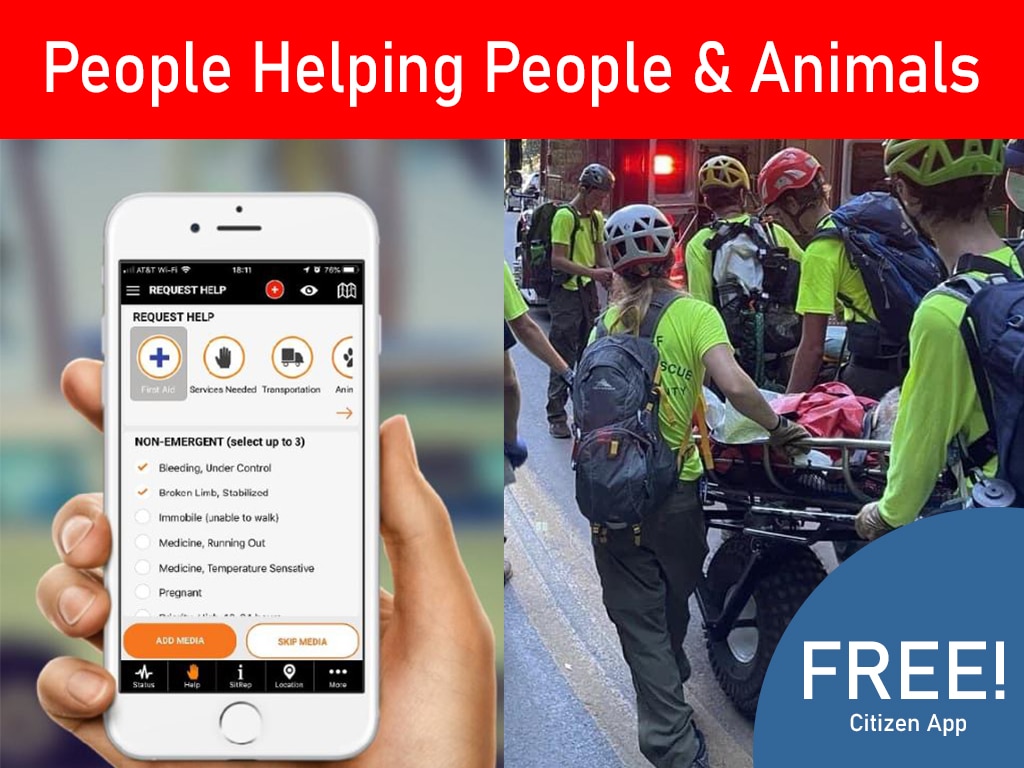
A free citizen-facing reporting app gives residents a meaningful and safe role in the response network. Instead of sending unstructured messages across social media or calling multiple offices, a resident can submit a report directly to the organization responsible for reviewing it. Location, images, category, and details can help staff quickly understand what is being reported.
That does not mean every report should trigger an immediate field deployment. Reports must be reviewed, verified when necessary, prioritized against life-safety concerns, and assigned to the appropriate organization. Good community disaster response software supports that judgment. It helps responders distinguish between awareness information, service requests, urgent hazards, and incidents that require escalation.
Two-way communication also matters. When residents receive trusted updates, they are less likely to rely on rumors or duplicate reports through multiple channels. Clear status information builds confidence while helping agencies manage expectations during a demanding operation.
Coordinate People, Tasks, and the Field Picture
Once an incident is active, the operational picture changes by the hour and sometimes by the minute. A dependable platform should connect help requests, work orders, dispatch activity, volunteer assignments, alerts, and live mapping so leaders can see both the demand and the response.
A field supervisor needs to know which teams are assigned, where they are operating, and whether they need support. A dispatch leader needs to route work efficiently and track the status of assignments. Command staff need a high-level view of open requests, emerging clusters of need, resource constraints, and completed missions. These needs overlap, but they are not identical.
Live operational mapping is especially valuable when incidents are geographically dispersed. Mapping can reveal concentrations of damage reports, show where teams have been deployed, and help leaders identify neighborhoods that may not yet have been assessed. Maps are most useful when they are connected to real operational records, not treated as a separate visual layer.
Keep sensitive information controlled
Emergency operations involve information that should not be broadly shared. Resident contact details, vulnerable-population requests, volunteer records, and operational notes require controlled access. The right software should support secure cloud access and role-based workflows so people can reach the information they need without exposing information they do not.
Security and speed are not competing priorities when systems are designed well. Clear permissions reduce confusion, protect sensitive records, and make it easier to maintain accountability across agencies and partner organizations.
Support Recovery With a Complete Operational Record
Recovery is where disconnected systems often create a second problem. Leaders may need to account for missions completed, volunteers deployed, requests received, resources used, and unresolved needs. If the information was captured across emails, paper notes, and separate applications, the organization must spend valuable time rebuilding the record.
A centralized platform preserves the history of the operation as work occurs. That helps organizations answer practical questions: Which requests remain open? Which neighborhoods received assistance? Which volunteers worked which assignments? What recurring needs should shape the next operational period?
It also supports after-action review. Teams can identify delays, communication gaps, training needs, and resource shortfalls while the incident is still fresh. Those lessons can then strengthen readiness for the next event rather than becoming another report filed away after the crisis.
Choosing the Right Platform for Your Organization
The right solution depends on your mission, organizational size, and operating model. A municipal emergency-management office may need multi-agency coordination and public reporting at scale. A CERT team may prioritize member readiness, volunteer dispatch, and incident documentation. An NGO may need strong case and work-order management across multiple service areas.
In each case, look beyond a feature checklist. Ask whether the system supports your actual workflow from the first resident report through assignment, completion, communication, and recovery review. Confirm that it can manage both planned readiness activities and fast-moving incident operations. Evaluate how it handles permissions, field access, mapping, alerts, volunteer credentials, and information retention.
PubSafe is built around this connected operational model, bringing citizen reporting, volunteer and member management, dispatch, work orders, alerts, and live mapping into one community-focused system. The goal is straightforward: help people coordinate the work that protects their neighbors, communities, and animals.
The most useful platform is the one your team can rely on before the next call comes in. Establish the workflows, organize the records, invite community participation, and give responders a clear path from report to resolution.