Professional fire crews rely on trained community volunteers during major incidents where resources are stretched thin. This playbook covers how fire departments can build effective partnerships with Community Emergency Response Teams using proven coordination frameworks and digital tools.
Schedule a PubSafe Demo to Improve CERT Coordination
Fire department CERT team collaboration works best when professional crews and local volunteers share clear goals and unified training. CERT teams provide basic disaster response skills when first responders are stretched thin. Fire leaders teach volunteer heads the Incident Command System for smooth operations. A strong coordination platform bridges the gap between alerts and real-world action. Joint drills build the trust needed to keep the community safe.
Why Does Fire Department CERT Team Collaboration Matter?
Trained CERT volunteers serve as force multipliers during major disasters. They handle light search and rescue, crowd control, damage assessment, and shelter management. This frees professional fire crews for the most critical life safety tasks. Strong collaboration between fire departments and CERT teams saves lives and stretches limited resources further.
When a major disaster strikes, professional responders cannot be everywhere at once. CERT teams fill this gap by acting as the eyes and ears of the fire service. They report local conditions, handle minor tasks, and provide critical support that would otherwise drain professional resources. This partnership is about more than just having extra hands. It is about having trained, organized volunteers who understand the chain of command and can operate safely within an active incident scene. Fire departments that invest in fire department CERT team collaboration see faster response times, better situational awareness, and stronger community trust. The collaboration also builds a pipeline of trained citizens who understand emergency operations and can step into support roles immediately.
How Do Fire Departments Align CERT Teams with the Incident Command System?
The Incident Command System provides a modular structure that CERT teams plug into as part of the Operations Section. A CERT team leader reports to the Operations Section Chief. Unified command reduces duplicate work, clear roles keep volunteers safe, and common terminology keeps communication fast during high-stress incidents.
Strong fire department CERT team collaboration starts with a shared operational framework. The Incident Command System (ICS) gives all responders a common language and chain of command. Without ICS, efforts become fragmented and dangerous.
Why ICS matters for volunteer integration
ICS provides a modular structure that scales from a single-neighborhood event to a multi-agency disaster. CERT teams plug into this structure as part of the Operations Section. A CERT team leader reports to the Operations Section Chief, keeping volunteer efforts aligned with professional operations. Plain language replaces radio codes, reducing confusion when stress levels are high.
Training leaders for unified command
CERT leaders should take the FEMA IS-315 course to learn how volunteer teams work within ICS. Many fire departments also run local joint training exercises. These shared drills build trust and reveal gaps in coordination before a real emergency. Tools like PubSafe’s disaster response platform help bridge ICS structure with field execution by providing a shared operating picture that both fire command and CERT leaders can access in real time.
- Unified command eliminates duplicate work in the same area.
- Clear roles keep volunteers safe during field operations.
- Common terminology maintains communication speed and accuracy.
- Standard forms enable clean data handoffs to professional crews.
- Regular joint training builds muscle memory for crisis response.
Staging Area Coordination During Emergencies
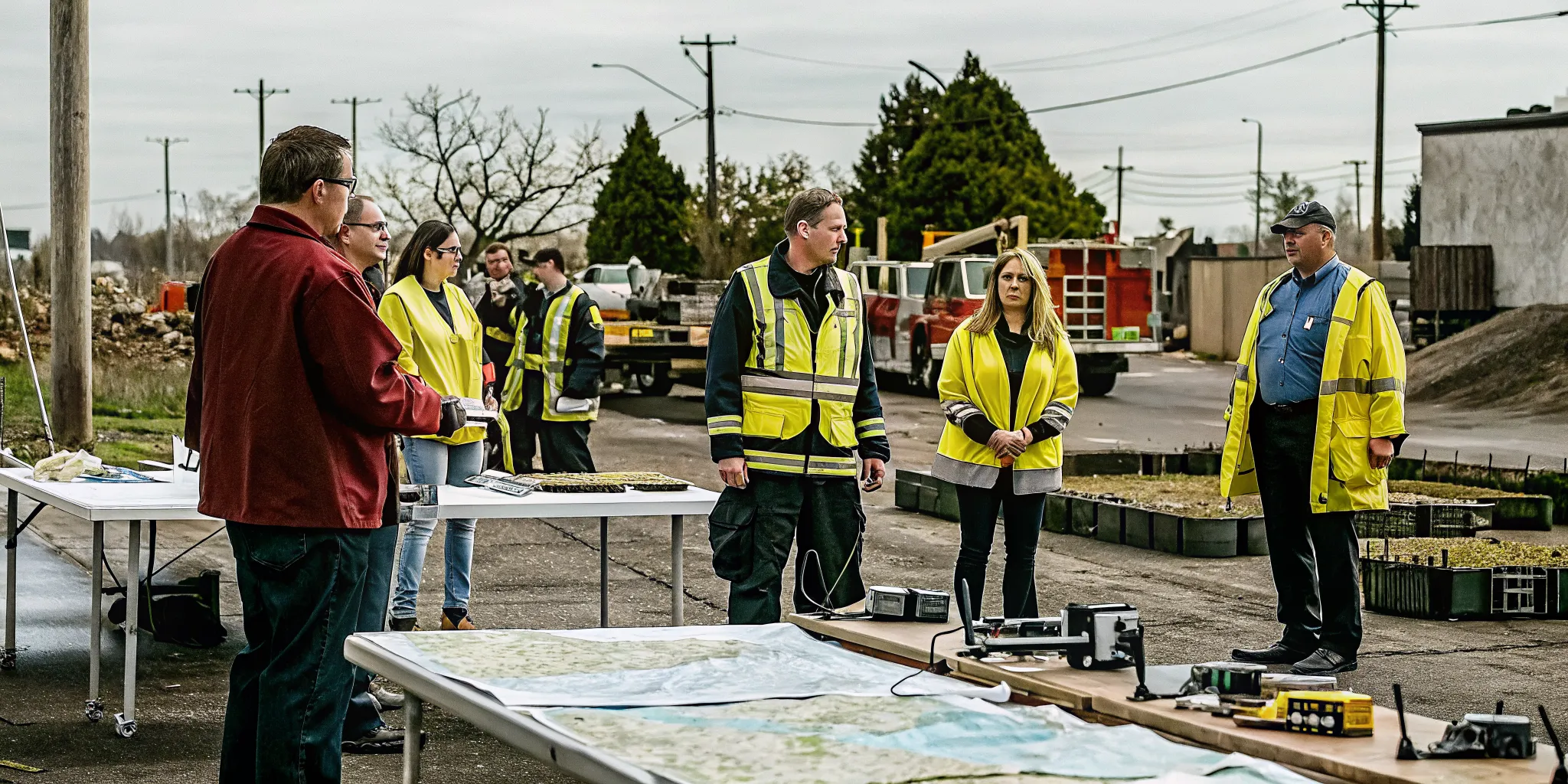
A well-run staging area keeps the incident scene clear and tracks every responder. Fire departments pick safe, accessible locations near the event. Every CERT member signs in upon arrival. A staging officer manages check-in, assigns squads, delivers safety briefings, and tracks equipment before teams deploy into the field.
Good fire department CERT team collaboration depends on a disciplined staging area. This staging area keeps the main scene clear and helps leaders track personnel. Without a staging plan, volunteers may crowd the incident site or miss critical safety updates.
Managing check-in and member tracking
Every CERT member must sign in upon arrival at the staging area. This creates an accountability baseline so incident command knows who is deployed and where.
Using PubSafe for CERT member accountability digitizes this process, replacing paper logs with real-time digital check-in that command can see from any device. This integrates with a government emergency communication system to keep all agencies informed.
Steps to build a staging workflow
- Designate a staging officer to run the site and track all personnel.
- Mark entry and exit points with bright tape or signs.
- Set up a check-in desk where every person logs name and arrival time.
- Group volunteers into squads by skill level and training.
- Deliver a safety briefing to every squad before deployment.
- Log all tools and equipment issued to volunteer teams.
Task Delegation Workflows for CERT Volunteers
Effective task delegation matches CERT volunteer skills to appropriate response duties. Volunteers handle light search and rescue, traffic control, shelter management, and damage documentation. Professional responders retain structural firefighting, hazardous materials, technical rescue, and advanced medical care. Clear boundaries keep everyone safe and operations efficient.
Effective fire department CERT team collaboration depends on clearly defined roles. When a disaster hits, fire departments deploy CERT teams for tasks that match their training level. This keeps professional crews focused on high-risk operations.
Appropriate tasks for CERT volunteers
Volunteers handle light search and rescue in structurally safe buildings, crowd and traffic control, shelter management, and damage documentation through photos and notes. Supply distribution centers are natural assignments for volunteer teams. Volunteers often know the local layout better than outside responders.
Roles reserved for professional responders
Some jobs require advanced certification. Professional crews handle structural firefighting, hazardous materials containment, technical rescue, and advanced triage. These boundaries protect volunteers from legal exposure and keep operations within safe parameters.
| Task Category | CERT Volunteer Role | Professional Responder Role |
|---|---|---|
| Search and Rescue | Light search in safe buildings | Heavy rescue and shoring |
| Fire Suppression | Small fire extinguisher use | Structural firefighting |
| Medical Care | Basic first aid and comfort | Advanced triage and trauma care |
| Operations Support | Traffic and crowd control | Incident command and HAZMAT |
| Data Management | Damage assessment and logs | Strategic planning and aid coordination |
Get Your Free PubSafe Demo for CERT Coordination
How Do Damage Assessment Handoffs Work Between Fire and CERT?
CERT volunteers conduct street-by-street surveys using a grid approach, categorizing damage into four standard levels. They document findings with photos and notes, then transmit reports to the fire department command post. This structured handoff gives incident command real-time situational awareness without pulling professional crews off life safety missions.
Trained CERT volunteers play a vital role in the first hours after a disaster. Fire crews face overwhelming call volume, making fire department CERT team collaboration essential for efficient damage assessment. Teams survey their assigned grid systematically, looking for blocked roads, downed power lines, gas leaks, and residents in need of help.
Volunteers classify damage into four standard categories: affected (minor issues, safe to occupy), minor (needs repairs but safe), major (not safe to occupy), and destroyed (total loss). These categories align with FEMA standards, ensuring consistent reporting across incidents. Volunteers photograph every damaged structure to support insurance claims and disaster assistance applications.
The final handoff is where technology makes the biggest difference. CERT teams submit findings to the fire department command post through tools like PubSafe’s disaster response communication platform. Reports include GPS coordinates, photos, and damage classifications that appear on a live map at command. This real-time feed lets fire chiefs allocate resources based on current conditions without leaving their post. And it accelerates state and federal aid requests by providing documented damage data from the first hours of the event.
Using PubSafe as the Shared Operating Picture
PubSafe creates a unified operational view that connects fire department command with CERT teams in the field. Leaders send mission tasks to volunteer phones instantly, field teams confirm with one tap. GPS-tagged incident reports appear on a live map. Volunteer hours are tracked for grant reporting. The platform works for both daily operations and crisis response.
Fire departments often struggle to track volunteer teams across multiple channels. Radio transmissions get garbled. Text messages go unread. PubSafe eliminates these gaps by creating a shared operating picture that shows every team, every task, and every report on one unified map.
Real-time mission dispatch and confirmation
Incident command sends mission assignments to CERT team phones instantly. Team leaders confirm receipt and departure with a single tap. This two-way flow keeps command continuously updated on where resources are deployed and which tasks are in progress.
Field reporting with GPS accuracy
CERT teams submit damage reports, hazard alerts, and situation updates through the PubSafe platform from their mobile devices. Every report carries GPS coordinates so command knows the exact location. The platform handles both blue-sky daily operations and gray-sky emergency response, making it a year-round investment rather than a crisis-only tool.
Grant-ready hour tracking
Fire departments use PubSafe to log volunteer hours automatically. Each record shows who contributed, what they did, and for how long. This data supports grant applications and demonstrates program value to city officials. Strong documentation helps CERT programs grow and maintain readiness between incidents. Fire departments can also use PubSafe’s CERT volunteer management tools to track certifications, schedule training, and maintain readiness year-round.
Building a full emergency response ecosystem
Beyond volunteer coordination, PubSafe connects CERT operations with the broader emergency management picture. Fire departments can align CERT field data with incident reporting workflows, integrate volunteer intelligence into situation reports, and maintain a continuous operational picture that spans both professional and volunteer response elements. Organizations can also explore scenario-based planning templates to design joint exercises that test coordination protocols before a real event.
Frequently Asked Questions
What kind of training do CERT members receive?
Standard CERT basic training involves about 18 to 20 hours of classroom instruction. Students learn fire safety, first aid, light search and rescue, and evacuation techniques. These skills enable community members to provide effective support when first responders are stretched thin.
Can CERT teams assist with non-emergency missions?
Yes, CERT teams support community projects during normal operations. According to FEMA guidelines, teams may assist with safety fairs, parades, and local events. This keeps the team active and builds working relationships with fire department personnel.
How are CERT teams managed by local fire departments?
Fire departments or emergency management offices oversee CERT programs at the local level. They establish standard operating guidelines and maintain training standards. Many departments use platforms like PubSafe to track volunteer hours, manage task assignments, and maintain team readiness year-round.
What is the difference between CERT and professional fire crews?
CERT volunteers receive basic disaster response training and support professional crews during large-scale events. Professional firefighters hold advanced certifications and handle structural firefighting, hazardous materials, and complex rescue operations. CERT teams operate under the direction of professional incident command at all times.
Ready to Strengthen Your CERT Coordination?
Waiting to integrate volunteers into your response operations creates confusion during a crisis. You cannot afford to lose track of personnel or critical data when your community depends on a fast, coordinated response. Starting today lets you build a resilient network for volunteer management and resolve coordination gaps before they become problems during a real emergency. Explore PubSafe’s volunteer management tools designed specifically for CERT programs and fire department partnerships.
Schedule a Demo of PubSafe for Your Fire Department and CERT Team