Disaster recovery coordination for rural health centers is not simply a matter of reopening the clinic. It is a structured way to protect continuity of care while staff, patients, roads, utilities, suppliers, and public agencies are working under changing conditions. A practical recovery process helps a rural clinic decide what matters first, communicate verified updates, request the right help, and show partners what has changed.
What does disaster recovery coordination mean for a rural health center?
For a rural health center, recovery begins while response is still underway. A clinic may be structurally sound but unable to operate because a bridge is closed, power is intermittent, a fuel delivery is delayed, or several employees cannot reach the site. Conversely, a clinic may be able to provide limited services even while normal operations remain disrupted.
That makes recovery a coordination problem with several connected questions:
- Which services can the center safely provide now?
- Which patients need follow-up, relocation, transportation, or a verified status update?
- Which staff members are available, and who has authority to make temporary decisions?
- What assistance is needed from emergency management, EMS, public health, pharmacies, transportation providers, utilities, or community organizations?
- What evidence will show that the clinic is moving from restricted operations toward normal service?
The emergency preparedness requirements for Rural Health Clinics and Federally Qualified Health Centers describe planning elements that include continuity of operations, communication, coordination, and documented exercises. This article is educational and does not interpret those requirements for a specific facility. Each center should confirm its obligations with its governing authorities and advisors.
Which continuity priorities should a rural clinic set first?
A useful recovery plan separates building access from service capacity. Ask what care the center can safely sustain today. A rural clinic may need a staged operating model rather than a simple open-or-closed decision.
- Confirm life safety and facility conditions. Verify access, utilities, fire and environmental hazards, communications, refrigeration needs, and any restrictions that affect staff or patients.
- Protect time-sensitive care. Identify services, medications, referrals, diagnostics, or follow-up activities that cannot wait for full restoration. Coordinate alternate locations when necessary.
- Account for staff and decision authority. Record who is available, who is delayed, who can authorize temporary changes, and who is the alternate decision-maker.
- Identify the patient communication need. Decide which patients or caregivers need a direct update, which public message is appropriate, and what information must remain private.
- Secure essential supplies and records. Track medications, protective equipment, fuel, backup power needs, refrigeration, paper forms, connectivity, and access to critical records.
- Set the next review time. Every status should have an owner, a time recorded, and a next check so that a temporary workaround does not become an invisible permanent gap.
Use a simple status vocabulary such as normal operations, limited services, relocated services, urgent referral only, or temporarily closed. Define each label in advance. Consistent terms reduce confusion when a county emergency operations center, a hospital partner, and the clinic are describing the same situation to different audiences.
How should staff and patients receive verified recovery updates?
Communication should be planned for both staff and patients. Staff need actionable information about reporting locations, schedules, safety conditions, service limits, and escalation contacts. Patients and caregivers need plain-language information about available services, changed locations, urgent alternatives, transportation instructions, and when to check again.
Use a short update format that can be repeated consistently:
- What changed: State the facility or service status in one sentence.
- When it was checked: Include the time and the person or partner who confirmed it.
- Who is affected: Identify the service area, patient group, staff group, or route involved without disclosing private information.
- What to do now: Give the next action, alternate location, contact method, or safety instruction.
- When to expect the next update: Set a specific review time or condition that will trigger a new message.
Keep public notices separate from patient-specific communication. A general message can explain that hours or services changed. Protected health information, individual care details, and private contact information should remain in approved channels and follow the center’s policies.
The Rural Health Information Hub overview of rural emergency preparedness and response emphasizes that rural communities may face limited staffing, equipment, infrastructure, healthcare access, and communications. Those constraints make a repeatable update process more valuable, not less.
How can a rural health center coordinate partners and transportation?
Build a partner map before an incident and keep it usable during recovery. The map may include county emergency management, public health, EMS, hospitals, pharmacies, laboratories, utilities, social services, transportation providers, neighboring clinics, tribal or regional authorities, and trusted community organizations.
| Partner | Coordination question | Useful recovery update |
|---|---|---|
| Emergency management | What hazards, routes, shelters, or resource constraints affect operations? | Current clinic status, unmet needs, access limits, and next review time. |
| EMS and hospitals | Which patients or services need referral, transfer, or alternate capacity? | Referral pathway, receiving contact, transport requirement, and urgency. |
| Pharmacies and suppliers | Which items are needed, where should they go, and by when? | Item, quantity, destination, delivery window, and confirmation owner. |
| Transportation partners | Which roads, vehicles, drivers, and pickup points are usable? | Route status, passenger needs, accessibility constraints, and backup route. |
| Community organizations | What nonclinical support can be safely coordinated? | Volunteer role, supervisor, location, time window, and handoff point. |
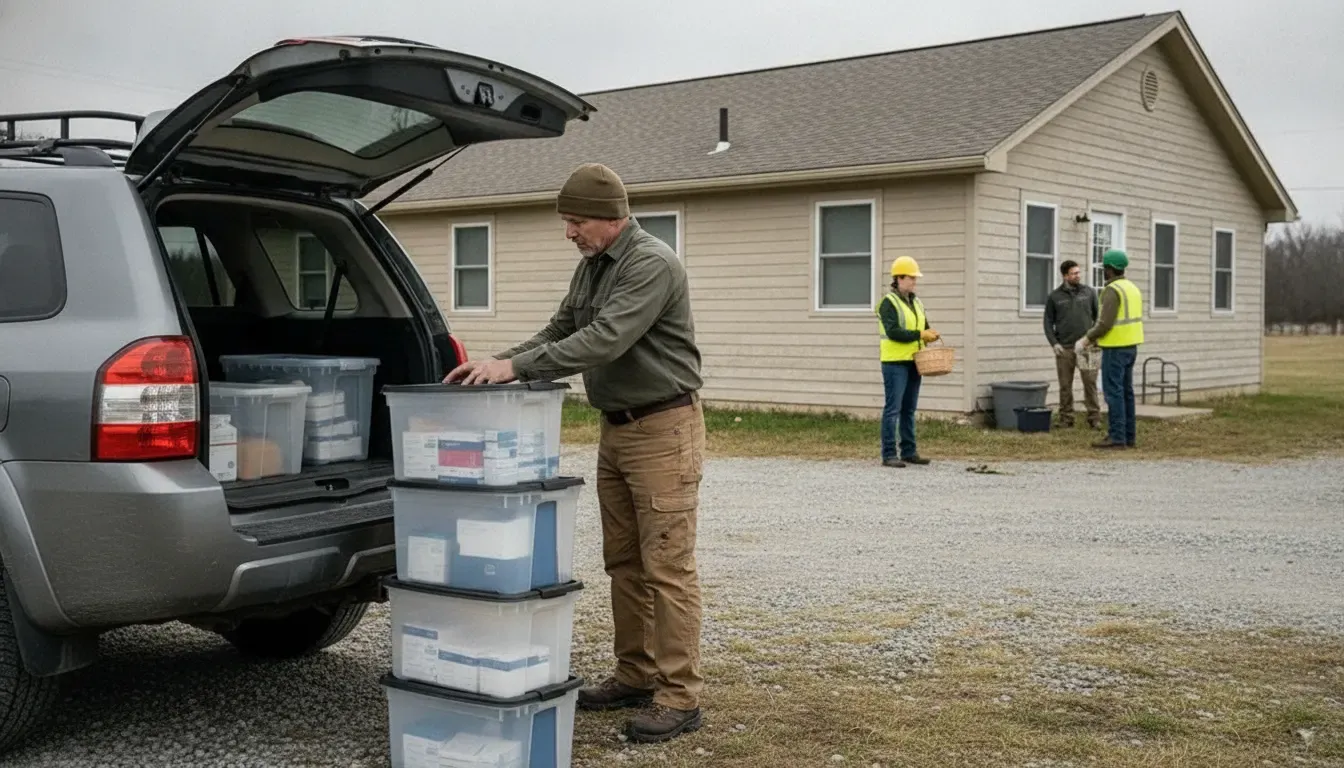
Transportation planning should identify more than a destination. Record road conditions, bridge or ferry limits, fuel availability, vehicle capacity, mobility needs, weather exposure, and the return trip. If travel is unsafe, the team needs an escalation path, not an informal promise that someone will “figure it out.”
When a partner cannot fulfill a request, close the loop visibly. Mark the request as accepted, delayed, redirected, or declined, then identify the next owner. Unclosed requests are one of the easiest ways for a rural recovery plan to overestimate available support.
What should a rural clinic include in a disaster supply request?
During recovery, shortages compete with one another. A request that says “send medical supplies” may be difficult to route, while a request that names the operational need can be acted on quickly. Use a request record with these fields:
- Priority: immediate safety, time-sensitive care, essential operations, or restoration.
- Item and quantity: Use the clearest local description and note acceptable substitutes.
- Destination: Name the clinic, alternate site, staging area, or approved handoff point.
- Need-by time: Include the consequence of delay without exaggerating urgency.
- Request owner: Identify who can answer questions and confirm receipt.
- Fulfillment status: Mark it open, accepted, in transit, received, partially filled, redirected, or closed.
Separate operational supplies from clinical decisions. A coordination system can help teams track requests and handoffs, but clinical leaders and authorized partners remain responsible for deciding what care, equipment, or medication use is appropriate.
How should recovery-status reporting show progress?
A practical recovery status report can use six sections:
- Current status: State the operating level and the time it was confirmed.
- Services available: List what the center can provide and any restrictions.
- Critical impacts: Note access, utilities, staffing, communications, supply, transportation, or referral constraints.
- Actions underway: Assign each action to an owner with a target time.
- Decisions needed: Identify questions that require an emergency manager, clinical leader, partner agency, or facility authority.
- Next update: Set the time or condition for the next review.
Keep the report factual. Distinguish confirmed information from an unverified report, a pending request, and an assumption. Include the source and timestamp for important observations. This discipline makes it easier to brief partners, support after-action learning, and change the plan without losing the reasoning behind a decision.
The ASPR TRACIE rural disaster health resources provide additional context on the distinct workforce, access, infrastructure, and resource challenges that can affect rural healthcare response. Use those resources alongside local plans, exercises, and authority-specific guidance.
How can coordination technology support recovery without replacing official systems?
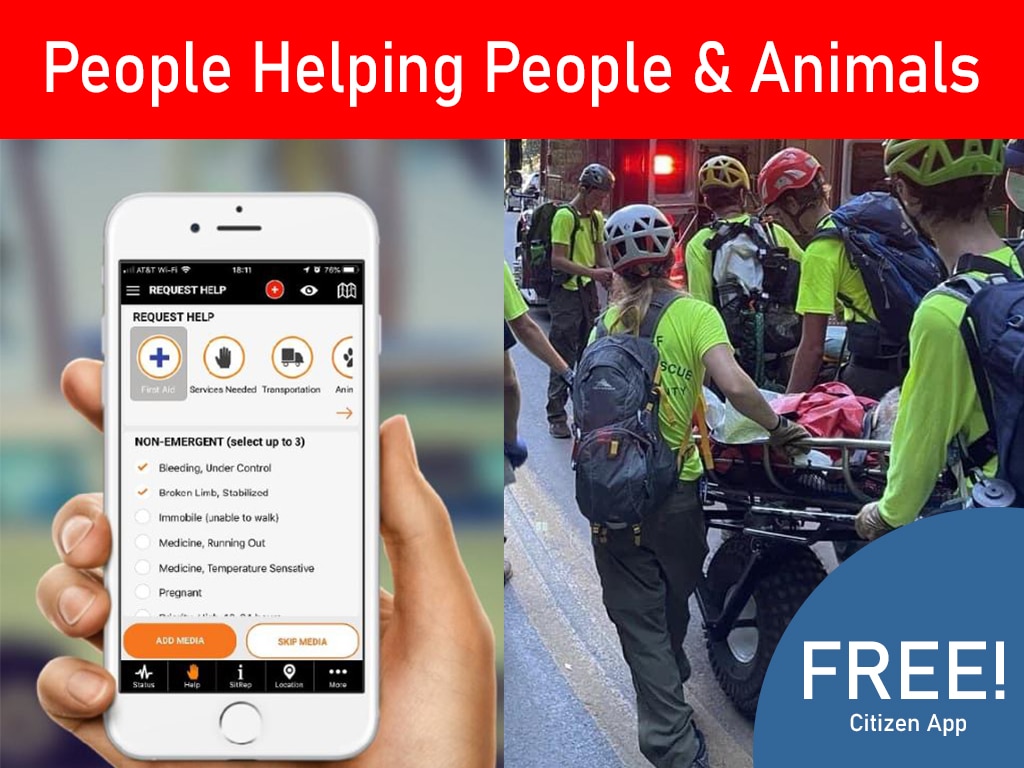
PubSafe is a community emergency coordination platform that connects citizens, NGOs, CERT teams, and public safety organizations through structured incident reporting, maps, alerts, and volunteer coordination. A rural health center could evaluate those capabilities for its partner network and workflow. PubSafe is not presented here as a healthcare compliance system or a replacement for clinical records, 911, dispatch, or incident command.
Relevant PubSafe resources include the emergency coordination platform overview, the disaster response platform, and incident reporting software. These pages describe community coordination use cases. A center should confirm its own privacy, security, clinical, and regulatory requirements before selecting or connecting any technology.
When evaluating a coordination tool, ask whether it can help the team:
- Keep reports structured enough to sort by location, urgency, and status.
- Assign an owner and next action to each request or handoff.
- Share verified updates with the right partner group.
- Maintain a record of status changes and unresolved needs.
- Continue coordination when a preferred communication channel is unavailable.
Frequently asked questions
What is disaster recovery coordination for rural health centers?
It is the process of aligning clinic operations, staff, patients, partners, transportation, supplies, communications, and recovery decisions after a disaster. It helps the center move from immediate response toward safe, staged restoration while keeping roles, needs, and next updates visible.
Why is rural health center recovery different?
Rural centers may serve dispersed populations across longer travel distances while working with smaller teams, limited alternate facilities, fewer suppliers, and fragile transportation or communications routes. Recovery plans must account for those dependencies instead of assuming urban levels of redundancy.
What should be in a rural clinic recovery status report?
Include the operating status, services available, known impacts, staffing and access constraints, open requests, assigned owners, decisions needed, partner updates, and the time of the next review. Keep confirmed facts separate from unverified reports and assumptions.
Can PubSafe replace a clinic’s clinical or emergency systems?
No. PubSafe should be evaluated as a community coordination layer that can complement official emergency communications and response workflows. It is not presented here as a healthcare compliance platform, electronic health record, 911 system, dispatch replacement, or substitute for clinical judgment.
Rural recovery becomes more manageable when every important need has a clear status, owner, next action, and review time. Start with the continuity priorities your center can verify today, then build the partner and reporting routines that will make the next disruption easier to coordinate.