When a utility outage affects a neighborhood, residents need more than an initial alert. Local governments and community organizations must determine which reports are credible and identify urgent needs. They must publish what is known and move reliable information to the people who can act on it. A documented process helps prevent conflicting updates and builds confidence during a fast-changing event.
A utility outage emergency communication plan should define how teams collect resident and partner reports and verify details. It should prioritize safety and access needs, approve public updates, track restoration information, and hand off situation reports to response partners. It should also assign ownership for each step and explain what remains unconfirmed.
This is the practical bridge between local government emergency communication and coordinated field response. Start by defining the information lifecycle, roles, and approval points before choosing channels or message templates.
What belongs in a utility outage emergency communication plan?
A utility outage emergency communication plan is more than a list of phone numbers or a collection of alert templates. It is a repeatable operating process for collecting, verifying, prioritizing, updating, and routing information as conditions change. Energy disruptions can affect residents, public services, businesses, and other critical infrastructure at the same time. The National Governors Association guidance describes effective energy-emergency communication as a documented, practiced, and coordinated process.
Define ownership before the outage
The plan should identify who gathers incoming reports, who verifies them, who approves public messages, and who owns each response tactic. It should also name authorized spokespeople. Define how information moves between emergency management, utility operators, public information staff, public safety agencies, community organizations, and volunteers.
Assigning ownership prevents two common failures. Important information can sit unanswered when everyone assumes someone else is handling it. Several organizations can also publish conflicting versions of the same event. Consistent messaging matters when restoration estimates, safety instructions, or service-area boundaries are changing. A shared plan should distinguish public updates from controlled operational information. Define what can be shared, with whom, and at what level of detail.
Use a clear information lifecycle
Every report or update should move through a defined lifecycle:
- Collect: Receive reports from residents, field teams, utilities, public safety partners, and trusted community organizations.
- Verify: Check the source, timestamp, location, context, and corroborating information. A submitted report is not automatically verified.
- Prioritize: Identify threats to life safety, critical facilities, vulnerable residents, access routes, and essential services.
- Update: Publish accurate information as it becomes available. If details are incomplete, state what is known. Acknowledge uncertainty and commit to the next update rather than speculating.
- Route: Send each item to the team, agency, utility contact, spokesperson, or community partner responsible for action or public communication.
Messages should explain technical events in plain language that residents can understand and use. The plan should account for accessibility, language needs, and the channels different audiences rely on. Templates can speed approval, but they must remain customizable to the outage location, impact, and status.
How should agencies collect and verify outage information?
During an outage, agencies need more than a stream of incoming messages. They need a consistent way to turn resident and field observations into information that can be assessed, prioritized, and routed to the right team. Residents and volunteers may report conditions, share ground-level information, view public safety updates, and communicate their status. That makes two-way reporting useful, but a submitted report is not automatically a verified report.
A practical workflow should preserve the original context while making the next action clear. Use the following sequence for each report:
- Capture a structured report. Ask for the location, time observed, outage or hazard category, apparent severity, affected people or facilities, immediate needs, and any supporting photo or video. A structured damage assessment form can organize detection, location, category, severity, media, context, routing, and resolution status. Keep the questions simple enough for residents, volunteers, and field personnel to use consistently.
- Record the timestamp and source context. Note when the condition was observed, when it was submitted, and who or what supplied the information. A resident describing a downed line from a specific address is different from a secondhand social post or an older field observation. Preserve those distinctions so an operator can judge freshness and reliability.
- Corroborate before treating the report as verified. Compare the observation with utility information, another independent report, a field check, or other available operational data. A single report may still deserve urgent attention, especially when it indicates an immediate safety concern. But it should remain clearly labeled as unconfirmed until a responsible reviewer checks it.
- Assign a status and priority. Use plain labels such as new, under review, corroborated, assigned, resolved, or unable to verify. Prioritize reports involving hospitals, shelters, assisted-living facilities, blocked access routes, medical needs, dangerous infrastructure, or residents who cannot safely self-evacuate. Routing should reflect both severity and the team equipped to respond.
- Close the loop. Record who received the report, what action was taken, and when the condition was resolved or transferred. If the issue cannot be confirmed, say so rather than silently closing it. Residents and volunteers should be able to see appropriate updates and communicate status, while sensitive operational or location details remain restricted to authorized users.
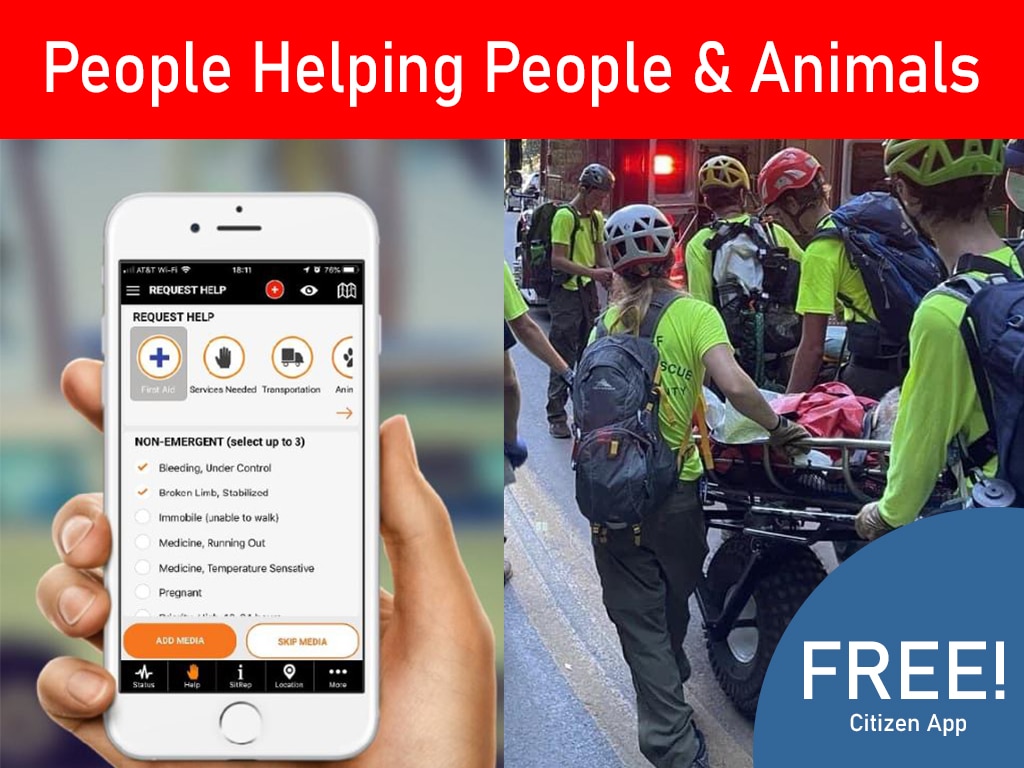
A platform such as PubSafe can support this lifecycle by connecting resident reports and field information with organizational workflows. Its documented capabilities include crowdsourced information, citizen status, structured incident reporting, routing, and status tracking. Agencies should still assign human ownership for review and approval. The system supports the process; it does not replace verification judgment.
How do local governments and community groups coordinate updates?
Coordination works best when every partner knows what it owns, which information it can share, and where a question should go next. A local government emergency manager may set priorities and approve public messaging. A utility can provide service status and restoration details. NGOs, CERTs, and neighborhood groups can report conditions, identify residents who need help, and support distribution. PubSafe is designed to connect citizens, public safety organizations, NGOs, CERT teams, and government agencies in a shared coordination environment.
That shared environment should support different communication levels rather than treating every message as public. A public update might explain the affected area, safety guidance, available resources, and when the next update is expected. Operational details, such as responder locations, vulnerable-person information, access constraints, or an unconfirmed report, should remain limited to the teams that need them. A situation report system can help teams package verified information for decision-makers without publishing the entire operational record.
Use one workflow, with channels matched to the audience
Partners can use direct chat for a specific handoff, team messaging for coordination, mass broadcasts for approved public notices, and structured situation reports for leadership. Geofenced priority alerts may help target a defined area. Messages that synchronize across mobile and web interfaces can keep field personnel and command users aligned. But the organization still needs an owner who decides what is verified and ready to publish. PubSafe currently requires internet connectivity, so it should complement, not replace, established radio, 911, CAD, and incident-command procedures.
Pre-approved templates make updates faster and more consistent. Templates should be customizable for the incident, distributed through multiple channels such as email. Text alerts, social media, and websites, and written for accessibility across disabilities and language barriers. The government emergency communication system should be part of a broader communications plan, not a single-channel solution.
Protect privacy while keeping information useful
Cross-organization membership can simplify handoffs when volunteers or responders serve more than one group, but access should follow the purpose of the work. Location sharing should be deliberately configured as hidden, team-only, organization-only, or public. Do not expose a resident’s exact location, medical details, or contact information merely because it could help someone act faster. Confirm who may see each report before forwarding it.
Finally, acknowledge questions even when investigation is still underway. Publish accurate information as it becomes available, state what remains unknown, and commit to the next update instead of speculating. This preserves trust while giving utilities, agencies, and community groups a common operating picture.
How should communication change as restoration progresses?
Communication should become more specific as the situation becomes clearer, while keeping the same discipline around verification and ownership. The first message is an acknowledgment: explain what is known, identify the affected area or service. State any immediate safety direction, and tell residents when they can expect the next update. If the cause, scope, or restoration window is still being investigated, say so plainly. Do not fill an information gap with a guess.
As field reports and utility information are reviewed, move from acknowledgment to verified updates. Each update should distinguish confirmed facts from open questions, identify the source or responsible agency when appropriate, and explain what has changed since the previous message. The Questline utility crisis communication guidance recommends sharing accurate information as it becomes available rather than waiting for a fixed publishing time. That does not mean publishing every unconfirmed report. It means maintaining a dependable feedback loop between intake, review, approval, and public communication.
Restoration windows require particular care. If the utility or incident command has provided a confirmed estimate, attribute it and label it as an estimate. If no reliable window exists, communicate the current status, the next decision point, and what residents should do in the meantime. A utility outage emergency communication plan should never promise a restoration time that the responsible operator has not confirmed. When residents ask questions, respond even when the answer is only that the issue is under investigation. That acknowledgment helps surface missing information without turning speculation into an official update.
When service returns, closeout communication should do more than announce restoration. Confirm what has been restored, note any remaining limitations or safety instructions, identify recovery resources, and explain how residents can report continuing problems. Post-crisis communication should also document impact and restoration details for partners and leadership, consistent with Questline’s guidance on maintaining communication after the immediate crisis.
Finally, hold an after-action review. Compare the reports received with verified conditions, note which messages reached the intended audiences, record unanswered questions and handoff delays, and update templates, contact lists, and approval paths. The review turns a single outage into a better practiced process for the next one.
A practical outage communication workflow for community organizations
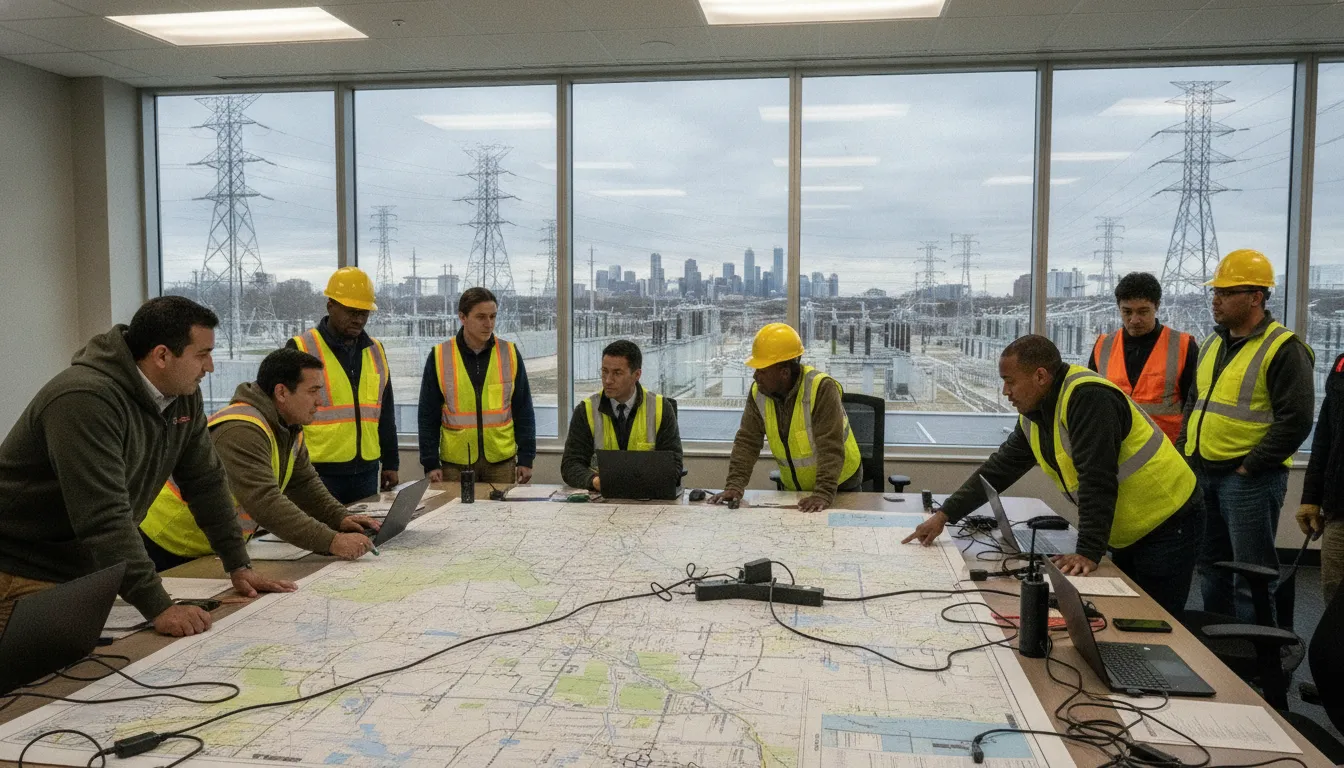
Community organizations often become the bridge between official updates and people who need practical help nearby. An NGO may coordinate supplies, a faith-based group may check on members, a CERT may deploy trained volunteers, and an apartment association may collect building-level reports. Their responsibilities differ, but they need a shared information lifecycle that avoids duplicate work and keeps local-government partners informed.
- Assign the operating roles. Name one coordinator to receive official direction, one intake lead to manage reports, one triage lead to rank needs, and team leads who can deploy volunteers. Give each partner a defined handoff point to the local emergency-management or utility liaison. CERT leaders should also track who is activated, where each member is assigned, and when the member checks back in. Rapid member activation and deployment accountability are core needs for CERT operations, especially when volunteers are working alongside official response organizations. Volunteer management software for nonprofits and CERTs can help clarify these responsibilities.
- Open a structured intake channel. Ask residents, volunteers, building managers, and partner organizations to submit the same basic information: location, affected service, immediate need, time observed, source, and any relevant context. Separate requests for welfare checks, accessible transportation, food or water distribution, charging support, and infrastructure concerns. Do not treat a submission as verified simply because it entered the system. Record timestamps and source context, then mark each item as new, under review, corroborated, assigned, or closed.
- Triage before deployment. The triage lead should group reports by location and need, identify urgent risks, and compare requests against available people and supplies. This helps community groups maintain field visibility, distribute resources, mobilize quickly, and avoid sending multiple teams to the same address. A faith-based organization might prioritize residents needing medication support, while a CERT may take a field assessment or welfare-check assignment. Keep household preparedness guidance separate from this operational queue.
- Deploy and maintain a check-in loop. Each team receives a concise assignment, safety boundary, contact point, and expected check-in time. Volunteers report what they found, what action they took, and what remains unresolved. Share only the location detail necessary for the assignment, using organization or team-level visibility when public sharing is not appropriate. If a need exceeds the group’s authority or capability, route it to the designated government, utility, medical, or public-safety partner rather than improvising a solution.
- Handoff, reconcile, and close out. At each shift change, pass along open assignments, verified conditions, resource gaps, and the next follow-up owner. A short situation report can give the coordinating agency a usable snapshot without replacing its incident-command or 911 processes. Close an item only when the responsible team records the outcome, the recipient or partner has been notified, and any unresolved need has a new owner. Retain the final notes for an after-action review and improve the workflow before the next outage.
What should an outage communication checklist include?
A useful checklist turns a utility outage emergency communication plan into an owned workflow. It should show who gathers information, who verifies it, who approves public language, which channels carry each update, and what evidence closes the loop. The National Governors Association recommends defining these responsibilities and spokespeople in advance because inconsistent messages can create confusion and distrust. Technical events should also be explained in plain language, not copied directly from an operations log.
| Phase | Owner | Action | Evidence to retain |
|---|---|---|---|
| Pre-outage readiness | Emergency manager and public information lead | Assign gathering, verification, approval, and spokesperson roles. Prepare customizable, pre-approved messages for likely scenarios and identify public, partner, and accessible channels. | Approved templates, contact roster, escalation path, channel and language list |
| Intake and verification | Operations or designated information team | Collect reports with location, time, source context, severity, and supporting media. Corroborate important details before labeling a report verified. | Timestamped report, corroborating source, verification status, reviewer |
| Priority and public updates | Incident lead and public information officer | Rank life-safety, access, shelter, and critical-service needs. Publish accurate updates as details become available, acknowledge uncertainty, and avoid speculation. | Priority rationale, approved copy, publication time, affected area, next update |
| Partner handoffs | Liaison or agency coordinator | Send the verified situation report to utilities, public safety, NGOs, CERTs, and community groups. Limit controlled operational details appropriately. | Recipient list, handoff time, current status, requested action, acknowledgment |
| Restoration | Utility liaison and communications lead | Share confirmed restoration information, explain what remains unknown, answer questions, and update affected audiences through more than one channel. | Utility confirmation, update history, question log, accessibility check |
| After-action review | Incident commander or emergency manager | Document impact, restoration details, missed audiences, duplicate work, and communication decisions. Convert findings into revised templates and training. | Final timeline, impact summary, feedback themes, corrective actions, owner and due date |
Accessibility is part of the operational checklist, not a final formatting step. Review messages for people with disabilities and language barriers, then use the channels that reach the affected community. A structured record with timestamps, source context, verification status, and handoff history helps teams distinguish confirmed information from an unverified report. Pre-approved templates support consistency, but every message still needs the current facts and appropriate approval.
Frequently Asked Questions
What belongs in a utility outage emergency communication plan?
Include clear ownership for intake, verification, approval, public updates, partner coordination, and restoration follow-up. Define which information is public, which is operational, and who serves as the spokesperson. A documented and practiced process helps agencies coordinate consistently during an energy disruption. The National Governors Association recommends defining these communication roles and processes.
How should agencies communicate during a prolonged outage?
Use multiple channels and publish updates as verified information becomes available. Combine public notices with two-way reporting so residents and responders can share conditions, priority needs, and status changes. Keep language accessible to people with disabilities and language barriers, and acknowledge when details are still being investigated.
What are the five core components of an outage communication workflow?
The five components are collection, verification, prioritization, publication, and handoff. Collect structured reports, verify them with timestamps and corroborating context, prioritize urgent needs, publish an understandable update. And route relevant information to the utility, government, nonprofit, or response team that can act.
How can a team verify outage updates before publishing them?
Record the source, location, time, category, severity, and supporting context for each report. Compare reports with utility or agency information when available, track whether a condition is new. Confirmed, resolved, or still under review, and avoid presenting unverified resident submissions as fact. This creates an auditable record without delaying an acknowledgment that an issue is being investigated.
Get started with coordinated outage communication
Utility outages require clear ownership, verified updates, and dependable handoffs between agencies and community partners. PubSafe can complement your existing CAD, 911, and incident command systems by helping teams coordinate resident reports, priority needs, and public information in one connected workflow. PubSafe requires internet connectivity, so it should fit within your broader continuity plan. Contact PubSafe to discuss communication coordination for your government agency or community organization.