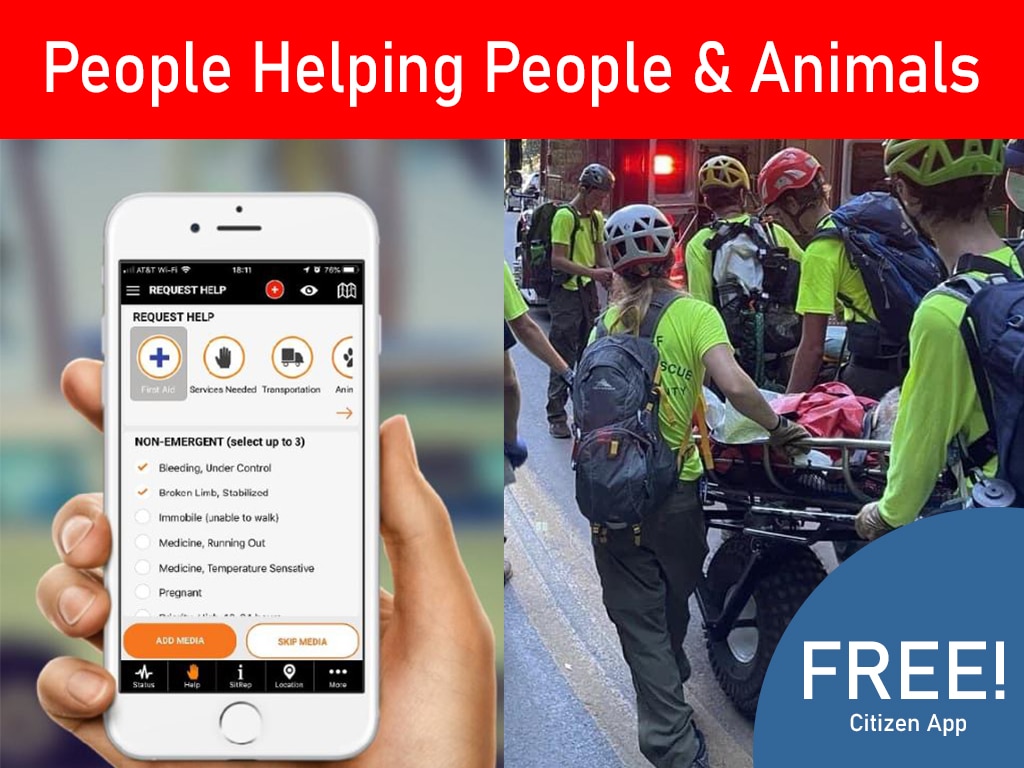

During an emergency, people do not need more group chats. They need clear instructions, accountable roles, reliable contact paths, and a way to share what is happening.
An emergency communication plan for organizations defines who activates communication, which audiences receive each message. How teams acknowledge instructions, and what backup procedures apply when internet, cellular service, or power fails.
That structure matters for NGOs, faith-based organizations, CERT teams, and public safety partners coordinating volunteers, resources, field reports, and public information. The plan should support two-way coordination, while remaining distinct from 911, CAD, dispatch, and other official emergency systems. PubSafe can help organize real-time coordination when connectivity is available, but every organization also needs practical continuity procedures for outages.
Start by testing whether the plan can move information from the right decision-maker to the right people, then bring critical responsibilities, audiences, and escalation paths into focus.
What an Emergency Communication Plan for Organizations Must Do
Answer: An emergency communication plan for organizations defines who needs information, what they need to know. Who is responsible for communicating, and how updates move during and after an incident. It connects preparedness with practical, coordinated action.
An effective plan is organization-wide and bidirectional. It supports consistent alerts, questions, status reports, decisions, and escalation, while keeping public notifications and official emergency communications in their proper lanes.
Communication needs can become immediate when an emergency occurs. Which is why the plan belongs in the organization’s preparedness program rather than in an inbox or spreadsheet used only after a crisis begins. Ready.gov recommends identifying potential audiences, understanding each audience’s information needs, and assigning the person best positioned to communicate with each one. Federal emergency communication planning guidance also emphasizes that different audiences may need different information during and after the same incident.
For a nonprofit, faith-based organization, CERT team, or public safety partner, audiences may include staff, volunteers, leaders, partner agencies, people receiving services, and members of the surrounding community. The plan should distinguish between internal coordination and public alerts. Internal communication helps authorized personnel share observations, confirm assignments, request resources, report status, and account for people. Public communication provides clear, verified instructions and updates for the people affected by the incident. These functions may use different approval paths, message formats, and spokespersons.
Make communication a two-way operating process
One-way announcements are only part of emergency communication. A usable plan must also show how recipients acknowledge a message, ask for clarification, report changing conditions, and escalate an urgent issue. That feedback gives coordinators a more current operating picture and helps them identify gaps between what was sent and what people understood. It also supports consistency when messages must be reviewed and updated as facts develop. Ready.gov notes that initial incident information may be limited and that a coordinated review and distribution process helps organizations adapt to changing information.
PubSafe can complement this coordination by helping public safety organizations, NGOs, CERT teams. And citizens communicate through tools such as team messaging, broadcasts, situation reports, incident reporting, and map-based awareness. It does not replace 911/112, emergency call centers, CAD, dispatch platforms, or official agency instructions. Because PubSafe requires internet connectivity, every plan should also identify alternate procedures for internet, cellular, or power outages.
1. Map Stakeholders, Roles, and Contact Paths Before an Incident
A workable plan begins with a clear picture of who needs information. It also identifies who provides it and how the organization reaches each person. Build the map before an incident. Make it usable when staff, volunteers, or partner agencies operate under pressure.
- List every stakeholder group. Start with internal leaders, employees, volunteers, and operations teams. Add the audiences your organization serves and the partners it may coordinate with. For an NGO, that may include shelter or relief volunteers, donors, and distribution partners. A faith-based group may need ministry leaders, facility teams, and congregation members. A CERT may need trained members, its sponsoring agency, and public safety contacts. A public safety partner may need designated liaisons and community organizations. Different audiences have different information needs, so do not put everyone into one undifferentiated contact list. Ready.gov advises organizations to identify audiences and determine who is best able to communicate with each one.
- Assign a role to each relationship. Record who can activate the communication plan, who confirms the situation, who coordinates personnel, and who approves public-facing updates. Name a primary owner and a backup for each responsibility. The backup should understand the same decision boundaries, not simply be the next person in an organizational chart. Also choose the media spokesperson in advance and prepare talking points for that person, as recommended by Ready.gov. This advance designation is part of the agency’s crisis communication guidance.
- Define the contact path. For each stakeholder, document the organization name, contact name, business telephone number, cell number, fax number when applicable, and email address. Note which channel is preferred for routine coordination and which person should receive an urgent escalation. Include partner contacts who may need to provide resources or situational information, rather than limiting the map to your own staff. Ready.gov recommends compiling contact information in advance and including as much relevant detail as possible.
- Set maintenance and access rules. Decide who owns the list, when it is reviewed, and how changes are recorded. Update it when volunteers change teams, a partner changes its liaison, or a backup assumes a new role. Keep the working list accessible during an incident, but restrict access to people who need it. Ready.gov specifically advises that emergency contact lists be updated regularly and secured. Use that principle when choosing storage and permissions.
- Connect the map to your coordination workflow. A stakeholder map should support action, not remain a static spreadsheet. The how community emergency response coordination works can help teams think through how roles, updates, and shared situational awareness fit together. Test the map with a simple scenario: identify who activates, who contacts volunteers, who briefs the public safety partner, and who records the status.
2. Choose Primary and Backup Channels for Each Audience
Different audiences need different information, timing, and acknowledgment requirements. Build the channel plan around the message purpose, not around a single favored tool.
These are general planning recommendations. Confirm that each channel is appropriate for your organization, audience, accessibility needs, and incident conditions.
| Audience | Primary channel purpose | Backup or continuity action | Acknowledgment |
|---|---|---|---|
| Staff and volunteers | Use an approved team channel for activation notices, assignments, status updates, and coordination. | Maintain current phone and email details. Define who calls team members if the primary channel is unavailable. | Require a reply, check-in, or status update by a stated deadline. |
| Incident leaders and coordinators | Use a restricted coordination channel for decisions, situation reports, resource requests, and escalation. | Keep an accessible contact roster and establish a secondary leader with authority to continue coordination. | Record decisions, owners, and next update times. |
| Partners and public safety agencies | Use the partner’s designated contact path for verified updates, requests, and coordination. | Document alternate contacts and the procedure for switching channels during an outage. | Request confirmation that the message reached the responsible contact. |
| Residents, members, or the public | Use an approved public alert or information channel for clear instructions and verified updates. | Prepare accessible web, phone, or in-person alternatives based on the audience and hazard. | Use questions, reports, or assigned contact points to identify unmet information needs. |
Channel selection should also account for accessibility. Keep messages concise, identify the affected area, state what people should do, and provide a way to request clarification.
PubSafe supports connected coordination through features such as team messaging, broadcasts, situation reports, incident reporting, and map-based awareness. Explore the disaster response coordination platform to understand where it may fit in your communication architecture.
PubSafe requires internet connectivity and does not provide offline functionality. Your plan must therefore define alternate procedures for internet, cellular, or power outages. Those procedures may include preassigned phone contacts, in-person check-ins, or coordination through an appropriate official partner. Treat them as continuity measures, not as PubSafe features.
3. Prepare Messages, Approvals, and Escalation Rules
During an incident, people need useful information before the full picture is available. Build message templates in advance so the communications lead can fill in verified details rather than draft from scratch. Ready.gov recommends pre-scripted templates with blanks that can be tailored to each incident, approved by management, and stored where authorized staff can access them remotely. The same guidance emphasizes message consistency and a coordinated review and distribution process.
Define the fields every update must contain
Keep the structure consistent across internal and public updates, while tailoring the content to each audience. A practical template should include:
- Situation: What happened, where, and when. Label the source and time of the latest verified information.
- Known facts: State what has been confirmed, including affected locations, operational impacts, and actions already underway.
- Unknowns: Say what is still being assessed. Do not fill gaps with assumptions or repeat unverified reports.
- Required action: Tell the audience exactly what to do, where to go, or what to avoid.
- Next update: Give a specific review point or explain how people will receive the next confirmed update.
- Questions and reporting: Identify the approved contact, reporting channel, or spokesperson for follow-up.
Initial information may be limited, so distinguish confirmed facts from working information in every release. This helps staff, volunteers, partners, and the public make decisions without mistaking an early report for a final account.
Set approval and escalation paths before activation
Assign one person to coordinate message review, one authorized spokesperson for media inquiries, and backups for each role. Prepare the spokesperson with approved talking points, and define who may release an internal notice, a public statement, or an update to partner agencies. Use a single review path for changes so a correction, new hazard, missing person report, or operational disruption reaches the right decision-maker quickly.
Escalation rules should state when to alert management, trained responders, public emergency services, and other designated partners. Include thresholds such as immediate threats to life, expanding impact, loss of communications, conflicting reports, or a request for resources. For a deeper role-based framework, review these CERT incident escalation procedures.
Keep public updates focused on verified protective actions and service impacts. Internal updates can include assignments, resource needs, and operational detail that the public does not need. When rumors appear, record the claim, verify it with the responsible source, and issue a concise correction through the established channel. Do not amplify an unverified rumor unnecessarily.
How Should Organizations Test and Maintain the Plan?
A communication plan is useful only when people can carry it out under pressure. Train personnel on their assigned emergency roles, then facilitate exercises that let the team practice the plan before a real incident occurs. Small organizations do not need an elaborate production. A short discussion-based exercise can test who activates the plan, who approves messages, which audiences receive updates, and how acknowledgments are recorded. A more realistic drill can test the complete sequence, including escalation to public emergency services and communication with management and employees.
Use each exercise to verify the contact paths, not just the wording of the plan. Confirm that primary and backup contact details reach the right people, that role assignments are understood, and that critical information is accessible during an incident. Ready.gov recommends compiling contact information in advance, keeping it accessible, updating lists regularly, and securing them. Those practices apply equally to staff, volunteers, partner organizations, and designated spokespeople. Contact records should include the available organization and individual names, telephone numbers, and email addresses where appropriate. See the guide to continuity of operations planning for a related approach to keeping essential functions in view.
Turn every exercise or incident into an update
After a drill or actual event, hold a short after-action review while the experience is fresh. Record what worked, where an acknowledgment or approval was delayed, which contacts could not be reached, and whether any audience received unclear or conflicting information. Assign an owner and due date for each correction. Then revise the relevant contact list, message template, role assignment, channel instruction, or fallback procedure rather than storing lessons only in meeting notes.
Review the plan whenever there is a meaningful change in hazards, personnel, facilities, partners, technology, or available response resources. Also update it after an exercise or incident exposes a gap. The appropriate cadence depends on the organization and its rate of change. So the plan should define its own review owner and trigger events instead of relying on an arbitrary calendar rule. Keep the current version accessible to authorized users, and make sure the continuity procedure covers internet, cellular, or power outages. If a platform requires internet connectivity, the plan must identify alternate channels rather than assuming the platform will operate offline.
Where PubSafe Fits in an Organization’s Communication Plan
PubSafe works as a coordination layer inside an organization’s broader emergency communication plan, connecting the people who need to share information before, during, and after an incident. It can support incident reporting, one-to-one chat, team messaging, and mass broadcasts, so a coordinator can use the appropriate channel for a specific audience and urgency.
For field operations, teams can submit structured situation reports, share status updates, and use mapping to build a clearer picture of locations and needs. Volunteer coordinators can organize deployments, resource distribution, damage assessment, and collaboration across participating organizations. Learn more about volunteer management for nonprofits and CERTs when designing those workflows.
The value is not limited to sending an alert. A broadcast can prompt an acknowledgment, while follow-up chat, team messaging, and reports support bidirectional coordination. That distinction matters for organizations that need to know who is available, what has happened, which resources are needed, and where conditions are changing.
PubSafe does not replace 911 or 112, emergency call centers, computer-aided dispatch, dispatch platforms, or official emergency notification systems. An emergency communication plan for organizations should define when staff, volunteers, or residents contact emergency services and when they use the organization’s coordination tools. PubSafe complements those systems rather than serving as a substitute for them.
Plans also need to account for connectivity. PubSafe requires internet access and does not provide offline functionality. Document alternate procedures for internet, cellular, or power outages, such as designated phone trees, radio procedures, in-person check-ins, or other channels appropriate to the organization. A utility outage communication plan can help teams think through those contingencies before an outage occurs.
Frequently Asked Questions
What should be included in an organization’s emergency communication plan?
Include the audiences you need to reach, their information needs, assigned communicators, current contact details. Primary and backup channels, message templates, approval steps, escalation procedures, and alternate methods for outages. Keep contact information secure and update it regularly.
How can an organization prepare messages before a crisis?
Create templates for common hazards and leave clear blanks for details confirmed during the incident. Prepare versions for staff, volunteers, partners, leaders, and public audiences. Approve templates in advance, then use a defined review process as facts change.
What roles should an emergency communication plan assign?
Assign authority to activate the plan, internal coordination, contact-list management, message review, accountability, and escalation. Choose a media spokesperson in advance. Prepare that person with approved talking points and name a backup.
How often should an organization test its communication plan?
Test the plan through exercises, train personnel on assigned responsibilities, and verify contact paths. Review what worked after each exercise or incident. Update the plan when hazards, roles, partners, technology, or contact information changes.
Ready to strengthen your emergency communication plan?
A clear plan helps your organization coordinate people, messages, and response responsibilities before an incident requires action. PubSafe can help you evaluate how communication, volunteer coordination, and readiness fit together while keeping appropriate backup procedures in place.
To discuss your organization’s needs, contact PubSafe.