A flooded roadway reported by a resident, a volunteer’s availability status, a shelter supply request, and a field team’s damage assessment may all arrive within minutes of one another. Disaster response operations management information and communication determines whether those updates become coordinated action or get lost across texts, spreadsheets, inboxes, and radio traffic.
For emergency managers, NGO leaders, CERT coordinators, and dispatch teams, the goal is not simply to send more messages. It is to establish a dependable operating picture: who needs help, what resources are available, which missions are active, and what information is verified. When that picture is current and shared appropriately, teams can respond faster and more effectively while protecting people, animals, and critical community services.
Why information flow drives response performance
Disasters create a difficult information environment. Conditions change quickly, reports arrive from many sources, and the people making decisions may be separated across an emergency operations center, field locations, partner agencies, shelters, and private homes. A useful report can become operationally irrelevant if it is delayed, duplicated, assigned to the wrong team, or never connected to a mission.
The most common breakdown is not a lack of commitment. It is fragmentation. One group may track volunteers in a spreadsheet, another may receive resident needs through social media, and a field supervisor may maintain work assignments in a separate messaging thread. Each tool may be helpful on its own, but no one has a reliable view of the whole operation.
Effective communication management creates a controlled path from intake to action. A hazard report should be reviewed, located, categorized, prioritized, assigned, updated, and closed with a record of what occurred. The same discipline applies to requests for welfare checks, debris removal, shelter support, animal assistance, donated goods, and volunteer deployment.
Build one operational picture from many sources
A shared operational picture is more than a map with incident pins. It connects location-based information to the people, resources, tasks, and decisions behind each incident. Command staff need to see trends and priorities. Dispatch needs enough detail to send the right resource. Field teams need clear assignments and a way to report changing conditions. Community members need trusted alerts and a simple channel for submitting observations or requests.
Start with structured intake
Information enters a response operation through many channels, including 911 or non-emergency referrals, agency partners, call centers, volunteers, field assessments, and residents. The intake process should capture consistent details: contact information when appropriate, incident type, location, urgency, accessibility needs, photos or notes, and the time of the report.
Structured forms reduce the burden on staff during busy periods. They also make it easier to identify duplicate reports and sort requests by operational priority. A resident reporting an impassable road, for example, should not need to understand incident command terminology. The reporting experience should be simple, while the operations team receives information in a format it can evaluate and route.
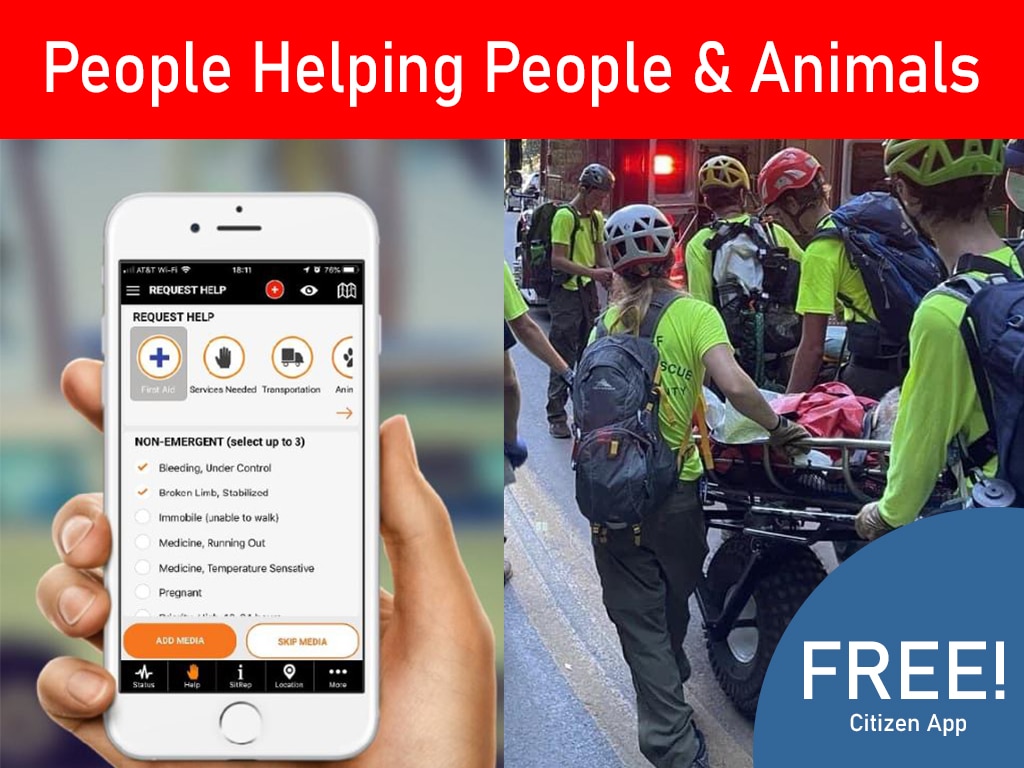
A citizen-facing reporting app can expand local awareness significantly. Residents are often the first to see blocked roads, damaged infrastructure, isolated neighbors, or emerging needs. Their reports are not a replacement for professional assessment, but they are valuable local intelligence when routed into an organized review process.
Verify before mobilizing when the mission allows
Not every report requires the same level of confirmation. A life-safety incident may demand immediate escalation. A duplicate debris report may be combined with an existing work order. A social media claim may require verification before being shared as public guidance.
The right standard depends on the incident, available resources, and consequence of delay. Teams should document source, confidence, and status rather than treating every incoming report as equally verified. This protects responders from unnecessary deployments and gives command staff a clearer basis for prioritization.
Connect reports to assignments and outcomes
Information has operational value only when it supports a decision or a task. Once a report is accepted, it should be linked to a work order, dispatch activity, resource request, or mission assignment. The assigned team needs the location, safety notes, point of contact if relevant, and a clear objective.
As work progresses, status updates should return to the same operational record. This creates accountability and prevents the familiar question: “Did anyone handle that?” It also helps leadership identify bottlenecks, such as requests awaiting approval, insufficient available volunteers, or areas receiving unusually high demand.
Disaster response operations management information and communication in practice
Consider a severe-weather event that produces flooding, power outages, and blocked roads across several neighborhoods. A coordinated operation may begin with residents submitting reports through a free community app, while dispatch personnel log partner-agency calls and field teams provide damage observations. The system places those reports on a live map and queues them for review.
Operations staff can then identify which incidents require immediate action, which should be sent to public works or utility partners, and which need volunteer support. A welfare-check request may be dispatched to an approved team. A blocked road may be routed to the responsible jurisdiction and included in a public alert. A report of a pet stranded at a residence may be directed to animal response partners with the relevant location and contact details.
The benefit is not that every organization uses identical procedures. Local authority, incident scale, mutual-aid agreements, and privacy requirements all vary. The benefit is that information moves through a documented workflow instead of relying on memory and scattered conversations.
Communication must serve each role
A message that is useful to a resident may be inadequate for a field supervisor. Good response communication respects those differences while keeping everyone aligned to the same facts.
Command-level leaders need concise information about priorities, resource capacity, mission status, and emerging risks. They should be able to identify where demand is growing and where response capacity is constrained.
Dispatch leaders need detailed, time-sensitive information. That includes available personnel, certifications, vehicle or equipment status, assignment history, safety considerations, and current mission locations. A volunteer coordinator needs visibility into who is trained, credentialed, checked in, and eligible for a particular role.
Field teams need direct instructions without unnecessary noise. They should be able to receive assignments, access critical notes, update their status, and report completion or escalation from the field. Residents need clear public instructions: where to find services, what conditions to avoid, how to request assistance, and when to call emergency services instead.
These audiences overlap, but they should not all receive every operational detail. Role-based access supports speed and security. It limits exposure of sensitive personal information while ensuring that authorized personnel can act on what they need to know.
Protect information without slowing the mission
Emergency operations frequently involve personal contact details, health-related needs, vulnerable-population information, responder locations, and internal operational notes. Sending these details through uncontrolled channels creates avoidable risk. Security is not separate from response management. It is part of maintaining public trust and protecting the people receiving assistance.
Cloud-based operations tools can give authorized users secure access from the EOC, a mobile device, or a temporary coordination site. However, technology alone does not create good information handling. Organizations also need clear permissions, retention practices, verification procedures, and training for staff and volunteers.
The practical balance is to collect only what is necessary, restrict access based on operational role, and maintain a record of actions taken. During a disaster, teams need speed. They also need confidence that a resident’s request, a volunteer’s credentials, and a sensitive field note are being handled responsibly.
Prepare the information system before gray-sky operations
The worst time to decide how reports will be categorized or who can dispatch volunteers is during an active incident. Blue-sky preparedness gives teams the structure to operate under pressure.
Before an event, organizations should maintain current member and volunteer records, certification dates, training completion, agency contacts, resource lists, public-message templates, and mission categories. They should also test reporting workflows through exercises. A tabletop discussion can reveal policy gaps, but a live workflow test often reveals practical issues such as missing map locations, unclear approval steps, or volunteers who cannot access their assignments.
PubSafe brings these functions into a single operational portal, connecting volunteers, training, help requests, dispatch activity, alerts, work orders, and live mapping. Its permanently free citizen app gives communities a direct way to report conditions and assistance needs while keeping response coordination in the hands of authorized organizations.
Preparedness also means deciding what happens after the initial response. Recovery requests can continue for weeks or months, especially after widespread storms, wildfires, or tornadoes. A documented system helps teams track unresolved needs, communicate changing services, and demonstrate what assistance was requested, assigned, and completed.
When the next incident begins, the community should not have to wonder where information goes or whether anyone will see it. Give residents a trusted way to speak, give responders a disciplined way to act, and keep every mission connected to the people it is meant to help.