A written emergency plan can be thorough and still leave teams searching for the next action when conditions change. The practical test is whether people can be notified, assigned, updated, and held accountable without rebuilding the process from scattered documents and messages.
The best choice depends on how your organization activates people, shares operational information, and reviews performance after an exercise or incident. Start by clarifying what this category should do beyond storing a plan.
What Is Emergency Response Planning Software?
Emergency response planning software turns preparedness information into coordinated action. It connects hazards, roles, communications, assignments, field reports, status updates, and documentation so local governments, nonprofits. And Community Emergency Response Teams can use a plan during an incident, while complementing existing 911, CAD, and incident command systems.
Unlike a static document, an executable workflow gives teams a way to activate responsibilities, share updates, and track what happens next. It helps organizations organize hazards, people, roles, communications, and response activities so a plan can guide decisions before and during an incident.
Tools in this category can serve different planning needs. For example, CAMEO is used to plan for and respond to chemical emergencies, and EPA and NOAA developed it to support chemical and all-hazards planning. CAMEO can access, store, and evaluate information critical to developing emergency plans. These examples show that planning software may focus on hazard data, mapping, reporting, coordination, or a combination of those functions.
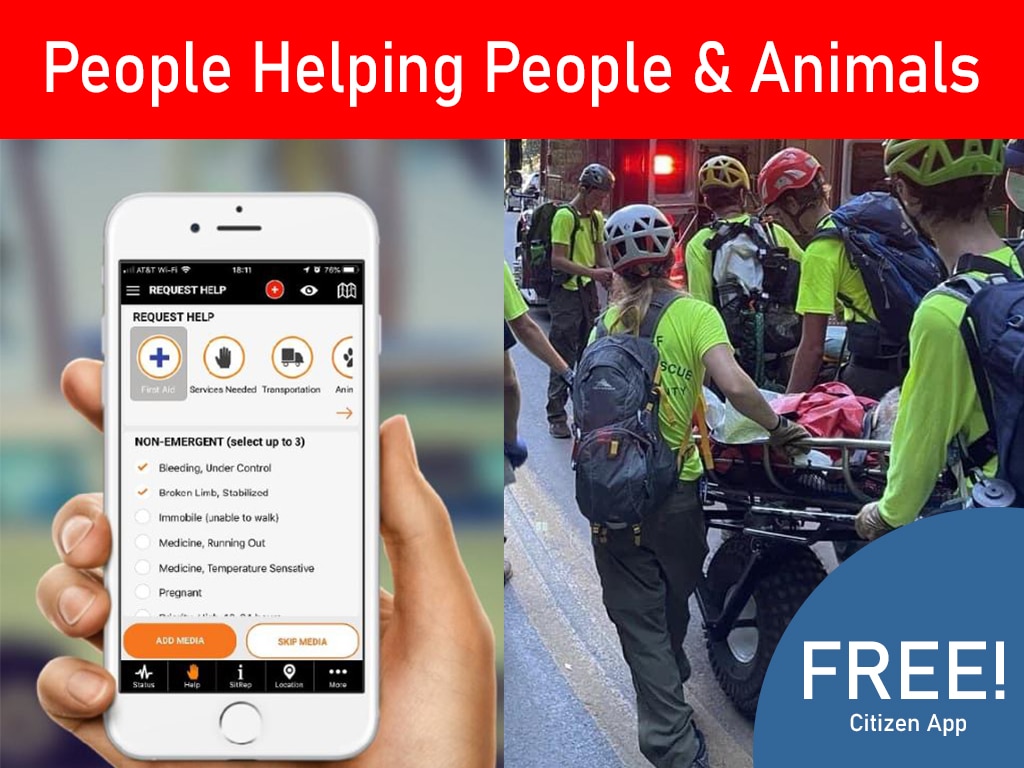
For local governments, nonprofits, and Community Emergency Response Teams, the practical question is what happens after an alert. PubSafe is positioned to bridge alerts and real-world response through incident reporting, volunteer coordination, and situational awareness. It complements CAD, 911, and incident command systems by helping participating organizations and community responders coordinate around shared information. See how PubSafe supports emergency coordination workflows.
Why Turn a Written Plan Into an Executable Workflow?
A written plan explains what an organization intends to do. An executable workflow makes that intent usable when conditions change. It shows what triggers activation, who owns the next decision, which operational period is active, what status means, and how information moves between teams.
This distinction matters because emergency response rarely follows a single straight line. A report may need classification, location context, media, routing to the right organization, and ongoing status updates. PubSafe’s incident workflow is designed around those actions, helping teams move from detection and reporting to coordinated follow-through instead of leaving the plan in a document repository.
Make ownership and handoffs visible
Start by translating each major plan objective into an action with an owner and a completion state. For example, a CERT coordinator might activate a trained team, a municipal emergency manager might assign a damage-assessment task, and a partner nonprofit might confirm shelter support. The workflow should show whether each action is unassigned, in progress, waiting for information, or complete.
Operational periods add useful structure. Even when an organization does not use every formal ICS record, teams can still define the time window, objective, responsible person, and handoff for each phase. Evaluation research on digital incident systems commonly emphasizes connections among check-in, assignments, activity records, and demobilization. Treat that as a buyer question, not a promise that every platform or jurisdiction uses the same structure.
A practical mini-workflow
- Trigger: a field report identifies a blocked road and affected residents.
- Classify and route: the coordinator confirms location and priority, then sends the task to the appropriate team.
- Assign and update: a team lead accepts the assignment, posts a situation update, and records progress.
- Handoff or close: the next operational period receives the current status, or the coordinator closes the task with a documented outcome.
Which Capabilities Should You Evaluate?
The right platform should help an organization move from a written plan to coordinated action without forcing every team into the same operating model. Evaluate the workflow, not just the feature list. The EPA’s CAMEO suite is a useful reminder that planning applications can work independently or share information interactively, and may combine data management, GIS, modeling, and reporting tools. Learn more about CAMEO’s information-sharing approach.
| Capability | What to look for | Proof question for a vendor demo |
|---|---|---|
| Plan activation | Triggers that turn a plan into assigned, trackable actions. | Can we activate a scenario and see the resulting tasks, owners, and status? |
| Roles and permissions | Role-based access that reflects teams, partner organizations, and local governance. | Can administrators control who can view, edit, assign, or share sensitive information? |
| Communications | Targeted alerts, team messaging, acknowledgments, and updates connected to the incident record. | Can leaders distinguish an issued alert from a confirmed response? |
| Field reporting | Mobile-friendly reports with location, context, media, timestamps, and clear routing. | Can a field update reach the right coordinator without being copied manually across systems? |
| Maps and resources | Shared map context and a current view of people, teams, incidents, and available resources. | Does the operational picture change as resources check in, receive assignments, and move through an incident? |
| Integrations and records | Connections to the systems your organization already uses, plus exportable incident history. | Can the platform connect related activities instead of creating another isolated form repository? |
| Auditability and adoption | Time-stamped accountability and workflows simple enough for occasional volunteers and busy staff. | Can users complete a realistic operational period with minimal training, and can reviewers trace what happened? |
Use a realistic scenario during evaluation. Test operational periods, command structure, connected records, and handoffs rather than accepting a slide presentation. A live status view can be valuable, but only when its underlying updates are timely and understandable. For a practical example of how incident reporting, team management, and situational awareness fit together, review PubSafe’s real-time disaster response coordination.
How Should Roles, Checklists, and Assignments Work?
A useful emergency response workflow turns a plan into clear actions for specific people, teams, and time windows. Each assignment should show who owns it, what needs to happen, where it applies, when it is due, and how completion or escalation is recorded. That structure reduces ambiguity without forcing every jurisdiction or organization into the same operating model.
Build roles around objectives and operational periods
ICS-aware software can represent an organizational chart and chain of command using structures such as ICS 203 and ICS 204 data. It should also connect command intent to operational-period objectives, then turn those objectives into assignments. This does not mean the software establishes compliance for every agency. It means the workflow can reflect the command structure and documentation practices an organization has already adopted.
For example, a coordinator might assign a team to check shelters during one operational period, set a reporting deadline, and route exceptions to the appropriate supervisor. If conditions change, the assignment should be updated or reassigned while preserving the relevant status and activity history.
Make checklists accountable, not merely digital
A checklist is valuable when it guides action and creates visibility, not when it simply reproduces a paper form on a screen. Role-based checklists should distinguish required steps from optional notes, identify dependencies, and make overdue or incomplete work easy to find. Supervisors need a current view of team status, while individual responders need only the tasks and context relevant to their role.
This approach is especially important when several organizations share an incident. PubSafe supports team formation, multi-organization membership, location-sharing controls, and volunteer-hour tracking. Those capabilities can help leaders organize emergency response partners while keeping participation and accountability visible across the response network.
How Do Communications and Field Updates Stay Connected?
Emergency coordination breaks down when an alert, a field observation, and a resource request live in separate channels. A connected workflow gives leaders a clearer view of what was reported, who needs to act, what has changed, and which resources are available.
PubSafe supports individual and team messaging, mass broadcasts, structured situation reports, and priority alerts. That lets an emergency management agency communicate broadly when a situation requires immediate awareness, while still giving teams a way to share more focused operational updates. Messages and reports can support the wider incident record instead of becoming isolated conversations.
Connect updates to location and conditions
Field information is more useful when it includes context. PubSafe’s live maps can show weather layers, incidents, and resources alongside updates from the people and organizations involved. A coordinator can use that shared view to understand where activity is occurring, identify changing conditions, and direct follow-up questions to the appropriate team.
This approach reflects a broader emergency-software principle: information is most valuable when teams can share and display it interactively rather than maintaining disconnected records. The EPA describes that capability in its overview of the CAMEO software suite, although CAMEO and PubSafe serve different operational purposes. For a closer look at the coordination needs of public agencies, see local government emergency coordination.
Keep resources and field activity visible
Resource requests should not disappear after they are submitted. A practical workflow connects the request to the responsible team, relevant location, current status, and subsequent field update. In ICS-oriented environments, check-in, assignments, activity records, and demobilization are often treated as parts of one resource lifecycle. Organizations should confirm how any platform fits their own policies and command structure rather than assuming one workflow applies everywhere.
Important limitation: PubSafe currently requires internet connectivity. It should not be presented as an offline communications system. Teams should account for that dependency in continuity planning and determine how PubSafe fits alongside radio, cellular, satellite, or other communications tools used by their organization.
How Do Exercises and After-Action Reviews Improve Readiness?
A written plan becomes useful when people can practice it under realistic conditions. Exercises and drills reveal whether alerts reach the right teams, assignments are understood, field updates are recorded, and leaders can see what is happening. DHS reports that SHERPA has supported more than 20 federal, state, and regional preparedness and operational planning efforts, including exercises. This shows how structured modeling and practice can support planning work. Read the DHS SHERPA fact sheet for context.
Each exercise should produce more than attendance. Track who was activated, which roles were filled, when assignments changed, what information was reported, and where handoffs slowed down. An activity record tied to a resource and operational period can create a clearer account of what occurred. In an ICS-oriented workflow, the ICS 214 activity log is designed to build over the course of an operational period, rather than being reconstructed from memory afterward. That evidence can support internal review and documentation, but it does not guarantee reimbursement or universal compliance.
The after-action review is where practice becomes improvement. Separate plan defects from training gaps, unclear authority, communication failures, and technology limitations. Assign an owner and due date to each corrective action, then revise the workflow and test it again. A local government may focus on department coordination and public accountability. A nonprofit may prioritize volunteer availability and resource handoffs. A Community Emergency Response Team (CERT) may need clear records for member activation, training coordination, integration with official response, and deployment documentation.
For field exercises, a documented damage assessment workflow can help teams practice collecting consistent reports and routing them for follow-up.
How Do You Choose for Government, Nonprofits, or CERTs?
The right emergency response planning software depends on who governs the response, who does the work, and how partners share responsibility. A local government may need clear permissions, department-level accountability, and alignment with its emergency operations center. A nonprofit may prioritize quick volunteer onboarding, simple communication, and disciplined use of limited staff time. A Community Emergency Response Team (CERT) may need member activation, training coordination, deployment records, and a clear relationship with official responders.
Start with governance. Ask whether the platform can separate administrators, coordinators, team leads, volunteers, and outside partner organizations without making routine participation difficult. Confirm how permissions work for locations, incident details, member data, and situation reports. For government buyers, document how the system fits alongside CAD, 911, and incident command processes rather than treating it as a replacement. An emergency operations center software review can help frame those requirements.
Then test the operating model. Nonprofits should walk through volunteer registration, assignment, hour tracking, handoffs, and demobilization with the people who will actually coordinate an event. CERT leaders should test activation, training status, team formation, location-sharing controls, and deployment documentation. These checks reveal whether the software supports repeatable work or merely stores forms. See how volunteer management for nonprofits and CERTs maps to those needs.
Interoperability deserves a practical test, not a promise. Bring a representative plan, roster, permission structure, and sample incident into a pilot. Ask participants to activate a team, assign a task, send an update, record a field report, and close the activity. Note where information must be re-entered, where approvals slow action, and what remains visible after the incident.
Keep budget discipline focused on total effort, not an isolated license line. Include onboarding, data preparation, training, administration, connectivity, support, and future partner participation. A short pilot with defined success measures can show whether the workflow improves accountability without requiring an organization to change every existing system at once.
Frequently Asked Questions
How do you turn an emergency plan into an executable workflow?
Start by translating each major objective into a trigger, an owner, a defined action, and a status that can be reviewed. Add the people, locations, resources, approvals, and handoffs required to complete that action. Test the workflow in an exercise, then revise it when teams identify unclear responsibilities or missing information.
What should local governments look for in emergency response planning software?
Look for role-based assignments, incident and resource tracking, situation reports, map context, alerts, audit-ready activity records, and permissions for multiple organizations. The platform should support your established command structure and connect planning tasks to field updates without requiring agencies to abandon CAD. 911, or other systems that remain authoritative for their functions.
Can nonprofits and CERT programs use the same emergency planning platform?
They can, provided the platform supports different roles, access controls, and operating practices. A nonprofit may need partner coordination and volunteer-hour tracking, while a Community Emergency Response Team may need activation, training coordination, deployment documentation, and clear integration with official response. Shared workflows can improve coordination without forcing every group into the same responsibilities.
Does emergency response planning software work without an internet connection?
That depends on the product and deployment model. Confirm connectivity requirements before purchase, especially for field operations and outages. PubSafe currently requires internet connectivity, so organizations should document backup communication methods and define how updates, assignments, and reports will be handled when users cannot connect.
Contact us to turn plans into workflows
Emergency response planning software should fit the way your government team, nonprofit, or CERT program already prepares, coordinates, and learns. A focused conversation can help you assess how executable workflows, team coordination, and field updates would support your operating model. Contact PubSafe to discuss emergency response planning workflows and identify a practical next step.