Disaster response for homeless service organizations requires more than opening a shelter or sending a general alert. Outreach teams, shelter operators, transportation partners, public agencies, and community groups need a shared way to verify changing conditions, route urgent requests, and maintain continuity of care. A practical plan should reach people who are unsheltered as well as people staying in shelters, transitional housing, vehicles, or other non-traditional arrangements.
How disaster response for homeless service organizations can plan effectively
Homeless service organizations should be part of emergency planning before an incident occurs because they understand local relationships. Access barriers, trusted messengers, shelter capacity, and the daily locations of outreach activity. Their operational knowledge helps emergency managers design response actions that are reachable, humane, and coordinated.
People experiencing homelessness may receive warnings through different channels, move frequently, lack reliable charging or connectivity, or avoid unfamiliar facilities because of past experiences. A plan that assumes every resident has a fixed address, transportation, identification, or a working phone can leave important groups out of the response.
HUD’s Disaster Recovery Homelessness Toolkit recovery guide organizes response considerations around warnings and notifications, evacuation and transportation, shelter and services, and return-to-community planning. Those categories are useful for building a shared operating plan with clear owners and handoffs.
Planning should also be trauma-informed. SAMHSA’s disaster planning guidance recommends involving homelessness service providers throughout planning, response, and recovery. It also highlights continuity of care, accessible communication, and the need to consider mental health, substance use, disability, and companion-animal needs without reducing any individual to a label.
For leaders, the main lesson is simple: treat homelessness services as a response partner, not a last-minute referral. Invite outreach workers, shelter partners, Continuums of Care, transportation providers, public health staff, and people with lived experience into planning conversations. Define how information will move between them when normal routines change.
What should a coordinated response plan cover?
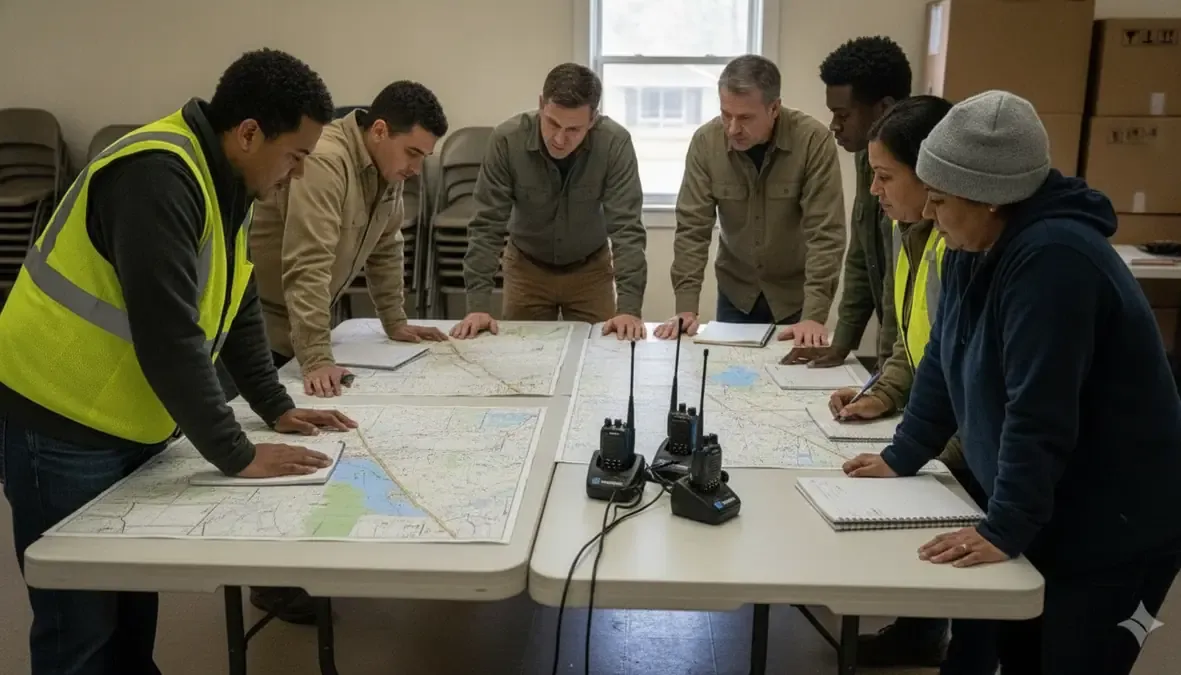
A coordinated plan should define who monitors conditions, who reaches people in the field. Where people can go, how transportation is requested, how supplies are allocated, and how updates are confirmed. Each workflow needs a backup owner, a simple status vocabulary, and a way to document unresolved needs.
Use a responsibility matrix that is specific enough to guide action during a fast-moving event. The following areas are a practical starting point:
- Planning and activation: Identify the person who activates the plan, the conditions that trigger it, and the agencies or partners who must be notified.
- Outreach and wellness checks: Divide the service area into manageable zones, assign teams, and establish check-in times. Record only the information needed to coordinate the response.
- Shelter and service capacity: Maintain current information about open facilities, hours, accessibility, rules, available beds or space, charging, food, medication support, and animal accommodations when applicable.
- Transportation: List vehicles, drivers, pickup locations, accessible transportation options, and backup routes. Decide who can authorize a request and how completion is confirmed.
- Supplies and resource requests: Create a consistent request format for water, food, hygiene items, blankets, batteries, first-aid supplies, and other approved resources. Track the request from intake through delivery.
- Public information: Prepare plain-language messages and identify trusted messengers. Every update should include what changed, where it applies, when it was verified, and what people should do next.
- Recovery and follow-up: Assign responsibility for reconnecting people with services after the immediate emergency, documenting unmet needs, and conducting an after-action review.
The National Alliance to End Homelessness recommends year-round preparedness that connects homelessness response systems with emergency management and community partners. This approach is stronger than creating a plan that is opened only when a storm, wildfire, extreme heat event, or other hazard is already underway.
How can outreach teams and shelter partners share information safely?
Safe coordination starts with data minimization. Share the location, need, urgency, owner, and status required to complete an action, while avoiding unnecessary names, medical details, photographs, or identifying information. Establish access rules, retention practices, and escalation procedures before the first request arrives.
Emergency coordination can create pressure to share everything with everyone. That is usually the wrong default. A useful operational record answers questions such as: What is needed? Where is it needed? How urgent is it? Who owns the next step? When was the information last verified? What is still unresolved?
Before an incident, leaders should agree on:
- Which information is appropriate for a broad operational channel and which must remain restricted.
- Which roles may create, view, assign, or close a request.
- How staff verify a report without exposing a person’s identity unnecessarily.
- How long records are retained and who is responsible for removing them.
- What to do when a request contains medical, behavioral health, domestic violence, immigration, or other sensitive details.
- Which communication method is used if the primary system, phone network, or power supply is unavailable.
A simple three-level information model can help teams make quick decisions:
| Information level | Examples | Coordination rule |
|---|---|---|
| Operational | Site status, supply request, route closure, team assignment | Share with the response group that needs it to act. |
| Restricted | Individual contact details, case notes, or identifying photos | Limit to authorized staff and use the approved case-management process. |
| Public | Open shelter hours, general resource locations, safety instructions | Publish only after a named person verifies the update and time. |
This model is not a substitute for an organization’s privacy, security, or records policies. It is a prompt to decide those policies in advance. Teams should also explain to volunteers what they may not record, photograph, or post in group chats and social media.
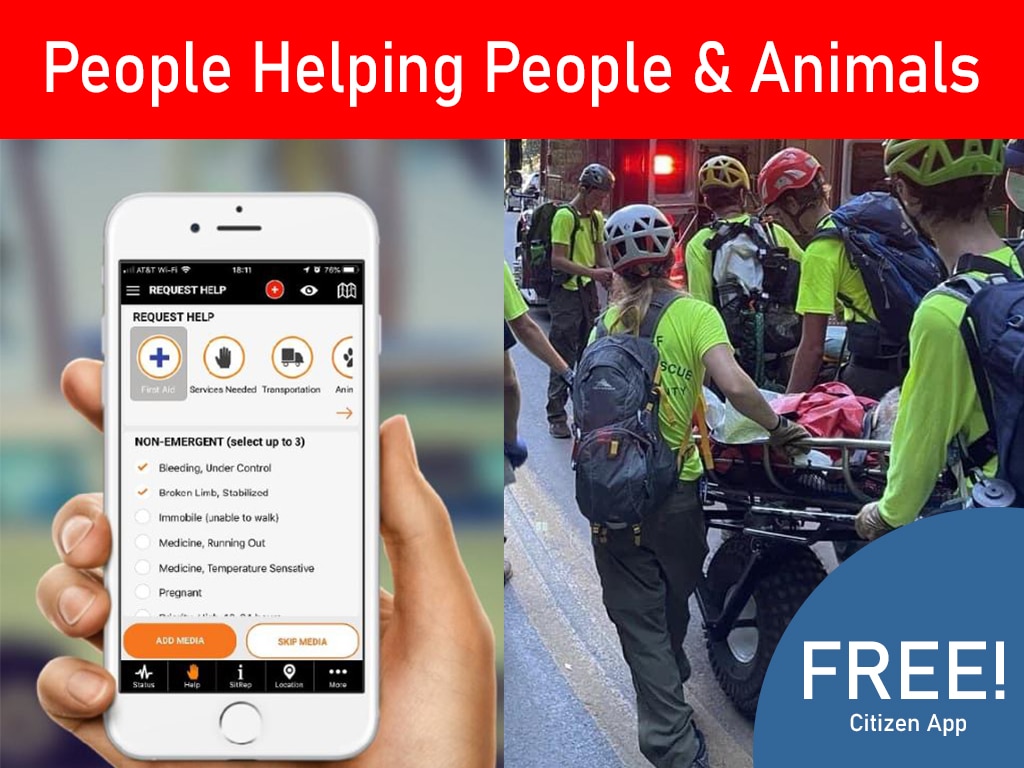
For public-facing incident information, PubSafe’s incident reporting workflow describes a way to submit an incident with a type, location, details, and optional media, then review its status. Organizations should configure any tool around their own privacy requirements and use it for coordination and reporting that the team has approved. Not as an automatic replacement for emergency services or protected case records.
Which workflows should teams practice before an emergency?
Practice the handoffs that fail when conditions change: alerting outreach teams, confirming a shelter update. Requesting transportation, assigning a wellness check, reporting a supply gap, and closing the loop. A short exercise with realistic constraints reveals more than a plan that has only been read.
Build exercises around a specific scenario, such as an extreme heat warning, flood evacuation, severe winter weather, wildfire smoke, or a power outage. The scenario does not need to predict the next disaster. It needs to test whether people can coordinate when information is incomplete and resources are limited.
- Start with the trigger. Name the alert or condition that activates the response plan. Record who confirms it and who sends the first partner notification.
- Map the affected service area. Identify outreach zones, shelters, cooling or warming locations, transportation constraints, closed roads, and other operational changes.
- Assign the first actions. Give each wellness check, transport request, supply request, or site verification a clear owner and due time.
- Test a changing update. Close one location, change a route, or reduce capacity in the exercise. See how quickly every affected partner receives and acknowledges the update.
- Test the fallback. Practice what happens when the primary phone, internet connection, power source, or staff member is unavailable. Name the alternate channel and owner.
- Close the loop. Require a completion status, an unresolved-needs note, or a documented escalation. Do not treat an assignment as complete merely because it was sent.
- Review the result. Capture the delay, duplicate request, missing handoff, or privacy concern while the exercise is fresh. Turn each finding into one owner and one change.
PubSafe’s volunteer management tools for nonprofits and CERTs describe contact management, group messaging, hours tracking, reporting, mapping, work orders, and alerts. Those are relevant coordination use cases for organizations that need to keep volunteers and partners aligned across routine operations and emergency response. Confirm the exact configuration, permissions, and retention approach with your own administrator before relying on any platform for a live workflow.
Talk with PubSafe about coordination and reporting workflows
How can teams coordinate wellness checks, transportation, and supplies?
Use one request pattern for every field need: location, request type, urgency, safety considerations, assigned owner, time of last verification, and current status. This makes it easier to prioritize work, identify gaps, and hand a request to another partner without starting over.
Wellness checks
Wellness checks should be designed around safety and consent. Assign teams in pairs or according to the organization’s field-safety policy, define check-in intervals, and avoid collecting personal details that are not necessary for the next action. If a team cannot make contact, record the attempt and escalation path rather than guessing at the person’s condition.
Transportation
Transportation coordination often breaks down at the handoff. A request should identify the pickup area, destination or service goal, accessibility needs when voluntarily provided and operationally necessary, vehicle or driver assignment, and confirmation of arrival. The plan should also address pets, belongings, medication continuity, and people who do not want or cannot use a particular destination.
FEMA’s fact sheet on assistance for people who were unhoused or living in non-traditional housing before a disaster is a useful reminder that eligibility and assistance questions may have specific federal or local requirements. Service organizations should direct people to the responsible agency for an eligibility determination rather than promising an outcome.
Supplies and urgent requests
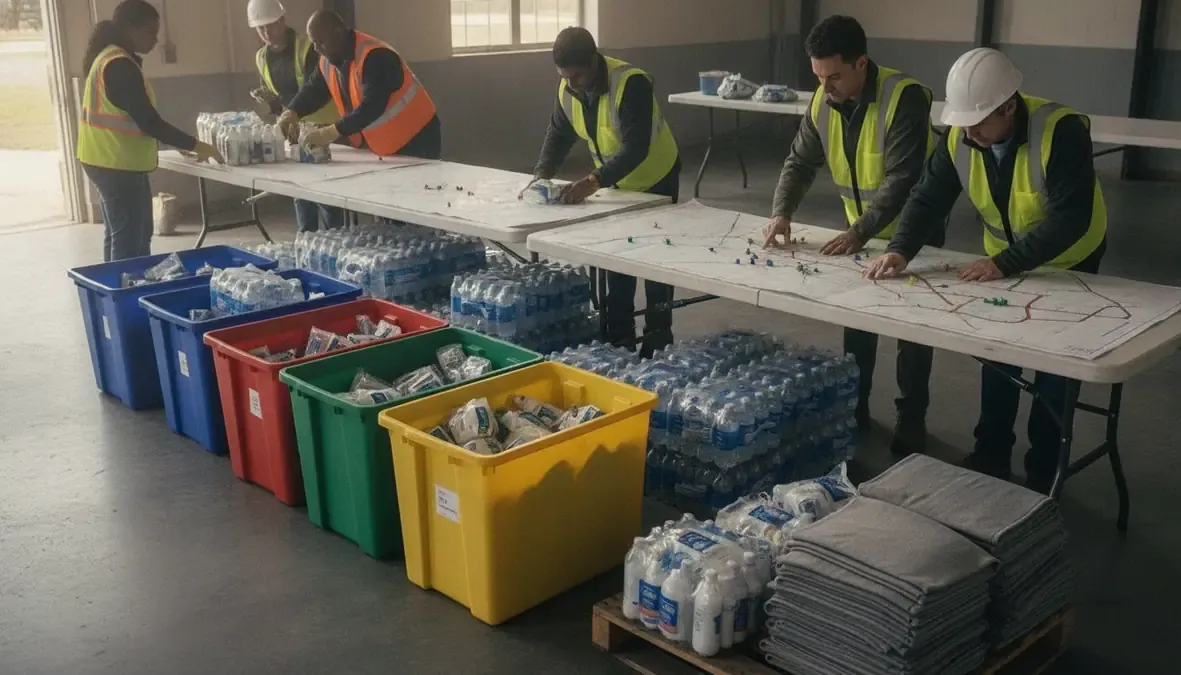
Separate a request from a donation. A request identifies a verified need, quantity or priority, delivery point, owner, and completion status. A donation is an available resource that still needs to be matched, accepted, transported, and documented. Keeping those records distinct helps prevent duplicate deliveries and makes it easier to explain what remains unresolved.
When a team uses a digital coordination layer, choose fields and statuses that reflect the real workflow. PubSafe’s public map can be reviewed as part of the platform’s mapping and public-safety context. While internal teams should apply their own access rules before publishing any location or incident detail publicly.
What should leaders measure after each response?
Measure whether people received useful information, whether requests reached the right owner, how long critical handoffs took, which needs stayed unresolved, and whether the process protected privacy. The goal is not to rank staff. It is to improve the next response with evidence from the last one.
A short after-action review can use a small set of consistent measures:
- Time from activation to the first partner notification.
- Time from a verified request to assignment.
- Percentage of assignments with a documented completion or escalation status.
- Number of duplicate, misrouted, or unverified requests.
- Number of shelter, route, or resource updates that were acknowledged by affected teams.
- Unresolved needs at the end of each operational period.
- Privacy or information-sharing concerns identified during the response.
- Staff and volunteer feedback about safety, workload, accessibility, and clarity of instructions.
Review the results with outreach teams and shelter partners, not only with executive staff. The people handling the handoffs can usually identify whether the problem was an unclear decision, a missing field, an outdated contact, a capacity change, or an unavailable channel. Assign a due date and owner to each improvement, then test the change during a routine exercise.
Organizations can also maintain a current partner directory, resource map, and contact tree outside the emergency period. The U.S. Government Accountability Office has highlighted coordination challenges in disaster shelter and housing assistance. Keeping relationships active throughout the year makes it easier to coordinate when a disaster increases demand across multiple systems.
Frequently Asked Questions
What is disaster response for homeless service organizations?
It is the coordinated process of preparing for, responding to, and recovering from an emergency while including people experiencing homelessness and the organizations that serve them. It can include outreach, alerts, wellness checks, shelter coordination, transportation, supplies, information sharing, and follow-up services.
Why should homeless service providers join emergency planning?
Homeless service providers understand local access barriers, trusted messengers, shelter operations, outreach routes, and continuity-of-care needs. Including them early helps emergency managers build plans that can reach people who may not receive standard alerts or have a fixed location.
How should teams protect sensitive information during a disaster?
Use data minimization, role-based access, approved systems, clear retention rules, and staff training. Share only the information needed for the next action, and keep medical, case-management, identifying, and other restricted details in the organization’s approved protected workflow.
What should a homeless service disaster plan include?
A practical plan should include activation criteria, partner contacts, outreach zones, warning channels, shelter and service capacity. Transportation, supply requests, accessible communication, privacy rules, fallback channels, recovery handoffs, and an after-action review process.
Can a community safety app replace emergency services?
No. A community safety app or coordination platform should complement established emergency services and organizational procedures. If someone is in immediate danger, follow local emergency instructions and contact emergency services. Use a coordination platform only for approved reporting, communication, and response workflows.
How can organizations prepare if conditions and shelter information change quickly?
Assign an owner to verify updates, record the time and affected area, notify every impacted partner, and require acknowledgment or a documented handoff. Practice a changing-location or reduced-capacity scenario before an emergency so the update process is familiar.
Sources and further guidance
- HUD Exchange: Disaster Recovery Homelessness Toolkit, Immediate Actions
- SAMHSA: Individuals Experiencing Homelessness, Disaster Planning
- National Alliance to End Homelessness: Preparing for Disasters on a Year-Round Basis
- FEMA: Assistance for Those Unhoused or Residing in Non-Traditional Housing Before the Disaster