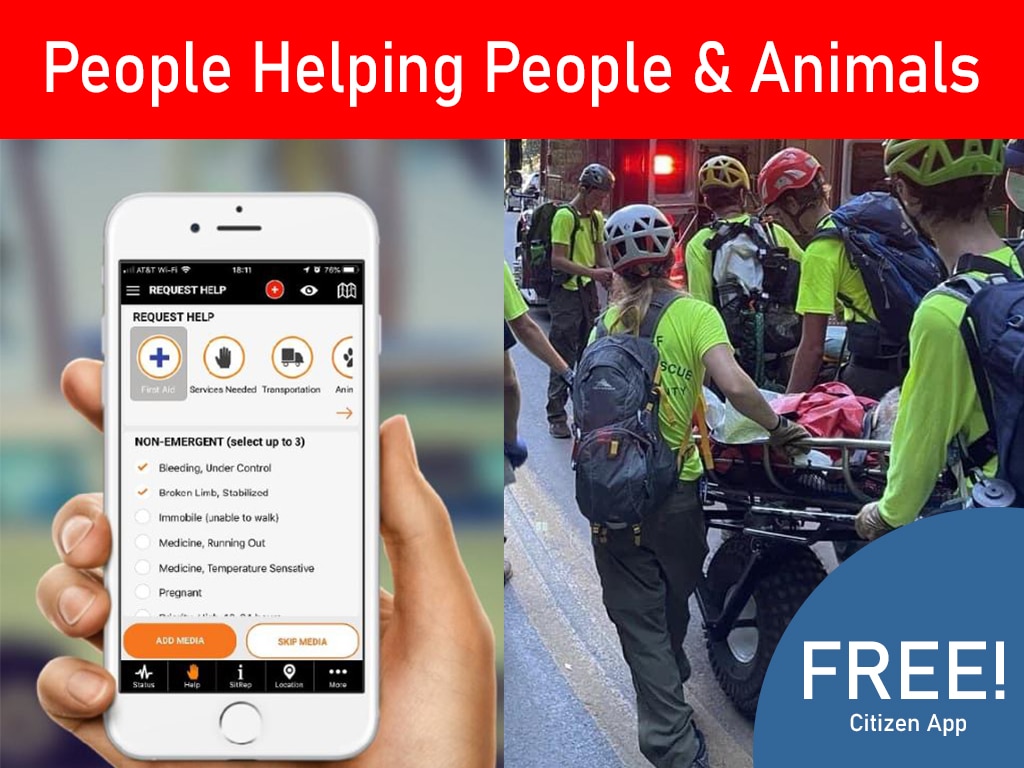
It’s a simple word, but it holds so much power. The decision to “join” is about connection, turning separate individuals into a unified force. In disaster response, this single action is everything. It’s how communities build resilience and how help gets to where it’s needed most. We’ll explore the true meaning of this word, from its history to its role in teamwork. Then, we’ll show you exactly how to take that powerful step and join a response organization on the PubSafe platform, connecting you with teams who are making a real difference in critical moments.

Understanding the Word “Join”
It’s a word we use every day, often without a second thought. But what does it really mean to “join” something? The word is more versatile than you might think, carrying different weights depending on the context. At its core, “join” is about connection—bringing separate things together to create a whole. This could be as simple as joining two pieces of wood to build a frame or as complex as different organizations coming together for a shared mission. Understanding these nuances helps us appreciate the power behind this simple, four-letter word, especially when it comes to building communities and responding to crises. It’s the foundational action that turns individual efforts into a collective, powerful force for good.
The Many Meanings of “Join” as a Verb
As a verb, “join” is an action word, and it’s where we see its true flexibility. It can describe a physical connection, a social one, or even a geographical one. Think about how you use it: you might ask a friend to join you for coffee, or you might talk about where two roads join. In each case, you’re describing a point of connection. This action of coming together is fundamental to how we build everything from friendships to infrastructure. It’s the first step in forming groups, teams, and alliances. Recognizing the different ways we use “join” helps clarify our intentions, whether we’re inviting someone into a conversation or into a collaborative effort that could save lives.
Connecting Physical Objects
The most straightforward meaning of “join” is to physically connect two or more things. According to Merriam-Webster, it means putting things together to form a single unit. This could be a carpenter joining pieces of a cabinet, a plumber joining pipes, or a seamstress joining panels of fabric. This definition highlights the idea of creating something new and stronger from separate parts. The integrity of the final product depends entirely on the strength of that connection, or “join.” It’s a tangible, visible representation of unity, where individual components become part of a larger, more functional whole. This basic concept of connection is the building block for more abstract ideas of joining.
Participating in an Activity
Beyond physical objects, “join” often means becoming part of a group or participating in an activity. You can join a book club, join the military, or simply have a friend join you for lunch. This sense of the word is about shared experience and belonging. When you join a group, you become a member, contributing to and benefiting from the collective. This is especially powerful in community-focused efforts. For instance, when volunteers join a response team during an emergency, they are not just showing up; they are becoming part of an organized effort, lending their skills and energy to a common cause and creating a more resilient community in the process.
When Two Things Meet
“Join” can also describe the point where two things meet or converge. Think of where a small stream joins a mighty river or where two properties share a boundary line. In this context, there isn’t necessarily an action of putting things together; rather, it’s a description of a natural or established meeting point. This meaning emphasizes proximity and adjacency. It’s a passive form of connection, but an important one. This concept applies to organizations as well. When different agencies work in the same disaster area, their operational zones might join, requiring clear communication and coordination to ensure their efforts are complementary and not conflicting, creating a seamless response network.
“Join” as a Noun
While we mostly use “join” as a verb, it can also be a noun. In this form, it refers to the specific place or line where two things are connected. You might talk about the join of a lid and a box or the join in a piece of furniture. As a noun, “join” isn’t about the action of connecting but the result—the seam, the junction, the connection point itself. This physical line of connection is often the most critical part of a structure, as its strength determines the durability of the whole object. This idea translates to organizations, too; the “join” between different teams or agencies is their communication and coordination protocol, and its strength is vital for success.
The Legal Context of “Join”
In the legal world, “join” takes on a very specific and formal meaning. It can refer to the act of uniting different claims or parties into a single lawsuit. For example, multiple plaintiffs with a similar grievance against a defendant might join their cases together. A person can also formally join a lawsuit, becoming a plaintiff or defendant after it has already started. This legal application underscores the idea of formal, official unity. It’s about creating a unified front in a structured, rule-based environment. This formal process of joining ensures that all related issues and parties are handled together for efficiency and consistency, much like how formal agreements help different response organizations work together effectively.
The Language and History of “Join”
The word “join” has a rich history that traces back centuries, evolving from Latin and Old French roots. Its journey through language reflects its core importance in human interaction and creation. Understanding where the word comes from, what its closest synonyms are, and how it’s used in everyday phrases gives us a deeper appreciation for its role in communication. This history is not just a linguistic curiosity; it reveals how the concept of connection has always been central to building societies, forming alliances, and working together. The language we use shapes our reality, and a word as fundamental as “join” has helped shape our collaborative world.
Word Origin
The word “join” entered the English language in the 13th century, but its roots go much deeper. It comes from the Old French word ‘joindre,’ which in turn derives from the Latin ‘jungere,’ meaning to join, unite, or yoke. The Latin root ‘jungere’ is also the source of words like ‘junction,’ ‘conjunction,’ and even ‘yoga,’ which itself means ‘union.’ This shared ancestry highlights a long-standing human focus on connection and unity. The idea of yoking things together, like oxen to a plow, perfectly captures the essence of “join”: bringing elements together to achieve a task that would be impossible alone. This ancient concept is still at the heart of modern teamwork and collaboration.
Synonyms and Their Nuances
While words like “connect,” “unite,” and “combine” are often used interchangeably with “join,” they each have subtle differences in meaning. Choosing the right word can make your communication more precise. “Join” is a general term for bringing things into contact, while its synonyms describe more specific types of connection. Understanding these nuances is key, especially when defining relationships between different groups or people. Are they simply connected by a shared location, or are they truly united in purpose? The distinction matters, as it sets the expectation for the level of collaboration and integration involved in the partnership.
Unite vs. Connect vs. Combine
According to Merriam-Webster, “join” is the most general term, simply implying things are brought into contact. “Connect” suggests a more established link, like a bridge that connects two cities. “Combine” implies a mixing or merging where the original elements might lose some of their individual identity, like combining ingredients for a cake. “Unite” is the strongest of all, suggesting that separate things have come together to form a single, cohesive whole, often losing their individual identities for a greater purpose. For example, when multiple agencies unite in a disaster response, they work as one integrated force, which is a deeper level of collaboration than simply joining a meeting.
Antonyms: The Opposite of Joining
To fully grasp the meaning of “join,” it helps to look at its opposites. Words like “separate,” “part,” “split,” and “withdraw” all describe the act of moving apart. These antonyms highlight what is lost when connections are broken: unity, strength, and shared purpose. While separating is sometimes necessary, it often leads to isolation and fragmentation. In a crisis, the difference between joining together and splitting apart can be the difference between an effective response and chaos. The antonyms of “join” remind us that connection is an active choice, one that requires effort to maintain and one that is essential for collective success and resilience.
Common Phrases and Idioms
The word “join” is a staple in many common English phrases and idioms that have become part of our daily vocabulary. These expressions often use the concept of joining to describe complex social interactions in a simple, relatable way. From “joining forces” to “joining the club,” these phrases are shortcuts that convey a sense of shared effort, experience, or circumstance. They show how deeply the idea of connection is woven into our language and our way of thinking about teamwork and community. These idioms are a testament to the universal understanding of what it means to come together.
Phrases like “Join Forces“
The phrase “join forces” is a powerful idiom that means to collaborate and work together to achieve a common goal. It evokes a military image of separate units merging to become a stronger, more formidable army. This expression is widely used in contexts far beyond the battlefield, from business mergers to community projects. When different organizations or individuals join forces, they are pooling their resources, skills, and knowledge. This synergy allows them to tackle challenges that would be insurmountable alone, which is the entire premise behind coordinated disaster response and effective team management.
Phrasal Verbs: “Join In” and “Join Up”
Phrasal verbs like “join in” and “join up” add another layer of meaning. To “join in” means to participate in an activity that is already happening. It’s an invitation to become part of the action, like joining in on a song or a game. “Join up,” on the other hand, often means enlisting in an organization, particularly a formal one like the military. It implies a more significant, long-term commitment. Both phrases are about becoming part of something larger than oneself, whether it’s a momentary activity or a lifelong career. They capture the different levels of engagement we can have when we choose to connect with others.
The Idiom “Join the Club”
“Join the club!” is a common, often sarcastic, idiom used to tell someone that they are not alone in a negative or difficult situation. According to the Cambridge Dictionary, it creates a sense of shared experience. If you complain about having a tough day at work, a colleague might say, “Join the club!” While it can sound dismissive, it’s also a statement of empathy. It creates an instant, informal group based on a common hardship. This idiom shows that joining isn’t always about positive, planned activities. Sometimes, we are joined together by circumstance, and finding solidarity in those shared struggles can be a powerful form of connection and support.
Other Platforms Named “Join”
The word “join” is so evocative of connection and collaboration that it’s no surprise several companies have adopted it as their brand name. These platforms, operating in fields from construction to human resources, leverage the word’s inherent meaning to communicate their core mission of bringing people, processes, or data together. While they share a name, each platform applies the concept of “joining” to a unique industry challenge. Looking at these examples shows the versatility of the word and highlights how the fundamental idea of connection is a universal need across different professional landscapes. It also helps clarify what makes PubSafe’s mission of joining communities for safety unique.
Join for the Construction Industry
In the construction world, Join is a software platform designed to streamline the preconstruction and design phases of a project. It helps stakeholders like owners, architects, and contractors collaborate more effectively on decisions, budgets, and plans. The platform acts as a central hub where different teams can “join” their data and workflows, reducing miscommunication and costly errors before ground is even broken. This use of “join” is about creating a unified source of truth and fostering proactive collaboration in a complex, multi-stakeholder environment, ensuring the project’s foundation is as solid as the building it will become.
Join for Recruiting and HR
Another company, JOIN, applies the concept to the world of recruiting and human resources. Their platform is a free applicant tracking system (ATS) that helps companies find and hire talent more efficiently. It allows businesses to post job openings across multiple platforms with a single click and manage all applicants in one place. Here, “join” refers to both the company joining the talent market and the candidate ultimately joining the company. The platform facilitates the connection between employers and potential employees, simplifying the process of building a team and helping people find their next career opportunity.
How to Join a PubSafe Organization
To join an organization, as well as our signup process itself, is easy. It includes several steps to ensure security and privacy for users and the organizations. PubSafe is the only platform for NGOs and businesses that enables a user to participate in multiple organizations for a single price. This includes sharing information with organizations and quickly toggling between them using our mobile app. Users are always in charge of privacy and data sharing rules.
Your Quick Guide to Adding Members
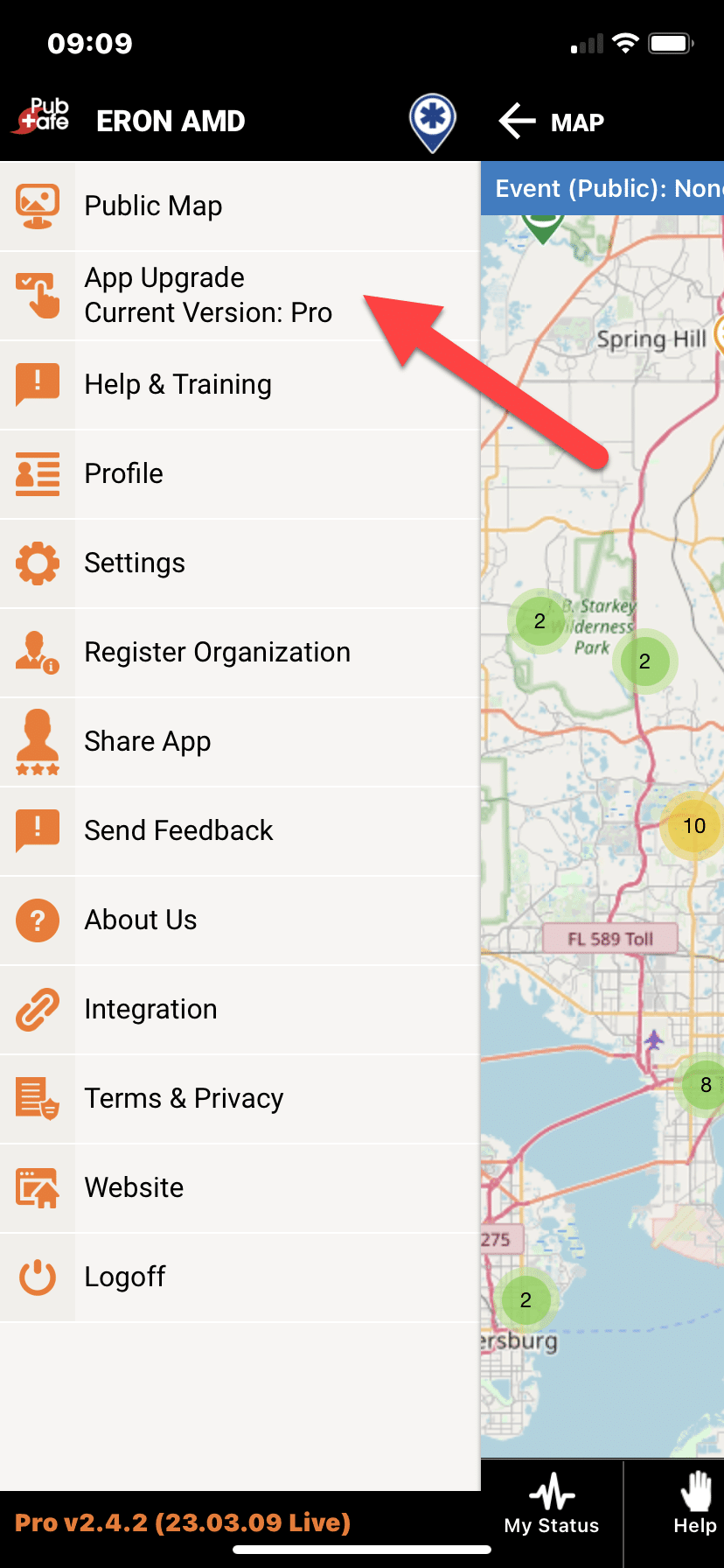
1. The free PubSafe mobile app is installed from the respective app store for Apple or Android. The app provides the option for upgrading to the Pro version to enable joining organizations or to register a new organization for portal access. The registration includes a 90-day free trial. [Use the top left settings menu in the app, App Upgrade].
View details
2. An organization must be registered and approved. The org creator is the account owner and can invite other members to join and assign them roles in the portal.
View details
3. The organization sends invitations to potential members using email, SMS or a QR code.
View details
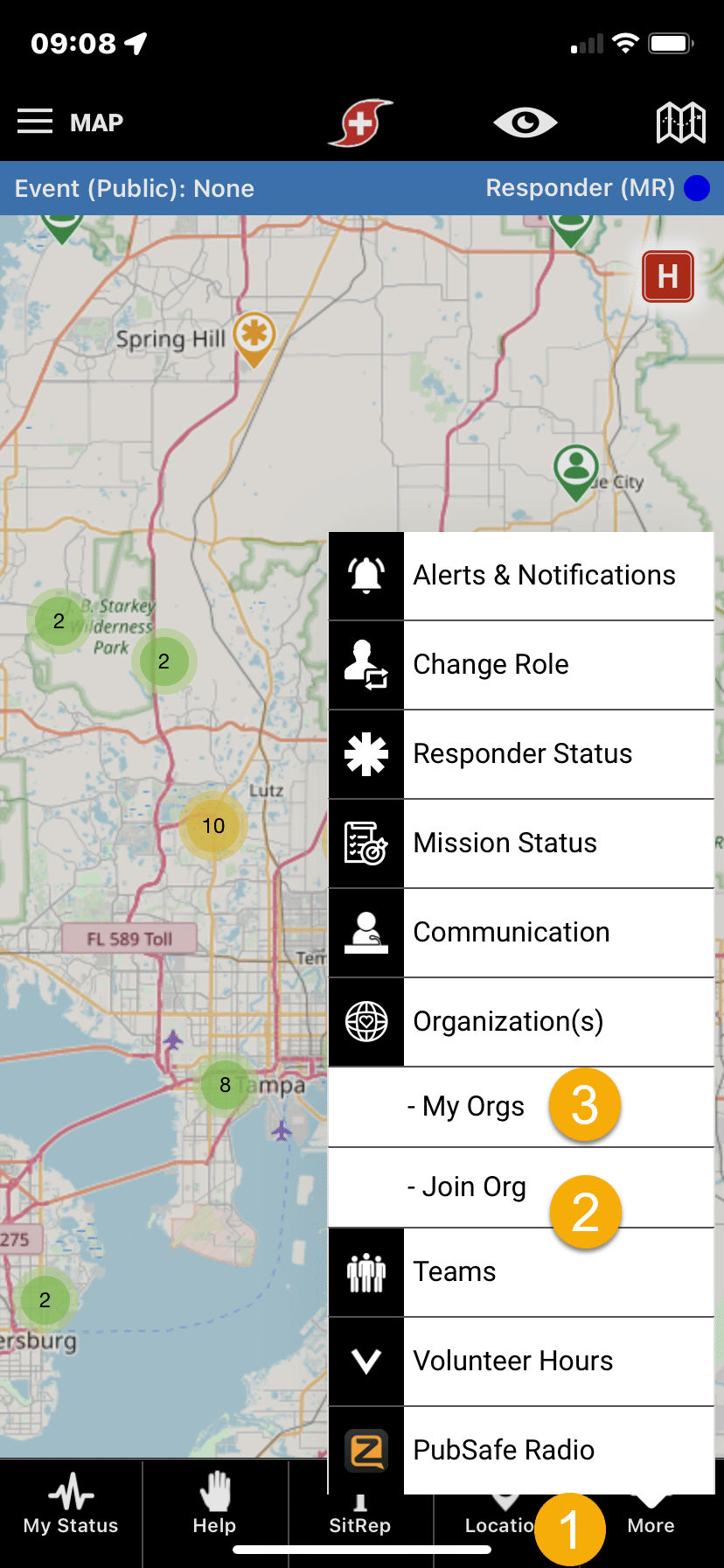
4. Users who receive the invitation must accept the invitation. [#2 in the image]
View details
5. The organization must to make final approval of users who have accepted the invitation. Once a user is approved they can use the app or log into the PubSafe portal using their mobile app credentials.
View details
6. User must then select their active organization. [#3 in the image]
View details

A Step-by-Step Guide to Joining
Step 1 – Install and Setup PubSafe Mobile App
1. The first step is to install the PubSafe mobile app. For users the joining an organization, an option is provided to upgrade to the Pro version. [Use the top left settings menu in the app, App Upgrade].
Apple / iOS
Google / Android
First, Upgrade to the Pro App
After installing the free version of PubSafe, click on the Admin menu in the top left corner (3 bars). Click on App Version. Scroll down and select Pro version.
Optional Next Step After Upgrading to Pro
Your status can toggled between Citizen and Responder role by touching MORE in the lower right corner and selected the desired role. Most organization members will choose Responder status. The first time Responder status is selected, additional information is requested to allow categorizing a responders available resources.
Note: The header bar will be blue in a Responder role or green in a Citizen role.
Your organization can now track and communicate with you in new ways from the web portal.
View User Privacy settings.
View tracking volunteer hours.
Step 2 – Registering an Org for Portal Access
2. To join an organization, the organization registration process must be completed and approved. The organization creator is the account owner and can invite other members to join and assign them roles in the portal.
Step 3 – Send Invitations to Join the Org
Organization send invitations to members using email, SMS (cell text) or a QR code. This step is only needed if an organization has not yet been registered and approved. Click here to register an organization. After the organization is approved, login using the same credentials used to log into the PubSafe mobile app. Click on the image below to view the referenced numbers.
Sending Out Your Invitations
There are four options for sending users an organization invitation to join. Select the the best method for your situation.
Note: Ensure the user has upgrade to the Pro version prior to sending if possible.
1. Copy and send the organization key. This is the least preferred method but it can be used to share in a chat group or put into an SMS message.
2. Copy a hyperlink which the user can click if the PubSafe app is already installed.
3. Email the user directly from the PubSafe portal.
Note: Every organization gets a custom link to share which is used to sign-up or onboard people. These users are automatically put into the Contact Manager menu. The contact information can be used to send invitations to join the organization.
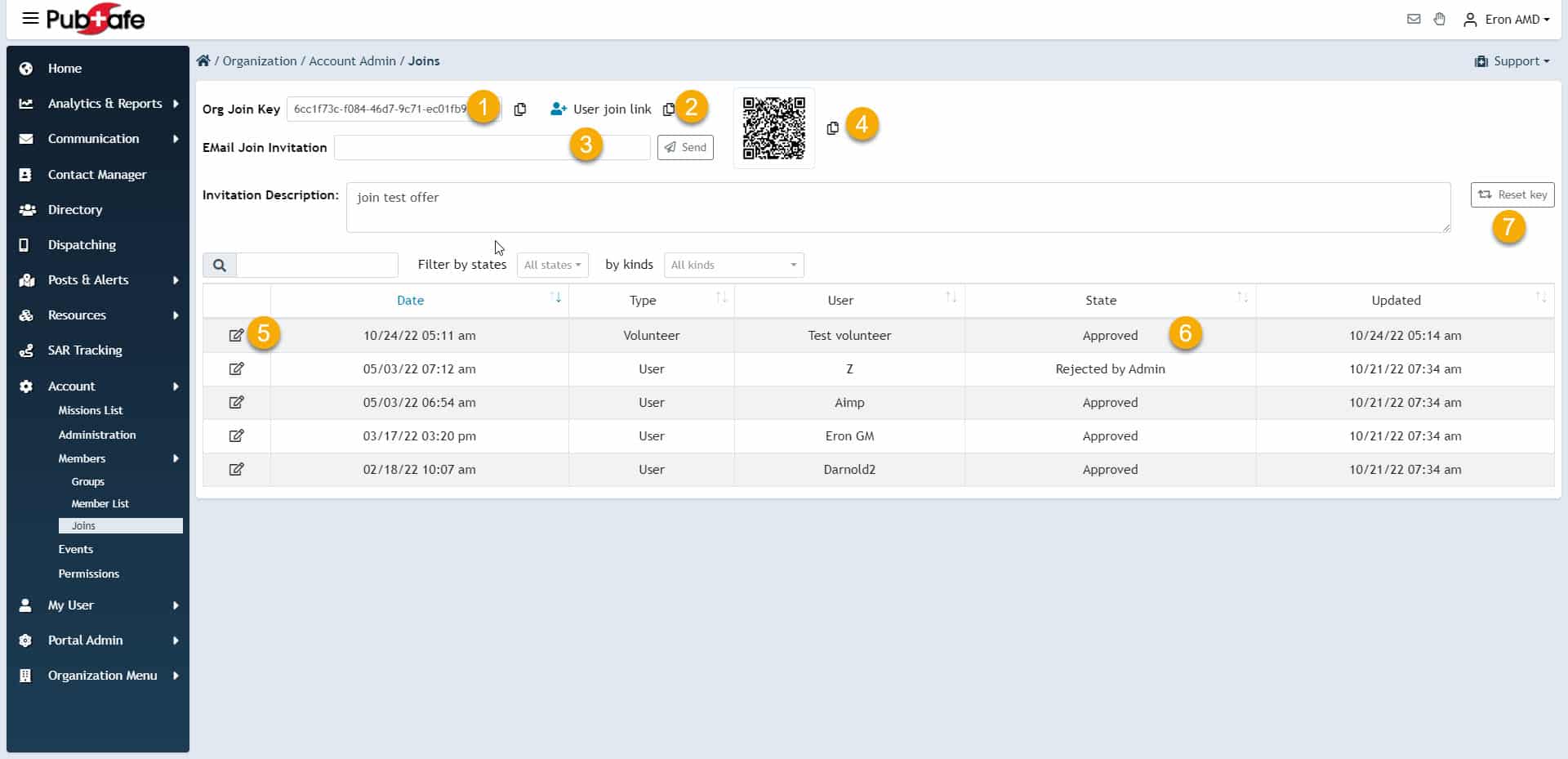
Image 1
Step 4 – Accepting an Invitation to Join an Org
Once a user receives an invitation, they must be accepted it. This changes the users status in the web portal. A portal admin must complete final approval. #5 and #6 above.
How to Accept Your Invitation
After you install the free PubSafe app and upgrade to Pro, you can join an organization several different ways. You can join from a hyperlink, copy and paste a code, or scan a QR code. Click the image below to see the steps in the PubSafe mobile app.
You will see a list of your organizations in the app as seen in #4. You can switch between several organizations which changes who can see you and who you can share with. It enables members to use PubSafe for multiple organizations without logging in and out all the time.
After you accept the invitation, the organization that sent you the invitation must complete final approval. As a member of an org, the org can see your location, dispatch missions to you if you are in the role of a Responder and in mission ready status, include you in org messaging, and track your movements for the last 96 hours. You can change your visibility options anytime by clicking on the eyeball icon at the top. User privacy settings override all other privacy.
As seen in #5, you can change your role from Citizen to Responder, and back at any time. As a Responder you can change your Mission Status at any time to communicate with dispatch your availability to run missions to assistance requests.
Join the Org and Set Your Responder Role
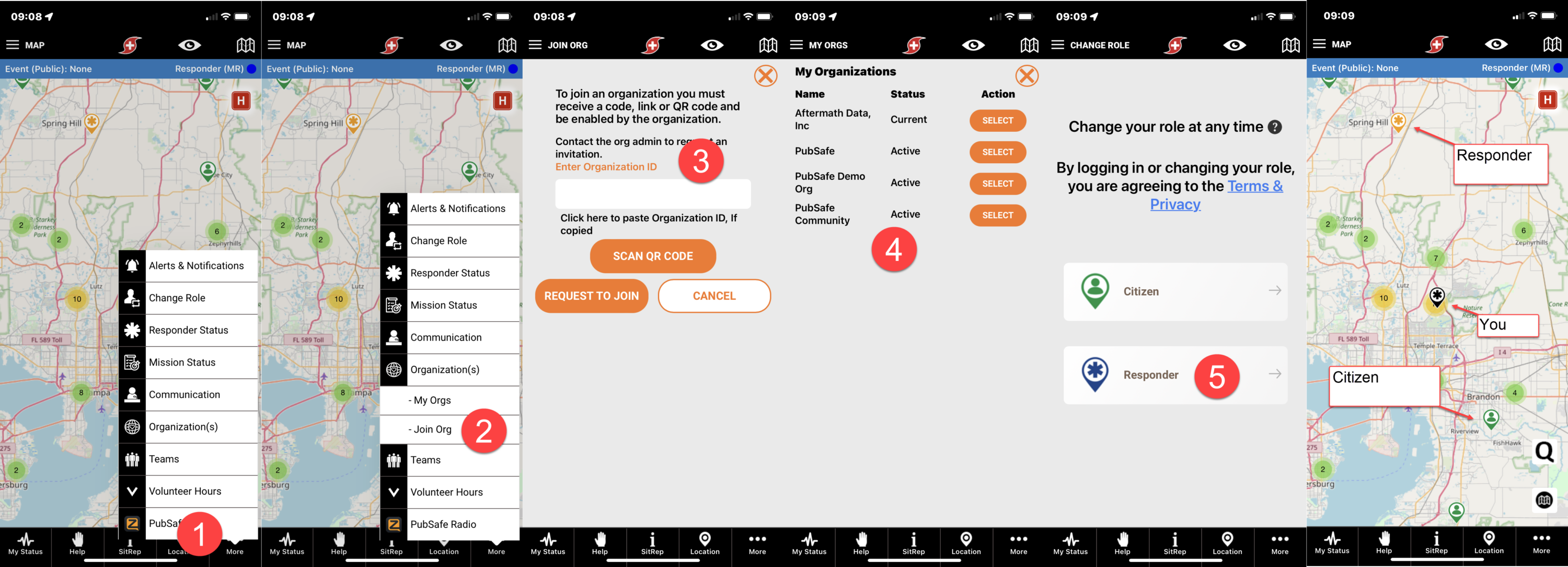
Image 2
Using Your Org Code to Join
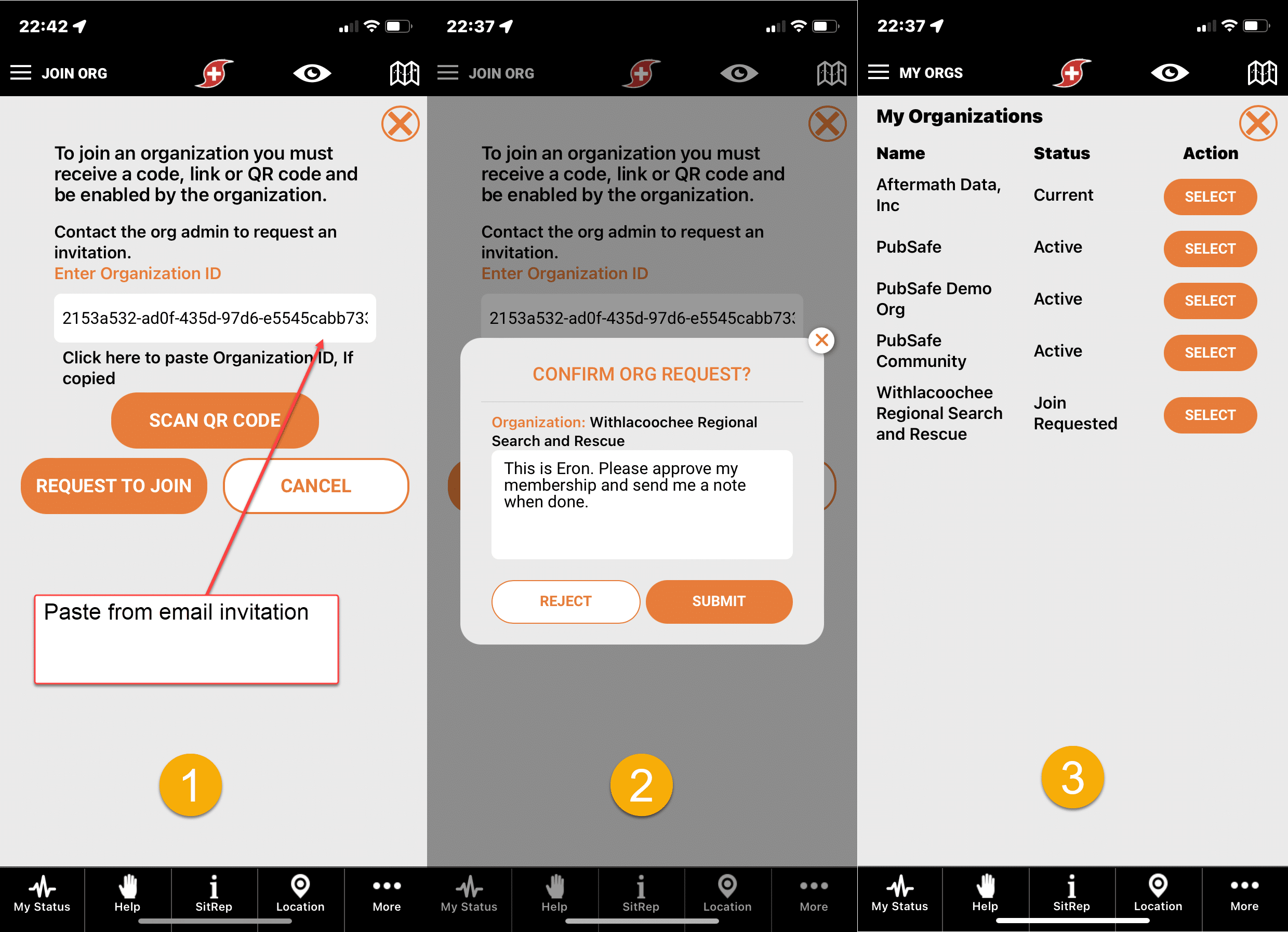
Image 2-a
Step 5 – Accepting an Invitation to Join an Org
Once a PubSafe mobile Pro app user receives an invitation, it is accepted by the user. This changes the user’s status displayed in the web portal. A organization administrator then completes final approval step as outlined previously in #5 and #6 in Image 1 above.
Confirming New Members in the Portal
After you install the free PubSafe app and upgrade to Pro, you can join an organization several different ways. You can join from a hyperlink, copy and paste a code, or scan a QR code. Click the image below to see the steps in the PubSafe mobile app.
You will see a list of your organizations in the app as seen in #4. You can switch between several organizations which changes who can see you and who you can share with. It enables members to use PubSafe for multiple organizations without logging in and out all the time.
After you accept the invitation, the organization that sent you the invitation must complete final approval. As a member of an org, the org can see your location, dispatch missions to you if you are in the role of a Responder and in mission ready status, include you in org messaging, and track your movements for the last 96 hours. You can change your visibility options anytime by clicking on the eyeball icon at the top. User privacy settings override all other privacy.
As seen in #5, you can change your role from Citizen to Responder, and back at any time. As a Responder you can change your Mission Status at any time to communicate with dispatch your availability to run missions to assistance requests.
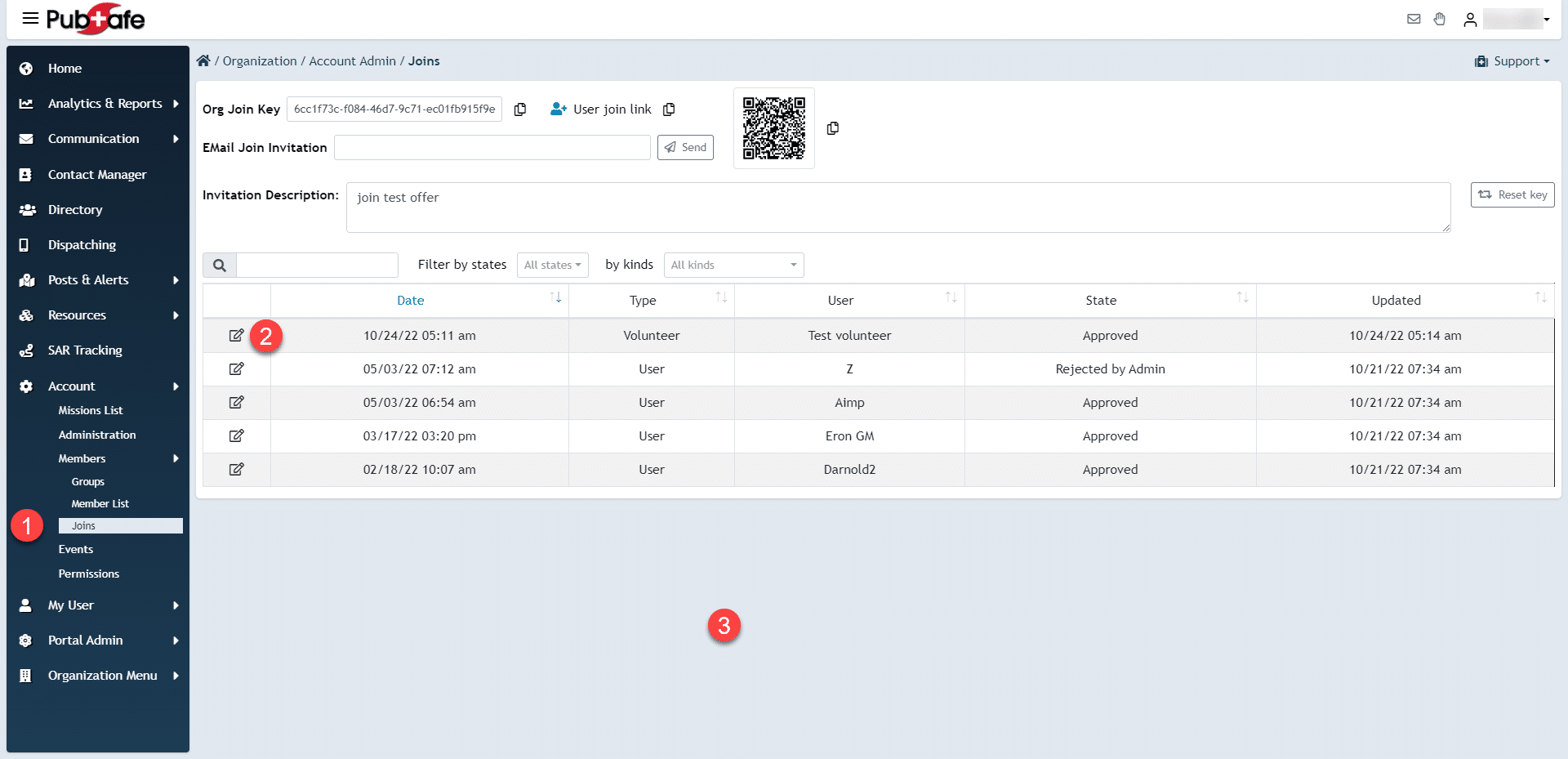
Image 3
Setting Up Your New Members
Assign a role to new members and select the other appropriate options. It is a good idea to have several Admin roles. Each role provides access to different areas and features of the portal.
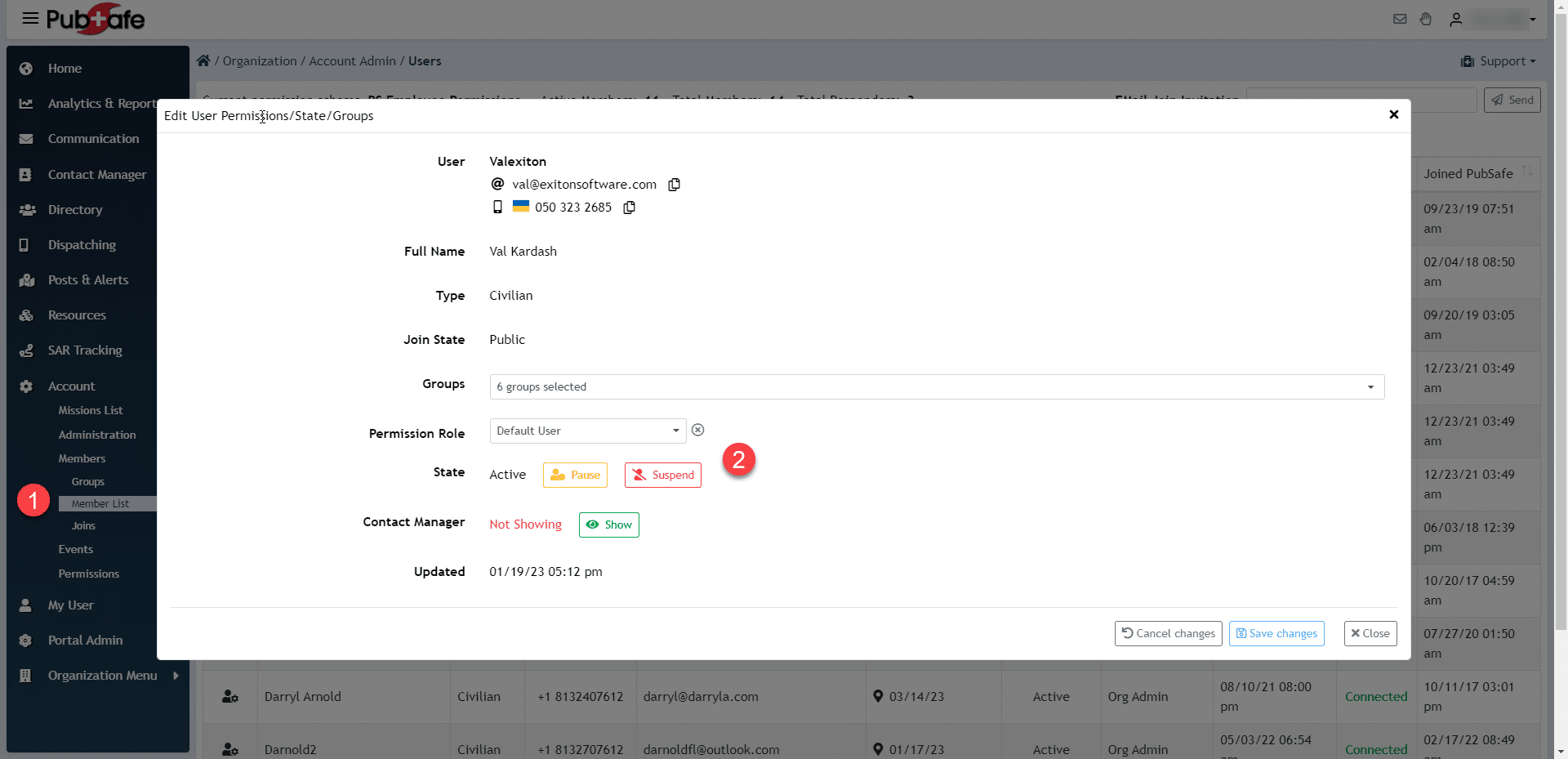
Image 4
Step 6 – Selecting and Changing an Organization
Members of organizations can choose to affiliate with an organization by making a selection in the My Organization list. Options are provided for a user to disconnect from an organization or change between organizations.
Getting Started in Your Responder Role
Users in the Responder role with Mission Ready status (image 6), can be contacted to provide assistance to others. A PubSafe Plus user can be assigned to handle a help request but are not part of the member feature set. PubSafe Pro users that are members of an organization can also be dispatched. These users have more features available. Go to our knowledge base to read about the various permission levels and permissions.
You can review your selections each time you login on the Summary window (image 7).
Choose Your Organization
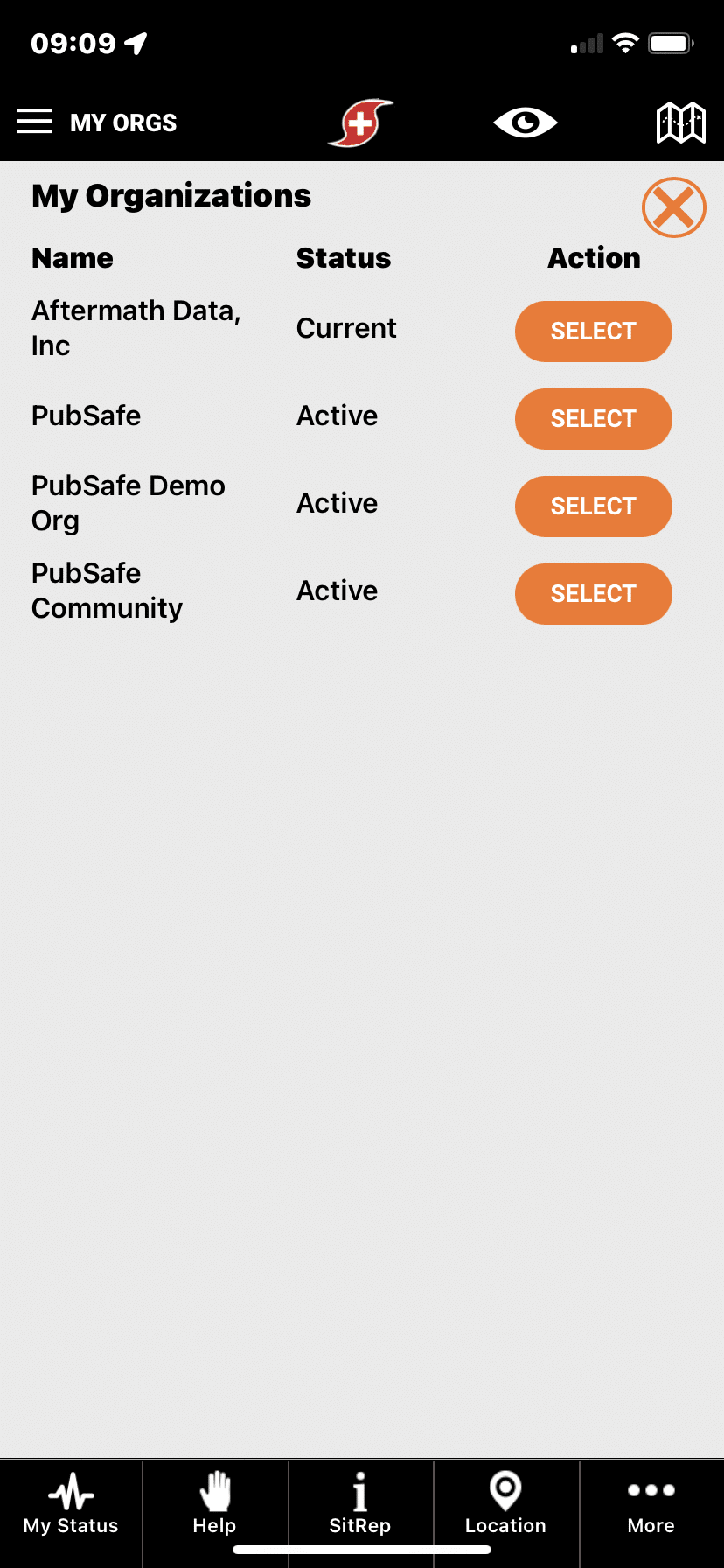
Image 5
Check Your Mission Status
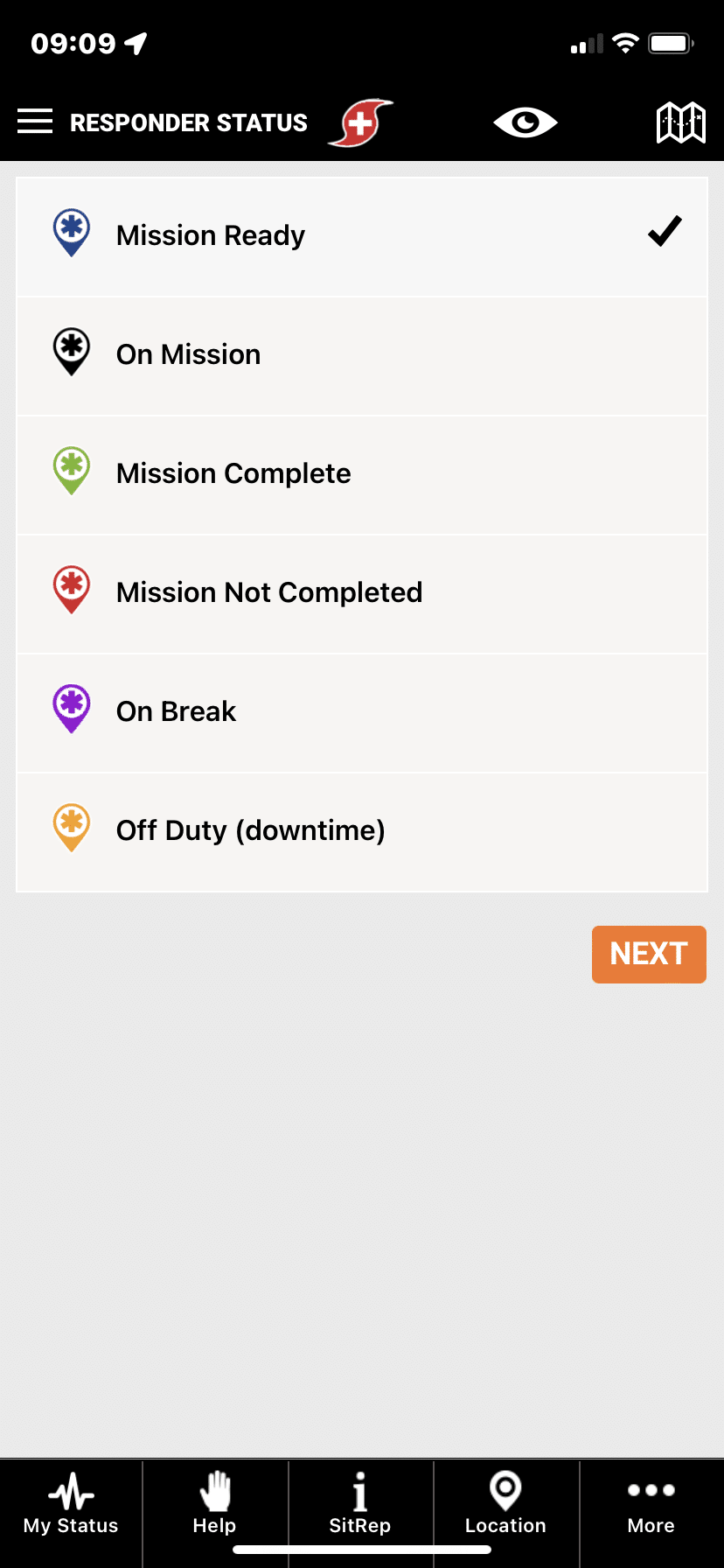
Image 6
Review Your Profile Summary
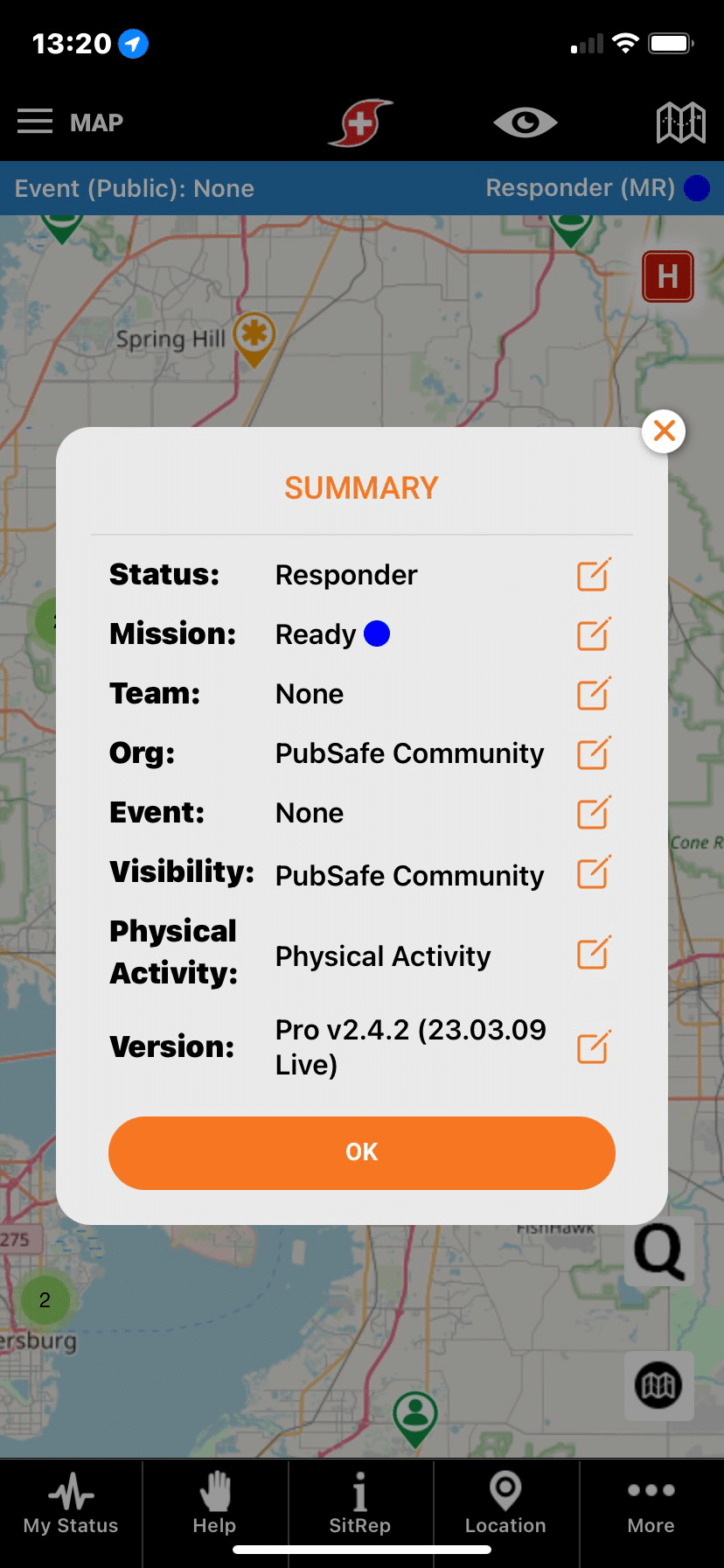
Image 7
Frequently Asked Questions
Do I have to upgrade to the Pro version of the app to join an organization? Yes, you do. The free version of the app is great for individual use, like reporting incidents. However, joining an organization requires the advanced coordination features that are part of the Pro version. This upgrade gives you the tools to connect with your team, receive assignments, and fully participate in a coordinated response effort.
Can I be a member of more than one organization at the same time? Absolutely. We know many volunteers and professionals work with multiple groups, so we designed PubSafe to support that. With a single Pro account, you can join several organizations and easily switch between them right in the app. This lets you stay connected with all your teams without needing to log in and out constantly.
What is the difference between the “Citizen” and “Responder” roles in the app? Think of the “Citizen” role as your default setting for personal safety and community awareness. In this role, you can report incidents and stay informed. When you switch to the “Responder” role, you signal to your active organization that you are available and ready to help. This allows dispatchers to see your status, communicate with you, and assign you missions.
Who can see my location after I join an organization? When you are active with an organization, its administrators can see your location to coordinate response efforts effectively. However, you are always in control of your privacy. The app gives you clear visibility settings, so you can manage who sees your location and when. Your personal privacy settings will always override any organizational settings.
I accepted an invitation to join, so why am I not a member yet? Joining an organization is a two-step process to ensure security for everyone. First, you accept the invitation you received. After that, an administrator from the organization needs to give final approval from their end. If you’ve accepted the invite, you’ve done your part; just give the team’s admin a little time to confirm you on their side.
Key Takeaways
- “Join” means creating strength in numbers: The word itself is about connection, and in disaster response, this action turns separate individuals into a unified, more effective force for good.
- Joining a team is a secure, multi-step process: To protect both users and organizations, becoming a member on PubSafe involves an invitation, user acceptance, and final administrator approval.
- The app gives you full control: After joining an organization, you can use the PubSafe app to manage your affiliations, switch your active team, set your responder status, and adjust your privacy settings.