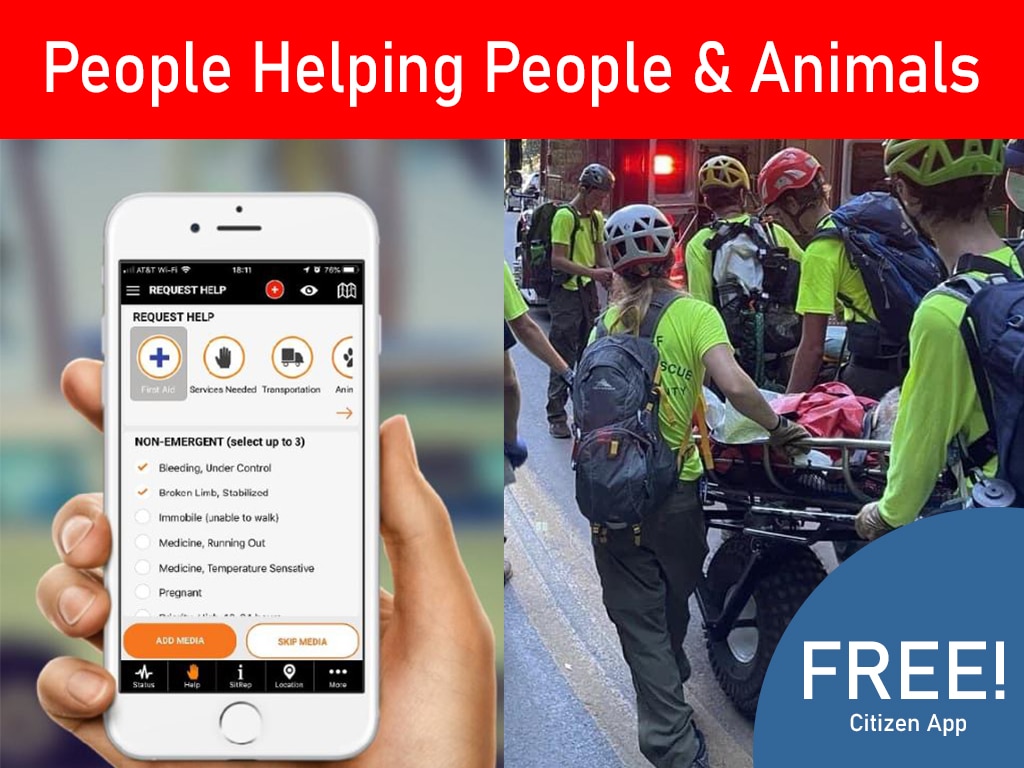
In the past, damage assessments were slow, relying on paper forms and siloed information that took days or weeks to reach decision-makers. Today, technology allows us to gather this crucial data in near real-time. By empowering everyone from trained responders to individual citizens, we can create a comprehensive, ground-level view of a disaster’s impact as it unfolds. A digital damage assessment form submitted through a mobile app can provide photos, GPS coordinates, and firsthand accounts instantly. Here, we’ll explore how this modern, crowd-sourced approach streamlines the entire process, getting help to those who need it faster than ever before.
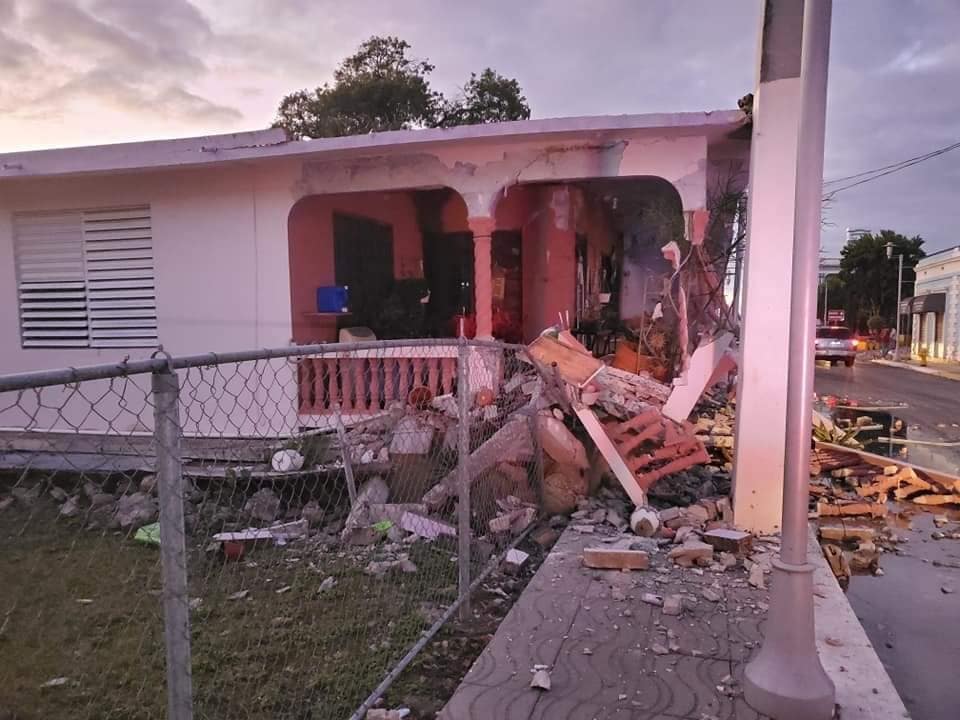
Digitizing & Collecting Damage Assessments
Damage assessments play an important role in allocating resources ranging from water pumps and firefighters to high-water vehicles, shelter support, and infrastructure repair. Recent disaster activity shows why speed matters: NOAA reported 27 separate billion-dollar weather and climate disasters in 2024, causing about $182.1 billion in damage and 568 deaths. A digital Preliminary Damage Assessment workflow helps teams collect photos, locations, notes, and resident needs while the situation is still changing.
View PubSafe’s Damage Assessment Form
The Role of Damage Assessments in Disaster Response
When a disaster strikes, the first hours and days are a whirlwind of activity. Amid the chaos, one of the most critical tasks is conducting damage assessments. Think of these as the first official look at what has happened. They are systematic processes used to figure out the extent of damage to homes, businesses, and public infrastructure. This initial information is vital for emergency managers to understand the scope of the event, determine the most immediate needs, and strategically deploy resources like search-and-rescue teams, medical aid, and temporary shelters. It’s the data that drives the initial response and ensures help gets to where it’s needed most.
Beyond the immediate response, these assessments serve a crucial long-term purpose. The information gathered is compiled into a formal report that helps local and state officials determine if the disaster’s impact is beyond their capacity to handle alone. This detailed picture of the damage is the foundation for requesting state or federal assistance. Essentially, a thorough damage assessment is the key that can unlock critical funding and support for a community’s recovery, making it an indispensable part of the disaster management cycle.
The Official Purpose: Unlocking Federal Aid
The primary goal of a formal damage assessment is to see if an event is severe enough to warrant a Presidential Disaster Declaration. According to FEMA, these Preliminary Damage Assessments (PDAs) are the official first step in this process. They are a joint effort between local, state, tribal, and federal partners to collect, verify, and present a clear picture of the disaster’s impact. This isn’t just about counting damaged buildings; it’s about quantifying the full effect on individuals, businesses, and public services to build a case for federal intervention and support for the long road to recovery.
How Has Damage Assessment Changed in 2025-2026?
Damage assessment now depends on faster field reporting, mobile evidence collection, and shared operating pictures. FEMA Preliminary Damage Assessment reports from 2025-2026, including DR-4898 through DR-4909, show continued demand for consistent local, state, tribal, and federal documentation. Teams need digital forms that capture location, photos, severity, habitability, infrastructure impact, and follow-up needs without waiting for paper reports to be retyped.
For broader response coordination, connect damage assessment data with PubSafe’s disaster response platform, emergency management platform, and emergency communication for local government resources. For operational context, see PubSafe’s article on top challenges in disaster response.
The Formal Government Assessment Process Explained
The path from a local incident to a federally declared disaster follows a structured, multi-step process. It’s a collaborative effort that begins at the ground level and moves up through state and federal channels. Each step is designed to verify the extent of the damage and ensure that the request for aid is justified and well-documented. Understanding this process is crucial for community leaders, volunteer organizations, and even citizens, as the initial information they provide can set the entire chain of events in motion. It’s a system of checks and balances that ensures resources are allocated appropriately and efficiently.
Step 1: Local Damage Assessment
Everything starts at the local level. Immediately following an event, local emergency management agencies, often supported by CERT teams and other volunteer groups, begin collecting initial damage details. They might use simple tools like FEMA’s “Street Sheets” or more advanced digital forms to document the impact on homes and infrastructure. This is where community-driven platforms can make a huge difference. When citizens report an incident through an app, they provide first-hand accounts, photos, and locations that give response teams a critical head start, allowing for a faster and more comprehensive initial assessment.
Step 2: State and Tribal Verification
Once the local data is collected, it’s passed up to the state, tribe, or territory. Officials at this level review the information to validate the severity and scope of the damage. They consolidate reports from various affected counties or areas to get a big-picture view. If the compiled data suggests that the event’s impact overwhelms local and state resources, the state or tribal leader can formally ask FEMA to participate in a Joint Preliminary Damage Assessment (PDA). This request is the official signal that the situation may require federal help.
Step 3: Joint Preliminary Damage Assessment (PDA) Planning
After receiving the request, FEMA works directly with state and tribal emergency management officials to plan the Joint PDA. This is a logistical phase where they decide how and where the assessment teams will operate. They determine which areas need to be inspected, who will be on the teams (a mix of local, state, and federal personnel), and the timeline for the assessment. Depending on the situation, these assessments can be conducted in person, with teams going door-to-door, or virtually, using photos, videos, and geospatial data to evaluate the damage from a distance.
Step 4: Conducting the Joint PDA
With a plan in place, the joint teams get to work. They move through the affected areas, systematically documenting and verifying the damage reported at the local level. Their job is to confirm the details and apply standardized criteria to ensure the assessment is consistent and objective. After the fieldwork is complete, all the verified information is compiled and given back to the state or tribal leader. This finalized data package provides the concrete evidence needed to support a formal request for a major disaster declaration from the President.
Step 5: Requesting a Major Disaster Declaration
Armed with the comprehensive data from the Joint PDA, the governor or tribal chief executive can formally request a Major Disaster Declaration from the President of the United States. This request outlines the extent of the damage, the estimated cost of recovery, and the specific types of federal assistance needed. The President then reviews the request and the supporting evidence from FEMA to decide whether to grant the declaration. This final step is the culmination of all the diligent assessment work done at the local and state levels.
Understanding the Outcome: Types of Federal Assistance
Once a Presidential Disaster Declaration is made, it opens the door to federal funding and resources. This assistance is generally categorized into two main programs, each designed to address different aspects of the recovery process. The type of aid made available depends on the data collected during the damage assessments, which specify the needs of both individuals and the community’s public infrastructure. Understanding these categories helps clarify what kind of support a community can expect after a declaration is approved.
Individual Assistance (IA) for Residents and Businesses
Individual Assistance (IA) is designed to help people and families recover from the disaster. This program provides direct financial and other forms of support to those whose homes and personal property were damaged or destroyed. Assistance can include grants for temporary housing and essential home repairs, low-cost loans to cover uninsured property losses, and funding for other serious needs caused by the disaster, such as medical or dental expenses. This is why accurate initial reports from residents are so important;they directly influence the availability of this critical lifeline.
Public Assistance (PA) for Infrastructure
Public Assistance (PA) is focused on the community as a whole. This program provides funding to state, tribal, and local governments, as well as certain private non-profit organizations, to help them rebuild. The funds are used for the repair or replacement of public facilities and infrastructure, such as roads, bridges, public buildings, utilities, and parks. The PA program also covers costs associated with debris removal and emergency protective measures taken during the response, ensuring the community can restore essential services and become resilient for the future.
Official Tools for Damage Assessment
To ensure consistency and accuracy, government agencies rely on a set of official tools and standardized procedures for conducting damage assessments. While the core principles are the same everywhere, the specific tools can range from simple paper forms to sophisticated digital applications. These resources are designed to streamline data collection, making it easier for teams in the field to capture the necessary information and for officials to analyze it quickly. Familiarity with these tools is essential for any organization involved in the assessment process.
What Damage Assessment Data Does FEMA Require for Disaster Declarations?
FEMA damage assessment data should clearly document location, ownership, occupancy, damage severity, habitability, accessibility issues, photos, infrastructure impacts, and the estimated cost or need for assistance. The strongest Preliminary Damage Assessment records are consistent, geotagged, time-stamped, and easy for local, state, tribal, and federal partners to verify.
Federal Resources and Templates
FEMA provides standardized templates for collecting damage information. These forms are tailored to capture the specific details needed for both Individual Assistance and Public Assistance programs. Using these templates ensures that all assessment teams, regardless of their location, are gathering data in a uniform way. This consistency is crucial when it comes time to consolidate information from multiple jurisdictions into a single, coherent report for the state and federal government. It helps create a clear and apples-to-apples comparison of the disaster’s impact across different communities.
FEMA’s Digital Damage Survey and Survey123 App
Moving beyond paper, FEMA has developed digital tools to make data collection faster and more efficient. The Digital Damage Survey, for example, allows teams to input information directly into a digital platform using apps like Survey123 for ArcGIS. This information can be made available in near real-time, complete with photos and GPS coordinates. This approach complements platforms like PubSafe, which can gather initial, crowdsourced reports from the public. Response organizations can then use this citizen-provided data to direct their official assessment teams, using FEMA’s tools to verify and formalize the reports for official submission.
State-Specific Requirements and Platforms
While federal templates provide a baseline, it’s important to remember that many states have their own specific requirements, forms, or digital platforms for damage assessment. State emergency management agencies often tailor the process to fit their unique geography, risks, and response structures. For any local agency or volunteer group, such as a CERT team, it’s vital to coordinate with your organization and be familiar with your state’s specific protocols. This ensures that the data you collect meets state requirements and can be easily integrated into the official reporting process without delays.
Building Your Perfect Damage Assessment Form
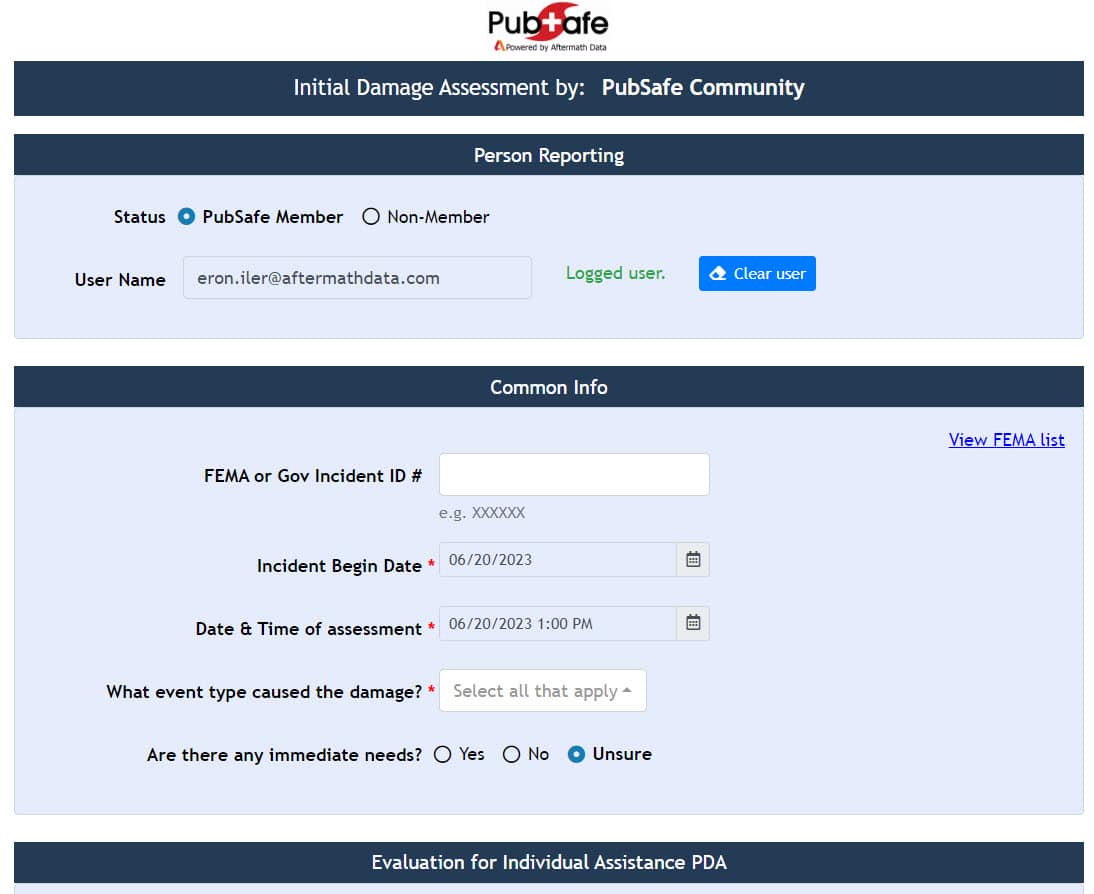
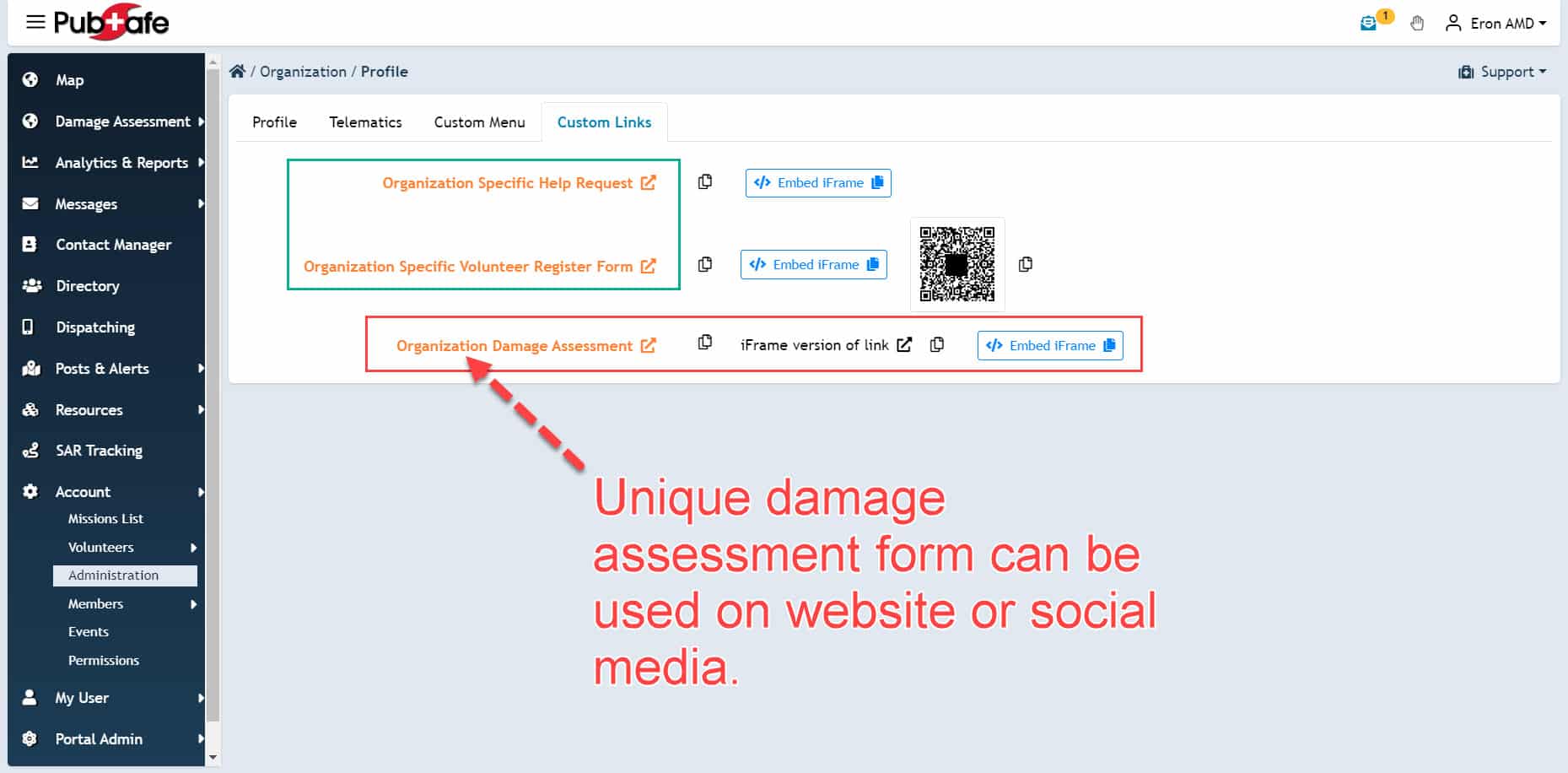
Organizations utilizing the PubSafe platform receive a custom damage assessment form. When this organization specific form is submitted, it is associated with the organization for report and map views. Since damage assessments are for the response community in general, all damage assessments are visible to other organizations on the PubSafe platform. Future integration includes sharing information collected with the Disaster Partner HUB to future disseminate information used in decision making.
How to Streamline Damage Assessment Collection
Historically initial damage assessments were done by FEMA, DHS or State EOC personnel. In phase two other organizations got involved such as insurance companies. Damage assessment information was put into information silos across every organization. Lately, there has been a movement to consolidate information at different points of a disaster continuum to provide better information to decision makers.
At PubSafe, we believe this process can move toward real-time crowd-sourced information like we like to do with all data collected. Through the mobile app, unique organization DA form, and the web portal, PubSafeTM can collect and share assessments in near real-time with all decision makers. To do this, we have empowered any citizen to submit a damage assessment form.
Damage assessments are put into two classifications, verified and unverified. Verified being done by an organization member and unverified being done by anyone not associated with a PubSafe organization. These two categories allow for reporting, filtering and mapping of information which can be used as input on decision making.
Getting Accurate Data from Your Assessments
The first “objection” naysayers will point out is that DAs done by untrained people will not be accurate. There is always going to be a error percentage which must be accounted for in decision making. The most trained professionals make mistakes all the time but it doesn’t mean we stop the process of continuing. By enabling any citizen to submit a DA, data will be collected faster and on a bigger scale than ever before. All levels of government will have access to the same information, at the same time, without red tape or sharing just what someone wants to pass along. This process also creates transparency and accountability. Time will tell how well citizens do submitted damage assessments. Only feedback from a real disaster will validate this new and innovative data collection method.
Video Transcript
Read the Damage Assessment Transcript
Hey YouTube, this is Aaron with PubSafe and today we’re going to be talking about a new feature that we added kind of on the fly. I was at the VOAD conference probably cold months ago now and the whole idea of this damage assessment came up and it struck me as you know that’s a pretty important function that we really need to be taking a look at and our core premise is data collection.
For the betterment of the general public and to do that we want to bring information to decision makers faster and easier than they have been able to get it before. which really involves you. which is crowd sourcing data that would otherwise not be available to…decision makers. until days weeks months after a disaster is struck.
So, within a couple of days actually why I was still at the conference. I contacted my developer and said Hey, we’ve got to do this This is such a big deal that I want to get this thing put in place as soon as possible So,
while I was working, at grow out of the developers were working we were communicating and say Hey, what really needs to go into a damage assessment And how do we facilitate. Our pub safe users to be able to provide input on that. So, we actually went and found You know the, the online you know female approve a demo assessment, form. We digitize that And then we said okay well, what are we going to do with this And how do we how do we manage this As it relates to. NGOs and is, how how do we take it a step further which is really enabling any citizen out there to submit a damage assessment Now.
Obviously we need to understand who’s. the assessment and, as with any statistics. There’s a there’s going to be a degree of error right? if we have professionally trained insurance adjusters that are going out and doing damage assessments, their degree of accuracy is going to be higher than the NGO who may be going out as part of the team to do a damage assessment And maybe they were trained Maybe not Maybe they do this once a year once every two years. Their degree of error is going to be higher And then you have what we believe is the key to all this as citizens.
And citizens don’t know how to do damage Just ask them but we can give them a form So if we can keep that in the box so to speak. Keep them into four and only give them certain choices in the form. Then we’re going to improve the error rate.
when collecting information that way now why even do that Because obviously there’s tens of thousands hundreds of thousands of millions of people that could potentially be submitting. damage assessments. And that information could be coming minutes after a tornado minutes after a wildfire minutes after a flood or a hurricane comes through. And that information through what we’re doing at pub safe can then be rolled up to decision-makers. And from there they can allocate resources right They may look at a damages assessment and say Hey you know we’ve got flooding over here These homes are damaged.
But you know what We don’t need to send rescue vehicles there yet because the water’s already receded. immediate life-threatening conditions are no longer present Right? So that goes along with. Puffs safes ability to crowdsource help requests. take a look at sit reps to look at location update information into message people, all of that being done through the post.
Platform. Is a facilitator of more rapid and accurate decision-making. So We didn’t want. Total chaos when it comes to, initial damage assessments. And you’ll see here on your screen that we actually did a blog. on this which will be available to you Obviously you can go to our website and just go to the blog and pull up damage assessments and you’ll see, you know what we got going on here. You can click on these and you can go look at it in March you but it’ll kind of explained to you. You know why we’re doing what we’re doing And, you know real-time data collection which is crowdsource is always our goal.
You know it’s not always going to be accurate. Again but it is better than waiting days and weeks for an insurance adjuster or somebody to get out to an area. especially in rural communities you. You’ve got underserved communities They don’t have the resources don’t have the manpower. You know a lot of the manpower demands are in areas of higher density populations.
Consequently, nobody has visibility as to what’s going on in either underserved communities rural communities or places like that or even third world countries.
because you know pub safe is a global platform So. you know this can be used to collect that information And then what we did was we said we don’t want to silo information That’s a big. sticking point, you. With me especially, and I don’t want information to go in silos and I don’t want people to, be possessive of information in their silos. By doing what we’re doing we’re actually going to make information available.
at the lowest level and the highest level simultaneously. When a damage assessment is done, it is ported into the puffs Hey portal. And in the portal we basically designate Hey these damages assessments were done by your organization, but these are all the other damage assessments that are being done in your area. So you have both of those things visible. inside of the Pepsi portal.
but then you can filter those right So if you only want to work with damage assessments created by organization Hey that’s fine. And do that But if you want to see damage assessments done by other organizations, you can do that as well. And the way that we have pub safe structured and will continue to structure pub safe is. We are a community with the ultimate goal of saving lives and property in reducing pain and suffering of people animals Right. And in order to get there sometimes we have to let our egos go and we’ve got to join forces in the least share information so we can work together and be more efficient in the overall response.
you know to our communities. So we make that information available online. recently the red cross is teamed up with I believe FEMA. To great the, disaster hub where information like this is going to be a centralized in addition to pub safe. you know they’re doing something a little bit different and we’re actually going to go to.
Going to contribute. some of the information that we collect over there provided you as a user, check the box and say Hey this is okay for you to share with them. you know because privacy is always up to you and what gets shared doesn’t get shared is up to you and we don’t sell your information We don’t track you for no reason you know things of that nature. all of our tracking has done because we have a specific of work that you need to get We need to alert others. that are near you.
in case somebody needs help and things of that nature So everything is purpose-driven and it’s not about the marketing. So
we will share some of that information over there provided yourselves It’s okay. Which will then go into a different pool. Of information that is available. So very interesting stuff going on with this. this form here you’ll see, we actually use.
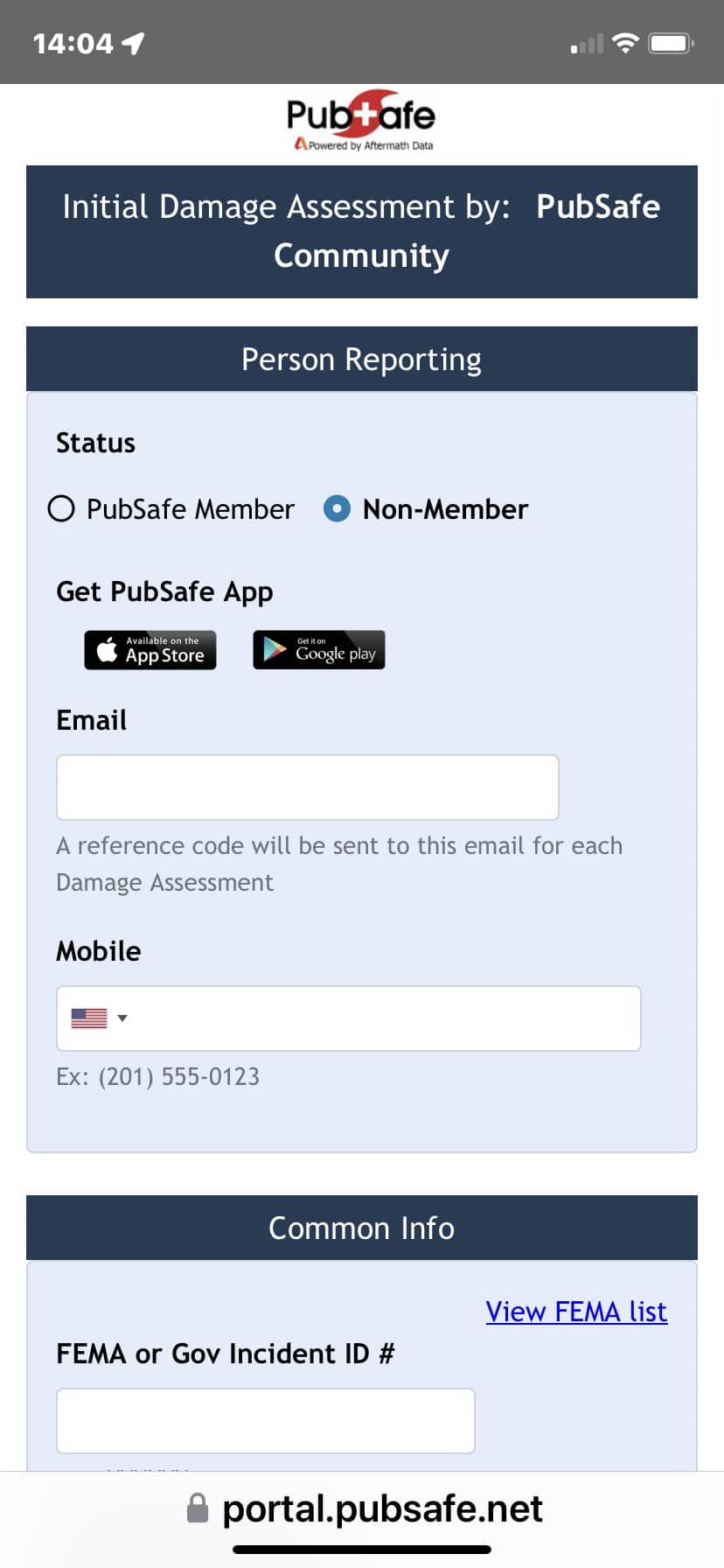
You know the pup safe member credentials. If you’re a pub safe member you’ve got the pub safe app. That’s great. you can really tie information to your user profile. If you’re tied to an organization then the things that you do will feed back to the organization.
And if you’re not a member of the pups community that’s okay too I will ask you from other some other information that we want you to get the mobile app because the more people that are on the mobile app the better the response is going to be overall. But then you can go in here and you can fill out this disaster forum, just like everybody else. And hopefully we’ve kept it super simple with simple dropdown. options that really. kind of make this something that can go into a database neatly.
And then some free form information. And then you know where’s the actual property and then give us some pictures right? Show it to us on the map So we know we’re getting really accurate GPS information and then start uploading some photos So the people that are going to be looking at this can really see and understand visually what you’re talking about in your damage assessment. It’s really somebody says oh my house is destroyed Then you go out and you find out it’s the aluminum carport That’s attached to the house. You know it’s really misleading You have to have the visual aids in order to really paint a clear picture. For the decision makers.
you know I mentioned inside of pub safe every organization that is using pub safe gets a custom link Right So in the accountant administration section, you’ll see we actually offer three different. custom links and these links are unique to a specific organization. And when these links are used that information is automatically brought into the web portal. There’s no double data entry There’s no Google cloud spreadsheets And you know all of that stuff that has been the plague of the NGOs for many many years. This information feeds straight into the web portal So you can have dispatchers and managers.
And coordinators all over the world. Logging into the pub safe portal and they’re all looking at the same information right? So down here we have that damage assessment form. We do also have one for volunteer registration which you can use on your website. And it looks like yours or uses your logo which you’ve uploaded through the post-sale portal.
And then when somebody fills that out they go straight into the puffs a portal where you can then manage their access and credentials and things like that. And then also same idea If you want to collect help requests through your website and through your social media, you could post that help request on Facebook. And when somebody says Hey I need help It actually will show up directly into the web portal under the dispatching menu. And then you can assign that out to people within your organization. If pups They’ve collected this information We actually just put it in the general pool and then you can pick it up and run with it
and assign your own people. you know the the mission of collecting a damage assessment or responding to her request. and then the last part of this is this is the partner disaster hub This is what the red cross is working on to centralize some information. the good part is that we’re, you know we’re way more nimble than government agencies and the red cross and other big companies We can move very very quickly to create and develop and implement a technology. But we want to share be part of the community So we’re going to work to pass information over to the disaster partner hub at some point in the future.
And hopefully. you know better the overall response because we’re using crowdsource real-time information for, You know, management decisions along the way you got any questions you know Hey please see this up in the comments and be sure to like and subscribe. you know to you know puff safe. get the mobile app. On Android and iOS you want to search for pub safe?
SOS. Or just use the QR codes which we’ll put up on the screen. And if you’ve got any questions you’ve got feedback super important to us, you know send us a message and say Hey you’d be really great if you guys did this or Hey we found a bug, you know let us know and we will get on it and get it straightened out for it We’ve got a lot of things on the development roadmap.
we can’t wait to get to, you know our goal right now is to get NGOs and government organizations and, corporate organizations onto the pub safe platform Because when your people traveled globally and respond to global disasters, they can be on the pub safe mobile app And you’re going to see where they are You’re going to be able to communicate one-on-one with them. You can do messaging to your entire organization whether you have two people or 20,000, you can go right on the map and. Send one message to everybody. You know that’s everything So lots of powerful power pools available to you. this this Visit us online@pubsafe.net.
And we’ll see you on the next video Thank you…
Getting Prepared: Official Training and Resources
A successful disaster response doesn’t just happen when the emergency call goes out; it starts long before with solid preparation and training. While having the right tools is a big piece of the puzzle, understanding the official processes is what makes your efforts truly effective. In the United States, the Federal Emergency Management Agency (FEMA) sets the standard for disaster recovery. Their guidelines are the playbook for a coordinated response, helping communities get the support they need to rebuild. Getting your team familiar with these protocols is one of the most powerful steps you can take before a crisis, helping you bring order to a chaotic situation.
FEMA’s PDA Guide and Training Courses
A key part of that recovery playbook is the Preliminary Damage Assessment, or PDA. FEMA describes PDAs as the official steps taken “to figure out how much damage and impact a disaster has caused.” This isn’t just a list of damages; it’s the critical first step that allows state and local governments to request a Major Disaster Declaration from the President. That declaration is what unlocks federal assistance for communities. To ensure accuracy, FEMA works directly with state, local, and tribal partners to conduct these assessments.
To help your team prepare, FEMA offers resources like training courses and digital templates for collecting damage information. Using these standardized forms ensures every organization is gathering consistent data. This structured approach is why we designed PubSafe to help teams report an incident with detailed, geo-located information directly from the field. By learning FEMA’s methods, your team can collect data that not only helps your immediate response but also fits perfectly into the official recovery framework.
Frequently Asked Questions
Why is the formal damage assessment process so important? Think of the formal process as building a case for major support. While initial reports help first responders, the detailed, step-by-step assessment provides the official evidence needed for a governor or tribal leader to request a Presidential Disaster Declaration. This declaration is the key that unlocks federal funding and resources, which are often essential for a community’s long-term recovery.
I’m not a trained responder. Can I still submit a damage report using an app like PubSafe? Absolutely. In fact, your report is incredibly valuable. Modern platforms like PubSafe are designed to gather initial information from everyone on the ground. While official teams will still conduct formal verifications, your photos, location data, and firsthand account give them a critical head start. It helps them understand the scale of the disaster much faster and directs them to the areas that need the most attention first.
Does using a platform like PubSafe replace the official government assessment process? No, it complements it. PubSafe acts as a powerful data collection tool that streamlines the very first step: gathering initial reports from the ground. This crowdsourced information can then be used by local and state agencies to inform their official Preliminary Damage Assessments (PDAs). The goal is to get better, faster information into the formal system, not to replace it.
What kind of help is available after a Presidential Disaster Declaration is made? Once a declaration is approved, federal assistance typically falls into two main categories. Individual Assistance helps residents and business owners with grants for temporary housing, home repairs, and other personal needs. Public Assistance provides funding to local governments and certain non-profits to repair or rebuild public infrastructure like roads, bridges, and utilities.
How does PubSafe handle data from different sources, like citizens and official teams? The platform classifies reports to maintain clarity. Information submitted by a member of a registered response organization is marked as “verified,” giving it a higher level of authority. Reports from the general public are classified as “unverified.” This system allows decision-makers to filter the data and use citizen reports to guide the efforts of their verified teams on the ground.
Key Takeaways
- Formal assessments unlock federal aid: The primary purpose of a damage assessment is to collect the official data needed to request a Presidential Disaster Declaration, which is the gateway to receiving federal recovery funds and support.
- The path to aid is a structured process: Response efforts follow a clear chain of command, starting with initial reports from local teams, followed by state-level verification, and finally a joint assessment with federal partners.
- Digital reporting gets help where it’s needed, faster: Modern platforms that allow for real-time, crowdsourced reports from citizens give decision-makers an immediate and comprehensive view of a disaster’s impact, speeding up the entire response timeline.