hATV Pros and Cons for Search and Rescue
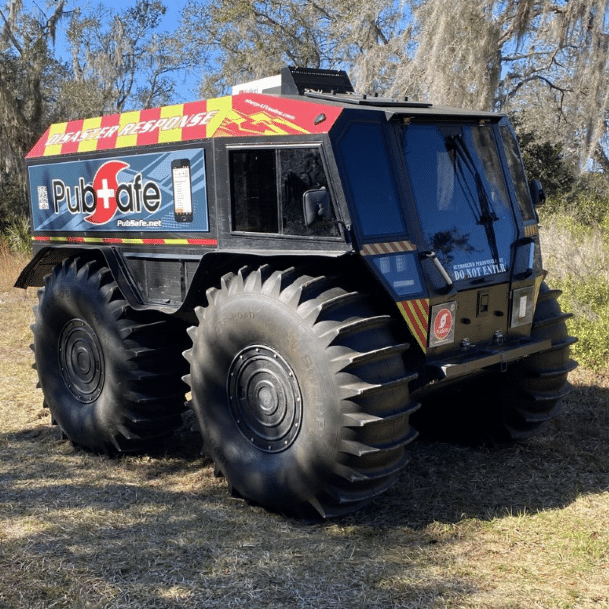
The Sherp ATV is a legendary search and rescue vehicle for a reason. It was designed for the brutal terrain of Siberia, where summer bogs and thin winter ice stop other machines cold. Its ability to swim across lakes and climb over obstacles is truly impressive. But performance is only half the story. Before you invest, you need to understand the maintenance, limitations, and the actual sherp atv price. This guide breaks down the complete picture, helping you decide if this unique sherp vehicle is the right financial fit for your team.
If your organization is searching for a search and rescue vehicle, understanding the Sherp ATV pros and cons will ensure a good decision is made. There are many vehicles, ATVs and boats used in SAR, and each do well in specific areas. Finding the right balance of capabilities to meet your mission requirements will avoid making the wrong investment.
These pros and cons are based on having owned several of each model of Sherp ATV over the past 7 years and having deployed with the Sherp to
Sherp ATV Models and Specifications
To really understand if a Sherp is the right fit, you need to look at the different models and what they can do. Each is built on the same incredible platform but offers unique features for specific missions. Knowing the differences will help you choose the right asset for your team.
Sherp Models
Sherp offers a few variations, allowing you to choose a configuration that best matches your team’s primary operational needs, from personnel transport to heavy cargo.
Sherp Pro
The Sherp Pro is the standard-bearer, built for extreme off-road challenges. It’s a workhorse designed to get a small team and their gear through almost anything. For added protection in unpredictable environments, you can get it with an optional external roll cage, which is a smart consideration for teams operating in areas with a high risk of rollovers, like steep hills or unstable terrain.
Sherp Pickup
Think of the Sherp Pickup as the versatile sibling. It features an open-back design with a removable cover, giving you flexibility in how you transport gear and personnel. This is especially useful for missions where you might need to quickly load bulky equipment or even perform a medical evacuation where open-air access is beneficial. The inside wall behind the front seats separates the cabin from the cargo area.
Sherp Ark
For large-scale operations, there’s the Sherp Ark. This is a much larger, articulated vehicle that can carry significantly more people and supplies. It’s essentially a small, all-terrain convoy in one package. While it comes with a much higher price tag, for organizations that need to deploy larger teams or establish a mobile command post in a remote area, the Ark is in a class of its own.
Key Technical Details
Beyond the model differences, the core specifications are what give the Sherp its legendary capabilities. These numbers translate directly into performance in the field.
Engine and Power
The Sherp is powered by a durable, efficient engine designed for reliability over raw speed. Its real strength is its ability to deliver consistent power to navigate extreme conditions. Whether you’re pushing through deep snow, churning through thick mud, or even floating across a body of water, the engine provides the torque needed to keep you moving forward when other vehicles would be stopped in their tracks.
Weight and Dimensions
A standard Sherp weighs about 2,866 pounds (1,300 kg) but can carry a payload of up to 2,200 pounds (1,000 kg). This impressive weight-to-payload ratio means you can transport a small crew, their rescue equipment, and essential supplies without overloading the vehicle. Its relatively light footprint is also what allows it to traverse soft ground and thin ice where heavier vehicles would break through.
Cabin and Storage Capacity
The enclosed cabin is surprisingly spacious, designed to hold people, gear, and supplies for extended missions. With under-floor storage and the ability to configure the space for up to four beds, it can serve as a temporary shelter during overnight operations. Effectively managing the personnel and supplies you can carry is crucial, which is where a unified platform for team management becomes invaluable for coordinating your response efforts in real-time.
What Makes the Sherp ATV Great for Search and Rescue?
There are many pros to the Sherp as a rescue platform. It brings a lot of versatility and reliability enabling it to work year round under a wide variety of conditions. It does many things well, and a few things very well. Let’s lay out the pros for search and rescue.
Seamlessly Crosses Water and Land
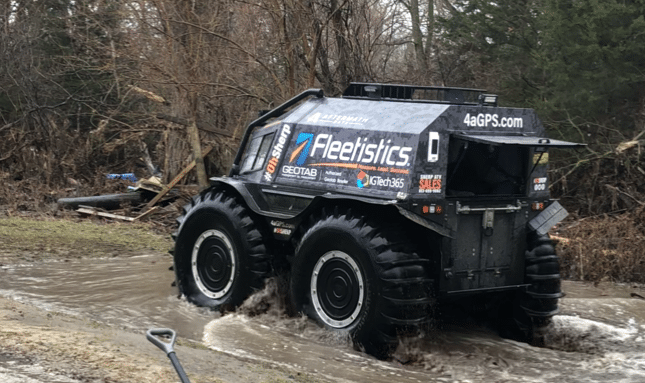
The Sherp is an amphibious vehicle. The large tires provide flotation on the water. The large treads provide the propulsion. Due to the large tire size, it is able to break through ice and climb back onto ice. In warm environments, the Sherp can often climb over down trees, palmettos, and deep mud. Generally, as long as the Sherp can get traction, it keeps moving forward. Thick tacky clay can get the Sherp stuck but a little tug from a 5,000 lbs winch is all that it takes to get a little traction.
How It Moves in Water
The Sherp’s movement in water is a fascinating piece of engineering. Its massive, low-pressure tires are the key, providing enough buoyancy to make the entire vehicle float. Once it’s in the water, those deep, paddle-like treads on the tires churn through the water to create forward momentum, much like an old paddlewheel boat. While it’s not fast—moving at around 3.7 mph—its strength is its reliability in getting through flooded streets, marshes, or across lakes. This ability to seamlessly transition from a flooded area back onto land or even climb onto an ice shelf is what makes it so valuable. Coordinating the deployment of such a unique asset is crucial, ensuring that rescue teams can work together effectively. Strong volunteer coordination ensures that specialized equipment like the Sherp is in the right place at the right time.
A Safe, Climate-Controlled Cabin
The Sherp offers heating and air conditioning as standard. Extreme temperature conditions can be dangerous whether it is cold or hot. The Sherp heater keeps the engine warm for subzero operation. In the summer, the AC unit keeps operators and passengers cool. In a search and rescue, the controlled climate keeps the patient stable during transport.
Go Farther on Less Fuel
The Sherp has a 25 gallon fuel tank with the ability to store more fuel in the wheel canisters. The large amount of fuel enables the Sherp to operate for days using just 7-8 gals/hr.
Room for the Whole Rescue Team
The Sherp is large enough to carry up to 8 passengers. In a rescue situation, two people can be in the front and two in the rear with a litter for a victim. If transporting just people, seating can be provided for up to 8 people. If staying on land, more can be carried but it will exceed the max payload.
Simple Mechanics Mean Fewer Breakdowns
Reliability is critical during search and rescue operations. There are no service centers open and having to fix equipment when people need rescue is not ideal. The Sherp uses a 1.8L Doosan diesel engine, producing 55 HP. This engine is used in a wide variety of small equipment around the globe. It is known to be a very reliable platform which any diesel mechanic should recognize.
Self-Inflating Tire System
One of the Sherp’s most impressive features is its self-inflating tire system. This system automatically adjusts tire pressure to maintain optimal performance as the vehicle moves between different environments, like from solid ground into water or mud. This constant adaptation ensures the Sherp always has the best possible traction and flotation for the conditions. For rescue teams, this means you can operate continuously without stopping for manual adjustments, saving critical time during an emergency. This automated system also increases operational safety by minimizing the risk of tire-related failures, allowing your team to concentrate fully on the rescue mission at hand.
Staying Upright on Any Terrain
When traveling over uneven terrain or in water where you cannot see the bottom, stability is very important for safety. The very low center of gravity makes it very difficult to flip under reasonable operating conditions. The engine sits at the same level as the drive train in the belly of the vehicle.
Low Center of Gravity
A huge part of the Sherp’s stability is its incredibly low center of gravity, a deliberate feature of its design. The engine sits deep inside the vehicle’s frame, right down at the same level as the drivetrain in the belly of the ATV. This makes the vehicle incredibly hard to flip, even when you’re tackling rough terrain or moving through water where you can’t see what’s underneath. For a rescue team, that level of stability is a game-changer. It means your team can concentrate on the mission—locating and helping people—instead of worrying about the vehicle’s safety. When you’re in a high-stakes situation, that peace of mind is invaluable. The thoughtful engineering behind the Sherp’s design really shines through in features like this, directly impacting the safety and effectiveness of your operations.
It Truly Goes Anywhere
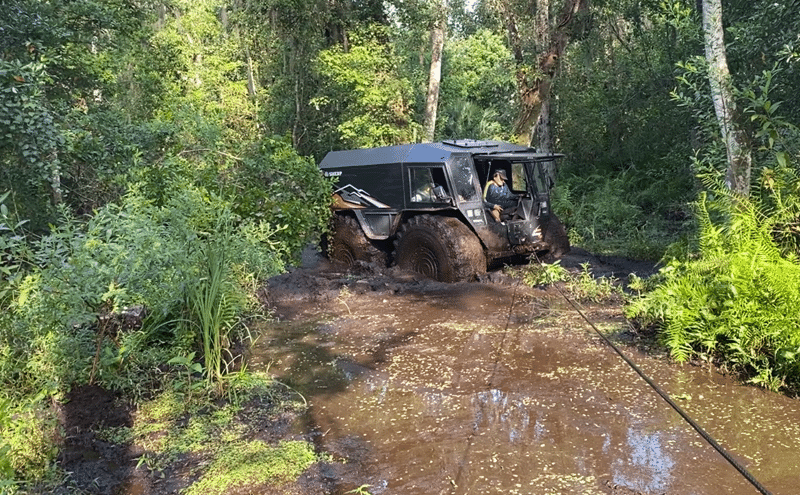
The large tires, flotation, low gear providing lots of torque, 26″ ground clearance and all wheel drive, make the Sherp capable going almost anywhere reasonable. It’s ability to go from water to ice, sand to mud, rock to road, make it extremely versatile.
Obstacle and Incline Capabilities
When you’re facing unpredictable terrain, you need a vehicle that can do more than just get by. The Sherp is engineered to master obstacles, boasting an impressive 26 inches of ground clearance and a low-gear system that provides serious torque for climbing. This means it can transition from deep mud to solid ground or from water to ice without missing a beat. But it’s not just about raw power. The Sherp’s incredibly low center of gravity makes it remarkably stable, even on steep inclines. This design gives your team peace of mind, reducing the risk of a rollover and allowing everyone to focus on the rescue at hand.
Zero-Radius Turning
Tight spaces can stop a rescue operation in its tracks. The Sherp gets around this problem with its exceptional maneuverability, including zero-radius turning. It uses a skid-steer system, which lets it pivot on the spot by moving the wheels on each side independently. Think of it as turning on a dime. This is a game-changer in dense forests, debris-filled urban areas, or any tight spot where a normal vehicle would get stuck. Instead of wasting precious minutes on a three-point turn, your team can instantly change direction. This agility means no path is truly a dead end, helping you get to those in need more quickly and safely.
Potential Drawbacks of the Sherp ATV
It’s Not Built for Speed
Getting to and from a disaster zone during rescue operations is highly reliant on speed. The faster the vehicle, the more rescues can be made. Airboats are good example of a vehicle with high speed and maneuverability. Airboats can cross some land provided it is not rocky or asphalt. Airboats also run the risk of being torn open by a fire hydrant just beneath the surface of the water.
Top Speeds on Land and in Water
The Sherp is not built for speed, and that’s by design. Its top speed on land is about 25 mph, while in the water, it moves at a steady 3.7 mph. This might seem slow, but the vehicle’s purpose is to methodically overcome extreme obstacles, not to race across flat ground. This deliberate pace is a direct trade-off for its incredible all-terrain capability. In many search operations, this slower speed is an advantage, allowing teams to carefully scan the environment for hazards or signs of life. It also provides operators with the time needed to coordinate with their team and report incidents or damage assessments in real-time, ensuring that every moment of the mission is productive.
Understanding Its Hauling & Towing Limits
The payload capacity is 2,640 and the towing capacity is 5,181. These are respectable numbers and will decrease on the water for safety. These capacities might be considered light by some standards. If moving bottle water, fuel tanks, or other heavy items, the capacity might run short.
Its Large Size Can Be a Limitation
The size of the Sherp can make it a bit of a challenge in some scenarios. An equipment trailer is the most common method of transport. The combination of trailer weight and Sherp weight will exceed mid-size pickup trucks, make it hard to pull in soft road conditions, and reduce maneuverability in tight spaces.
Requires Specialized Maintenance
Although the Doosan engine is very reliable, if it were to breakdown, there may not be a diesel mechanic shop nearby. Sherp specific parts may also take time to get. This is definitely a situation where preventive maintenance is very important.
The High Initial Sherp ATV Price
What does a Sherp ATV cost? Good question. Prices range from $100,000 to $175,000 for used verse new. There are plenty of used units available with low hours. In fact, the PubSafe Sherp is for sale for $115,000 with 80 hours. Contact us if you are interested in purchasing the PubSafe Sherp.
Get the PubSafe Mobile App

Frequently Asked Questions
Is the Sherp ATV street legal? No, the Sherp is not designed for public roads and is not street legal. Its purpose is extreme off-road and amphibious travel. You will need a heavy-duty trailer to transport it to and from your operational areas. This is an important additional cost and logistical factor to consider when purchasing one for your team.
How fast can a Sherp ATV actually go? The Sherp is built for torque and traction, not speed. On land, it has a top speed of about 25 mph. In the water, it moves at a steady 3.7 mph using its large, paddle-like tire treads for propulsion. This deliberate pace is ideal for careful search operations where you need to navigate obstacles and scan the area, rather than race across open terrain.
What kind of maintenance does a Sherp require? While the Doosan diesel engine is known for its reliability, the Sherp does require specialized attention. Regular preventive maintenance is key to ensuring it’s ready to deploy at a moment’s notice. Since you won’t find a Sherp service center on every corner, having a team member familiar with diesel mechanics or establishing a relationship with a specialized technician is a smart move.
Can a smaller organization or volunteer team afford a Sherp? The price tag can seem high, but the used market makes the Sherp accessible to more organizations. You can often find models with very low hours for a significantly lower price than a new one. This is a practical way for volunteer teams and groups with tighter budgets to acquire this unique capability without the full cost of a brand-new machine.
How does the Sherp handle water and ice? The Sherp is fully amphibious. Its massive, low-pressure tires provide enough buoyancy to make the entire vehicle float. Once in the water, the treads on the tires act like paddles to propel it forward. Its design also allows it to break through thin ice and use its all-wheel-drive system to climb back onto the ice shelf, a critical capability for winter rescue operations.
Key Takeaways
- Unmatched All-Terrain Capability: The Sherp excels where other vehicles fail by seamlessly crossing land, water, mud, and ice. Its amphibious design, high ground clearance, and low center of gravity make it an incredibly reliable and stable platform for search and rescue in extreme environments.
- Balance Performance with Practicality: While the Sherp’s go-anywhere ability is its greatest strength, it is not built for speed. Potential buyers must weigh its deliberate pace and specialized maintenance needs against its life-saving versatility, remembering it also requires a heavy-duty trailer for transport.
- Smart Investment and Coordination: The Sherp is a significant financial investment, but the used market offers a cost-effective alternative. To maximize its value, integrating the vehicle with a coordination platform like PubSafe is crucial for effective team management and real-time asset tracking during emergencies.