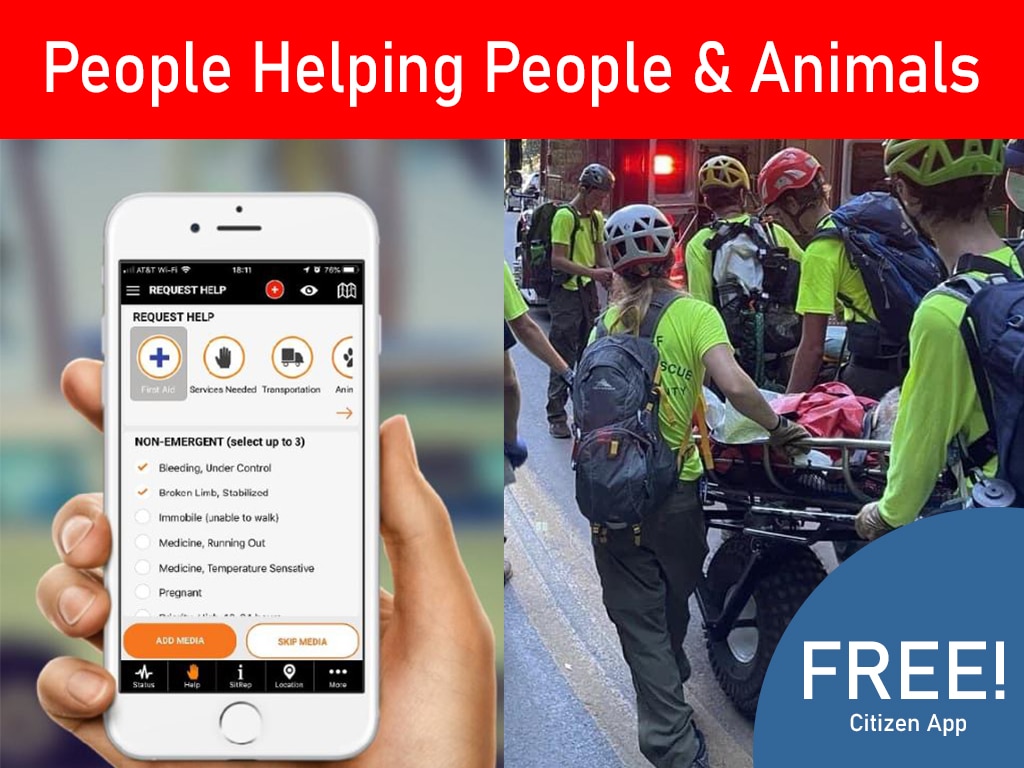
During an emergency, social media often becomes the digital town square where people share updates and cry for help. While this creates a powerful, real-time source of information, the sheer volume can be impossible for response teams to manage manually. This is where AI steps in, acting as a crucial filter to identify the most urgent needs and turn a chaotic feed into a clear map of where assistance is required. We’ll explore the growing field of disaster rescue communication using mobile devices, social media, and artificial intelligence, and how it empowers both citizens and organized teams to work together.
How AI Is Transforming Disaster Response for Communities, NGOs, and CERT Teams
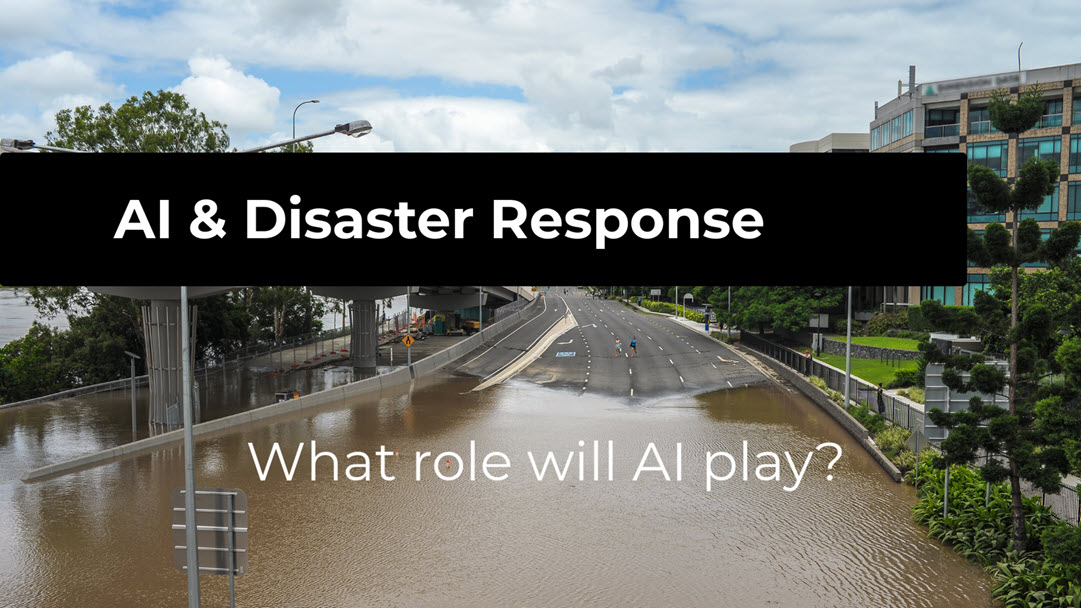
How AI is Making Disaster Response Smarter, Faster, and Safer
Artificial intelligence is rapidly reshaping disaster preparedness and emergency response as new ideas come to realization daily. As climate driven emergencies grow more frequent and severe, communities need faster, smarter, and more coordinated ways to prepare for and respond to a humanitarian crises. The video “AI in Disaster Response” by PubSafeSOS explores this emerging landscape and raises an important question: How will AI shape the future of disaster planning, and how can NGOs and CERT teams leverage it today?
?️ Why Do We Need a Smarter Disaster Response?
From hurricanes and wildfires to floods and tornadoes, disasters are becoming more unpredictable and destructive. Traditional response systems—often reliant on manual reporting, slow communication, and fragmented data—struggle to keep up.
AI in disaster response offers a new path forward by enabling:
- Faster decision-making from improved data aggregation
- Real-time situational awareness
- Predictive insights
- Better coordination across agencies and volunteers
These capabilities dramatically improve outcomes when every second counts.
? How AI Empowers Emergency Response Teams
AI in disaster response is especially powerful for organizations that often operate with limited resources, such as:
- Local NGOs
- Community Emergency Response Teams (CERT)
- Volunteer groups
- Faith-based organizations
- Neighborhood associations
These groups are essential during disasters, yet they frequently lack access to advanced tools. AI bridges that gap.
? Gather Critical Information in Real-Time
AI systems can pull information from weather services, social media, satellite imagery, emergency alerts, and crowdsourced reports—creating a unified, constantly updated picture of what’s happening on the ground.
? Predict a Disaster’s Next Move
AI can forecast flood paths, storm intensification, evacuation bottlenecks, and resource shortages, helping responders position supplies and personnel before a crisis peaks.
? Allocate Resources More Effectively with AI
AI helps determine where medical teams should be deployed, which neighborhoods need rescue support, and how to prioritize supply distribution.
The Role of Social Media in AI-Powered Response
When a disaster strikes, social media platforms instantly become digital town squares. They are a lifeline where people share critical updates, check on loved ones, and, most importantly, call for help. For response teams, these platforms offer a real-time view of the unfolding crisis, serving as key communication pathways that connect victims with responders. The problem is the sheer volume of information. It’s a firehose of data filled with urgent pleas mixed with rumors, news reports, and general chatter. Manually sifting through this digital noise is impossible when every second counts. This is where AI becomes an indispensable partner. It acts as an intelligent filter, scanning millions of posts to identify actionable information and piece together a clear, dynamic picture of what’s happening on the ground. This gives NGOs and CERT teams the “situation awareness” they need to make faster, more informed decisions and direct aid where it’s needed most.
How AI Analyzes Social Media for Urgent Needs
So, how does AI actually make sense of a chaotic social media feed during an emergency? It uses a technology called natural language processing (NLP) to read and understand human language, much like we do. The AI is trained on massive datasets to recognize keywords, phrases, and the sentiment behind a post. It can quickly identify messages that mention specific needs like “no water,” “need rescue,” or “medical emergency.” This allows it to cut through the noise and pinpoint the most critical information. Instead of teams having to scroll endlessly, the AI turns a torrent of unstructured data into a prioritized list of needs, allowing responders to focus their efforts immediately.
Filtering for Critical “Imperative” Messages
One of AI’s most powerful skills is its ability to distinguish between a general comment and a desperate call for help. Researchers have trained AI systems to sort social media posts into two main categories: “imperative” and “non-imperative.” An imperative message is an urgent, actionable request, like, “We are trapped in our attic and the water is rising fast.” A non-imperative message might be someone sharing a news article or expressing sympathy. By filtering for these imperative messages, AI helps response teams focus their limited resources on those in immediate peril, ensuring that the most critical pleas don’t get lost in the digital crowd.
Inferring Location from User Posts
Knowing what someone needs is only half the battle; you also have to know where they are. Many social media posts don’t include precise GPS data, which presents a major challenge for rescue teams. AI can help solve this by inferring a location from the content of the post itself. For example, if someone tweets, “Stuck on the roof of the corner store on Maple & 3rd,” the AI can extract that address. It can even analyze user profiles and previous posts to approximate a location. This capability is crucial for dispatching rescue teams and volunteers to the exact spot where they are needed, which is why platforms like PubSafe visualize this data on a public map for better coordination.
Adapting AI Models Across Different Crises
No two disasters are the same, and the AI used in response needs to be just as adaptable. An AI model trained to identify needs during a hurricane can be retrained to understand the unique language and challenges of a wildfire, earthquake, or even a public health crisis. The beauty of these systems is that they are designed to learn and evolve. As researchers feed them more data from different events, the AI gets smarter and more accurate. This flexibility ensures that AI remains a relevant and powerful tool for crisis managers, providing that critical situation awareness across a wide range of scenarios, no matter what the next disaster looks like.
? How AI-Powered Apps Improve Disaster Communication
Platforms like PubSafe show how AI in disaster response can empower everyday citizens—not just official responders.
AI-powered apps can:
- Enable instant emergency reporting
- Connect volunteers with people needing help
- Provide real-time hazard alerts
- Map safe evacuation routes
- Track missing persons
- Coordinate community-level response efforts
In many local disasters, neighbors are the first responders. AI strengthens that grassroots capability.
Understanding the Limitations of Technology in Disasters
As promising as AI is, it’s not a magic wand. Relying solely on technology during a crisis can be risky because the very infrastructure it depends on is often the first thing to fail. Even the most advanced AI-powered platform is only as strong as the network supporting it. For response teams to be truly effective, it’s crucial to understand these limitations and plan for them. The two biggest hurdles are infrastructure failure and the digital divide, both of which can disrupt communication and leave vulnerable people isolated when they need help the most.
When the Power Goes Out: Infrastructure Challenges
During a major disaster, power grids, cell towers, and internet services are often compromised. When the power goes out, so does the ability to charge devices and access Wi-Fi. As one study notes, even powerful mobile phones “rely on infrastructure…that can easily break down during a disaster.” This creates a critical information blackout. AI systems can’t process data they can’t receive, and people on the ground can’t send or get alerts. This is why a resilient response plan must include offline strategies and tools that facilitate volunteer coordination even in low-connectivity environments.
Ensuring No One is Left Behind: The Digital Divide
Technology is not accessible to everyone equally. Many people, particularly the elderly, those in low-income households, or residents of rural areas, may not own a smartphone or have reliable internet access. An emergency response strategy that depends entirely on apps and online platforms risks excluding these vulnerable populations. True community resilience means building a system that bridges this gap. This is where organized groups like CERT teams and NGOs become essential, acting as a human network to relay information and provide assistance to those who are offline. A platform that connects citizens, volunteers, and agencies ensures that everyone can be part of the response effort, regardless of their tech-savviness.
? Your First Steps: How NGOs and CERTs Can Use AI
Even small organizations can begin integrating AI-driven tools into their operations.
✅ Step 1: Choose an AI-Enabled Communication Platform
Automated alerts, translation tools, and intelligent routing improve coordination.
?️ Step 2: Leverage AI for Mapping and Analytics
Risk maps, population overlays, and infrastructure vulnerability data help teams plan more effectively.
? Step 3: Get Your Team Comfortable with AI Tools
Simple training sessions help volunteers submit accurate reports, use mobile apps, and interpret AI-generated maps.
? Step 4: Find the Right Tech Partner
Collaborations with platforms like PubSafe give NGOs access to tools they couldn’t build themselves.
Building Better Tools: Key Recommendations
The promise of AI in disaster response is huge, but technology alone isn’t the answer. The most effective tools are the ones designed with a deep understanding of the chaotic, high-stakes environments where they’ll be used. For AI to truly make a difference, we need to focus on building solutions that are practical, inclusive, and community-driven. It’s not about creating the most complex algorithm; it’s about creating the most useful and reliable resource for people on the ground.
Putting Responders at the Center of Development
To create tools that actually work during a crisis, developers must include the voices of those who will be using them. As one study notes, this ensures that solutions are practical and meet the real needs of responders. When developers collaborate directly with emergency managers, CERT volunteers, and NGO field staff, they gain invaluable insights into the challenges these teams face. This user-centered approach moves beyond theory and results in features that matter, like intuitive interfaces for reporting incidents or streamlined workflows for coordinating volunteers. The goal is to build technology that feels like a natural extension of a responder’s instincts, not another complicated system to manage.
Designing for Diverse Communities
Disasters don’t affect everyone equally, and our technology must reflect that reality. An effective AI system needs to create a unified picture by pulling information from many sources, including social media and crowdsourced reports. This is vital for understanding the specific needs of different neighborhoods and demographics. For example, a tool might identify a non-English-speaking community that isn’t receiving official alerts or pinpoint a neighborhood with a large elderly population that requires evacuation assistance. By designing platforms that aggregate and analyze diverse data streams, we can ensure a more equitable and effective response that leaves no one behind.
Keeping Tools Relevant and Communities Engaged
A successful disaster response tool isn’t just launched; it’s adopted and maintained by the community it serves. Engaging community members in the development and rollout of new technologies is essential for long-term success. When platforms are user-friendly and foster collaboration, they encourage widespread participation. This creates a powerful feedback loop where citizens feel empowered to contribute information, and organizations can register their teams to become part of a larger, coordinated network. This ongoing engagement ensures the tools remain relevant and effective, transforming them from a simple piece of software into a living, breathing part of a community’s resilience strategy.
? What’s Next for AI in Disaster Response?
As AI continues to evolve, we can expect:
- Autonomous drones for search and rescue
- AI-powered damage assessments
- Automated triage systems
- Smarter evacuation modeling
- Real-time translation for multilingual communities
- AI-driven volunteer coordination networks
The goal isn’t to replace human responders—but to give them superhuman capabilities.
? Final Thoughts
AI will become more powerful in disaster preparedness and response as issues are resolved on the logic and output. By leveraging data, automation, and predictive intelligence, communities can respond faster, save more lives, and recover more efficiently.
Local NGOs, CERT teams, and everyday citizens will play a crucial role in this transformation. With the right tools and training, AI can help build safer, more resilient communities—one disaster at a time.
Integrating the Internet of Things (IoT)
Think of the Internet of Things (IoT) as a network of connected sensors and devices that gather data from the world around us. During a disaster, this technology provides a stream of real-time information. For example, IoT sensors can report rising water levels in a flood, detect gas leaks after an earthquake, or monitor air quality during a wildfire. When you feed this constant flow of data into an AI-powered platform, it creates an incredibly detailed and accurate picture of the situation on the ground. Mobile apps then become the central hub for this information, helping to organize rescue efforts and send out precise, timely alerts to the people who need them most.
The Power of Responsible Crowdsourcing
Information from the community—often called crowdsourcing—is a game-changer in disaster response. People on the ground can report blocked roads, downed power lines, or requests for help long before official teams might arrive. But with so much information coming in, how do you sort through the noise? That’s where AI helps. It can analyze reports from social media and apps to identify credible threats and urgent needs, turning a flood of individual observations into actionable data. Platforms like PubSafe empower citizens to report an incident directly, ensuring that critical, verified information gets to response teams quickly and efficiently.
Practical Features for Long-Term Use
For a disaster response app to be truly effective, it needs to be useful long-term, not just during an active crisis. This means including practical features that build trust and encourage ongoing community engagement. Simple, reliable tools for direct communication, clear integration with official agencies, and easy ways to manage volunteers are essential. When an app becomes a core part of a community’s preparedness plan, it ensures that people are already connected and ready to act when a disaster strikes. By providing tools for ongoing team management and coordination, platforms can help foster a resilient community that is always prepared.
Ready to Strengthen Your Community’s Disaster Response?
Explore how PubSafe tools can transform your preparedness strategy for your organization. Click Here
? Start by learning more about PubSafeSOS and community-driven disaster response.
Are You Part of a CERT Team or Local NGO?
Empower your volunteers with modern tools that improve coordination and save lives.
? Setup your free web portal account. Click here
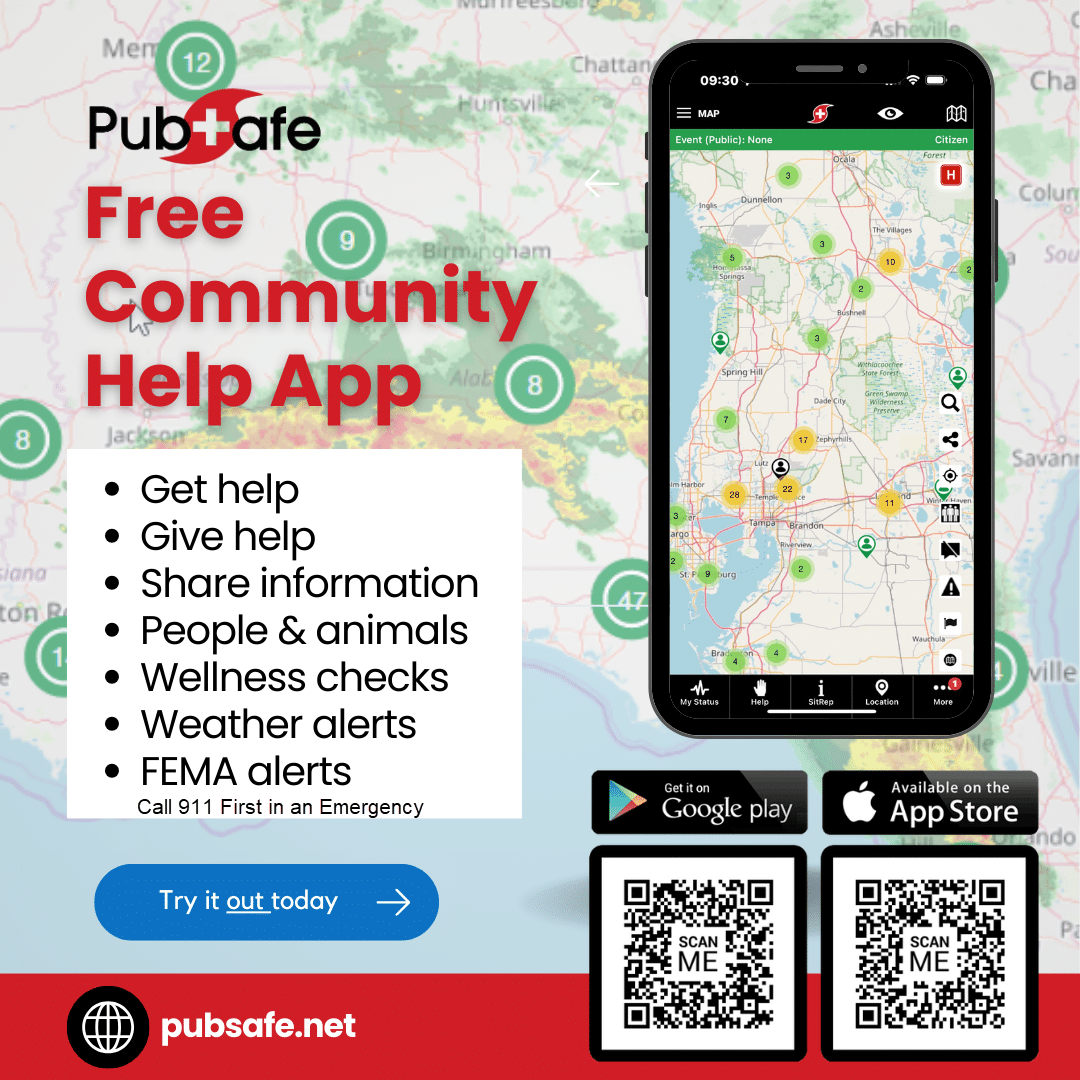
Get the PubSafe Mobile App
Frequently Asked Questions
Is AI technology practical for smaller organizations like local NGOs or CERT teams? Absolutely. You don’t need a team of data scientists to benefit from AI. Platforms like PubSafe are designed to make this technology accessible, handling the complex data analysis for you. For smaller teams, AI acts as a force multiplier, automating the process of gathering information and identifying critical needs so you can focus your limited resources on direct action and community support.
What happens when technology fails during a disaster, like when the power or internet goes out? This is a critical point, and it’s why technology is a tool, not a total solution. A solid disaster plan always includes offline strategies. While AI relies on data, its most important work can happen before a crisis by helping teams create smarter plans and organize volunteers. During a communication blackout, the coordination established beforehand through platforms that connect human networks becomes essential for an effective response.
Will AI replace the need for human volunteers and first responders? Not at all. The goal of AI is to support human responders, not replace them. Think of it as the world’s most efficient assistant. It can sift through millions of data points in seconds, a task impossible for a person. This frees up human teams to make informed decisions, operate in the field, and provide the hands-on help and empathy that technology can’t.
How does AI actually find the important calls for help on social media without getting lost in all the noise? It works by learning to understand language much like a person does. The AI is trained to recognize keywords, phrases, and patterns that signal a true emergency. It can distinguish between a post sharing a news story and an urgent, actionable plea like, “We are trapped and need immediate rescue.” By filtering for these critical messages, it turns a chaotic feed into a clear list of priorities for response teams.
As an individual, what’s the best way for me to contribute to these AI-powered response efforts? The most helpful thing you can do is provide clear, accurate, and structured information. Instead of just posting on social media, using an app designed for incident reporting ensures your alert gets to the right people. When you report an issue through a platform like PubSafe, you provide verified, location-specific data that feeds directly into the system, making it immediately useful for coordinating aid.
Key Takeaways
- AI filters digital noise to pinpoint urgent needs: It analyzes massive amounts of data from social media and sensors, allowing response teams to quickly identify who needs help and where to send resources first.
- A resilient response plan combines tech with human networks: Technology is powerful, but infrastructure can fail. The most effective strategies use platforms to support on-the-ground volunteers and ensure no one is left behind, even in low-connectivity situations.
- Effective tools are designed for and with responders: The most useful technology is created with direct input from emergency teams and community members, ensuring platforms are practical, inclusive, and easy to use when it matters most.