VOAD Coordination Software for Local Disaster Networks
When a flood, wildfire, tornado, or mass care event activates a local disaster network, the hardest problem is rarely compassion. It is coordination. VOAD coordination software gives voluntary organizations, churches, CERT teams, emergency managers, and community partners one shared operating picture so help requests, volunteers, supplies, damage reports, and field updates do not get trapped in separate spreadsheets, text threads, and radio calls.
Need a practical way to coordinate NGOs, churches, CERT teams, and agencies during response? Register your organization with PubSafe to start building a shared disaster coordination network.
Local Voluntary Organizations Active in Disaster networks work best when each partner can keep its identity, mission, and command structure while still seeing what the wider network needs. A church may run shelter support. A food bank may manage distribution. A CERT team may support damage assessment. A nonprofit may handle muck out requests. A county emergency management office may need visibility without taking over every mission. The right software supports that reality.
This guide explains what local VOAD and community disaster networks should look for in a coordination platform, how software reduces duplicated effort, and why real-time situational awareness matters before, during, and after a disaster.
What is VOAD coordination software?
VOAD coordination software is a shared digital system that helps voluntary organizations, faith-based groups, nonprofits, CERT teams, and agencies coordinate disaster response work across organizational boundaries. It centralizes incoming needs, volunteer activity, mission status, field reports, maps, and communication so each group can make better decisions with current information.
For local disaster networks, the goal is not to replace relationships or formal emergency management systems. The goal is to make those relationships operational. A good platform helps partners answer five questions quickly:
- What needs have been reported?
- Which organization is handling each request?
- Where are volunteers, teams, supplies, and incidents located?
- Which tasks are unassigned, duplicated, delayed, or complete?
- What does the wider network need to know right now?
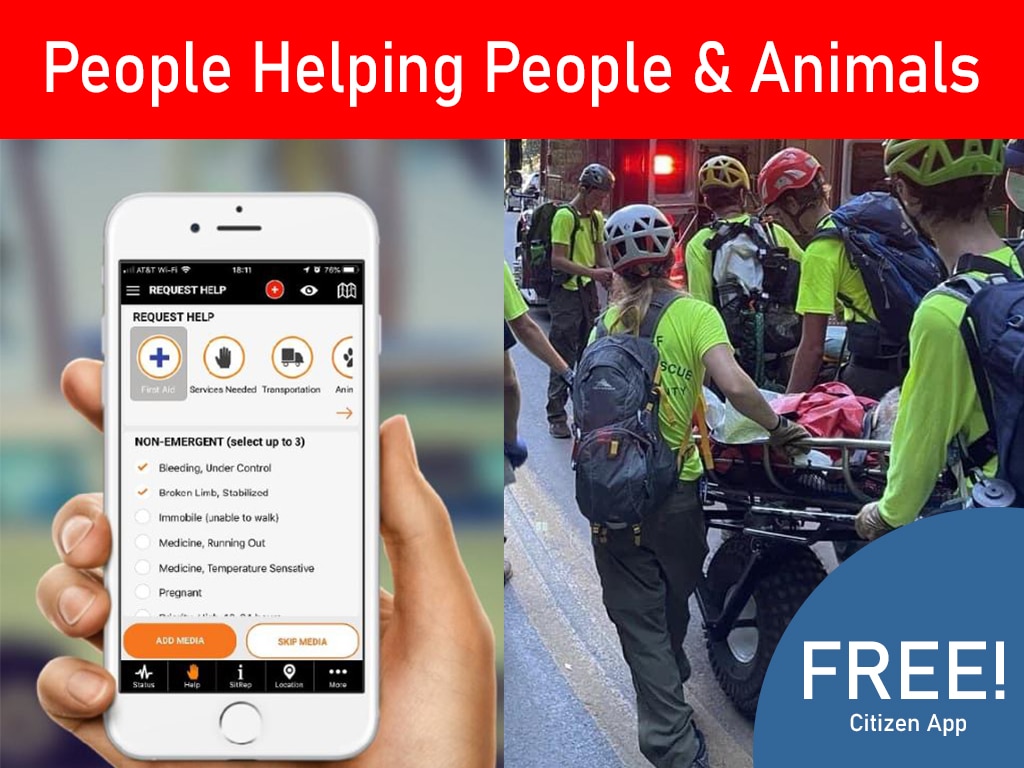
PubSafe is built around this kind of community-powered emergency coordination. The PubSafe disaster response platform connects citizens, volunteers, NGOs, CERT teams, and public safety organizations through a mobile app and organizational web portal, giving local partners a more complete picture of field activity.
Why local disaster networks struggle without shared coordination tools
Most communities already have people who want to help. The problem is that disaster work crosses boundaries faster than normal communication systems can handle. Requests arrive through phone calls, social media, web forms, 911 referrals, door-to-door canvassing, shelter intake, and partner organizations. Volunteers self-deploy or wait for assignments. Supplies move to one neighborhood while another has the same unmet need.
Without shared coordination software, local VOAD partners often face the same operational problems:
- Duplicated work: Two organizations may send teams to the same address while another urgent request remains untouched.
- Incomplete situational awareness: Leaders may know what their own organization is doing but not what the rest of the network is seeing.
- Slow assignment: A need can sit in an inbox because no one knows which partner has capacity.
- Fragmented volunteer tracking: Hours, locations, credentials, and assignments get recorded in separate systems.
- Poor handoffs: A shelter, feeding site, damage assessment team, and emergency manager may all need the same update but receive it at different times.
- Weak documentation: After-action reporting, grant support, and impact reporting become difficult when activity records are scattered.
These gaps cost time. In a disaster, time translates into missed rescues, delayed aid, exhausted volunteers, and a public that loses trust in the response network.
How VOAD coordination software reduces duplication
Duplication happens when organizations cannot see the same request queue, mission status, or field updates. A shared platform reduces duplication by making work visible before teams deploy.
The most effective systems use a common operational workflow:
- A need is reported by a resident, volunteer, organization, or agency.
- The request enters a shared queue with location, category, priority, and notes.
- Approved organizations review open needs based on mission, geography, skill, and capacity.
- One organization claims or receives the mission.
- Field teams update status as assigned, en route, on scene, delayed, complete, or escalated.
- The network can see which needs are still open and which have already been handled.
This is especially important for community disaster networks that include churches and nonprofits. These groups often have different strengths. One partner may have chainsaw crews. Another may have high-clearance vehicles. Another may have trained case managers. Another may run donations management. Coordination software should help the right organization see the right need at the right time.
PubSafe’s model supports this by giving registered organizations access to tools for dispatch, tracking, and messaging while keeping citizen reporting simple. The existing PubSafe article on NGO disaster response coordination explains why bringing requests into a structured queue helps multiple organizations work from the same information instead of competing for partial data.
What should a VOAD platform include?
A local disaster network does not need an expensive enterprise emergency operations system to get better coordination. It needs practical tools that match how voluntary response actually works. The best VOAD coordination software should include the following capabilities.
1. Shared request intake
Requests should be easy to capture from citizens, volunteers, and partner organizations. A platform should support incident reports, help requests, damage observations, welfare concerns, supply needs, and other community-generated information. Mobile reporting matters because the first useful information often comes from people already on scene.
PubSafe’s community emergency response workflow is designed around this early field intelligence, helping turn reports from citizens and volunteers into useful information for organizations.
2. Mission assignment and dispatch
Once a request enters the system, coordinators need to assign it to the right team. VOAD networks should look for dispatch tools that support mission ownership, status updates, responder notes, location data, and reassignment when a partner cannot complete the work.
This prevents the classic disaster response failure where a request is known, discussed, and forwarded, but never clearly owned.
3. Real-time map visibility
Maps help leaders understand where needs are clustering, where teams are working, and where conditions are changing. A disaster map should show incidents, volunteer locations when appropriate, team activity, public reports, and relevant overlays. The value is not just visual. It helps prioritize work by geography and severity.
For example, a local VOAD may notice that welfare checks are clustering in one neighborhood while debris removal requests are concentrated in another. A map view can help the network split assignments logically instead of sending teams across the entire county.
4. Volunteer and team management
Local networks depend on people who may belong to several groups at once. A CERT volunteer may also attend a church. A church volunteer may also support a nonprofit. A medical volunteer may be deployable only for specific missions. Software should make team membership, availability, assignments, and hours easier to manage.
PubSafe’s volunteer coordination resources show why volunteer information becomes more valuable when it is connected to real missions, not stored separately from operations.
5. Organization-level controls
Shared coordination does not mean everyone sees everything. Local disaster networks need permissions that protect sensitive data while still allowing useful collaboration. Churches, NGOs, CERT programs, and agencies should be able to manage their own members, teams, and activity while sharing the operational information the network needs.
The PubSafe NGO, FBO, and CERT platform is designed for this kind of multi-organization participation, where partners can coordinate without losing their own operational identity.
6. Communication tools tied to missions
Messaging is most useful when it is attached to the work being done. A mission update, team message, or broadcast should not live in a separate chat thread with no connection to the request. VOAD coordination software should connect communication to incidents, teams, and assignments so decision makers can reconstruct what happened later.
7. Documentation and reporting
After the emergency phase, local VOAD partners still need records. How many requests were received? Which were completed? How many volunteer hours were logged? Which neighborhoods had the most unmet needs? What resources were used? These records support after-action reviews, grant reporting, donor communication, and future planning.
Want to connect field reports, volunteer teams, and mission status in one place? Explore PubSafe’s disaster response platform for community-powered emergency coordination.
How VOAD coordination software improves situational awareness
Situational awareness is the shared understanding of what is happening, where it is happening, who is affected, what resources are available, and what decisions are needed. For local disaster networks, this awareness is often incomplete because each partner sees only part of the picture.
VOAD coordination software improves situational awareness by combining several streams of information:
- Citizen incident reports and help requests
- Volunteer field observations
- Team locations and status updates
- Damage assessment data
- Open and completed missions
- Shelter, feeding, supply, and service activity
- Public safety alerts and weather context
The result is a more accurate common operating picture. Instead of asking each partner for a separate update, a coordinator can see activity as it changes. Instead of waiting for a formal briefing, a field leader can understand where help is already moving.
PubSafe’s public map and organizational mapping tools are examples of how community reports and response activity can support faster awareness. The map does not replace incident command. It gives the network better ground truth.
How churches and faith-based groups fit into a local VOAD system
Churches and faith-based organizations are often among the first local groups to mobilize. They know neighborhoods, have buildings, maintain volunteer lists, and can move food, supplies, transportation, and care teams quickly. But they are also at risk of operating in isolation if they are not connected to the wider disaster network.
VOAD coordination software helps faith-based groups participate in a disciplined way. A church can receive requests, assign volunteers, report completed work, and coordinate with NGOs and emergency managers without relying only on phone trees or social media posts.
For example, after a tornado, a church may open a supply distribution site. A nonprofit may handle debris removal. A CERT team may complete neighborhood checks. A county office may monitor dangerous areas. If each partner logs activity into a shared platform, leaders can see where needs are covered and where gaps remain.
This approach respects the strengths of faith-based response while reducing the risk of duplicated aid, unsafe deployments, or missed neighborhoods.
How NGOs, CERT teams, and agencies can share data safely
Data sharing is one of the hardest parts of disaster coordination. Organizations want to collaborate, but they also need to protect private information, responder safety, and operational control. The answer is not to make every record public. The answer is to define what should be shared, with whom, and for what purpose.
A practical local VOAD data model includes three levels:
- Public information: General incident awareness, public safety updates, and community-facing information.
- Network information: Open needs, assignment status, service locations, and coordination notes visible to approved partner organizations.
- Organization information: Member details, internal messages, private notes, and team management records controlled by each organization.
Software should support these boundaries. It should let partners collaborate without forcing them to expose sensitive internal information. PubSafe’s organization model and mobile app structure are designed to let citizens contribute information while organizations manage responder tools through approved access.
A practical VOAD coordination workflow
Local networks can use the following workflow to turn software into real operational improvement.
Before disaster season
- Register participating organizations and assign administrators.
- Create teams for common functions such as shelter support, damage assessment, welfare checks, feeding, logistics, and volunteer reception.
- Train volunteers on reporting, location sharing, privacy settings, and mission updates.
- Agree on categories for requests and status updates.
- Run a tabletop or small exercise using real software, not a slide deck.
During activation
- Open a shared event or operational period.
- Route incoming requests into the platform.
- Assign missions based on geography, skill, and partner capacity.
- Use maps to identify clusters and gaps.
- Track mission status and volunteer safety.
- Escalate requests that require public safety, specialized rescue, or government action.
During recovery
- Continue tracking unmet needs, damage assessments, donations, and volunteer work.
- Export or review completed activity for after-action reporting.
- Identify neighborhoods with recurring requests.
- Document volunteer hours and organizational impact.
- Use lessons learned to improve the next activation.
PubSafe also supports related workflows such as damage assessment, which can help local networks document needs in a more structured way after storms, floods, fires, and other emergencies.
How to evaluate VOAD coordination software
Before choosing a platform, local disaster networks should evaluate software against real operating conditions. A system may look impressive in a demo but fail if volunteers cannot use it from the field or if partner organizations cannot adopt it affordably.
Use these questions during evaluation:
- Can citizens or field volunteers submit useful reports quickly?
- Can multiple organizations coordinate without giving up their own structure?
- Can dispatchers see open, assigned, delayed, and completed missions?
- Does the system include mapping and location-aware updates?
- Can teams communicate inside the same system used for assignments?
- Can volunteer hours and mission records support reporting?
- Is the pricing realistic for churches, CERT teams, and small nonprofits?
- Can the platform support daily preparedness work as well as disaster activation?
- Does it complement emergency management systems instead of requiring replacement?
Affordability matters. Many local VOAD partners cannot buy enterprise emergency management software. They need a platform that can start small, support free or low-cost participation, and scale as the network matures.
Common mistakes when digitizing VOAD coordination
Software alone does not fix coordination. It only works when the local network agrees on process, ownership, and adoption. Avoid these common mistakes:
- Using software only during major disasters: Teams need practice during blue-sky operations, trainings, and small events.
- Creating too many categories: Simple request and mission categories are easier for volunteers to use under stress.
- Ignoring permissions: Partners need confidence that sensitive data is protected.
- Failing to assign ownership: Every open request should have a clear status and next action.
- Replacing relationships with tools: Software supports trust. It does not create trust by itself.
- Skipping after-action review: The data gathered during response should improve the next response.
The strongest local networks use software as shared infrastructure. The people, relationships, and mission still drive the response.
Where PubSafe fits for local disaster networks
PubSafe is designed for the exact gap many local VOAD groups face: coordinating citizens, volunteers, NGOs, CERT teams, faith-based organizations, and public safety partners without forcing them into a heavy enterprise system.
Key advantages for local disaster networks include:
- A free mobile app that allows community members to report incidents and share field information.
- Organizational tools for team management, messaging, dispatch, and tracking.
- Real-time mapping that helps partners understand activity and needs by location.
- Support for multi-organization coordination across NGOs, FBOs, CERT teams, and agencies.
- Use during daily preparedness, trainings, events, and full disaster response.
- Accessible participation for resource-constrained organizations that cannot afford traditional enterprise tools.
For local networks, the practical benefit is simple: more of the right people can see the right information soon enough to act on it.
Ready to improve coordination across your local disaster network? Download the free PubSafe app or create an organization account to begin connecting teams before the next activation.
FAQ: VOAD coordination software
What does VOAD stand for?
VOAD stands for Voluntary Organizations Active in Disaster. Local and state VOAD networks bring together nonprofits, faith-based organizations, community groups, and agencies that support disaster preparedness, response, and recovery.
Who should use VOAD coordination software?
VOAD coordination software is useful for NGOs, churches, CERT teams, volunteer coordinators, emergency management partners, disaster case management groups, and local organizations that need to coordinate requests, teams, supplies, and field updates during disasters.
How does software reduce duplicated disaster response?
Software reduces duplication by creating a shared request queue, clear mission ownership, live status updates, and map visibility. When partners can see what has already been assigned or completed, they are less likely to send multiple teams to the same need.
Does VOAD coordination software replace emergency management systems?
No. The best VOAD coordination software complements official emergency management, CAD, 911, and incident command systems. It helps community organizations and volunteers share ground-level information that traditional systems may not capture quickly.
Can churches use PubSafe for disaster response coordination?
Yes. Churches and faith-based organizations can use PubSafe to organize volunteers, coordinate missions, share information, and participate in a wider local disaster network while maintaining their own teams and identity.
Build the network before the disaster
The best time to improve VOAD coordination is before the next emergency. Local disaster networks need relationships, training, and a shared operating picture before the pressure arrives. VOAD coordination software gives those partners a practical way to reduce duplication, improve situational awareness, and turn community willingness into organized action.
Disasters will always create uncertainty. A connected local network can reduce the avoidable confusion. With the right software and the right preparation, NGOs, churches, CERT teams, and agencies can spend less time chasing updates and more time helping people.