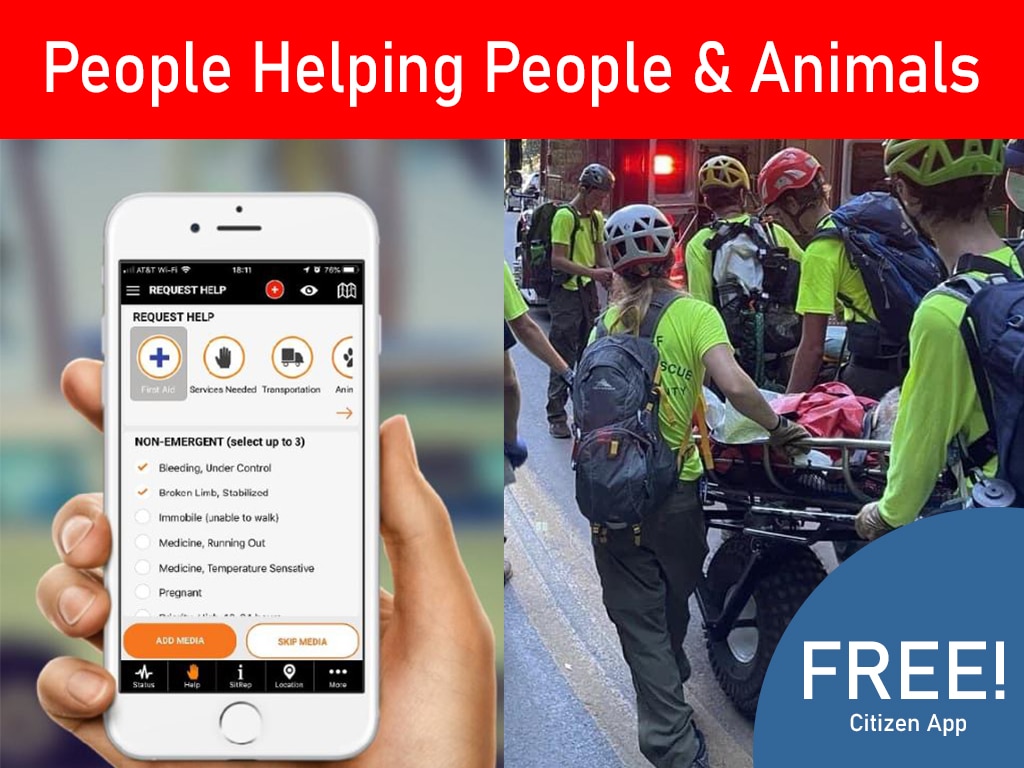

During a fast-moving emergency, teams rarely lack information. They lack a reliable way to sort incoming reports, identify what matters most, and give decision-makers a clear operating picture. That challenge becomes harder when updates arrive through different channels and contain inconsistent levels of detail.
AI incident management software can help emergency organizations summarize reports, classify incoming information, surface patterns, and support prioritization. It should assist qualified personnel, not make autonomous life-safety decisions, replace incident command, or hide how recommendations were produced.
The responsible approach begins with bounded, reviewable tasks. Examples include organizing incident records and preparing concise updates. Organizations should test accuracy, privacy, security, connectivity, and fallback procedures before relying on a system during a crisis. That starts with a clear definition of the category and its difference from ordinary ticketing tools.
What Is AI Incident Management Software?
AI-enabled incident management uses artificial intelligence to streamline incident detection, response, and resolution. In practice, that may mean extracting key details from reports, organizing information, identifying patterns, or helping a response team find the next relevant record. It does not mean handing command authority to a model.
For emergency organizations, the category needs a broader definition than the software used only by an information technology help desk. A useful system should connect incoming reports to roles, locations, severity, communication, status, and follow-up. It should help an emergency manager or volunteer coordinator see what has been reported, what has been verified, who owns the next action, and what remains unresolved.
PubSafe offers an example of the coordination layer around that workflow. Its mobile app, browser-based command portal, and cloud infrastructure support real-time synchronization. The platform also has a dual-use model, supporting daily readiness and volunteer management during normal operations as well as coordination during emergencies. Learn more about the emergency coordination platform model before comparing AI features.
The distinction matters because an AI feature can be useful without being the system of record or the decision-maker. A summary can shorten a briefing. A classification can help sort incoming reports. A retrieval feature can surface a relevant update. The authorized human still decides whether the information is accurate, significant, and ready to influence operations.
Where Can AI Assist During an Incident?
The safest starting point is work that is repetitive, reviewable, and easy to compare with source records. AI can summarize long updates, classify reports by topic or urgency, prioritize alerts for review, and retrieve relevant details from a large incident record. These tasks reduce searching and formatting time without requiring the system to decide what responders must do.
For example, a summarization tool might turn multiple field updates into a briefing draft while retaining links to the original reports. A classification tool might group reports by location, incident type, or apparent severity. A retrieval assistant might answer which area, resource, or team is mentioned in a set of records. Each output should show its source and remain editable by an authorized person.
Structured data makes those uses more useful. PubSafe’s incident workflow includes detection, GPS location, category and severity, media, description, routing to relevant organizations, and status tracking through resolution. Its platform also supports messaging, situation reports, priority alerts, geofencing, mapping, and cross-platform synchronization. That is the kind of operational context an AI feature can help organize, provided the underlying data is current and complete.
Use a reviewable assistance checklist
- Can the reviewer open the original report behind a summary or classification?
- Does the system distinguish a verified fact from an inference or missing data?
- Can staff correct an output and record who approved the final version?
- Does the workflow preserve location, time, severity, assignment, and status changes?
- Can the team continue its established command and communication process if the AI feature is unavailable?
These controls turn AI from a novelty into a bounded operational aid. They also make it easier to compare a vendor’s demonstration with a real disaster response platform workflow.
What Must Remain Under Human Control?
AI can reduce the time required to organize incident information. Speed does not transfer responsibility from an experienced responder to a software system. The boundary should be explicit: AI may assist with summaries, pattern recognition, prioritization, and situational awareness. Qualified people retain authority over decisions that affect safety, rights, resources, and public communication.
Approval and escalation need accountable owners
Every AI-generated recommendation should have a named human reviewer before it becomes an operational action. That includes changing incident priority, escalating a report, notifying the public, assigning scarce resources, or closing an incident. An approval step is not meaningful if reviewers cannot see the information behind a recommendation or do not have enough time and authority to challenge it.
Escalation rules should identify when the system must stop and hand the matter to a person. Unclear reports, conflicting data, unusual conditions, possible vulnerable-person impacts, and life-safety judgments belong in that category. Vendors may describe agents that challenge their own conclusions. That safeguard is not a substitute for qualified human review. Incident.io describes this type of adversarial checking. Independent evaluation guidance also recommends calibrated skepticism and stronger validation for AI-generated postmortems than for autonomous root-cause analysis.
Explainability, privacy, and bias checks are operational controls
Responders should be able to ask what information influenced an output, what information was missing, and whether the recommendation was generated from current or stale data. Keep the underlying report, edits, approvals, escalations, and final decisions in an audit trail. This makes after-action review possible and helps teams identify recurring errors rather than treating an AI output as an unquestionable record.
Privacy and bias checks are equally practical. Limit access to sensitive incident details, define retention rules, and test whether recommendations vary unfairly by neighborhood, language, disability, age, or another protected characteristic. These checks should happen before deployment and continue during real-world use. The objective is responsible assistance: organizing reports, highlighting patterns, and supporting awareness without disguising an unverified judgment as fact.
Use AI alongside established command systems
AI incident management software should fit into the response structure already used by an organization. PubSafe is designed to complement CAD, 911, and incident command systems, not replace them. Its role is to help participating organizations coordinate information and people while established authorities retain command decisions. That complementary model is safer than claiming that an AI tool can independently dispatch resources, make life-safety determinations, or manage an emergency from end to end.
How Should Organizations Evaluate AI Incident Management Software?
Evaluate the platform as an emergency operating system, not as a collection of impressive demonstrations. The strongest choice should help people detect, organize, communicate, and learn from incidents while keeping consequential decisions with qualified leaders. Test the full workflow, from the first alert through the after-action review. Expose where the software depends on integrations, data quality, connectivity, or human review.
Start with the criteria below, then require each vendor to demonstrate its answers using representative incident data. Alert quality, workflow structure, integration depth, post-incident analysis, AI validation. And total cost are established dimensions for comparing incident-management tools, but emergency organizations also need explicit governance and authority boundaries.
| Criterion | Evidence to request | Emergency-specific question |
|---|---|---|
| Alert quality | Historical alert examples, noise-reduction metrics, prioritization logic, and escalation rules. | Can the system distinguish a life-safety signal from duplicate, low-value, or stale notifications without hiding uncertainty? |
| Workflow structure | A live demonstration of role assignment, incident status, approvals, escalation, and a time-stamped operating record. | Can an incident commander see who owns the next action, what has been verified, and which decisions still require approval? |
| Integrations | API documentation, supported communication and mapping tools, failure behavior, and the difference between contextual alerts and bare notifications. | What happens when a connected system is delayed, unavailable, or sending incomplete location and severity data? |
| Post-incident analysis | An exported timeline, audit history, incident report, and examples showing how notes and actions are retained. | Can the team reconstruct what happened without manually searching scattered messages, then identify a specific corrective action? |
| AI validation | Testing on representative, redacted incident data; confidence indicators; source traceability; error handling; and human review controls. | Does the vendor demonstrate summaries and classifications on your alerts, rather than relying on generic claims or autonomous root-cause analysis? |
| Total cost | License, usage, implementation, integration, training, support, data retention, and future expansion costs. | How much staff time and technical work are required before a volunteer team or emergency office can use the workflow reliably? |
| Governance | Data-use policy, access controls, retention rules, model-change notices, accountability ownership, and an incident escalation policy. | Who can approve an alert, override an AI suggestion, audit the decision, and suspend a feature when the output is unsafe? |
Use the NIST AI Risk Management Framework as a practical governance lens. NIST describes the framework as a voluntary way to improve trustworthiness across the design, development, use, and evaluation of AI systems. Its four functions, Govern, Map, Measure, and Manage, create a useful sequence for procurement: assign responsibility, define the emergency context and risks, test performance and limitations, then monitor and address issues over time. See this guide to evaluate emergency management software with budget, staffing, and operational fit in mind.
Does AI Incident Management Software Work During Outages?
Only if the surrounding response plan accounts for what happens when the software cannot connect. A platform may organize reports, surface patterns, and preserve a shared operating picture during normal connectivity. It cannot replace radio procedures, satellite communications, mesh networks, or other fallback channels when cellular and internet infrastructure is damaged or overloaded.
Test this boundary before an emergency. Map every dependency between the application, identity provider, cloud services, mobile devices, cellular networks, and the systems that provide source data. Then run a scenario in which connectivity is intermittent rather than simply unavailable. Can responders still receive assignments? Can they verify the last known status of an incident? What happens to updates entered on a device while it is disconnected? If the answer is unclear, the organization has a continuity gap, not an AI solution.
Plan complementary channels
Fallback communications should have defined owners, escalation rules, and a handoff procedure for returning to the primary platform. Teams might use radio, satellite, telephone, or in-person check-ins according to their risk profile. When service returns, reconcile those updates deliberately. Do not assume that a system can automatically merge conflicting reports or infer which field update is authoritative.
PubSafe is transparent about its current limitation: it requires continuous internet connectivity and does not currently provide offline functionality. That makes connectivity testing and complementary fallback communications essential for any organization evaluating it. PubSafe can support connected coordination, while an emergency organization remains responsible for maintaining a resilient communications plan. Its structured workflows can also support emergency resource request tracking once authorized users can reconnect and synchronize information.
Protect data during continuity operations
Outage planning should cover more than availability. Review who can access incident information, how accounts are authenticated, and what data is copied into temporary channels or paper logs. PubSafe’s stated controls include SSL/TLS transmission encryption, token-based API authentication, private-network architecture, and hardware firewalls. These controls support a security review, but they do not eliminate the need to minimize sensitive data in fallback communications or define retention and reconciliation procedures.
Trustworthy deployment also benefits from formal risk management. NIST’s AI Risk Management Framework is intended to help organizations incorporate trustworthiness into the design, development, use, and evaluation of AI systems. NIST’s April 2026 concept note for a critical-infrastructure profile is a useful reminder that resilience and trust should be evaluated together, not treated as separate procurement questions.
How Does PubSafe Fit Into an AI-Enabled Response Stack?
A structured operating layer for people and information
PubSafe is best understood as a coordination layer within a broader response stack, not as an autonomous AI system. It does not replace 911, computer-aided dispatch (CAD), emergency communications infrastructure, or an incident command system. Instead, it helps organizations turn incoming reports, operational updates, and volunteer activity into a shared operating picture that qualified leaders can review and act on.
PubSafe combines a mobile app, a browser-based command portal, and cloud infrastructure for real-time synchronization. A report can capture GPS location, category, severity, media, and description, then be routed to relevant organizations and tracked through resolution. That structure gives an AI-enabled response stack cleaner information to work with than fragmented email, text messages, WhatsApp threads, social posts, and spreadsheets. Any later use of AI for summarization, classification, retrieval, or pattern review should support this workflow, not obscure who made a decision or why.
The platform also supports one-to-one, team, and mass messaging, situation reports, priority alerts, geofencing, and cross-platform synchronization. Maps can combine member locations, weather radar, incident reports, resource overlays, and external alert layers such as IPAWS, USGS, and the National Weather Service. These capabilities support situational awareness while keeping responsibility with the people managing the incident.
Coordination beyond the active incident
PubSafe’s dual-use model supports daily readiness and volunteer management during normal operations as well as coordination during emergencies. Teams can track volunteer hours for grant reporting and compliance, helping maintain relationships and operational familiarity before a crisis occurs. Organizations looking to turn incident information into documented lessons can also evaluate PubSafe as after-action reporting software.
Know the boundaries before deployment
PubSafe currently requires continuous internet connectivity and does not provide offline functionality. Cellular or internet infrastructure may be damaged or overloaded during an emergency, so it should be deployed alongside appropriate fallback communications and existing response procedures. Its stated security controls include SSL/TLS transmission encryption, token-based API authentication, private-network architecture, and hardware firewalls. But each organization should still evaluate governance, access, retention, and resilience requirements for its own risk environment.
In practical terms, PubSafe can organize the coordination layer around an AI-enabled response stack. It should not be presented as the AI decision-maker, the emergency dispatch authority, or the system of record for every operational function.
Frequently Asked Questions
What can AI safely do during an emergency?
AI can help organize incoming reports, summarize long incident updates, classify information, highlight patterns, and surface relevant details for responders. It can reduce manual searching and support situational awareness, but a qualified person should verify important information before it guides public messaging, resource allocation, or operational decisions.
Should AI make life-safety or dispatch decisions?
No. AI should assist with information management, not replace incident commanders, dispatchers, 911 processes, or other authorities responsible for life-safety decisions. Set clear approval and escalation rules, preserve an audit trail, and require human review when information is incomplete, ambiguous, sensitive, or potentially harmful.
How should an organization evaluate an AI incident management tool?
Start with real emergency workflows, not a feature checklist. Ask the vendor to demonstrate alert handling, source traceability, role-based permissions, integrations, human approvals, failure behavior, and reporting using representative data. Test whether the system reduces noise without hiding important signals, and confirm how your team can correct inaccurate outputs.
Can AI incident management software work during an outage?
Only if the product and communications environment support the required connectivity and fallback processes. Test cellular, internet, power, and integration failures before deployment, and document what responders will use when the platform is unavailable. PubSafe currently requires continuous internet connectivity and does not provide offline functionality, so it should complement rather than replace established emergency communications and command systems.
Contact us to plan your next step
Choosing an incident management platform is easier when your team can assess how it fits existing roles, workflows, and emergency tools. PubSafe can help you discuss an emergency coordination platform for your organization and identify practical questions for evaluation. To talk through your needs and contact PubSafe, share your current coordination goals and response environment.