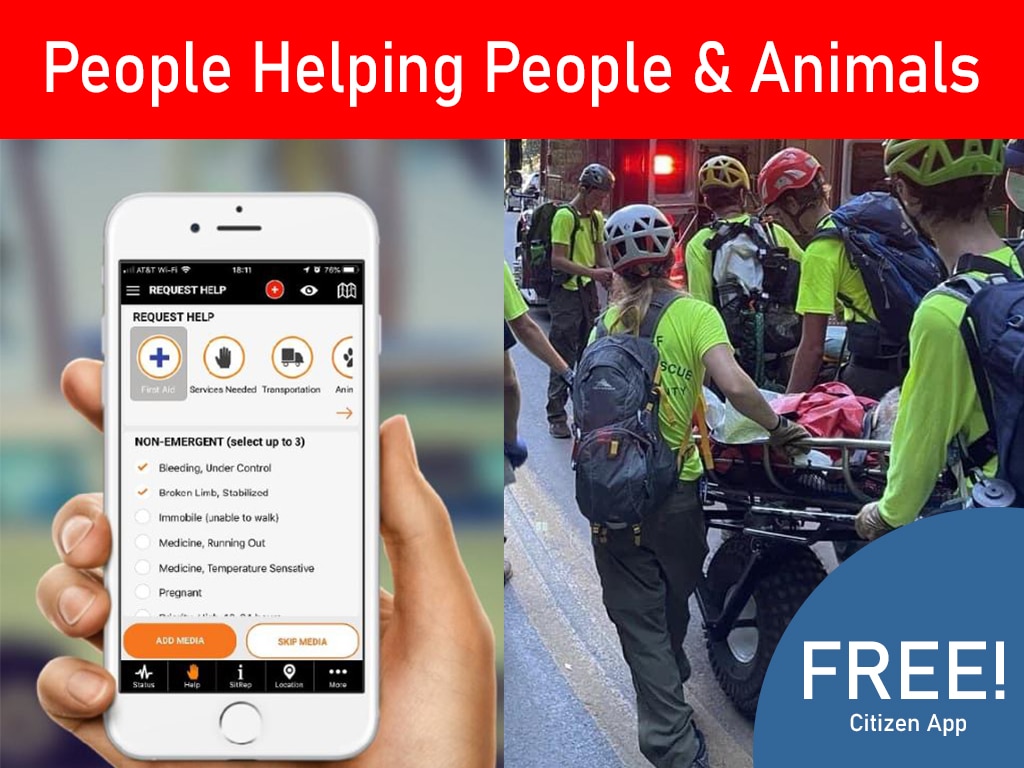
Apartment community emergency preparedness is more than posting a list of emergency phone numbers in the leasing office. Property managers must coordinate residents, onsite staff, maintenance teams, vendors, building systems, and public safety partners while conditions change. A practical plan gives each person clear responsibilities before an incident and a reliable way to share verified information during it.
This guide explains how property managers and resident-facing teams can build an operational plan for alerts, resident accountability, accessible communication, evacuation, sheltering, and post-incident reporting. It focuses on apartment operations, not HOA governance, so the recommendations can be adapted to the staffing, building access, and resident needs of a multifamily property.
What Makes Apartment Community Emergency Preparedness Different?
Apartment community emergency preparedness must protect people and keep a property functioning while residents have different needs, schedules, mobility levels, languages, and access to transportation. The plan also has to account for shared systems such as elevators, fire alarms, utilities, entry controls, parking areas, and common spaces.
That operating environment differs from an HOA, where an elected board often focuses on association governance and common-property decisions. A property manager or onsite response team is responsible for turning a plan into daily actions: confirming who is onsite, communicating building-specific instructions, coordinating vendors, preserving records, and reporting what happened.
| Planning question | Apartment-community focus |
|---|---|
| Who leads? | Property manager, regional operations lead, maintenance lead, and designated backups with authority clearly assigned. |
| Who needs information? | Residents, staff, contractors, ownership representatives, emergency services, and community partners. |
| What must be protected? | Resident safety, accessible routes, building systems, access information, essential records, and continuity of operations. |
| What must be documented? | Alerts, check-in results, incidents, decisions, vendor activity, damage, unmet needs, and recovery actions. |
The HUD Exchange multifamily disaster preparedness template uses a resident safety, building protection, and business continuity framework. That structure is useful for property managers because it connects resident-facing actions with the physical property and the information needed to resume operations.
What Should a Property Manager Include in an Apartment Emergency Plan?
A property-level plan should be specific enough for a new staff member or backup lead to follow during a stressful event. Keep the core plan accessible in a secure digital location and in an approved offline format. Review it when staffing, building layouts, resident populations, vendors, or local hazards change.
1. A property-specific hazard and vulnerability profile
Start with hazards that could affect the property and the people who live there. Depending on the location, that may include severe storms, flooding, wildfire, extreme heat, earthquakes, winter weather, power failures, hazardous-material incidents, public safety threats, or a prolonged communications outage.
For each hazard, identify likely impacts on residents and operations. Consider which entrances or roads may become inaccessible, whether elevators or power-dependent systems could be affected, where residents could shelter, which building areas need inspection, and which services must be restored first. Avoid copying a generic county plan without adding building-level details.
2. Defined roles, backups, and escalation paths
List the property manager, assistant manager, maintenance and facilities leads, security contacts, regional leadership, ownership contacts, emergency vendors, and relevant public agencies. Define primary and backup responsibilities for monitoring conditions, contacting 911 or local authorities, sending resident updates, checking common areas, coordinating access, documenting damage, and approving repairs.
Include a simple escalation rule. The person who receives an urgent report should know when to contact emergency services. They should also know when to notify the property manager, issue a resident alert, or request regional support. The plan should identify who can make decisions if the usual manager is offsite or unavailable.
3. Alert channels and message templates
Use more than one channel because residents may not have power, internet access, or the same communication preferences. The plan can define how the team uses text or app alerts, email, phone calls, building notices, door-to-door outreach, resident portals, and coordination with local authorities. Each method should have an owner and a backup.
Prepare short templates for an initial warning, protective-action instruction, evacuation update, shelter-in-place message, all-clear notice, and service interruption. Every message should state what happened, which building or area is affected, what residents should do now, where verified updates will appear, and when the next update is expected. Do not forward unverified rumors or conflicting instructions.
4. Resident accountability and support procedures
Resident accountability is not a demand for unnecessary personal information. It is a structured way to identify who has checked in, which units or areas still need attention, and what support requests are unresolved. Establish privacy-conscious procedures for voluntary check-ins, welfare concerns, missing residents, visitors, and residents who may need assistance.
Define how the team records a check-in, avoids duplicate outreach, escalates an unanswered concern, and shares only the information required for a safety response. Pay particular attention to older adults, people with disabilities, residents with medical or power-dependent needs, families with young children, and residents who may not receive messages in English.
5. Building, vendor, and continuity information
Keep current information about utility shutoffs, fire protection systems, access points, generators or backup power, elevators, water controls, alarm panels, emergency equipment, critical vendors, insurance contacts, and building plans. Protect sensitive access details and limit them to authorized personnel.
Document how rent, maintenance requests, resident records, work orders, and staff communication will continue if the leasing office is closed. Identify an alternate meeting point, an offsite contact method, and a process for preserving incident photos, reports, invoices, and decisions.
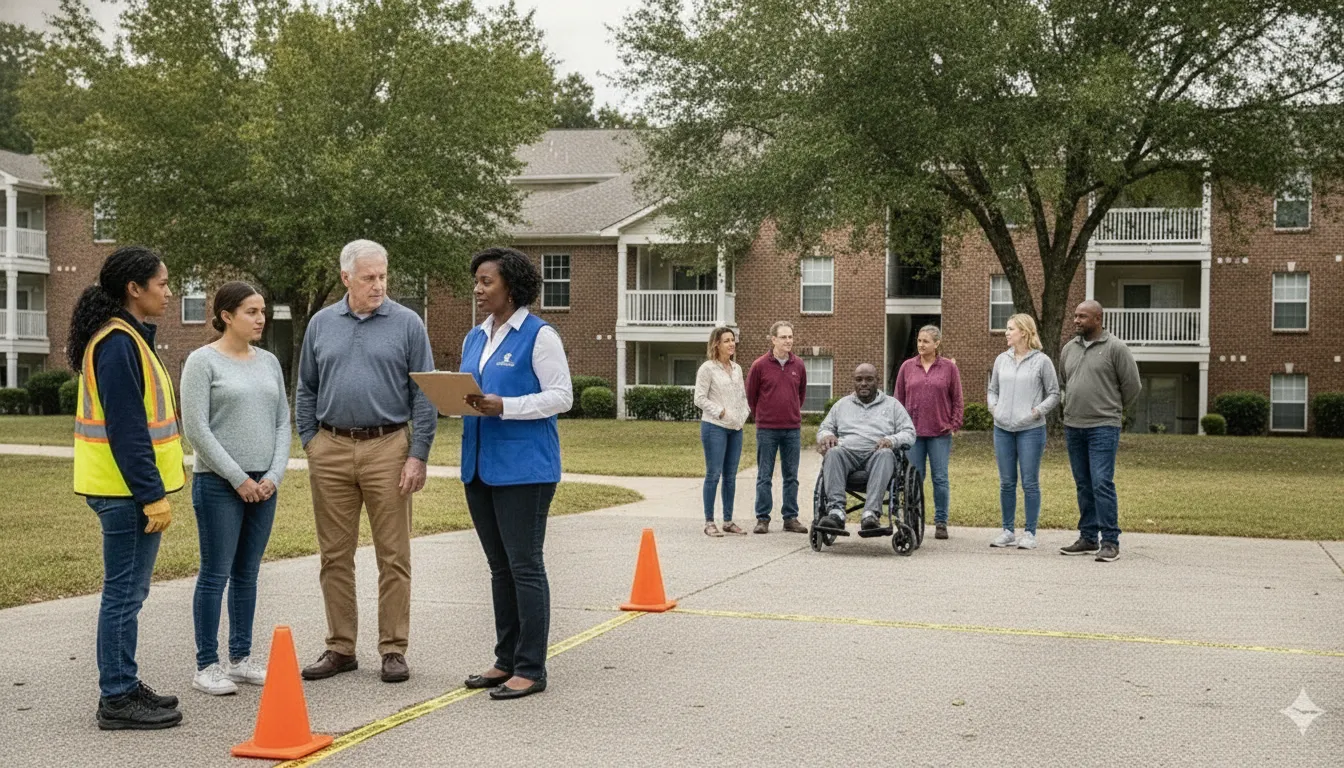
How Should Property Managers Handle Alerts and Resident Accountability?
Alerts and accountability work best as one workflow. An alert tells residents what to do, while accountability helps the response team understand who received the information, where needs remain, and whether conditions are changing. The goal is not to create a perfect census during a crisis. The goal is to focus limited staff attention on verified safety information and unresolved needs.
- Confirm the source and scope. Identify whether the message comes from emergency services, a utility, a weather authority, building staff, or a verified incident report. Record the affected building, floor, amenity, or surrounding area.
- Choose the protective action. State whether residents should evacuate, shelter in place, avoid an area, conserve water, prepare for a service interruption, or wait for further instructions.
- Send a concise first message. Use plain language, avoid speculation, and include the time of the next update. If information is incomplete, say what is confirmed and what is still being checked.
- Track responses and requests. Record resident check-ins, unanswered outreach, accessibility needs, transportation concerns, medical or power-related concerns, and reports of damage or unsafe conditions.
- Escalate unresolved needs. Route urgent safety issues to emergency services and operational issues to the responsible lead. Do not leave a resident request in a general inbox without an owner.
- Close the loop. Send updates when instructions change, when services are restored, or when an all-clear is issued by the appropriate authority. Preserve a time-stamped record of major messages.
For properties with multiple buildings, divide accountability by building, floor, or response zone. A simple structure makes it easier to see which areas have been checked and prevents several staff members from unknowingly performing the same outreach while another area receives none.
How Can an Apartment Community Plan for Accessible Communication, Evacuation, and Sheltering?
Evacuation and sheltering plans should be usable by residents with different mobility, sensory, language, transportation, and caregiving needs. The plan must also recognize that an accessible route or shelter option can become unavailable when elevators lose power, smoke affects a corridor, roads flood, or staff cannot reach a building.
Work with residents and qualified local partners to identify practical options without creating a public list of private medical information. The U.S. Fire Administration guide for residents of large apartment buildings emphasizes building-specific evacuation awareness, while FEMA guidance on evacuation and shelter-in-place planning provides a broader framework for protective-action decisions.
Build an accessible communication plan
- Use plain language, high-contrast notices, and clear direction words such as leave, stay, avoid, or wait.
- Offer more than one communication method and identify how residents can request an accommodation.
- Plan for language access, captions or written instructions, and support for residents who cannot hear an alarm or read a notice.
- Describe the location and accessibility of exits, assembly areas, shelters, charging options, and transportation pickup points.
- Coordinate with local emergency managers, fire officials, disability-serving organizations, and transportation partners where appropriate.
Practice the decision points
Exercises do not need to be elaborate. A tabletop discussion can test who sends an alert when a storm warning arrives. A walkthrough can reveal blocked exits, confusing signs, poor lighting, or a missing backup key. A communications drill can test whether staff can reach residents through the planned channels and record unresolved responses.
After each exercise, document what worked, what failed, who owns the correction, and when the plan will be reviewed. Practice should improve the system, not simply prove that a meeting occurred.
What Belongs in Post-Incident Reporting and Recovery?
Post-incident reporting turns a stressful event into usable operational knowledge. It should be factual, time-stamped, and focused on actions and conditions rather than blame. Start while details are fresh, then add verified information as vendors, responders, and residents provide updates.
A practical report can include:
- Incident date, time, location, hazard, and source of the initial information.
- Buildings, units, common areas, utilities, and services affected.
- Alerts issued, channels used, and major changes in instructions.
- Resident check-in totals, unresolved requests, accessibility needs, and escalations.
- Emergency services, vendors, contractors, and community partners contacted.
- Observed damage, photos, work orders, costs, temporary controls, and repair status.
- Decisions made, who made them, and the information available at the time.
- Resident, staff, or vendor safety concerns that require follow-up.
- After-action improvements, assigned owners, and due dates.
Keep resident information limited to what authorized responders need. Separate sensitive personal details from a general after-action summary, and follow the property’s privacy and records policies. Reporting should support recovery, insurance, compliance, and learning without turning a safety record into an uncontrolled data collection exercise.
| Phase | Property-manager question | Useful record |
|---|---|---|
| Before | Are roles, channels, routes, vendors, and supplies ready? | Plan version, contact list, exercise notes, open corrective actions. |
| During | What is confirmed, who needs help, and what action is next? | Alerts, check-ins, incident reports, decisions, escalations. |
| After | What must be restored, explained, corrected, or practiced? | Damage report, work orders, resident follow-up, after-action review. |
Can Software Support Apartment Emergency Preparedness?
Software should reinforce a plan, not replace judgment, local authority, or direct emergency services. Its role is to give authorized teams a shared coordination layer for information that otherwise gets scattered across texts, email threads, spreadsheets, paper notes, and individual phones.
For an apartment community, a platform such as PubSafe can support organized communication, member or resident information workflows, incident reporting, and coordination among the property team and approved response partners. The specific implementation should follow the property’s privacy rules, staffing model, resident communication preferences, and local emergency procedures.
Before adopting any tool, ask:
- Can the team send clear, targeted updates through channels residents use?
- Can authorized staff record incidents, check-ins, requests, and follow-up without duplicating work?
- Can the workflow show ownership and status for unresolved needs?
- Can the team preserve a usable incident history for recovery and after-action review?
- Can the tool complement local emergency-management and public-safety coordination instead of creating a separate, isolated process?
Technology is most effective when it is introduced alongside a property-specific plan, staff training, resident education, and regular exercises. The objective is not to add another inbox. It is to make the right information easier to find, verify, assign, and act on when normal operations are disrupted.
Frequently Asked Questions About Apartment Community Emergency Preparedness
What is apartment community emergency preparedness?
Apartment community emergency preparedness is the property-level process for identifying hazards, assigning staff roles, communicating with residents, supporting evacuation or sheltering, tracking safety needs, coordinating vendors and responders, and documenting recovery. It combines resident safety with building protection and continuity of operations.
What should property managers do first when building an emergency plan?
Start with a property-specific hazard and vulnerability review. Map likely hazards to buildings, residents, access routes, utilities, vendors, communication channels, and decision-makers. Then assign primary and backup roles and test the plan with a short tabletop exercise or walkthrough.
How can property managers keep residents accountable during an emergency?
Use a privacy-conscious check-in and outreach process that records who has responded, which areas still need attention, and what support requests remain unresolved. Focus on actionable safety information, assign every request to an owner, and escalate urgent concerns to emergency services.
How should apartment communities support residents with disabilities?
Plan multiple communication methods, accessible routes and assembly areas, language access, transportation options, and procedures for requesting an accommodation. Review the plan with qualified local partners and test it under conditions such as power loss, blocked routes, or an unavailable elevator.
Why is post-incident reporting important for property managers?
A factual report preserves the timeline, decisions, resident needs, damage, vendor activity, and recovery actions. It supports follow-up, insurance and compliance needs, staff learning, and targeted improvements to the next version of the emergency plan.
Preparedness becomes more dependable when it is assigned, practiced, and improved after every exercise or incident. Contact PubSafe to discuss a coordination approach for your community and response partners.