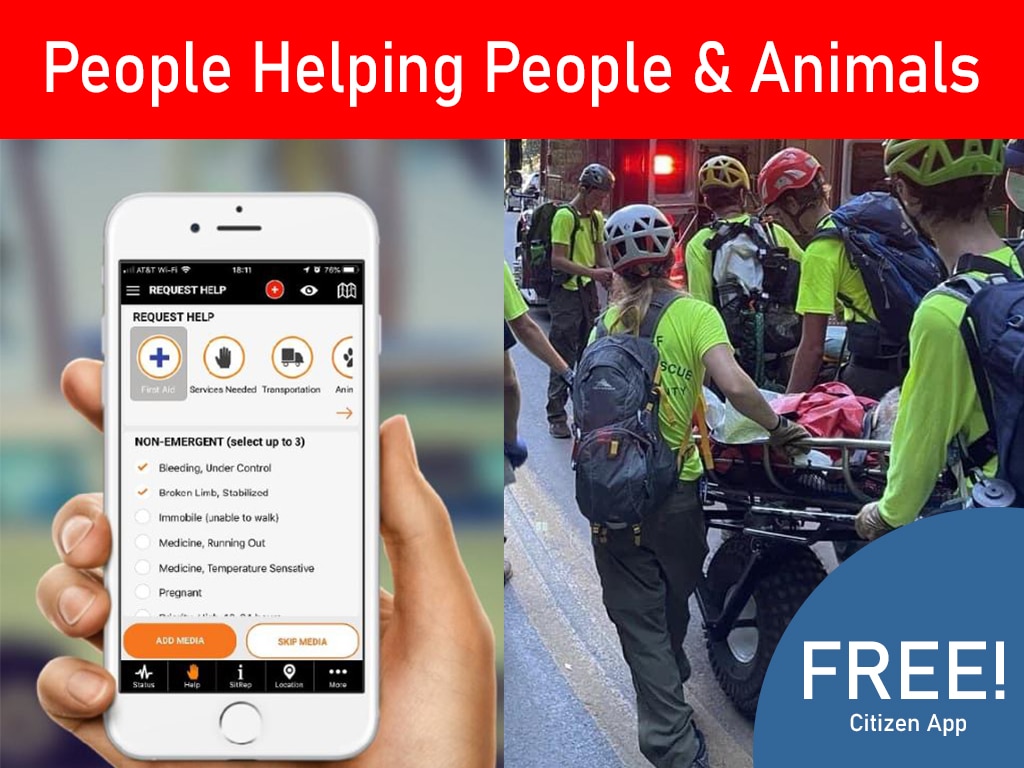
When a Community Emergency Response Team activates, the challenge is rarely a lack of commitment. It is keeping volunteers aligned as assignments change, messages move across channels, and leaders build a reliable picture of conditions on the ground. A practical coordination workflow helps a 20- to 200-member volunteer team move from routine preparedness to organized action without depending on scattered texts and spreadsheets.
Ready to strengthen your CERT response workflow? Schedule a free consultation with PubSafe to explore a coordination approach that fits your team and budget.
That layer should support the work CERT volunteers already do while complementing professional emergency response, not replacing 911 or computer-aided dispatch. The first step is understanding why preparedness breaks down when teams lack a shared system for organizing people, information, and responsibilities.
Why CERT Teams Need Collaboration Software for Disaster Preparedness
Community Emergency Response Team (CERT) volunteers train to support their neighbors, but readiness depends on more than skills. Many teams operate with 20 to 200 volunteers, face activation challenges, and lack adequate disaster coordination technology. When an alert arrives, leaders need a reliable way to reach the right people. Organize assignments, and maintain a shared operating picture without relying on scattered texts, email threads, or spreadsheets.
CERT team collaboration software for disaster preparedness gives Community Emergency Response Teams one resilient coordination layer for communication. Task assignment, scheduling, and shared situational awareness before and during an incident.
Start building a practical coordination workflow before the next activation. Review CERT program funding options and plan tools around your team’s actual budget.
That need becomes more urgent during a large-scale disaster. FEMA describes the CERT program as a consistent, nationwide approach to volunteer training and organization that professional responders can rely on during disaster situations. Organized volunteers can handle appropriate support activities, allowing professional responders to focus on more complex tasks. The value of a CERT team therefore depends not only on who is trained, but also on whether leaders can activate and coordinate those people quickly.
Move from individual contacts to a dependable workflow
A dedicated collaboration workflow gives coordinators one place to manage the steps that are easy to lose under pressure: confirming availability, sharing instructions, assigning roles, and recording updates. It also creates a repeatable process that volunteers can practice during drills. Team members should know where to look for current information and how to report their status before an emergency tests the system.
This does not mean replacing 911, computer-aided dispatch, or professional incident command. It means giving the CERT organization a practical coordination layer that connects trained volunteers with the people managing the response. PubSafe is positioned to bridge emergency alerts and real-world response through incident reporting, volunteer coordination, and situational awareness.
Budget discipline matters, especially for volunteer-led programs. The right platform should be useful during routine planning as well as an activation, so the team builds familiarity instead of paying for a system that sits unused. A collaboration tool can support daily coordination, then provide a clearer path from notification to assignment when conditions deteriorate.
What Does CERT Team Collaboration Software Do?
For a Community Emergency Response Team, collaboration software turns scattered updates into a shared operating picture. The goal is not to replace 911 or professional emergency services. It is to help trained volunteers organize information, coordinate assignments, and support responders with clear, timely updates.
Team communication that works in both directions
A useful platform gives coordinators a dependable way to send updates to the right people and receive field information in return. That bidirectional communication matters when conditions change quickly. PubSafe is designed to provide real-time situational awareness and communication between responders and citizens, helping a CERT team connect incoming reports with outbound instructions. The key takeaway: communication should be a live exchange, not a one-way announcement board.
Task assignment by role and responsibility
During an activation, leaders need to clarify who is handling welfare checks, supply support, search and rescue coordination, or public information. Role-based collaboration rooms can let a defined group focus on one activity while retaining access to the broader operational picture. This approach reflects the way emergency collaboration systems support specialized teams without isolating them from incident-wide information. Research on disaster-response software describes this balance as focused work with comprehensive visibility.
Shift scheduling that keeps coverage visible
Volunteer availability changes, especially during a prolonged incident. Scheduling tools should show who is on duty, when a shift changes, and which roles still need coverage. That reduces reliance on personal spreadsheets and helps leaders avoid assigning the same people repeatedly. Use the same workflow during routine emergency communication drills so volunteers recognize it when an actual activation occurs.
Shared situational awareness for better decisions
Team communication, assignments, and schedules become more useful when they feed a common view of the incident. PubSafe positions itself as a resilient coordination layer that bridges emergency alerts and real-world response, including incident reporting, volunteer coordination, and situational awareness. The platform is intended to support both “blue skies” daily operations and “gray skies” emergencies. Every role should see the information needed to act, while leaders retain the broader context required to prioritize work.
| Preparedness task | With scattered tools | With collaboration software |
|---|---|---|
| Team communication | Texts and email threads that miss members | One shared channel everyone monitors |
| Task assignment | Manual spreadsheets that go stale | Role-based assignments with clear owners |
| Shift scheduling | Personal calendars with gaps in coverage | Visible duty rosters and coverage alerts |
| Situational awareness | Disconnected field reports | Shared operating picture for leaders |
How PubSafe Works as the Resilient Coordination Layer for Your CERT Team
Community Emergency Response Teams do not rely on one communication method in every incident. Radio, mesh networks, satellite devices, phone calls, and in-person check-ins may all have a role. PubSafe serves as the resilient coordination layer that helps connect those channels to one shared operating picture. So team leaders can organize information and action when normal networks are unreliable.
The goal is not to replace your existing communication tools. It is to give your team a central hub for coordination around them. That distinction matters during an outage. A radio transmission may reach a field group, while a satellite device may connect an incident lead elsewhere. PubSafe can help bring updates, assignments, reports, and requests into a workflow that the broader team can follow.
Coordinate in blue skies and gray skies
PubSafe is designed to support both “blue skies,” or daily operations, and “gray skies,” or emergency conditions. During routine periods, coordinators can maintain member information, share preparedness updates, and keep volunteers familiar with the collaboration process. When an incident develops, the team is not forced to adopt an unfamiliar system under pressure.
This continuity supports preparedness that becomes operational muscle memory. Leaders can use the same central workflow for planning and response, while adapting the communication method to the conditions in the field. For practical guidance, review these essential CERT digital tools and how they can fit into your team’s operating model.
Keep information moving in both directions
PubSafe provides real-time situational awareness and bidirectional communication between responders and citizens. That means the coordination flow does not stop at outbound alerts. Team members and residents can send information back, helping leaders understand conditions, requests, and changing needs as an incident unfolds.
For CERT leaders, this creates a clearer path from field observation to informed action. A report received through an alternate channel can be relayed to the appropriate group, while status updates can be shared with people who need them. This approach is especially useful when maintaining emergency communication during power outages requires several tools and fallback methods.
Scale coordination without creating a budget barrier
PubSafe’s community messaging platform starts at $99 per year, giving smaller volunteer organizations a lower-cost entry point. As coordination needs grow, the Pro Tier supports teams with up to 30,000 members. Your CERT team can begin with a practical coordination layer and expand as participation, jurisdictions, or partner organizations increase.
Which Collaboration Tools Should Your CERT Team Adopt First?
Start with the tools that make routine coordination easier and emergency activation more disciplined. A Community Emergency Response Team does not need every feature on day one. It needs a dependable workflow that volunteers can learn during normal operations and use confidently when conditions deteriorate.
-
Establish one team messaging channel
Replace scattered text threads and email chains with a shared messaging space for announcements, availability checks, and response updates. Keep the first deployment affordable enough to sustain. PubSafe community messaging starts at $99 per year, giving smaller teams a practical entry point without requiring a large technology budget. Choose the channel your team will actually monitor every day.
-
Add role-based coordination
Next, organize conversations and assignments around real responsibilities, such as search and rescue, logistics, shelter support, or communications. Members should see the information relevant to their role while leaders retain the broader operational picture. This reduces noise without isolating workgroups. Use the same structure in exercises and review it during your CERT disaster drill planning.
-
Connect existing systems through open standards
Before choosing a platform, confirm that it can interoperate with tools your agency and partners already use. Open-standards architecture allows information to move between existing systems and gives authorized organizations shared visibility as an incident develops. The goal is not to force every responder into a new application. The goal is to make essential information available across the response network. MIT Lincoln Laboratory describes this interoperability model as a way to share internal data externally for better awareness: open-standards emergency coordination.
-
Prioritize live maps and growth capacity
Once communication is stable, add real-time mapping for incident perimeters, evacuation zones, weather conditions, and field reports. A shared map helps leaders turn updates into coordinated action instead of relying on disconnected descriptions. Select a platform that can grow with your program. PubSafe’s Pro Tier supports teams of up to 30,000 members, so a tool adopted by a small CERT can remain useful as participation expands.
Build a Preparedness Workflow That Actually Gets Used
A drill should not be a one-day performance that disappears when the last checklist is filed. Turn each exercise into a repeatable operating rhythm: prepare, communicate, act, review, and improve. The goal is simple: when an incident occurs, volunteers should recognize the workflow because they have already practiced it during ordinary operations.
Make preparedness part of the team’s routine, not a special event. Use the same collaboration space for monthly updates, training reminders, volunteer availability, equipment checks, and incident assignments. That daily familiarity reduces hesitation during an activation. It also gives coordinators a current view of who is trained, who is available, and which responsibilities still need coverage.
Design exercises around the hazards your community faces
FEMA advises Community Emergency Response Team programs to tailor exercises to realistic events that could affect their communities. A coastal team might rehearse storm shelter support and neighborhood communications. A mountain community might test wildfire evacuation coordination. A city team could practice traffic control, damage reporting, or volunteer check-in after a severe storm. The scenario should be specific enough to expose gaps in people, procedures, and information flow.
After each exercise, capture three things while they are still fresh: what happened, where communication slowed, and what the team will change before the next drill. Assign an owner and due date to every improvement. A shared task list turns the after-action review into accountable work instead of a document that no one revisits.
Connect training to real responsibilities
CERT training gives volunteers research-validated guidance for what to do before, during, and after hazards. Use that foundation to map lessons to actual team roles, such as communications, logistics, damage assessment, or neighborhood support. FEMA also describes CERT volunteers as an important support for professional responders during large-scale disasters, allowing those responders to focus on more complex tasks. Clear role boundaries help volunteers contribute confidently without presenting the team as a replacement for 911 or established emergency services.
Review readiness on a predictable cadence. Track participation in drills, completion of assigned follow-up actions, response to test alerts, and the time required to fill critical roles. These measures show whether the workflow is becoming dependable. They also reveal when a process is too complicated for volunteers to use under pressure.
Frequently Asked Questions
Are Community Emergency Response Teams part of FEMA?
Community Emergency Response Teams are local volunteer programs, while FEMA provides national guidance and training resources for the CERT program. FEMA describes CERT as a consistent approach to volunteer training and organization that helps professional responders during disasters. FEMA CERT guidance explains the program’s role.
How do CERT volunteers prepare for disasters?
Volunteers prepare through training, realistic exercises, team organization, and practice with the hazards most likely to affect their community. Core training can include fire safety, light search and rescue, disaster medical operations, and team organization, according to FEMA’s CERT program guidance. Teams should also rehearse communication, assignments, check-ins, and reporting before an incident occurs.
Why do CERT teams need specialized collaboration software?
CERT teams often coordinate trained volunteers with limited time, budgets, and technical resources. Specialized software gives leaders one place to share updates, assign tasks, organize availability, and maintain situational awareness instead of relying on disconnected messages and spreadsheets. It should support routine operations as well as emergencies, and complement rather than replace 911 or core dispatch systems.
How can PubSafe improve CERT team disaster communication?
PubSafe serves as a resilient coordination layer between alerts and real-world response. It supports blue-sky daily operations and gray-sky emergencies, with real-time situational awareness and bidirectional communication between responders and citizens. Teams can start with community messaging for as little as $99 per year, while the Pro Tier supports up to 30,000 members. See PubSafe’s platform overview.
Ready to Strengthen Your CERT Coordination?
A resilient coordination layer can help your Community Emergency Response Team keep communication, assignments, and situational awareness connected as conditions change. Contact PubSafe to discuss how your team can build a more dependable preparedness workflow. Contact PubSafe to see how your CERT team can get started.