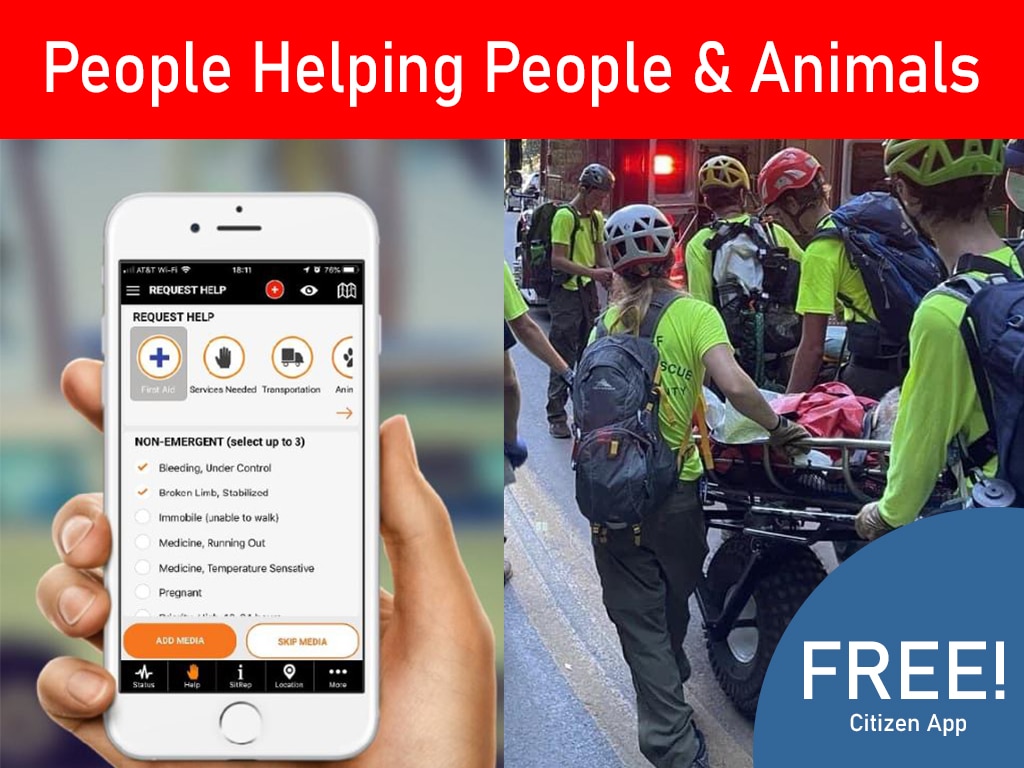
A downed power line, flooded roadway, stranded pet, or resident needing medication may be visible to the public long before it reaches an operations center. A citizen incident reporting app gives communities a structured way to turn those firsthand observations into actionable information for the people coordinating the response.
For emergency managers, CERT leaders, NGOs, and public safety partners, the goal is not to collect more messages. It is to receive better reports, assess them quickly, protect sensitive information, and connect verified needs to the right resources. When reports remain scattered across social media, voicemail, email, and informal text chains, the operational picture is delayed and incomplete.
Why citizen reporting belongs in emergency operations
Residents are already observing conditions across the community. They see blocked access routes, damaged homes, hazardous debris, isolated neighbors, animal welfare concerns, and changing weather impacts. During a widespread incident, that local visibility can extend far beyond what field teams can cover in the first critical hours.
The challenge is that raw public input is not automatically reliable or useful. A report without a location, time, category, or supporting detail can create more follow-up work for dispatch and coordination staff. Duplicate reports can make one issue appear larger than it is. Public comments may also include personal details that should not be shared broadly.
A purpose-built reporting app brings order to that input. It gives residents clear reporting options while giving authorized personnel a consistent intake workflow. Instead of asking staff to monitor multiple channels, the organization can receive reports in one operational environment, review them against other incoming information, and determine what requires action.
This is a meaningful shift in community preparedness. Citizens are not being asked to self-deploy or take unnecessary risks. They are being given a safe, defined role: observe, report, receive trusted updates, and follow local guidance.
What a citizen incident reporting app should capture
A reporting tool should make it easy for a resident to submit useful information under stressful conditions. The best experience is simple enough for the public, but structured enough for responders.
At a minimum, reports should support the incident type, location, time, description, and photos when appropriate. Location information matters because a report cannot be assessed or dispatched effectively if responders cannot determine where the condition exists. Category selection matters because a road obstruction, welfare check, medical concern, and volunteer request may need different workflows.
The reporting process should also account for the reality that community members may not know the official name of a hazard. Plain-language categories help residents identify what they are seeing without requiring emergency-management terminology. Clear prompts can encourage them to describe immediate dangers, access limitations, the number of people or animals affected, and whether conditions are worsening.
However, more fields are not always better. During a fast-moving storm or evacuation, a long intake form can discourage reporting. Organizations should prioritize the information needed for triage and allow staff to request clarification when necessary. The right balance depends on the mission, the hazards common to the area, and who will review submissions.
Reports need a path to action
A report is only valuable when it enters a defined operational process. That process may include review, validation, assignment, dispatch, status updates, and closure. For some reports, the appropriate outcome may be monitoring rather than immediate deployment. For others, it may trigger a work order, welfare check, public alert, or referral to a partner agency.
A strong system helps coordinators see who owns the next step. It should preserve report history, document actions taken, and prevent needs from disappearing into an inbox. This accountability is especially important when multiple agencies, volunteer groups, and community partners are working in the same area.
Build situational awareness without creating noise
Every incident has an information-management threshold. Early in an event, even a small number of reports can reveal a pattern: a neighborhood losing access, a cluster of vulnerable residents, or a route becoming unsafe. Later, hundreds of submissions may arrive within a short period. The operating model must work at both volumes.
Mapping is central to that model. When reports appear on a live operational map, coordinators can compare them with road closures, field assignments, shelters, resource locations, and known hazards. Geographic patterns help command staff prioritize limited personnel and equipment based on impact rather than the order messages arrived.
Verification remains essential. A citizen report is an observation, not necessarily a confirmed incident. Teams should be able to label reports by status, identify duplicates, request follow-up, and distinguish unverified information from validated field intelligence. This protects decision-making while still treating residents as valuable sources of local knowledge.
The same discipline applies to public communication. If an organization receives repeated reports about a flooded intersection, it may need to notify the public, redirect traffic, or update field teams. But a single unconfirmed report may first require verification. Two-way communication allows the organization to acknowledge the report, provide safe next steps, and reduce uncertainty without making unsupported promises.
Security and privacy are operational requirements
Incident reporting can involve addresses, contact information, images of private property, medical or accessibility needs, and details about people seeking assistance. That information must be handled with care.
Organizations should define who can view reports, who can assign work, who can access contact details, and what information may be shared with partner agencies or volunteers. Role-based access is not simply an administrative preference. It helps protect residents while ensuring that the people responsible for a task have the information needed to complete it.
Retention practices also deserve attention. Agencies and nonprofits may need records for after-action reporting, reimbursement, grant documentation, or case continuity. At the same time, they should avoid treating sensitive resident information as a permanent, unrestricted archive. Clear policies, secure cloud access, and documented workflows support both accountability and public trust.
Where the app fits before, during, and after a disaster
The strongest programs do not introduce public reporting for the first time when a disaster is already underway. In blue-sky operations, organizations can encourage residents to download the app, explain what should be reported, and run exercises that test internal routing and review procedures. Teams can also use the system for non-emergency community concerns, preparedness observations, and volunteer engagement where appropriate.
During gray-sky operations, the app becomes an intake channel for real-time conditions and assistance needs. A resident may report a blocked driveway preventing emergency access. A neighborhood volunteer may identify a supply point running low. An animal rescue partner may document livestock or pets needing transport. Each report can be evaluated within the larger response picture rather than managed as an isolated message.
After the immediate threat, reporting remains useful for damage observations, unmet needs, recovery work orders, and follow-up communication. Recovery often creates a longer, less visible workload than the initial response. A system that keeps requests, assignments, contacts, and status records organized can help teams sustain service when public attention has moved on.
Put community intelligence into a coordinated workflow
A citizen-facing app should not stand apart from the rest of the response operation. If staff must manually copy reports into separate spreadsheets, maps, and dispatch tools, the organization has only moved the bottleneck. The value comes from connecting public reports to the workflows that manage people, resources, tasks, and communications.
PubSafe supports this operational approach by pairing a permanently free citizen mobile app with a cloud-based coordination portal. Community reports can contribute to live situational awareness while authorized teams manage requests, work orders, dispatch activity, volunteers, alerts, and recovery missions in one organized environment.
Before launching any program, leaders should decide who monitors reports, what response standards apply, how urgent issues are escalated, and how the public will be informed about appropriate use. A reporting app is not a replacement for 911 or other emergency channels. It is a structured community intelligence tool that works best when its purpose is clear.
When residents know how to report safely and response teams know how to act on what they receive, a community gains more than another communication channel. It gains a practical way for people to help people and animals when timely local information matters most.