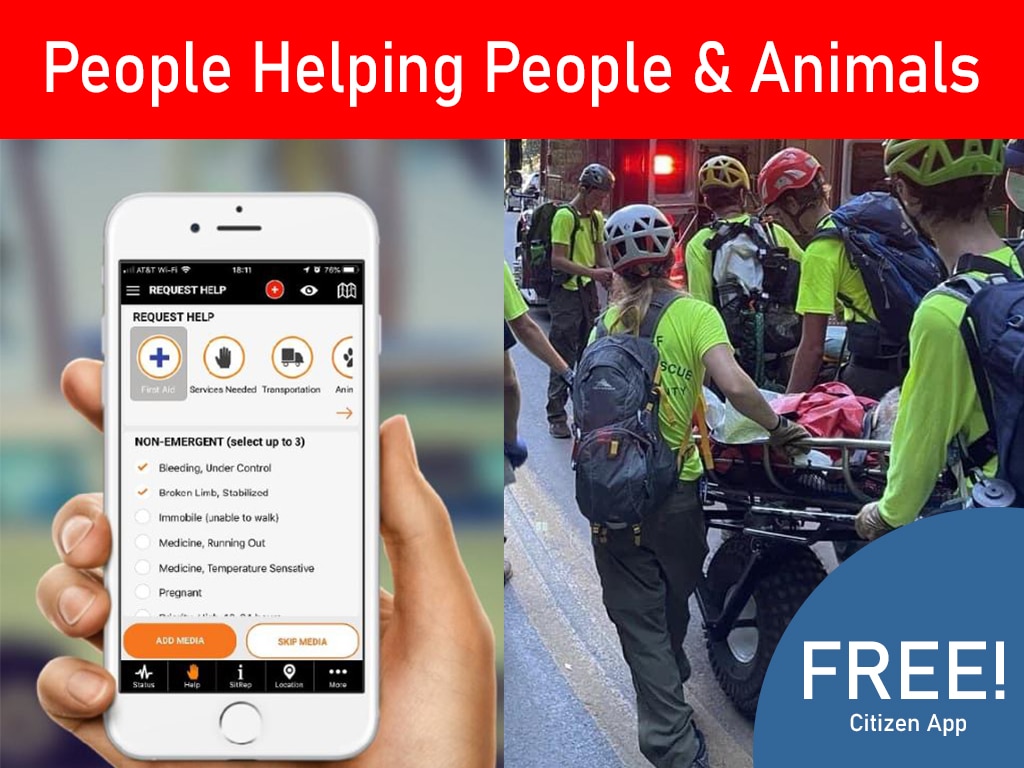

For organizations researching the best incident response and crisis communication software enterprise teams can actually operate, the buying decision is not judged by an alert button alone. During a complex incident, public agencies, nonprofits, CERTs, and business continuity teams need a dependable way to coordinate people, information, decisions, and follow-up across organizational boundaries.
A sound evaluation starts by defining how the organization will make decisions, share information, and prove what happened. FEMA’s National Incident Management System provides a useful reference point because it gives whole-community partners shared vocabulary, systems, and processes. From there, the right questions become practical: who can act, which systems must connect, how teams coordinate across regions, and how readiness is measured before and after deployment.
How Do Enterprise Teams Choose the Best Incident Response and Crisis Communication Software?
An enterprise-ready system should connect incident work with communication, governance, and recovery rather than treating alerts as the entire response. Evaluate how the platform supports shared operating practices, clear permissions, cross-organization coordination, accessible outreach, usable records, and realistic implementation. Ask vendors to demonstrate each requirement in a scenario that matches your jurisdictions, partners, and response responsibilities.
| Criterion | Buyer questions | Evidence to request |
|---|---|---|
| Governance and shared processes | Can the system reflect our incident roles, escalation paths, approval rules, and standard operating procedures? | Scenario walkthrough, process map, role matrix, and documentation showing how changes are governed. |
| Whole-community coordination | Can government teams, NGOs, private partners, volunteers, and other approved stakeholders work from a consistent operating model? | Permission examples, partner workflow demonstration, and a plan for onboarding external participants. |
| Incident records and accountability | How are reports, decisions, assignments, updates, approvals, and after-action information captured and reviewed? | Sample record, export or reporting demonstration, retention explanation, and audit-review procedure. |
| Communication and response loop | Can people receive direction, report conditions, ask questions, and hand work back to the responsible team? | End-to-end exercise showing message delivery, acknowledgment, two-way reporting, escalation, and handoff. |
| Implementation and readiness | What training, exercises, support, administration, and process changes are required before a gray-skies event? | Implementation plan, training materials, exercise schedule, support model, and measurable adoption criteria. |
Use the National Incident Management System as a governance reference point. FEMA explains that NIMS guides government, nongovernmental organizations, and private-sector partners in working together across incident phases, and provides a shared vocabulary, systems, and processes for whole-community stakeholders. A vendor should show how its workflows can support your established operating model, not ask your organization to replace it with undocumented conventions. See PubSafe’s emergency management platform for an example of the broader coordination context to assess.
Governance, Permissions, and Audit Trails Are the Operating Foundation
Enterprise response software should make accountability visible before, during, and after an incident. Start by naming the operational owner, communications owner, technical administrator, records owner, and executive approver. For a nonprofit or volunteer-led team, those responsibilities may be shared, but they should not be ambiguous. A clear ownership model prevents an urgent message from waiting on an unavailable individual or reaching people who are outside the decision boundary.
FEMA’s National Incident Management System (NIMS) guides government, nongovernmental organizations, and private-sector partners to work together across incident phases. It also provides a shared vocabulary, systems, and processes for whole-community stakeholders. Those principles are useful procurement tests: can the proposed workflow reflect your incident command structure, partner relationships, and handoffs without creating a separate process for every department? Review FEMA’s NIMS guidance when aligning software terminology with established response practices.
Ask how permissions follow the work
Do not stop at asking whether a vendor offers role-based access. Ask which roles can create an incident, change its priority, approve a public statement, assign a task, contact a partner, export records, or close the event. Confirm whether permissions can be scoped by organization, region, incident, or data type. Then test escalation boundaries: what happens when the primary approver is unavailable, a volunteer needs limited access, or an external agency must contribute information without seeing unrelated records?
Approval workflows should distinguish drafting from authorization. Buyers should request a demonstration of message review, escalation, delegation, emergency override, and post-incident reconciliation. The goal is not to add bureaucracy to a crisis. It is to make authority explicit while preserving a documented path for exceptional decisions. Teams evaluating emergency operations center software should include local government, nonprofit, and mutual-aid representatives in these scenarios.
Make the record useful after the incident
An audit trail should answer who acted, what changed, when it changed, and under whose authority. Ask how the system records approvals, assignments, edits, escalations, acknowledgments, exports, and closure decisions. Also ask how long records are retained, who can review them, and whether they can be retrieved for exercises, grant documentation, public-records processes, or internal improvement. Request an example report using a realistic exercise, not a polished product tour.
How Do Integrations and Multi-Region Coordination Affect Response?
Interoperability is not simply a list of connectors. It is the ability to move trusted information between agencies, systems, and jurisdictions without losing context or creating conflicting instructions. CISA explains that responders, public services, and NGOs may need to share vital voice and data across disciplines and jurisdictions. It also notes that communication gaps can exist even within one agency. CISA’s Interoperability Continuum provides a useful framework for testing whether a proposed system supports real operations.
Evaluate the handoff, not just the integration
Ask vendors to demonstrate how an incident moves from one region or organization to another. The demonstration should show identity, role, location, and current status without requiring staff to re-enter the same information in multiple systems. Clarify how the platform distinguishes a local coordinator, a regional lead, a mutual-aid partner, and a public information role. Confirm who can view, edit, approve, or forward information at each stage.
Region-aware routing also needs explicit rules. Buyers should ask whether notifications can follow operational boundaries, affected areas, team assignments, or escalation policies, and what happens when an incident crosses those boundaries. The goal is not to alert everyone to everything. It is to reach the people responsible for action while preserving a shared operational picture for authorized leaders.
Test voice, data, and identity under pressure
Request a scenario that includes an incoming report, a data update, a voice communication, and a handoff to another jurisdiction. Check whether timestamps, source identity, attachments, and status changes remain understandable after transfer. Then test failed conditions: an unavailable connector, stale personnel records, duplicate reports, an expired user account, and a region that temporarily follows a different procedure. A resilient workflow should make the failure visible, define a fallback, and preserve a record for later review.
CISA identifies governance, procedures, technology, training and exercises, and usage as five success elements for interoperable communications. That means integration work belongs in policy and exercise planning, not only in technical implementation. Organizations evaluating a government emergency communication system should assign owners for data standards, identity management, routing rules, and cross-jurisdiction drills before signing off on a deployment.
Resilience Depends on More Than a Cloud Deployment Model
SaaS, on-premises, and hybrid deployment can each be workable. None is automatically resilient. The relevant question is whether the operating model remains usable when people, networks, vendors, facilities, or procedures are under pressure.
Check access dependencies, not just uptime. For a SaaS model, ask which services must be available during an incident and how the response continues when one dependency fails.
- Identity: Confirm identity-provider requirements, account recovery, and administrator availability.
- Connectivity: Test network paths and how critical information is retrieved when a user or system is unavailable.
- Continuity: Require a scenario-specific fallback plan rather than accepting a general availability statement.
For on-premises software, examine the responsibilities that move inside the organization. Who patches the system, monitors capacity, replaces failed hardware, protects backups, and restores service after a facility or infrastructure problem? A local installation may provide operational control, but that control also creates a larger internal recovery obligation.
Hybrid models require especially clear boundaries. Determine which records, workflows, identities, and communication functions operate in each environment. Then document what happens when synchronization pauses, one environment is unreachable, or teams must transfer work between systems. Ask vendors to show the handoff rather than describing it only in a proposal.
Continuity planning should also cover exports and recovery. Confirm what data can be exported, in which formats, on what schedule, and with what permissions. Identify the recovery point and recovery time objectives that matter to your operation, then ask how those objectives would be tested. Include incident history, contact information, assignments, status updates, and public communication records in the exercise, not just database restoration.
Finally, test the plan under realistic conditions. Run a blue-skies exercise for routine access and a gray-skies exercise involving a lost administrator, a regional outage, or a failed communication path. Record dependencies, workarounds, decision owners, and evidence of recovery. A platform such as an emergency coordination platform should be evaluated as part of that complete operating process, not as an isolated hosting choice.
Accessibility Must Be Tested Across Every Crisis Communication Channel
Accessibility is an operational requirement, not a final design check. The U.S. Department of Justice explains that state and local emergency management programs must follow the Americans with Disabilities Act and warns that many emergency warning systems remain inaccessible to people with disabilities. Build accessibility into procurement, message design, contact data, and exercises from the start.
Do not assume one alert format reaches everyone. An audio-only message may not reach people who are deaf or hard of hearing, while a visual-only cue may not reach people who are blind or have low vision. DOJ guidance recommends considering multiple alert methods, including visual and audible alerts, telephone calls, auto-dialed TTY messages, text messaging, and email. These are examples for an agency’s communication plan, not a claim that every software product supports every channel. Ask vendors to document which channels they support, what configuration each requires, and how delivery failures are surfaced. Review the DOJ emergency planning guidance when defining requirements.
Test the experience, not just the transmission
A channel can technically deliver a message and still create an access barrier. Evaluate whether interfaces work with keyboard navigation and assistive technology, whether text is readable on mobile devices, and whether urgent content remains understandable when users enlarge text or change contrast. Test plain-language messages, translated versions, captions, interpreters, and accommodation requests. Confirm who owns language review and how updates are issued when an incident changes quickly.
Include residents, employees, volunteers, and partner organizations with different access needs in exercises. Test a warning, an acknowledgement or status response, a follow-up update, and a handoff to a human coordinator. Record which people received the message, which could understand it, and where an alternate channel was needed. A two-way emergency reporting workflow can be evaluated for whether recipients can respond with useful status information, not merely whether an alert was sent.
How Should Teams Roll Out and Measure Adoption?
Enterprise adoption is strongest when the rollout follows the way people already coordinate, then improves that process in measured steps. Treat implementation as an operational change, not simply a software launch. The same approach can serve public agencies, nonprofits, CERTs, and other organizations coordinating across boundaries.
- Map current processes. Document how an incident is reported, prioritized, assigned, escalated, communicated, and closed today. Include routine readiness work as well as emergency response. Note duplicate data entry, unclear handoffs, approval delays, and points where outside partners or volunteers join the workflow. This baseline gives buyers something concrete to improve.
- Define roles and decision rights. Identify owners for intake, incident leadership, public information, volunteer coordination, technical administration, and after-action review. Write down who may view, edit, approve, broadcast, or close information. Include partner organizations, such as incident management for NGOs, rather than treating them as an afterthought.
- Pilot one representative use case. Select a manageable scenario that exercises both incident response and crisis communication. Set a start date, participating teams, success measures, and a process for capturing issues. A pilot should test real handoffs and decision points without attempting to redesign every workflow at once.
- Train by role and task. Give each user group practice with the actions it will perform, including reporting, assignment, approval, escalation, and status updates. Provide short reference material and an owner for questions. Training should cover the organization’s procedures, not just where buttons appear.
- Run scenario drills. Test routine and high-pressure conditions, including cross-jurisdiction coordination and participation by external organizations. CISA’s Interoperability Continuum identifies governance, procedures, technology, training and exercises, and usage as five success elements to address when strengthening interoperability. Review CISA’s interoperability guidance as a neutral framework for the exercise plan.
- Measure adoption and operating quality. Track useful indicators such as active participation by role, completion of required training, time to acknowledge assignments, handoff completion, drill participation, and unresolved workflow issues. Pair activity data with brief user feedback. A high login count alone does not prove that teams can coordinate effectively.
- Review, adjust, and expand. Hold a structured review after the pilot and each major drill. Compare results with the original process map, assign owners to corrective actions, update procedures, and decide whether the next team or region is ready. CISA notes that jurisdictions can use the Continuum to track progress, making recurring review more useful than a one-time launch assessment.
How Can Enterprise Teams Compare the Best Incident Response and Crisis Communication Software?
A procurement process should produce more than a preferred product. It should show why the selected operating model fits the organization, its authorities, its partners, and the people it serves. A vendor-neutral scorecard creates that record without turning the article into an unsupported ranking of the best incident response and crisis communication software enterprise options.
Weight the criteria before the demonstrations
Start by agreeing on the criteria and their relative importance. Governance, permissions, incident workflows, communication channels, interoperability, accessibility, resilience, reporting, implementation effort, and support may not deserve equal weight. Let emergency management, information technology, communications, legal, accessibility, finance, and frontline representatives define the weights together. FEMA describes NIMS as a shared vocabulary, systems, and processes for whole-community stakeholders, so the evaluation should test whether the proposed approach supports shared work across organizational boundaries.
Keep the scoring definitions observable. Instead of awarding points for a vendor’s feature label, specify what the team must be able to demonstrate. Can an authorized user document an incident, route an update, preserve context, and hand work to another role? Can administrators review permissions and change history? Can the organization export the records it needs for oversight? Ask vendors to verify each answer in the proposed configuration.
Test realistic scenarios and request evidence
Use the same scenarios for every finalist. Include a routine readiness exercise, a multi-agency emergency, a public information update, a volunteer or partner handoff, and a recovery review. Observe the steps, dependencies, approvals, and failure points, rather than accepting a polished slide presentation. Request written responses to security, accessibility, data handling, training, support, integration, and continuity questions. Ask for references from organizations with a similar governance structure and coordination burden.
Assess total operating fit, not just the software interface. Include configuration ownership, administrator time, user onboarding, training refreshes, exercise participation, process maintenance, reporting, and the work required to keep contact and role data accurate. For local agencies, the local government incident management resource can help frame these operational questions.
Document governance sign-off
Publish the criteria, weights, evidence, scenario results, risks, exceptions, and unresolved questions in the procurement record. Require sign-off from the people who will own policy, technology, communications, accessibility, and response operations. The result is a defensible decision based on verified fit, not marketing language, popularity, or an arbitrary vendor ranking.
Frequently Asked Questions
How should an enterprise compare incident response and crisis communication tools?
Start with real response scenarios, then compare governance, permissions, integrations, auditability, resilience, accessibility, and rollout effort. Ask each vendor to demonstrate the same workflows, identify the evidence behind each capability, and explain what happens when a dependency, communication channel, or regional team is unavailable.
Why do governance and permissions matter in crisis software?
Clear ownership and role boundaries help teams decide who can create, approve, send, update, and review incident information. The system should support your established operating model rather than becoming a separate source of truth. FEMA describes NIMS as providing shared vocabulary, systems, and processes for whole-community stakeholders: FEMA NIMS guidance.
What should teams test before approving integrations and multi-region workflows?
Test identity, data exchange, routing, handoffs, regional ownership, and failure recovery with the agencies, nonprofits, and partners involved in response. CISA says responders and relevant public services and NGOs need to share voice and data across disciplines and jurisdictions: CISA interoperability guidance.
How can an organization evaluate accessibility in emergency communication?
Test every channel with people who have different access needs, including the interface, message content, language workflow, and acknowledgment process. DOJ guidance notes that audio-only and visual-only warnings do not reach everyone and identifies options including telephone, TTY, text messaging, and email: DOJ emergency-planning guidance.
Ready to Evaluate Your Response Model?
A structured evaluation can help public safety and nonprofit teams compare governance, coordination, resilience, and rollout needs against real operating workflows. Contact PubSafe to discuss an enterprise incident response and crisis communication software evaluation framework for your team. Contact PubSafe to explore the next step.