When a hurricane is on the map, coordinating volunteers can feel impossible for a small NGO. But you don’t need a massive command center to be effective. You need a simple operating rhythm built before landfall. This guide gives you that structure. We’ll show you how to register people early, assign clear roles, and map needs in real time. It’s about giving your small team the tools to move fast without putting volunteers or survivors at risk. You can find more resources by searching site:pubsafe.net to see how a unified platform supports this process.
Need a hurricane-ready volunteer system? See how PubSafe helps NGOs manage volunteers, messaging, mapping, and hours tracking in one platform.
Hurricanes create a coordination problem before they create a cleanup problem. A nonprofit may have trained volunteers, donated supplies, and willing neighbors, but those assets lose value when no one knows who is available, where help is needed, which roads are blocked, or what information has already been shared. A small NGO does not need a giant enterprise system to solve that. It needs a repeatable plan that connects people, locations, tasks, and updates.
The Coordination Gap in Disaster Response
When a disaster strikes, the first challenge isn’t always a lack of resources or willing volunteers; it’s a breakdown in communication. Information becomes siloed, efforts are duplicated, and critical needs go unmet simply because the right hand doesn’t know what the left is doing. Regular emergency alerts tell people about danger, but they don’t help groups work together or share live information. This often leads to slow responses, wasted effort, and missed chances to help people during emergencies. Closing this coordination gap is essential for an effective, community-wide response that saves time, resources, and lives.
Why Traditional Alerts Aren’t Enough
Think about the alerts you get on your phone during a storm. They’re great for telling you to take cover, but they don’t provide a way to communicate back. They can’t tell first responders where a tree has fallen, guide a volunteer to an elderly citizen who needs help, or show which shelters have available space. This one-way communication stream leaves communities in the dark. A truly effective response requires a dynamic, two-way flow of information. It needs a system where citizens, volunteers, and official agencies can share real-time updates on a single, accessible map, turning chaos into coordinated action. This is precisely how PubSafe works to bridge that critical gap.
The Vital Role of NGOs in Community Resilience
When disaster strikes, Non-Governmental Organizations (NGOs) are often among the first to arrive and the last to leave. These groups are the backbone of community resilience, operating with agility and a deep understanding of local needs. They fill the spaces that government agencies might not be able to reach, providing everything from immediate shelter and food to long-term recovery support. Their independence allows them to adapt quickly to changing conditions on the ground, making them indispensable partners in any emergency. By empowering these organizations, we strengthen the entire community’s ability to prepare for, respond to, and recover from crises.
What is a Non-Governmental Organization (NGO)?
At its core, an NGO is a group that works independently from the government. They are usually non-profit, meaning their primary goal isn’t to make money but to address a specific social or humanitarian issue. You’ll find NGOs focused on a huge range of causes, from environmental protection and public health to animal welfare and disaster relief. Because they are mission-driven, they bring passion, specialized expertise, and a network of dedicated volunteers to the table. For any NGO looking to streamline its disaster response efforts, getting set up on a unified platform is a crucial first step. You can complete your organization registration to become part of a larger response network.
Types of NGOs in Disaster Relief
Not all NGOs operate in the same way, especially in a disaster zone. They often specialize in different areas of relief, and understanding these roles helps clarify how the entire response ecosystem functions. Generally, we can group them into two main categories: those who perform hands-on work and those who focus on systemic change.
Operational NGOs
These are the groups you see on the ground doing the hands-on work. As the name suggests, operational NGOs are focused on executing relief projects directly. This includes distributing food and water, building temporary shelters, providing medical care, and conducting search and rescue operations. They are the doers, turning donations and volunteer hours into tangible aid for survivors.
Advocacy NGOs
While operational NGOs focus on immediate needs, advocacy NGOs work to influence policy and public opinion for long-term change. They might campaign for stronger building codes in earthquake-prone areas, raise awareness about the needs of displaced populations, or lobby governments for more effective disaster preparedness funding. Their work aims to address the root causes of vulnerability and improve the systems in place for future events.
Beyond Immediate Aid: The Long-Term Role of NGOs
The work of an NGO doesn’t end when the storm passes or the ground stops shaking. In fact, some of their most critical work happens long after the initial crisis fades from the headlines. Their long-term role is vital for true recovery. They stick around to help rebuild homes and schools, provide sustained mental health support for traumatized individuals, and work to restore local economies. This commitment to long-term rebuilding is what helps a community move from surviving to thriving again. Effective volunteer coordination is key to sustaining these efforts over months and even years.
How Citizens Become Part of the Solution
You don’t need to be part of an official organization to make a difference. Every community is filled with capable, caring individuals who want to help their neighbors. The challenge has always been connecting those who need help with those who can provide it. Modern technology now makes it possible for everyday citizens to become an active part of the solution. By using a shared platform, individuals can report needs, volunteer their skills, and coordinate with others safely and effectively. This grassroots involvement transforms a disaster response from a top-down directive into a true community-wide effort.
A Network for People Helping People
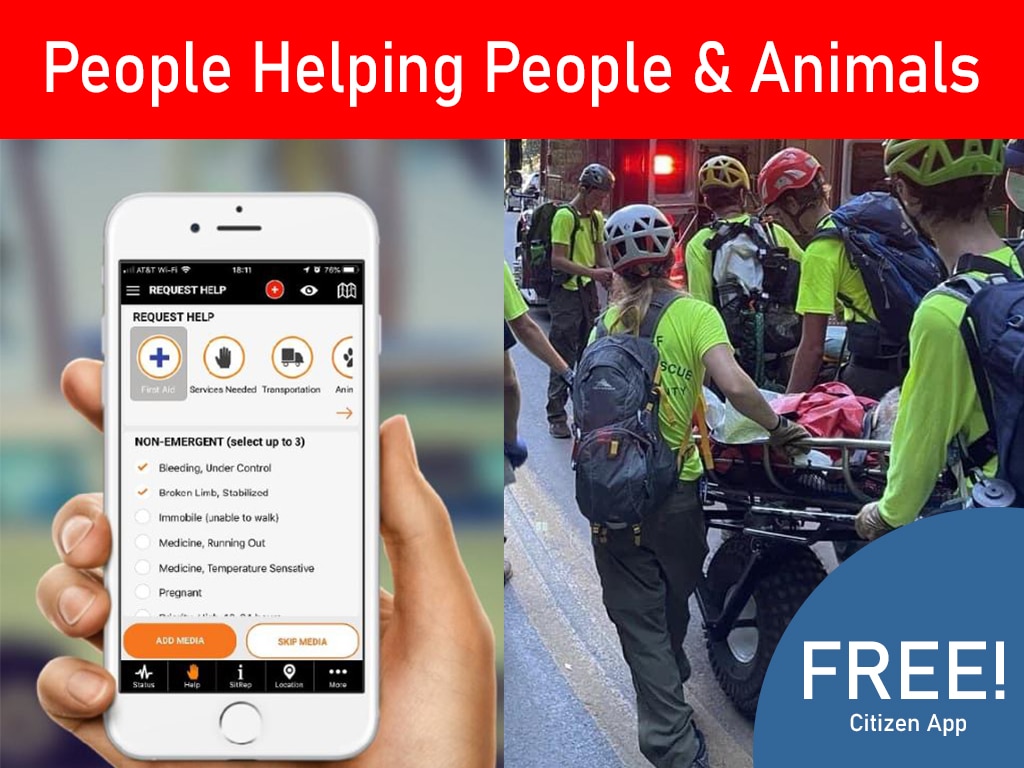
PubSafe is a free mobile app that connects people to a community safety network. It’s built on the simple but powerful idea of “People Helping People & Animals” and acts as a free public service. Instead of waiting for help to arrive, you can use the app to see needs mapped in your area and connect with neighbors and volunteer groups. Whether you have a chainsaw to clear a fallen tree or simply time to check on an elderly neighbor, the app provides a way to offer your help. You can install the free app today and become a part of your community’s safety net.
Requesting Help for Emergencies and Everyday Needs
The network isn’t just for large-scale disasters. You can use it to ask for help in major emergencies, like being stranded during a hurricane or getting injured on a hike, but it’s also there for everyday needs. Life happens, and sometimes you just need a hand. Whether you have a flat tire, need a jump start for your car, or could use help shoveling a snowy driveway, you can post a request and connect with someone nearby who is willing and able to assist.
Your Safety and Privacy on the PubSafe App
In a world where personal data is a valuable commodity, it’s natural to be cautious about the apps you use. Trust is the foundation of any community network, which is why protecting your safety and privacy is a top priority. You should have full control over who you connect with and how your information is used. When you’re in a vulnerable situation, the last thing you should have to worry about is your data privacy. That’s why it’s so important to choose platforms that are transparent and put your security first.
Private Teams for Family and Friends
PubSafe is a private community that does not track your online activity like many other apps. You can create private, invitation-only teams for your family, friends, or neighborhood group. This allows you to share your location and status securely with only the people you trust. During an emergency, you can quickly check in and confirm that your loved ones are safe without broadcasting your information publicly. It gives you peace of mind while maintaining complete control over your privacy.
Our Commitment to Your Data Privacy
Our commitment to you is simple and absolute: Your personal information is never sold or shared with other companies. Period. PubSafe was created as a public service, not a data-mining operation. We believe that helping people in their time of need should not come at the cost of their privacy. You can use the platform with the confidence that your data is secure and is only used to facilitate help and safety within the community network.
A Critical Safety Note: Always Call 911 First
It is absolutely essential to remember this: Always call 911 or your local emergency services first in any life-threatening situation. PubSafe is a powerful tool for community coordination and for getting help with non-emergency situations, but it is not a replacement for official emergency services. Think of it as a valuable resource to use in addition to 911. After you have contacted professional first responders, you can then use the app to alert your private teams, report a need on the public map, or coordinate with local volunteer groups. Your first call in a true emergency must always be to the pros.
Create Your Three-Phase Hurricane Volunteer Plan
The easiest way to manage hurricane volunteers is to divide the work into three phases: before landfall, during impact, and after the storm clears. Each phase needs different decisions, different messages, and different levels of risk control.
Before the Storm: Build Your Roster and Assign Roles
Before a storm arrives, your organization should know who is trained, who is available, what skills they bring, and where they can safely serve. This is the time to update contact details, confirm volunteer status, check team leaders, and review the tasks your NGO is willing to perform. For example, one team may handle shelter support while another team checks on vulnerable residents, distributes supplies, or assists with damage documentation.
This phase is also where a tool like PubSafe matters. NGOs can organize volunteers through the PubSafe coordination workflow, create teams, share information, and prepare to see field reports on a map once conditions change.
During the Storm: Prioritize Safety and Limit Activity
Volunteer energy is high during a hurricane, but the safest response is often restraint. During the most dangerous window, your NGO should focus on monitoring official guidance, confirming volunteer safety, tracking incoming help requests, and preparing assignments for the first safe operating period. Volunteers should not self-deploy into flooded roads, downed power lines, unstable buildings, or active storm conditions.
Use this phase to collect reports, not to send untrained people into dangerous areas. If volunteers are already deployed in a safe support role, team leaders should send short status updates at set intervals. Keep messages brief: location, status, issue, next need.
After the Storm: Match Volunteers to Verified Needs
Once local officials say movement is safe, the work shifts to triage. Which neighborhoods need wellness checks? Which shelters need staffing? Which supply points need unloading? Which homes or facilities require damage assessment? A small NGO should assign volunteers only after a need is verified and a team leader understands the site conditions.
PubSafe supports this kind of post-storm coordination through incident reports, live maps, situation reports, and team communication. The PubSafe hurricane response platform is built around rapid alerts, shared help requests, shelter and aid station visibility, media on a map, and preliminary damage assessments.
What Volunteer Info Should You Collect Before Hurricane Season?
A volunteer roster is only useful if it helps leaders make decisions. Small NGOs should avoid collecting data they will never use, but they should collect enough detail to assign safe work quickly.
- Name, phone number, email, and emergency contact
- Home area or preferred deployment area
- Availability before, during, and after a storm
- Training, certifications, languages, and special skills
- Physical limitations or task restrictions
- Vehicle access, equipment, trailers, radios, generators, or tools
- Preferred roles such as shelter support, logistics, intake, delivery, cleanup, or admin
- Organization affiliation, if the volunteer belongs to a church, CERT, civic group, or partner nonprofit
Do not wait until the evacuation order is issued to gather this information. A rushed intake process creates duplicates, missing phone numbers, and unsafe assignments. PubSafe offers volunteer registration and app-based participation so people can start their volunteer journey before the disaster window opens.
Key Volunteer Roles for a Small NGO
Small organizations often make the mistake of letting one coordinator become the hub for every decision. That works for a training exercise. It fails when text messages, calls, social posts, and partner requests all arrive at once.
A better model is to define a few simple roles before the storm.
Volunteer Coordinator
The volunteer coordinator owns the roster, availability, onboarding, and reassignment process. This person should not also manage every field update. Their job is to know who is ready and who can be called next.
Operations Lead
The operations lead decides which missions the NGO accepts and which ones it declines. That boundary matters. A food pantry should not suddenly become a swift-water rescue team. A church volunteer group should not send members into unsafe structures. The operations lead protects the mission and the volunteers.
Team Leaders
Team leaders manage small groups in the field. They confirm arrival, send updates, track issues, and report when a task is complete. For most small NGOs, teams of three to seven people are easier to manage than large groups.
Communications Lead
The communications lead controls outbound updates to volunteers, partners, donors, and the public. This keeps the organization from sending mixed messages through multiple channels.
Documentation Lead
The documentation lead tracks volunteer hours, completed missions, photos, supply movement, and after-action notes. This role supports grant reporting, reimbursement requests, donor updates, and future planning.
These roles can be held by volunteers in a small NGO, but they should be named in advance. Role clarity reduces confusion when the storm creates pressure.
How a Shared Map Turns Reports Into Action
Hurricane response is location-driven. The same message can mean different things depending on where it happens. A request for water near a shelter, a flooded road near a delivery route, or a damage report near a senior housing complex all require different decisions.
A shared map helps small NGOs answer four questions quickly:
- Where are volunteers right now?
- Where are verified help requests coming from?
- Which roads, shelters, aid stations, or neighborhoods need attention?
- Which assignments are complete, active, or waiting?
PubSafe is designed for this kind of location-aware response. The PubSafe disaster response platform combines community reports, volunteer coordination, mapping, and situational awareness so organizations can see more than a spreadsheet or group chat can show.
Mapping also helps prevent duplication. Without a shared view, two teams may deliver supplies to the same site while another site waits for hours. A map turns scattered updates into a common operating picture.
The PubSafe Three-Step Process for Coordinated Response
A shared map is powerful, but it’s only one piece of the puzzle. The real value comes from a simple, repeatable workflow that turns information into action. At PubSafe, we’ve built our entire platform around a three-step process designed to help organizations move from chaos to coordination. This isn’t about adding complexity; it’s about creating a clear path for information to flow from the community, through your organization, and out to your volunteers as clear, safe assignments. This structure helps your team make better decisions under pressure, ensuring your efforts have the greatest possible impact.
1. Citizens and Responders Report Live Information
Effective response starts with good information. During a hurricane, the situation on the ground changes by the minute, and official channels can’t capture every detail. PubSafe closes this gap by allowing citizens and responders to report live information directly from their phones. A resident can flag a downed power line, a volunteer can report a flooded street, or a family can request a wellness check for a loved one. Each report is geotagged, creating a real-time, ground-truth view of what’s happening, where it’s happening, and who needs help right now.
2. Organizations See the Same Picture and Plan Together
Individual reports are just data points. The magic happens when they are collected and displayed on a single, shared map that every organization can access. Instead of relying on fragmented text chains or radio chatter, your NGO, a neighboring CERT team, and local public safety officials can all see the same picture. This common operating picture instantly reveals patterns, like a cluster of help requests in a specific neighborhood or a series of impassable roads along a key route. It allows leaders to stop duplicating efforts and start collaborating on a unified plan to allocate resources where they are needed most.
3. Volunteers Receive Clear Instructions to Act Safely
Once your team has a clear plan, the final step is to mobilize your volunteers. With a shared understanding of the needs and risks, your operations lead can create and assign specific missions. Through the PubSafe platform, volunteers receive clear instructions that tell them where to go, what to do, and what to watch out for. This directed approach is much safer and more effective than allowing volunteers to self-deploy into unknown conditions. It ensures that your team’s energy is focused on verified needs, turning good intentions into life-saving action.
Set Up Your Communication Plan Before the First Alert
Communication breaks down during hurricanes because everyone tries to communicate at the same time. A small NGO should create a message plan before the storm, then use it consistently.
Choose One Official Channel for Volunteers
Volunteers should know where official NGO instructions will come from. If the organization uses email, text, social media, and chat apps with no hierarchy, people will miss updates or follow outdated instructions. Choose the primary channel for assignments and the backup channel for urgent updates.
Save Time With Message Templates
Templates save time and reduce mistakes. Prepare messages for availability checks, standby notices, safety holds, deployment instructions, mission updates, demobilization, and thank-you notes. Each assignment message should include location, task, team leader, check-in time, safety notes, and what to bring.
Keep Public and Volunteer Messages Separate
The public may need donation guidance, shelter information, or ways to request help. Volunteers need assignments and safety instructions. Mixing those audiences in one message creates confusion.
PubSafe supports team messaging, situation reports, alerts, and organization-level coordination. For NGOs that need to move from scattered texts to organized updates, the PubSafe disaster response communication tools can help centralize communication during changing conditions.
How to Prevent Volunteers From Self-Deploying
Volunteer self-deployment is one of the biggest risks during a hurricane. People want to help, but unaffiliated activity can create more work for responders, place volunteers in danger, and send help to the wrong locations.
Small NGOs can reduce self-deployment with clear rules:
- Tell volunteers not to report anywhere until assigned.
- Explain that safety checks come before deployment.
- Use standby groups so volunteers feel included without moving early.
- Give people safe remote tasks, such as calling roster members or sorting incoming requests.
- Send frequent updates, even when the update is “stay in place until conditions improve.”
The most important rule is simple: no assignment, no deployment. Volunteers should not guess where they are needed. They should wait for a verified task, a team leader, and a check-in process.
PubSafe helps teams move from good intentions to organized action. Learn how NGOs and response partners can use PubSafe for coordinated disaster response.
Don’t Go It Alone: Work With Local Partners
A small NGO should not operate as an island during a hurricane. Your organization may have volunteers, supplies, or community trust, but local emergency management, shelters, faith-based partners, VOAD groups, CERT teams, and other nonprofits may already be coordinating work in the same area.
Before hurricane season, identify the partners your team will coordinate with and the boundaries of your role. Decide who receives your situation reports, who can request volunteers, who approves field activity, and what information can be shared publicly.
PubSafe’s approach to NGO disaster response coordination fits this need because it focuses on shared information, reduced duplication, and better visibility across organizations. The goal is not to replace official systems. The goal is to help community groups complement them with better field-level information and organized volunteer activity.
How to Build and Maintain Community Trust
Trust is the most valuable currency in a crisis. It’s earned when your organization proves it is reliable, transparent, and safe. For a small NGO, this means communicating clearly about what you can and cannot do, following through on commitments, and being a predictable partner for local agencies and the community you serve. This isn’t something you build when the wind starts blowing; it’s established through consistent action and clear messaging beforehand. When people know what to expect from your team, they are more likely to offer support, request help, and follow your guidance. This reliability is the foundation of all effective disaster response, turning good intentions into measurable, trusted action.
Operationally, trust is built by demonstrating competence. This includes managing volunteers effectively to prevent self-deployment, which protects both the volunteers and the official response effort. When untrained individuals enter a disaster zone, they can pull resources away from critical tasks, eroding confidence in all volunteer efforts. It also means showing that your team is part of a larger, coordinated system. When your NGO can operate within a shared framework, you show partners and the public that you are a dependable part of the solution. This collaborative approach enhances your credibility and ensures your efforts contribute effectively to the overall community response, reinforcing the trust you’ve worked hard to build.
Track Your Impact From Day One
During a hurricane, documentation feels less urgent than action. After the storm, it becomes one of the most valuable assets your NGO has. Accurate records help leaders understand what happened, support grant reporting, show donor impact, and improve the next response.
Track these items from the beginning:
- Volunteer hours by person, team, day, and mission
- Task type, location, start time, completion time, and outcome
- Supplies delivered or distributed
- Photos or notes tied to damage assessments, when appropriate
- Safety incidents, near misses, and blocked assignments
- Requests referred to another agency or partner
PubSafe includes volunteer hour tracking and reporting features for nonprofits and CERT teams. This is useful after a hurricane because response work does not end when the last assignment is closed. Organizations still need to report impact, apply for funding, thank volunteers, and update procedures.
What’s Your Plan for Power and Internet Outages?
Even the best digital workflow needs a fallback plan. Hurricanes can interrupt power, cellular service, and internet access. Small NGOs should prepare for that without abandoning their coordination system.
Before the storm, print or export key rosters, team leader contacts, partner contacts, shelter addresses, and role assignments. Keep portable chargers, vehicle chargers, and battery packs ready. Decide how often field teams should update their status if service is limited. If a team cannot send data in real time, it should record notes safely and update the system when service returns.
The best practice is to plan for temporary disruption, then return to the shared system as soon as possible. Paper notes, radios, and phone trees can help in a narrow window, but they should not become the permanent record if a platform is available again.
Beyond Hurricanes: Adapting Your Plan for Any Disaster
The hurricane plan we’ve walked through isn’t just for hurricanes. Its core principles—building a roster, defining roles, mapping needs, and communicating clearly—form a solid foundation for responding to any crisis. Whether you’re facing a wildfire, a flash flood, or a tornado, the fundamental challenge remains the same. As we’ve said, disasters create a coordination problem before they create a cleanup problem. Without a system, your trained volunteers and donated supplies can’t be deployed effectively when no one knows who is available or where help is needed. This core issue is universal, making a structured approach essential for any small NGO wanting to make a real impact during an emergency.
What changes with each disaster is the context, not the core need for coordination. A wildfire demands a different timeline and safety protocol than a winter storm. A tornado leaves no time for a “before” phase. A flexible plan acknowledges these differences while relying on a consistent, repeatable process. Your team shouldn’t have to invent a new response system every time the threat changes. A small NGO needs a repeatable plan that connects people, locations, tasks, and updates. This builds organizational muscle memory and reduces the mental load on leaders when they are under the most pressure. Having a central platform for team management allows you to adapt your tactics without rebuilding your entire strategy from the ground up.
Applying the Framework to Wildfires, Floods, and More
The framework of “before, during, and after” still applies, but the activities within each phase will shift. For a wildfire, the “before” phase might involve creating defensible space or preparing evacuation kits, while the “during” phase is about monitoring evacuation orders and air quality. For a tornado, the response is almost entirely in the “after” phase, focusing on search and rescue, damage assessment, and debris cleanup. In a flood, volunteer tasks could range from sandbagging to muck-out operations. The key is that your system for volunteer coordination can handle these different tasks and timelines. A shared map becomes even more critical when road access is unpredictable or danger zones are shifting, as they do in fires and floods. Your core roles—coordinator, ops lead, team leaders—remain essential for making safe and effective decisions, no matter the disaster.
Your 72-Hour Volunteer Coordination Checklist
Use this checklist when a hurricane is likely to affect your service area.
72-48 Hours Before Impact: Final Prep
- Send an availability check to all volunteers.
- Confirm team leaders, operations lead, communications lead, and documentation lead.
- Review your mission boundaries and safety rules.
- Confirm partner contacts and reporting expectations.
- Prepare message templates and backup contact methods.
48-24 Hours Before Impact: Confirm and Communicate
- Group volunteers by availability, location, skills, and safe travel limits.
- Identify likely support tasks such as shelter staffing, supply distribution, intake, wellness checks, or admin support.
- Share a standby message and remind volunteers not to self-deploy.
- Confirm devices are charged and backup power is ready.
- Prepare the map, reports, and team channels your leaders will use.
During the Storm: Shelter and Monitor
- Monitor official guidance and partner updates.
- Confirm volunteer safety and availability.
- Collect incoming reports and help requests.
- Hold field activity unless conditions are safe and authorized.
- Prepare first assignments for the safe operating period.
The First 72 Hours After: Assess and Deploy
- Verify needs before assigning volunteers.
- Deploy teams with a team leader, location, task, and check-in schedule.
- Use the map to track active work and avoid duplicate assignments.
- Document hours, outcomes, photos, referrals, and safety issues.
- Hold a short daily review to update priorities for the next operational period.
How to Turn Response Into Year-Round Readiness
The strongest hurricane volunteer programs are not built during a storm. They are built through monthly habits: roster updates, training, drills, partner conversations, and after-action reviews. A small NGO that uses the same coordination process for everyday community support will be more prepared when a hurricane arrives.
PubSafe is built for both everyday help and large-scale disaster response. Organizations can use the platform for volunteer management, mapping, messaging, incident reporting, and mission support before, during, and after emergencies. That year-round use matters because volunteers are more likely to follow a system they already know.
Prepare before the next storm. Review PubSafe pricing and platform options for NGOs, CERT teams, and response organizations.
For a small NGO, hurricane coordination does not have to be complicated. Register people before the season, assign roles before the pressure rises, use a shared map for verified needs, keep volunteer instructions in one trusted channel, and document the work as it happens. When those pieces are in place, volunteers can help faster, leaders can make safer decisions, and communities can recover with less confusion.
Frequently Asked Questions
What is the single most important thing our small NGO can do to prepare for a hurricane? The most critical step is to build your volunteer roster and define key roles before the storm is on the horizon. Know who is available, what skills they have, and who will be in charge of coordinating, operations, and communications. A rushed intake process during an emergency leads to mistakes and unsafe assignments. Getting this structure in place early is the foundation for everything else.
Our volunteers always want to rush out and help. How do we prevent them from self-deploying into dangerous situations? Clear and consistent communication is your best tool. Establish a firm rule: no volunteer goes anywhere without a specific assignment from a team leader. Keep your volunteers engaged by giving them standby roles or safe, remote tasks like monitoring reports or making calls. Frequent updates, even if the message is just “stay put, we’ll have assignments soon,” help people feel included and prevent them from going out on their own.
Is PubSafe a replacement for calling 911? No, absolutely not. In any life-threatening emergency, your first call must always be to 911 or your local emergency services. PubSafe is a community coordination tool designed to be used after you have contacted professional first responders. It helps you alert your private teams, report non-emergency needs on a public map, and coordinate with volunteer groups, but it is not a substitute for official emergency services.
How can a shared map really make a difference for a small team like ours? A shared map transforms scattered information into a clear, actionable picture. Instead of relying on confusing group texts, you can see exactly where help is needed, where your volunteers are, and which roads are blocked, all in one place. This allows you to spot patterns, avoid sending two teams to the same location, and make smarter decisions about where to send your limited resources for the greatest impact.
We’re a small organization with a tiny budget. How can we track our impact without getting buried in paperwork? Start by tracking the essentials from day one: volunteer hours, tasks completed, and supplies distributed. Using a platform that has built-in tools for this, like PubSafe, can automate much of the process. This documentation isn’t just for reports; it proves your value to donors, helps you get reimbursement, and gives you concrete data to improve your response for the next event.
Key Takeaways
- Prepare your team before the storm: Effective hurricane response starts with preparation, not reaction. Build your volunteer roster, define clear roles for leaders, and decide on your primary communication channel long before a storm is on the map to ensure your team can act decisively under pressure.
- Follow a phased approach for safety: Structure your plan into three stages: before, during, and after impact. Before the storm, you organize. During the storm, you monitor conditions and track requests while keeping volunteers safe. After the storm, you deploy teams to verified needs based on reliable information.
- Use a shared map to coordinate action: A common operating picture is essential for turning scattered reports into an effective response. Using a shared map allows your organization to see real-time needs, avoid duplicating efforts with other groups, and give volunteers clear, safe assignments.