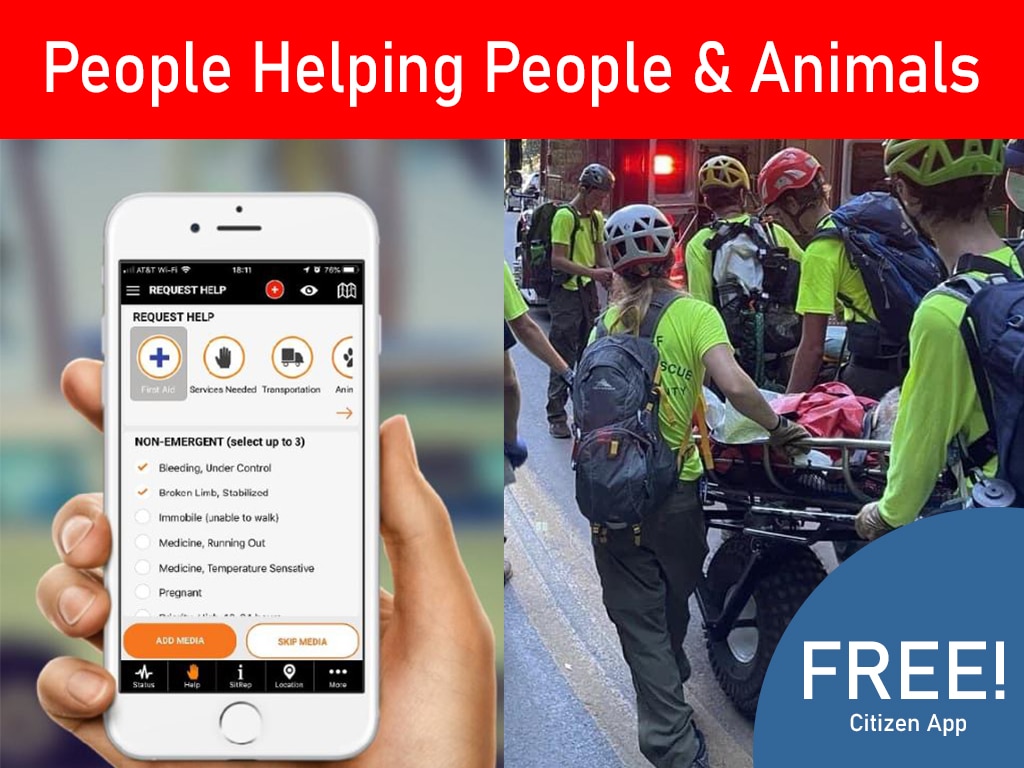
After a major disaster, people will show up wanting to help. Some will bring useful skills, vehicles, tools, language abilities, medical backgrounds, neighborhood knowledge, or simply the willingness to do hard work. Without a plan, that energy can create risk. With a clear spontaneous volunteer management process, emergency managers, NGOs, CERT teams, and faith-based organizations can turn public goodwill into safe, documented, mission-ready support.
Need a faster way to organize volunteers during response operations? Get a free PubSafe organization account and coordinate teams, missions, and field updates from one platform.
Spontaneous volunteers, sometimes called unaffiliated volunteers, are people who self-deploy after an emergency without being formally requested by an agency. FEMA training materials define them as members of the public who are not part of a recognized voluntary agency and may have little or no disaster response training. They are predictable. They will arrive after hurricanes, floods, tornadoes, wildfires, searches, mass care events, and long recovery operations.
The goal is not to stop people from helping. The goal is to receive them, protect them, match them to appropriate work, communicate clearly, and document what they do. This guide explains how to build that system before the next disaster.
What Is Spontaneous Volunteer Management?
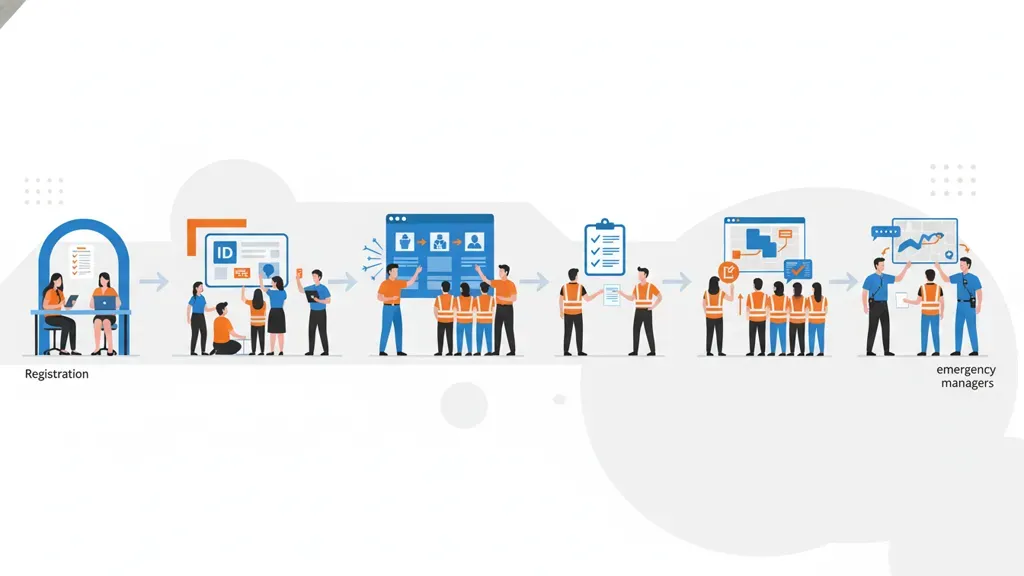
Spontaneous volunteer management is the process of registering, screening, orienting, assigning, supervising, communicating with, and documenting unaffiliated volunteers during and after a disaster. It is often built around a Volunteer Reception Center, or VRC, which may be physical, virtual, or both.
A VRC is more than a table with sign-in sheets. It is a controlled intake and referral process. Volunteers enter the system, provide basic information, share skills and limitations, receive safety guidance, and get matched with tasks requested by responsible organizations. The same process also records hours, assignments, training, liability acknowledgments, and demobilization details.
That structure matters because disasters create information gaps. Field needs change quickly. Roads close. Shelters fill. Donation points move. Rumors spread. A strong disaster response platform helps response leaders see needs, assign work, and communicate updates without forcing volunteers into scattered text threads or social media groups.
Why Spontaneous Volunteers Become a Risk Without Structure
Most spontaneous volunteers are motivated by compassion, but good intentions do not remove operational risk. An unregistered volunteer may enter an unsafe area, duplicate work already assigned, interfere with responders, consume scarce resources, or create liability for the organization that accepts help.
Common failure points include:
- Uncontrolled self-deployment: Volunteers go directly to damaged neighborhoods, shelters, staging areas, or search zones without accountability.
- Unverified capabilities: A person may claim skills that have not been checked or may be physically unable to perform the assigned work safely.
- Weak communication: Instructions spread through text chains, social media posts, and phone calls that quickly become outdated.
- No safety briefing: Volunteers miss hazard information about debris, downed power lines, heat stress, floodwater, animals, traffic, or unstable structures.
- Poor documentation: Hours, tasks, locations, injuries, and referrals are not captured in a usable format.
The fix is a simple rule: no assignment without intake. If someone wants to help, they enter the volunteer management process first.
Build the Plan Before Volunteers Arrive
The best spontaneous volunteer management happens before disaster day. Every emergency operations plan should name who owns unaffiliated volunteer coordination, when the process activates, where volunteers are directed, what roles are available, and how organizations request help.
For many communities, the lead may be a local emergency management agency, VOAD, CERT program, nonprofit coalition, faith-based organization, or volunteer center. The owner must be clear because volunteer coordination often sits between public safety, nonprofits, and community groups. If no one is assigned before the event, everyone assumes someone else is doing it.
At minimum, define:
- The trigger for activating a Volunteer Reception Center
- The agency or organization responsible for operations
- Primary and backup VRC locations
- Virtual intake options for remote registration
- Required forms, waivers, safety briefings, and ID procedures
- How organizations submit requests for volunteer support
- How assignments, hours, and incidents are documented
- How the public information officer will message volunteer instructions
PubSafe’s disaster plan template for NGOs and CERT teams can help organizations think through roles, communications, activation steps, and response procedures before the pressure starts.
Set Up a Volunteer Reception Center That Can Scale
A Volunteer Reception Center gives spontaneous volunteers one clear place, or one clear online process, to enter the response system. It should be easy to find, safe to access, separated from heavy equipment and donation traffic, and large enough for intake lines, briefings, staging, and staff workstations.
Many operations now use a hybrid model. A physical VRC handles walk-ins, identification, safety briefings, and assignment dispatch. A virtual VRC lets volunteers pre-register, receive instructions, see approved opportunities, and get updates before they travel. FEMA’s Emergency Management Institute notes that virtual VRCs can help communicate a consistent message, display current volunteer opportunities, and provide a mechanism to contact registered volunteers.
A scalable VRC usually includes these stations:
- Welcome and triage: Explain the process, manage the line, and redirect people who should not proceed.
- Registration: Capture contact information, emergency contact, availability, language skills, equipment, transportation, and consent forms.
- Screening: Review skills, credentials, physical limitations, age requirements, background check needs, and role suitability.
- Safety orientation: Provide hazard information, required personal protective equipment, reporting expectations, and conduct rules.
- Assignment matching: Connect volunteers to approved requests from agencies or teams.
- Check-out and documentation: Record destination, supervisor, expected return time, assignment type, and sign-out requirements.
Intake: Collect Only the Information You Can Use
During a disaster, registration must be fast, but it cannot be sloppy. Collect enough information to match volunteers safely and contact them later. Avoid forms so long that people abandon the process or staff cannot enter data quickly.
A practical intake form should capture:
- Full name and mobile number
- Email address
- Emergency contact
- Home city or neighborhood
- Availability by day and time block
- Transportation access
- Languages spoken
- Relevant skills, such as medical, construction, logistics, animal care, chainsaw operation, radio, technology, or casework
- Certifications, licenses, or affiliated organizations
- Physical limitations or restrictions
- Equipment they can safely provide
- Consent, liability acknowledgment, media preference, and code of conduct acceptance
Use prebuilt role categories so staff can move quickly. Examples include shelter support, call center support, food distribution, debris support, animal support, runner, warehouse support, damage assessment support, wellness check support, translation, donations sorting, and administrative support.
For organizations that manage volunteers year-round, volunteer management software for nonprofits and CERTs can reduce the scramble because member profiles, teams, and contact details already exist before the disaster.
Safety: Brief Every Volunteer Before Assignment
No spontaneous volunteer should deploy without a safety briefing. Even low-risk assignments can become dangerous when roads are blocked, power is out, emotions are high, weather is changing, or responders are operating nearby.
Keep the briefing short, specific, and documented. Volunteers should know:
- What hazards are present in the operating area
- What areas are off limits
- Who their supervisor is
- How to report an injury, unsafe condition, or urgent need
- What personal protective equipment is required
- What they are not authorized to do
- How to communicate if phones, data, or radios fail
- When to stop work and return
Document that the briefing occurred. FEMA’s spontaneous volunteer course emphasizes that safety and job training protect volunteers and help manage liability. If your operation is using paper, use a sign-in sheet for the safety briefing. If you use a digital system, attach the briefing record to the volunteer profile or assignment.
Assignment: Match Volunteers to Real Requests, Not Random Needs
Assignment control is where many volunteer operations break down. Staff hear about needs from every direction and start sending people wherever the need sounds urgent. That is risky. Volunteers should be assigned only to validated requests from an accountable organization, team leader, or incident function.
Each request should include:
- Requesting organization or supervisor
- Task description
- Location and reporting instructions
- Number of volunteers needed
- Skills or restrictions
- Safety concerns and PPE requirements
- Start time, expected duration, and check-out procedure
- Point of contact at the assignment site
Do not send untrained spontaneous volunteers into high-risk rescue, medical, law enforcement, structural assessment, hazardous material, swiftwater, chainsaw, or confined space tasks unless the receiving agency has verified credentials and accepted responsibility. Many volunteers can still help with lower-risk but critical work, including logistics, administration, shelter support, food distribution, call center support, neighborhood information collection, and supply staging.
Mid-response coordination gets easier when requests, teams, and field updates are visible in one place. Learn how PubSafe supports real-time emergency coordination for communities and organizations.
Communication: Give the Public One Clear Message
During a disaster, public messaging can either reduce chaos or create it. If volunteers hear different instructions from the city, sheriff’s office, nonprofit partners, social media, and neighborhood groups, they will self-deploy. A spontaneous volunteer plan needs one approved message that every partner repeats.
Effective public messaging tells people:
- Whether volunteers are needed right now
- Where to register before showing up
- What skills are currently needed
- What items not to bring
- What identification or equipment to bring
- Which areas are closed or unsafe
- How they will receive updates after registration
Messages should be updated as needs change. If no volunteers are needed, say so and provide an alternative, such as registering for future shifts, donating through approved channels, or joining a recognized organization for training. If special skills are needed, target the request. For example, ask for bilingual volunteers, licensed medical professionals, amateur radio operators, drivers with high-clearance vehicles, or trained animal handlers.
For multi-agency events, use the public information officer or joint information system to keep volunteer messaging aligned with official response priorities. The article on NGO disaster response coordination explains why communication discipline matters when many organizations are operating in the same affected area.
Documentation: Capture the Work While It Happens
Volunteer documentation is not administrative busywork. It supports safety, accountability, reimbursement, grant reporting, donor reporting, after-action review, and future planning. Once the operation ends, missing records are difficult to recreate.
Track at least:
- Volunteer registration records
- Safety briefing attendance
- Assignments accepted and declined
- Hours worked by date, location, and task type
- Supervisor or receiving organization
- Tools, vehicles, or equipment used
- Incidents, injuries, near misses, or complaints
- Demobilization and check-out times
FEMA training materials note that documented volunteer hours and types of work may support local or state cost share records when properly maintained and presented in a usable format. Requirements vary by disaster and jurisdiction, so volunteer managers should coordinate with emergency management and finance staff early.
Documentation also helps leaders see where capacity is thin. If hundreds of volunteers register but few are assigned, the bottleneck may be request intake. If many volunteers fail to report back, check-out procedures need improvement. If one task type creates repeated injuries, the safety briefing or assignment criteria need to change.
Use Technology Without Losing Command Discipline
Technology cannot replace leadership, but it can remove friction. A digital volunteer workflow helps teams register people faster, segment skills, send updates, assign missions, collect field reports, and retain documentation in one place. That is especially important when an incident lasts days or weeks and multiple organizations rotate through the response.
PubSafe is designed for community-driven emergency coordination, connecting citizens, volunteers, NGOs, CERT teams, and public safety partners through a mobile app and organizational web portal. It can support daily readiness and disaster response by helping organizations manage teams, missions, field information, and communications.
The key is to keep technology aligned with your incident structure. Use the platform to support approved missions, not to create a second chain of command. Assignments should still come from validated needs, supervisors should still be clear, and safety requirements should still be documented.
A Practical Spontaneous Volunteer Management Checklist
Use this checklist before and during activation:
- Name the organization responsible for spontaneous volunteer management.
- Identify physical and virtual VRC options.
- Create short intake, waiver, and safety briefing forms.
- Prepare role categories and assignment templates.
- Define which tasks are not appropriate for spontaneous volunteers.
- Build a public message template before disaster season.
- Train staff on intake, screening, assignment, and documentation.
- Confirm how agencies request volunteer support.
- Test communication channels before an incident.
- Track hours, locations, supervisors, and check-out status from the first operational period.
- Run an after-action review and update the plan after each activation.
For hurricane-prone communities, this process pairs well with pre-season planning. PubSafe’s guide to coordinating volunteers during a hurricane covers additional preparation steps for storm response.
Frequently Asked Questions About Spontaneous Volunteer Management
What is a spontaneous volunteer in disaster response?
A spontaneous volunteer is a person who offers help during or after an emergency without being formally requested or affiliated with a recognized response organization. They may have valuable skills, but they still need intake, screening, safety guidance, assignment control, and documentation.
Should emergency managers turn spontaneous volunteers away?
Not automatically. If there is no safe role available, leaders should tell volunteers how to register for later needs or connect with a recognized organization. When safe roles do exist, a structured VRC process can turn spontaneous help into useful capacity.
What is the most important first step?
Designate ownership before the disaster. Someone must be responsible for the VRC process, public messaging, intake forms, safety briefings, requests for volunteers, assignments, and documentation. Without ownership, spontaneous volunteer management becomes reactive.
Can a Volunteer Reception Center be virtual?
Yes. A virtual VRC can collect registrations, publish current volunteer needs, send updates, and reduce crowding at a physical site. Many incidents benefit from a hybrid model that combines online registration with in-person safety briefing, identification, and dispatch.
Turn Public Goodwill Into Accountable Action
Spontaneous volunteers are not a problem to avoid. They are a resource to prepare for. The difference between chaos and capacity is the system you build before people arrive.
Start with ownership. Add a VRC process. Keep intake short, screen for safety, assign only to validated requests, communicate through one public message, and document every hour. Then use technology to make the system faster without weakening command discipline.
PubSafe helps NGOs, CERT teams, emergency managers, and community organizations coordinate people and information when conditions are changing fast. Request a PubSafe demo or register your organization before the next disaster.