Most written disaster plans share the same flaw: they describe an ideal response, not a realistic one. For a nonprofit or CERT team, that gap between paper and practice is a mission-critical risk. When a disaster strikes, your team doesn’t get to pause. A plan that wasn’t built for failing cell networks and compromised roads will not hold up. This guide breaks down what a functional plan looks like for organizations in the field. It covers the gaps that derail response efforts, especially in disaster response communication for ngos, and shows how to build a playbook that works under pressure.
Most written disaster plans share the same flaw: they describe what an organization wants to happen, not what it is actually prepared to do. For a nonprofit humanitarian organization or a Community Emergency Response Team, that gap is not just an administrative problem. It is a mission-critical risk that plays out in real time while people are waiting for help. This guide breaks down what a functional disaster plan looks like for organizations operating in the field, not office buildings. It covers the sections that matter, the gaps that consistently derail response efforts, and where purpose-built technology bridges the distance between a plan on paper and a coordinated operation on the ground.
Why Your NGO Needs a Different Kind of Disaster Plan
Generic business continuity frameworks were designed to protect revenue, protect data, and keep the lights on. That is a legitimate need for a commercial enterprise. An NGO or CERT team has a fundamentally different obligation: to maintain operational capacity precisely when conditions are at their worst, because that is when the people depending on you most need you to be functional. When a disaster strikes, your organization does not get to pause. Volunteers are deployed while roads are compromised. Communications networks fail at the same moment your team most needs to coordinate. Mutual aid partners show up unannounced while your incident commander is managing a rescue. A plan that was not built for those realities will not hold under them. The challenges facing disaster response organizations are well documented. Fragmented communications, poor situational awareness, and volunteer coordination failures consistently top the list. A well-designed disaster plan directly addresses each of them before the event begins.
Beyond the Storm: Protecting Your Reputation and Reducing Risk
The work of a disaster response organization doesn’t end when the storm passes or the ground stops shaking. In many ways, that’s when the most critical evaluation begins. How your organization performed during the crisis directly impacts its ability to function tomorrow. A chaotic, ineffective response can erode community trust, discourage donors, and make it harder to recruit volunteers for the next event. Conversely, a well-coordinated, transparent, and effective operation builds a legacy of trust that becomes your most durable asset. This is why your disaster plan must extend beyond logistics and operations to include strategies for protecting your reputation and actively reducing future risks. These aren’t afterthoughts; they are essential components of long-term mission success and organizational resilience.
Thinking about reputation and risk reduction ahead of time is what separates good organizations from great ones. It’s about understanding that every action taken during a crisis is a message to the community you serve. By integrating tools and protocols that enhance communication and coordination, you’re not just managing an incident—you’re building a reputation for competence and reliability. For instance, using a shared platform like PubSafe allows all stakeholders, from volunteers on the ground to agency partners, to operate from a single source of truth. This level of coordination minimizes confusion and demonstrates a high degree of professionalism, reinforcing the trust that is so vital to your work.
Reputation as Your Most Valuable Asset
For any nonprofit, NGO, or CERT team, a strong reputation is the bedrock of your entire operation. It’s what convinces donors to give, volunteers to show up, and communities to accept your help. As experts in crisis communications note, a positive reputation is often the primary driver of financial support and your ability to fulfill your mission. In the high-stakes environment of a disaster, your reputation is tested in real time. A fumbled response can undo years of trust-building in a matter of hours. The best way to protect this invaluable asset is to demonstrate competence under pressure. A disaster plan that prioritizes clear communication, efficient resource deployment, and transparent operations is your best defense against reputational damage.
Proactive Disaster Risk Reduction (DRR)
With the increasing frequency of natural and human-made disasters, waiting for an event to happen is no longer a viable strategy. Proactive Disaster Risk Reduction (DRR) is the practice of taking steps to minimize the impact of disasters before they occur. According to Points of Light, it’s crucial for organizations to build resilience by adapting their plans for this new reality. This means your disaster plan should include activities like identifying vulnerable populations, mapping resources, and establishing mutual aid agreements ahead of time. By completing your organization registration and pre-loading your teams and resources onto a shared platform, you can transform your plan from a static document into a dynamic, operational tool ready for immediate activation.
Public education and skill-building
A core component of DRR is empowering the community itself. An informed public is a more resilient public. As research highlights, a key strategy for NGOs is to teach people about disaster risks and how to prepare. This can take many forms, from running preparedness workshops and creating ad campaigns to engaging with residents directly. The goal is to build a culture of preparedness where citizens see themselves as active participants in their own safety, not passive victims. Modern technology can amplify these efforts significantly. When citizens can use a simple app to report an incident or view a public safety map, they become an integral part of the response network, providing valuable real-time information and fostering a stronger, more connected community.
What Are Your Organization’s Real-World Risks?
Before you write a single protocol, your team needs an honest assessment of what it is actually facing. This is not a FEMA checklist exercise. It is a structured conversation about the hazards relevant to your operating area, the vulnerabilities specific to your organization, and the realistic capacity you can deploy. Hazard identification should reflect your geography. A coastal CERT team in the Gulf South faces a different primary threat than a wildland-urban interface SAR unit in the Mountain West. Map your hazard types, their frequency, and their likely impact on your operational footprint. Organizational vulnerability assessment is where most plans fall short. Ask: What happens to our volunteer roster when our most common disaster type strikes? Do our volunteers live in the same impact zone we serve? How many team members lose power, lose mobility, or become unavailable due to household responsibilities? What happens to our data and communications infrastructure when cell towers go down? Critical function prioritization forces hard decisions before the adrenaline is running. Which operations must continue even in a degraded state? Which can be deferred? Where does your team draw the line between supporting community response and protecting its own members? Document this as your baseline. Review it annually and after every activation.
Factoring in Climate Change
It’s no longer enough to plan for the disasters of the past. Climate change is actively increasing the frequency and intensity of emergencies, from wildfires to floods. The World Health Organization projects it will cause around 250,000 additional deaths per year between 2030 and 2050. For response organizations, this means your team will be called upon more often, under more extreme conditions. A plan based on historical data alone is already outdated. You have to look at the specific climate-related threats in your area and ask how they change your operational reality. Are you prepared for longer wildfire seasons, more intense hurricanes, or flash floods in areas that have never seen them before? Scenario planning should include practical hurricane response strategies for your team.
This new reality puts immense pressure on your most critical resources: your people and your communication systems. More frequent disasters lead to volunteer burnout and can strain your roster, especially if your team members are also personally affected. This is where your plan must address sustainability. How will you manage team welfare and availability when activations become the norm, not the exception? This is also where relying on outdated methods like phone trees and spreadsheets will fail you. The complexity demands a more robust system for volunteer coordination, one that provides real-time situational awareness and allows you to manage resources effectively, even when everything else feels chaotic.
Who’s in Charge? Defining Your Command Structure
Effective emergency response runs on clarity of authority. When your team is activated at 2 AM following a flash flood warning, no one should be asking who is in charge or who has the authority to request mutual aid. Your plan needs a defined incident command structure that mirrors the Incident Command System (ICS) your volunteers have already trained on. Assign primary and backup leads for each function. Do not assume a specific person will always be available. Build redundancy into every critical role. Key roles to document:
- Incident Commander and alternates
- Operations Section lead
- Logistics coordinator (equipment, supplies, transportation)
- Communications officer
- Volunteer coordinator
- Public information liaison (if applicable)
Each role should have a written scope of authority, a contact chain, and a documented handoff protocol. The contact chain should include out-of-area relay contacts, because in-region cell networks are often the first infrastructure to fail. NGO disaster response operations depend on this structural clarity. When partner organizations arrive on scene, they need to know immediately who has authority and how to integrate into your command.
Succession Planning for Key Leadership
A common crisis point is the sudden absence of your primary leader. Whether they are personally affected by the disaster or simply unreachable, your plan must answer, “Who takes over right now?” A leadership vacuum can halt operations when every second counts. Your plan should explicitly name a person or position designated to step in immediately. This isn’t about office politics; it’s about operational continuity. By documenting a clear line of succession, you ensure someone is always empowered to make critical decisions and guide the team through the initial chaos without hesitation. This simple step prevents a moment of uncertainty from becoming a complete operational failure.
Defining temporary authority
Just as important as naming a successor is defining what they can do. Your plan must specify the powers of the temporary leader. Can they authorize spending, request mutual aid from partners, or speak for the organization? Answering these questions in writing beforehand prevents confusion and legal gray areas. This clarity allows the temporary leader to act decisively, knowing their actions are sanctioned. Align these powers with the Incident Command System (ICS) structure your team already uses. When everyone understands the chain of command and the authority of each role, your response becomes more fluid and effective.
Expanding Your Emergency Contact List
During a crisis, you don’t have time to search for phone numbers. A well-organized and up-to-date emergency contact list is a non-negotiable part of your plan. This isn’t just a simple list of names; it’s a strategic directory that connects you to your internal team and your external partners. The list should be accessible to key personnel in multiple formats—a physical copy in a go-bag, a cloud-based document, and ideally, integrated into your response platform. Remember that communications are often the first thing to fail, so include multiple contact methods for each person, such as a cell number, an email address, and even a satellite phone number if available.
Internal and external contacts
Your contact list should be split into two clear categories. Internally, you need immediate access to your board members, legal counsel, financial advisors, and all functional leads within your command structure. These are the people who keep the organization itself running. Externally, the list must include local police and fire departments, emergency management agencies, government officials, and crucial mutual aid partners. Building these relationships beforehand is key. Platforms like PubSafe are designed for this, allowing different groups to register their organization and connect into a shared network, turning a static contact list into a dynamic, real-time coordination tool that is ready when you need it most.
Building a Fail-Proof Disaster Response Communication Plan
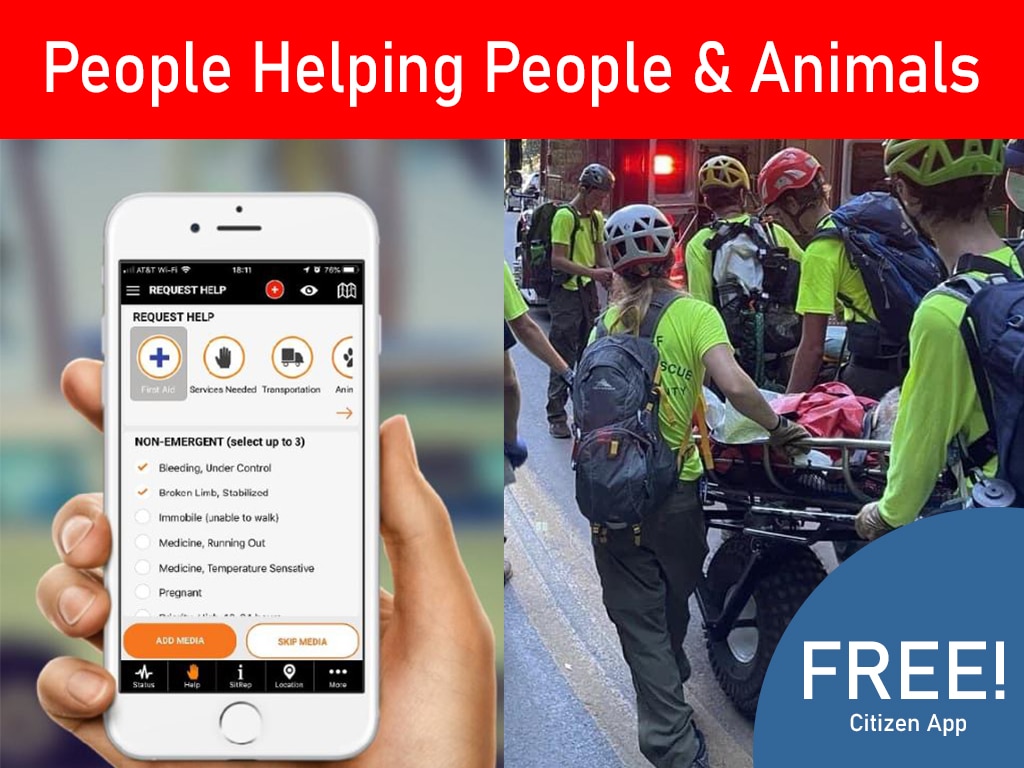
Communication failure is the single most cited cause of coordination breakdown in post-disaster after-action reports. A disaster plan that does not address this explicitly is not a plan, it is a hope. Your communications plan needs layers. Primary layer should be your existing digital tools: group messaging, incident management software, email. These are fast and familiar. They are also the first to fail. Secondary layer should be radio. Ensure your team has trained operators and assigned frequencies. Coordinate in advance with your county emergency management office for shared radio channels during joint operations. Tertiary layer is the one most plans omit: out-of-band communication when everything else is down. Satellite messaging devices, pre-arranged check-in schedules, and designated in-person rally points all belong here. Your plan should also define how you communicate outward: to the public, to partner agencies, and to the people requesting help. Pre-drafted status messages and a designated spokesperson reduce the cognitive load during high-pressure activations. PubSafe’s platform was built with this multi-layer reality in mind. The PubSafe mobile app allows team members and community members to report conditions and request help even when traditional channels are saturated, feeding real-time incident data directly to your web portal where coordinators can manage the operational picture. Understanding how to report an incident through the app is a basic skill every team member should have before an event, not during one.
Developing a Detailed Media Strategy
During a disaster, the story will be told with or without you. A clear media strategy ensures your organization helps shape that narrative with accurate, timely, and compassionate information. When chaos is the default, controlling your message is not about spin; it’s about providing a source of truth for the community, your volunteers, and the media. This involves more than just answering calls from reporters. It requires a proactive plan that designates who speaks for your organization and what they will say before the crisis even hits. This preparation reduces the risk of misinformation and protects your organization’s reputation when it matters most.
Designating a single spokesperson
When multiple people from your organization speak to the media, you risk sending mixed messages that create confusion and undermine public trust. Your disaster plan must designate a single, primary spokesperson. This person should be chosen for their ability to remain calm under pressure and communicate clearly and with empathy. They don’t need to know every operational detail, but they must be the funnel through which all official information flows. To be effective, this spokesperson needs a support team of subject matter experts—like your operations lead or logistics coordinator—who can provide them with correct information. This structure allows your spokesperson to focus on delivering a consistent message while your operational team stays focused on the response.
Preparing message templates
In the middle of an activation, your team won’t have the time or mental bandwidth to craft perfect public statements from scratch. This is why your disaster plan should include pre-drafted message templates. Create core messages for various scenarios: an initial statement acknowledging the event, regular status updates, calls for specific donations or volunteers, and information on how the public can receive aid. These templates provide a solid starting point that can be quickly adapted with event-specific details. Your plan should also establish a communication rhythm, deciding in advance how often you’ll share new information with the media and the public. This manages expectations and positions your organization as a reliable source.
Managing Stakeholder Communications
Your communication plan must extend beyond the media to include all the groups who have a vested interest in your mission: your donors, partner agencies, and government liaisons. These stakeholders are your allies and your support system. Keeping them in the loop is not just a courtesy; it is a critical component of maintaining operational resilience and securing the resources you need to continue your work. While the public needs general updates, your partners and donors often require a more detailed view of the situation and your organization’s specific actions. A separate communication track for these key stakeholders ensures they feel valued and informed, reinforcing their commitment to your cause.
Keeping donors and partners informed
Your donors and institutional partners have invested in your ability to execute your mission. During a disaster, you must maintain open lines of communication with them, providing timely updates on the situation and your response. This transparency demonstrates that their support is making a tangible impact on the ground, which is the single best way to ensure their help continues. Use direct channels like email updates or private briefings to provide a clear view of your operations. A comprehensive disaster response platform that centralizes incident data and team deployments can be invaluable here, as it allows you to easily generate reports and share a real-time operational picture. This level of professional coordination shows partners that you are a capable and effective organization, making it easier for them to justify and deploy their own resources to support your efforts.
Building Trust and Combating Misinformation
In the chaos of a disaster, trust is your organization’s most critical currency, and misinformation is the fastest way to devalue it. A disaster plan is incomplete if it doesn’t explicitly address how you will build the former and fight the latter. When official channels are overwhelmed, rumors fill the void. Your plan must ensure your organization is a source of clarity, not confusion. This isn’t just about public relations; it’s about operational effectiveness. A community that trusts you will follow your guidance, share accurate information, and support your response efforts. A community flooded with misinformation becomes a second, parallel disaster that drains resources and puts people at risk.
Earning Community Trust Through Transparency
Trust isn’t granted by your non-profit status; it’s earned through consistent, transparent action. Your disaster plan should formalize this by making transparency a core operational principle. This means being open about your organization’s goals, capabilities, and limitations before, during, and after an event. Involve community members in your planning process and listen to their concerns. When you make a promise, keep it. A powerful way to do this is by providing clear, visible proof of your work. Using a platform that offers a public map of verified incidents and response activities can transform how a community perceives your organization. It shifts the narrative from “we’re here to help” to “here is exactly how we are helping right now,” building confidence with every updated pin on the map.
Monitoring and Correcting False Information
Your communication plan needs a dedicated protocol for monitoring and correcting false information. During a crisis, you have to assume misinformation will appear and spread. The best defense is a strong offense built on the trust you’ve already earned. Your plan should outline how you will use multiple channels—social media, local radio, and community meetings—to share verified updates. Work with established local leaders and partner organizations to amplify correct information. The key is to create a single source of truth. A unified platform for team management ensures your own volunteers and staff are operating from the same playbook. When your team receives tasks and updates through one system, it prevents the internal confusion that often spills out as conflicting public messages, stopping rumors before they even begin.
How to Prepare and Mobilize Your Volunteers
Your volunteers are your most critical resource and your most variable one. A robust disaster plan accounts for the full human dimension of your roster. Volunteer management software and roster segmentation by capability, availability, and geography let you mobilize the right people for a given incident type rather than broadcasting a call-out to everyone and managing the chaos that follows. Know who can respond within one hour, who needs transportation, who has medical training, who has equipment like boats or generators, and who has household obligations that limit their availability during prolonged activations. Activation protocols should be tiered. A watchcon posture (monitoring a developing situation) requires different actions than a full activation. Define the triggers for each tier clearly and document the notification sequence for each. Welfare tracking during extended operations is a gap in many plans. Your team members are volunteers, not paid emergency personnel. Fatigue, personal losses, and household stress during a community-wide disaster affect their capacity. Build explicit welfare check-in schedules into your operations plan. The PubSafe disaster response platform includes volunteer and team management tools that let coordinators track member status, manage task assignments, and maintain a shared operational picture without the bottlenecks of manual tracking systems.
Stay Ahead: Your Pre-Event Preparedness Checklist
A disaster plan that only activates when an event is imminent is not prepared, it is reactive. The most operationally effective organizations treat preparedness as a continuous state with defined escalation triggers. Annual readiness review (90+ days before peak season): Verify all equipment, update your roster, confirm mutual aid agreements, and check insurance and liability coverage. Review your risk profile for any changes in your operating area. Pre-season exercises: Conduct at least one tabletop exercise annually. A realistic scenario forces your team to find gaps in the plan before they appear in the field. Document every gap and assign a remediation owner. 72-hour activation window: When a significant event is 3 to 5 days out, specific actions should trigger automatically: notify volunteers, verify equipment readiness, confirm logistics for deployment, brief your command structure, and activate your communications plan. 24-hour window: Final go or no-go for deployment decisions, pre-positioning of resources, and coordination with county emergency management and partner agencies. Pre-event coordination is also where volunteer coordination succeeds or fails. Waiting until an event is underway to organize your volunteer pool is too late.
Your Playbook for Active Response Operations
This is the core of the plan. When your team is activated, your response protocols are the documented playbook that keeps operations moving without constant improvisation. Incident intake and triage: How do requests for help reach your team, and how do you prioritize them? Your plan should define intake channels, triage criteria, and the decision authority for resource allocation. The PubSafe public map provides real-time community-submitted incident reports that give your coordinators a live ground-truth picture of where needs are concentrated. Resource deployment: Define how equipment and personnel are assigned to incidents. Document your tracking system so that any coordinator, including a backup stepping in mid-event, can see what is deployed, where, and against which task. Interoperability with partner agencies: Your team rarely operates alone. Define in advance how you integrate with county emergency management, law enforcement, fire, and other NGOs. Assign a liaison role. Understand your legal authority and its limits. Documentation during operations: Situation reports, resource logs, and activity records are not bureaucratic overhead. They are the data your team needs for after-action review, donor accountability, and grant reporting. Build documentation habits into your operational culture, and use tools that reduce the friction of capturing that data in real time.
Maintaining Operational Flexibility
A disaster plan is not a rigid script to be followed no matter what. It’s a framework built on your best assumptions. When a real event unfolds, those assumptions will be tested, and some will break. The most effective organizations are those that treat preparedness as a continuous state, not a static document. They build flexibility into their operational DNA. This starts long before the disaster, by asking tough questions like, “Which operations must continue even in a degraded state? Which can be deferred?” Knowing the answers gives your team the freedom to adapt without compromising its core mission. True operational resilience isn’t about having a perfect plan; it’s about having a team that can adjust when the plan meets reality, ensuring you can still deliver help where it’s needed most, even when conditions on the ground change by the minute.
Pivoting to meet urgent needs
The ability to pivot is where flexibility becomes action. A crisis might demand a service you hadn’t planned to offer, like shifting from search and rescue to setting up a temporary shelter. Being ready to make that change depends on having clear triggers and real-time information. Your communication plan is vital here; it’s how your team on the ground reports changing needs back to command, allowing leaders to make informed decisions. This is also why knowing your volunteers’ full range of skills is so important. When you need to pivot, you can quickly identify who has the right experience for the new task. Effective volunteer coordination isn’t just about deployment; it’s about having a deep understanding of your team’s capabilities so you can adapt your response to meet the community’s most urgent needs as they evolve.
Engaging Your Community and Partners
A disaster plan that only looks inward is fundamentally incomplete. Effective response doesn’t happen in a vacuum; it unfolds within a complex ecosystem of residents, partner organizations, and government agencies. The most resilient organizations are the ones that build these bridges long before a crisis hits. Your plan must outline not just how your team will operate, but how it will listen, collaborate, and integrate with the community you serve and the partners working alongside you. This external focus is what transforms a well-meaning group into a truly functional and impactful response force.
Listening to the Community
There’s a core truth in emergency management: disasters start and end locally. The people who live in an affected area have an unparalleled understanding of their own needs, risks, and resources. As the nonprofit Points of Light puts it, the most direct way to know what a community needs is to simply ask the people who live there. Your plan must create clear channels for this two-way communication, moving beyond a top-down model where your organization just delivers aid. When you create systems that empower residents to share real-time information, they become active partners in the response. Allowing citizens to report an incident like a blocked road or a request for a welfare check provides your team with critical ground-truth that no satellite image can capture.
Formalizing Partnerships with VOADs
When a crisis strikes, it’s common for multiple organizations to converge on the same area. Without prior coordination, this can lead to duplicated efforts, wasted resources, and conflicting instructions for the public. This is exactly why formalizing partnerships is so critical. Groups like VOADs (Voluntary Organizations Active in Disaster) exist to solve this problem, creating a framework where nonprofits, faith-based groups, and community teams can work together to multiply their impact. Your disaster plan should identify key partners in your region and document your agreements. A shared operational platform is the modern equivalent of a shared radio channel; it allows different teams to see the same map and deconflict their actions in real time. By creating a central system where every organization can register and coordinate, you build a true coalition response.
What Comes After? Recovery and After-Action Reviews
Response ends. Recovery does not, at least not quickly. Your plan needs to address the transition from active operations to sustained recovery support and eventually demobilization. Demobilization protocols define how your team stands down safely, accounts for all personnel and equipment, and manages the handoff of ongoing support activities to long-term recovery organizations. After-action review is where organizational learning actually happens. Conduct a structured debrief within 72 hours of demobilization while details are fresh. Capture what worked, what did not, and what needs to change before the next activation. Assign owners to every corrective action and track completion. Volunteer support and recovery matters beyond logistics. Team members who responded to a disaster while simultaneously managing personal losses from that same event carry a weight that does not resolve on its own. Build explicit check-in protocols for your volunteers in the weeks after a major activation.
Planning for Long-Term Recovery
Supporting community mental health
The work isn’t over when the immediate physical danger has passed. True recovery addresses the invisible wounds left behind. The most effective way to understand a community’s mental health needs is simply to ask the people who live there. Building trust through transparent communication is essential; people are more willing to seek help when they trust the organizations offering it. This means being open about your capabilities and limitations. It’s also critical to remember your own team. Volunteers who respond to a disaster while managing their own personal losses from the same event carry a heavy burden. Your plan must include explicit protocols to check in on your volunteers in the days and weeks after a major activation. Their well-being is a core component of your organization’s long-term sustainability.
Addressing economic and educational needs
Long-term stability for a community depends on more than just shelter and supplies. A comprehensive recovery plan must also address economic and educational disruption. For many, recovery means finding a new job, getting kids back into a stable school routine, or accessing resources to rebuild a small business. These are not secondary concerns; they are fundamental to helping people reclaim their lives. Use your after-action review process, conducted shortly after demobilization, to look for these gaps. Beyond logistics, ask what your team observed about local employment, access to education, and financial strain. This process helps you build resilience by identifying where your organization or your partners can better integrate economic and educational support into future recovery efforts.
Keep Your Plan Alive: A Guide to Maintenance and Testing
A plan that is written once and filed is not a plan. It is a document. Assign a plan owner whose explicit responsibility is to keep the document current. Update it after every activation, after any significant change in your roster or operating area, and on an annual review cycle at minimum. Verify that every contact list, resource inventory, and mutual aid agreement referenced in the plan reflects current reality. Test it. Tabletop exercises, communications drills, and partial activations all expose gaps that paper review misses. Every gap you find in a drill is a gap you do not face in an actual event. The PubSafe organization registration process is designed to get your team configured on the platform before you need it, so that when an event develops, your workflows, your roster, and your communications infrastructure are already operational.
Common Disaster Plan Gaps (And How to Fix Them)
After years of working alongside volunteer response organizations, the same gaps appear repeatedly in plans that look comprehensive on paper: No defined alternate incident commander. If your IC is unavailable or impacted by the event, operations stall until someone improvises authority. Name alternates explicitly. Communications plan that stops at primary channels. Most plans describe how the team communicates when everything is working. Very few describe what happens when it is not. Volunteer roster that is not segmented by capability. Sending a broadcast call-out to 80 volunteers and sorting through responses in the first hour of an activation is a costly use of coordinator capacity. No welfare tracking for deployed personnel. Extended operations without mandatory check-ins create risk for volunteers and liability for the organization. Plan that has never been tested. Even a one-hour tabletop exercise with your core leadership team reveals gaps a document review will not.
How to Build the Plan Your Mission Requires
A disaster plan for an NGO or CERT team is not a compliance exercise. It is a commitment to the people who will call on your organization when they have nowhere else to turn. The quality of that plan determines the quality of the response they receive. The sections outlined here represent the structural foundation: risk assessment, command clarity, communications redundancy, volunteer readiness, pre-event protocols, operational playbooks, and a recovery framework. The specific content of each section belongs to your organization, your geography, your team, and your mission. PubSafe was built to support exactly this kind of operational reality. From real-time incident reporting and shared situational awareness to volunteer management and team coordination, the platform is designed to close the gap between what your plan describes and what your team can actually execute. Register your organization to explore how PubSafe supports mission-ready response operations. About the Author Eron Iler draws on deep experience in volunteer disaster response, helping organizations enhance their preparedness and response capabilities through strategic technology adoption. He is the founder of PubSafe, a public benefit company connecting citizens, NGOs, and CERT teams on a shared platform for real-time emergency coordination.
Frequently Asked Questions
Why can’t my NGO just use a standard business disaster plan template? Standard business plans are designed to protect things like data, revenue, and office buildings. Your mission is different. As an NGO or CERT team, your job is to function when everything else is breaking down. Your plan needs to account for real-world field conditions like failed communication networks, impassable roads, and volunteers who are also personally affected by the disaster. It’s about maintaining operational capacity for the community, not just continuity for your business.
Our team is small and all-volunteer. How can we possibly manage all this planning? A good plan isn’t about being perfect; it’s about being prepared. Start with the most critical elements: Who is in charge if your main leader is unavailable? How will you communicate if cell service goes down? What are the one or two most likely disasters in your area? Answering these basic questions is more valuable than having a 100-page binder that no one has read. Focus on creating a simple, actionable playbook for your most probable scenarios.
How does a platform like PubSafe actually help during a disaster? It helps by solving the most common points of failure in real time. Instead of relying on chaotic group texts or phone trees, PubSafe gives your team a single, shared map to see where incidents are happening and where your people are. It allows you to manage volunteers, assign tasks, and communicate with partners all in one place. This creates clarity and coordination, which means you can get help to people faster and more efficiently.
What’s the single biggest mistake organizations make with their disaster plans? The most common mistake is writing the plan, filing it away, and never looking at it again. A plan is a living document that needs to be tested and updated. If you don’t practice using it through drills or tabletop exercises, you won’t know where the gaps are until it’s too late. A plan that has never been tested is just a theory, and you can’t run a real-world response on a theory.
How do we start building trust with the community before a disaster happens? Trust begins with transparency and engagement. Involve community members in your planning process and listen to their concerns. Be honest about what your organization can and cannot do. A great way to build trust is to provide tools that empower residents, like an app where they can report issues directly. When people see that you are listening and responding, they begin to see you as a reliable partner, which is invaluable during a crisis.
Key Takeaways
- Plan for reality, not perfection: Your disaster plan must account for real-world failures like downed cell networks, unavailable volunteers, and blocked roads. Assess your specific risks, define your command structure with clear backups, and build a communications plan with multiple layers of redundancy.
- Prioritize people and partnerships: A plan is only as good as the people executing it. Focus on volunteer welfare, segment your roster by skill, and formalize partnerships with other organizations before a disaster. This approach turns a static document into a coordinated, human-centered operation.
- Use technology to bridge the gap: Modern tools can close the distance between your plan and your on-the-ground response. A shared platform for incident reporting, volunteer coordination, and real-time mapping gives your team the situational awareness needed to make smart decisions under pressure.
Related Articles
- NGO Disaster Response: Key Challenges & Solutions | PubSafe
- Volunteer Coordination During Emergencies: How Communities, NGOs, And Responders Work Together
Connect this communication plan to broader NGO disaster response, use a disaster response platform for shared visibility, prepare to coordinate volunteers during a hurricane, or get a free organization account before the next incident.