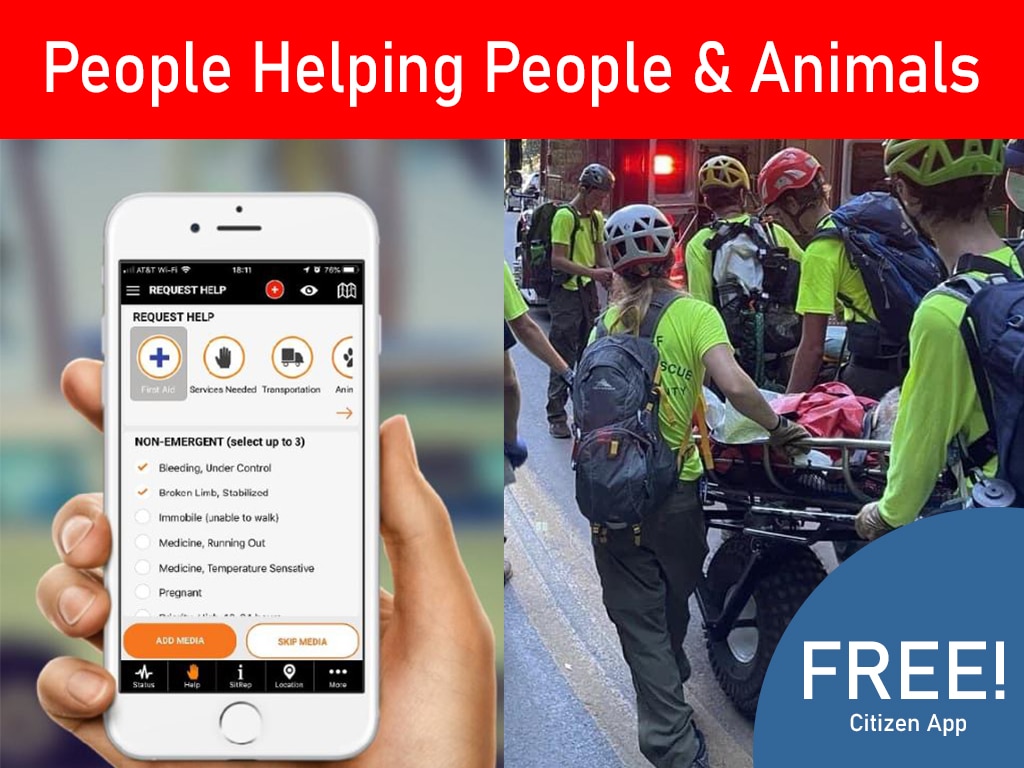
Every second counts during a flood or wildfire in a rural county, and local leaders need reliable tools without spending a year’s budget on one system. EOC technology for small jurisdictions has caught up with what towns can afford, pairing real-time mapping and alerting with prices built for local government budgets.
You do not need a big-city budget for a modern EOC. Compare budget-friendly emergency operations center software for local government and find the right fit for your community.
EOC Technology for Small Jurisdictions: The EOC Technology Gap in Small and Mid-Sized Communities
Legacy EOC systems can cost $10,000 to $150,000 per year and need dedicated servers, pricing out small jurisdictions. Modern cloud-based tools deliver the same coordination across mapping, alerting, and team management for a fraction of the cost, with no servers and no six-figure contracts.
Small towns need the same emergency response power as big cities with far smaller budgets, creating a real gap in eoc technology for small jurisdictions. Big cities staff high-tech hubs; small towns rely on radios and volunteers.
High costs of old systems
Enterprise platforms can charge $10,000 to $150,000 per year and need costly servers and IT staff. Per a FEMA research paper, small jurisdictions must balance threats against limited budgets.
Why small towns struggle
Volunteers and part-time staff cannot master complicated tools they rarely open, and rural internet fails in storms. Towns need simple systems that work when the grid is weak.
Finding a better way
Cloud-based tools let small counties skip local servers and run on phones staff already own, scaling up in storms at little daily cost.
Legacy systems price out small towns with six-figure annual costs; cloud tools close the gap on standard mobile devices at a fraction of the cost.
What Are the Key Functions of an Emergency Operations Center (EOC)?
An EOC is the hub where leaders coordinate disaster response. Under the National Incident Management System (NIMS) it supports five core functions, and modern eoc technology for small jurisdictions unifies them in one dashboard.
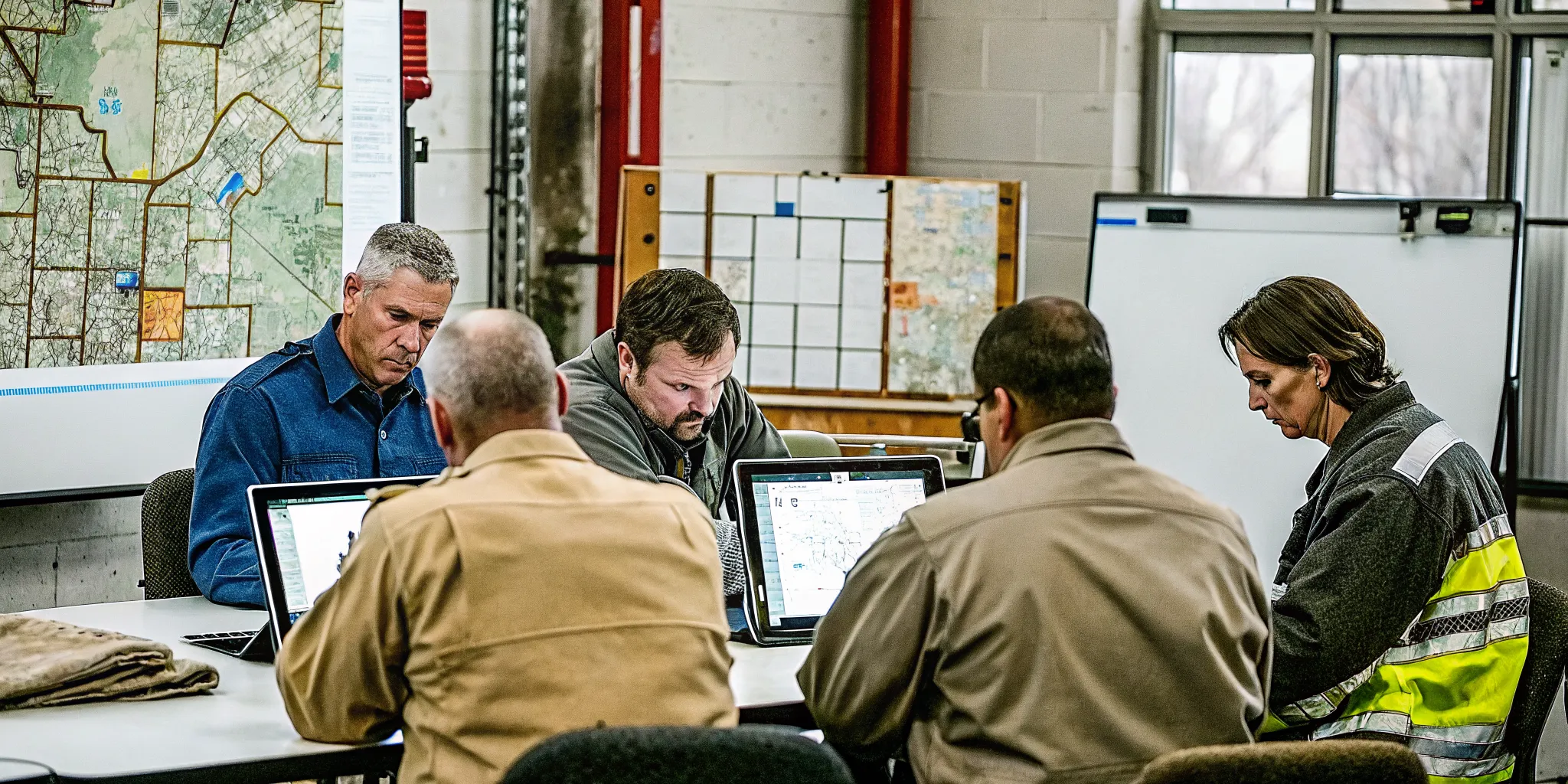
Core Operational Duties
An EOC handles five main jobs to keep response under control:
- Command and management: setting goals and decisions.
- Operations and resourcing: moving people and equipment where needed.
- Planning and intelligence: gathering data to anticipate what happens next.
- Logistics: keeping supplies and communications ready.
- Finance and administration: tracking spending and hours for reimbursement.
Towns that pair these functions with solid incident management for local government keep agencies aligned in fast-moving events.
Technology as a Force Multiplier
Technology turns a few workers into a strong team. Real-time data shows active incidents, resource deployments, field reports, and citizen alerts in one view, kept current by a mobile-first emergency management platform.
Five core functions, unified in one dashboard, let a small team act like a much larger one.
WebEOC vs. Affordable Emergency Operations Center Software: Which Fits Your Budget?
High-end tools like WebEOC set the benchmark, but they bring heavy costs and slow setup. Small towns often need a better fit: affordable EOC software that works on any phone and starts quickly.
The cost of legacy systems
Legacy WebEOC implementations run from $10,000 to over $150,000 per year and require months of setup plus dedicated servers. State agencies can justify that at scale; small towns usually cannot. Affordable WebEOC alternatives now cover the same ground.
Modern affordable solutions
New cloud tools deliver live data, mapping, and team coordination at prices small jurisdictions can budget for. PubSafe offers plans for local agencies and community response teams, with an operations dashboard and offline mobile field reporting. See EOC software for local government options.
Choosing the right fit
Look for tools that start fast, run on devices you already own, and need no IT pros, growing with the event instead of requiring a big upfront investment.
WebEOC carries six-figure costs and slow setup; cloud tools offer the same coordination at consumer-friendly pricing.
Essential EOC Hardware and Connectivity Upgrades
Software only works when the network holds up. Essential EOC hardware upgrades for small jurisdictions include backup power, low-orbit satellite internet, and rugged mobile devices paired with GIS mapping.
Tough networks and backup tools
If the main internet line goes down, the EOC can go dark mid-event. Low-orbit satellite dishes are cheaper now, and mesh radios keep base and field teams connected without cell towers.
Shared maps and GIS displays
A modern EOC needs to see danger in real time. Live incident mapping on a few large displays lets managers track teams and assets, with GPS-tagged citizen reports feeding the map from the street.
Gear for many agencies to use
Fire, police, public works, and medical agencies should share the same tools. Standards-based systems that work across agencies save money and simplify training.
Backup power, satellite or mesh connectivity, and live GIS mapping keep the EOC running when cell towers and the grid fail.
Transitioning from Blue Skies to Gray Skies with PubSafe
Most leaders spend their time in “blue skies”: daily tasks and normal operations. When a storm hits, the best eoc technology for small jurisdictions makes the shift to “gray skies” smooth.
Bridging the gap in emergency tools
The problem with emergency tools is that teams rarely open them. PubSafe is built to be part of daily flow: member check-ins, status reports, and routine communication, so everyone knows how to use it when a crisis hits. See how PubSafe works.
Clear talk during gray skies
Mass alerts to an entire city create clutter and panic. PubSafe uses street-level messaging to reach one block or one building, plus two-way citizen reporting feeding GPS-tagged reports into the live map, making it a practical government emergency communication system.
Growing for large-scale response
Events grow fast, and technology must grow with them. PubSafe scales to large member teams, supports ICS-compatible coordination, and keeps damage files current. View current plans and licensing details.
Tools used daily are tools that work in a crisis. PubSafe acts as the resilient coordination layer between radio, mesh, satellite, and other channels.
Frequently Asked Questions About EOC Technology for Small Jurisdictions
What are the 5 functions of an EOC?
Per the Arkansas Division of Emergency Management, an EOC handles command, operations, planning, logistics, and finance.
What is the difference between ICS and EOC?
The Incident Command System (ICS) manages direct work at the scene. An EOC provides high-level support: resources, policy, and the big picture. FEMA’s NIMS guidance explains how they fit.
How does EOC technology help small towns?
EOC technology for small jurisdictions lets a small staff track a wide area through live mapping, fast alerts, and verified citizen reports, turning a few volunteers into a coordinated team.
What is the most affordable EOC software for small towns?
Cloud-based tools like PubSafe offer coordination features at prices small towns can budget for. Follow emergency notification best practices for local governments.
Should Your Small Town or County Upgrade Its Emergency Tools?
Old, disconnected tools fail exactly when lives depend on them. The affordable, cloud-based approach lets your town prepare now, without a six-figure price tag.
Ready to act? Explore the disaster response platform from PubSafe to keep your jurisdiction connected from blue skies to gray skies.