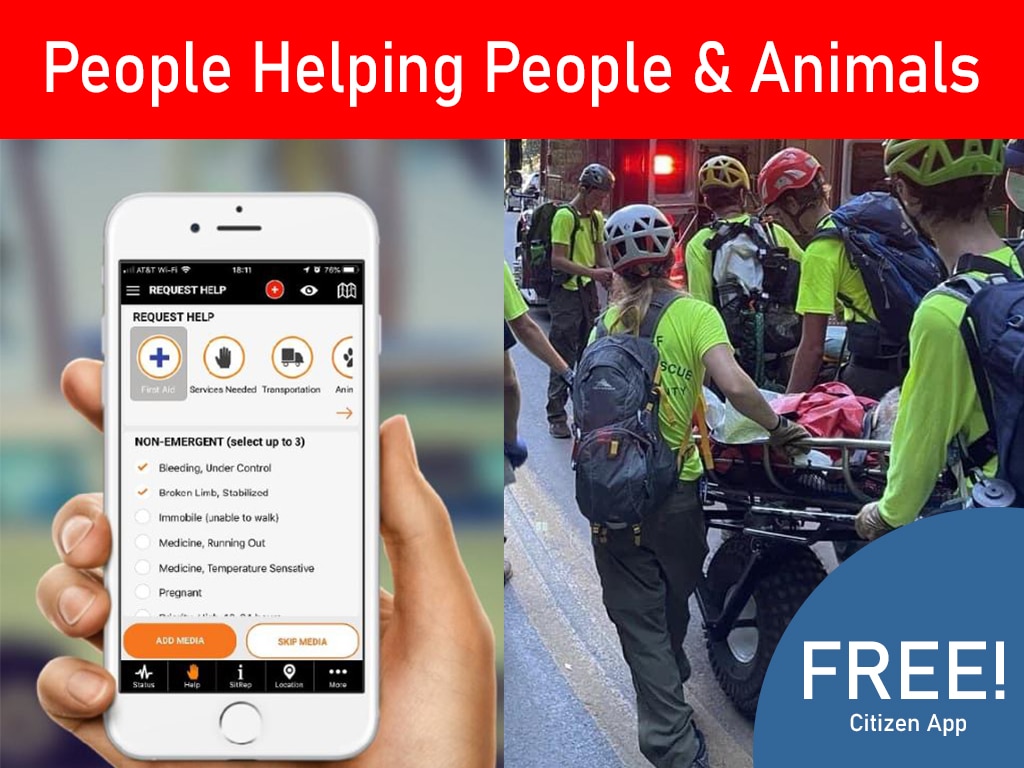

Volunteer organizations do not need a staffed, enterprise-scale command center to coordinate an effective emergency response. They need a shared operating picture, clear ownership of tasks, and a reliable way to keep information moving when staff are distributed across locations.
Contact PubSafe to see how the free app can support your team.
The practical question is not whether your organization can replicate a government EOC. It is which capabilities will reduce confusion, limit repetitive calls, and help a small team make timely decisions. That starts with understanding why a lightweight virtual EOC can become a force multiplier for volunteer operations.
Why Volunteer Organizations Need a Virtual EOC
For NGOs, CERTs, and other volunteer groups, virtual emergency operations center software brings incident updates, volunteer coordination. Mapping, and situational awareness into one accessible workspace without the cost or maintenance burden of a traditional EOC.
NGOs, CERT teams, and faith-based organizations may not have a permanent operations room, but emergencies still demand a clear view of people, tasks, requests, and changing conditions. A lightweight virtual EOC gives a distributed volunteer team a shared coordination point without requiring a dedicated facility or enterprise-scale deployment.
The cost barrier is lower than many teams assume. Guidance from the Washington Military Department notes that even small jurisdictions can use advanced emergency management technology with minimal investment in equipment, hardware, and software. For a volunteer organization, that means starting with the capabilities it actually needs, then expanding as its response program matures.
That shared system also reduces the communication burden on coordinators. Instead of every volunteer calling the same leader for updates, teams can route assignments, status reports, and resource requests through one accessible workspace. The goal is simple: stop the phone from ringing constantly during emergencies so coordinators can focus on decisions, priorities, and support.
For teams evaluating their options, review virtual EOC technology for small teams and look for tools that are easy to adopt, accessible on the go, and sized for real operational needs.
What Is Virtual Emergency Operations Center Software?
Virtual emergency operations center software is a cloud-based platform that gives response teams a shared place to manage incidents. Exchange updates, and maintain a common operating picture without gathering in one physical operations room. It brings essential EOC coordination online so authorized people can contribute from different locations.
At its core, the platform is a real-time crisis information management system. Public-sector EOC software examples show how teams can organize current operational information for local, state, and federal response environments, including updates that support situational awareness. For a volunteer organization, the same principle can be applied at a more practical scale: collect reports. Assign follow-up, share status, and keep the team working from the same information.
The distinction is important. A virtual EOC is not simply a group chat, video call, or shared folder. Those tools can support communication, but they do not necessarily provide a structured record of incidents, responsibilities, decisions, and changing conditions. Virtual EOC software connects those functions so information is easier to find and act on during a fast-moving event.
For NGOs, CERTs, and other volunteer groups, the best approach is to adapt professional-grade incident management concepts into lightweight tools that fit the organization’s actual mission and capacity. That can mean starting with a few repeatable workflows rather than reproducing every module used by a large government EOC. The result is a coordination layer that improves accountability without imposing unnecessary technical overhead.
In practice, a virtual EOC can help a distributed team replace scattered updates with a shared operational view, while leaving room to expand as response responsibilities grow.
Sources: Washington State Military Department overview of WebEOC; PubSafe’s emergency operations center platform.
Three Core Capabilities of a Lightweight Virtual EOC
A practical virtual EOC gives a volunteer organization one place to understand conditions, record what is happening, and keep people aligned. The platform does not need to reproduce every function of a large government operations center. It needs to make essential information visible and usable when coordinators are managing changing conditions with limited staff.
- Common operating picture: Coordinators need current information about the situation around them, not isolated updates in separate messages. A common operating picture can bring together weather trends, mapping information, satellite imagery, and resource status so leaders can see what is changing and where support is needed. These are core elements of real-time crisis information management described by the Washington State Military Department.
- Incident tracking and documentation: A lightweight system should make it straightforward to create an incident record, update its status, and preserve the operational history. Useful records may include activity logs such as ICS-214, initial damage estimates, shelter locations, mutual-aid requests, and after-action information. Keeping these details in a shared system reduces the risk that important decisions disappear in personal notes or disconnected spreadsheets. The California EOC360 overview illustrates the range of incident and documentation modules an EOC platform may support.
- Team communication and coordination: The platform should help volunteers, team leads, and partner organizations work from the same information without requiring everyone to be in one physical room. Cloud-based architecture supports scalable access as the response grows, while keeping updates, assignments, and status information connected. This approach is consistent with the California Office of Emergency Services description of a scalable, cloud-based solution for incident management and common situational understanding.
What Features Should You Look for in Virtual EOC Software?
For a volunteer organization, the best platform is not the one with the longest feature list. It is the one people can use confidently during a fast-moving incident without constant technical support. Look for tools that reduce friction, keep information accessible, and fit the way your team already works.
- Simple setup and low maintenance: Volunteers should be able to learn the core functions quickly, while administrators can manage users and settings without specialized technical skills. Ease of use and low ongoing maintenance are recognized priorities in EOC software.
- Configurable forms and incident logs: Teams need consistent ways to collect reports, document actions, record damage information, and maintain activity logs. Configurable forms let an organization capture the details that matter to its own mission instead of forcing every group into the same template.
- Task assignments and status dashboards: A coordinator should be able to assign work, show ownership, and see what is open, underway, or complete. A shared status view reduces duplicated effort and helps leaders identify gaps before they become delays.
- Maps and accessible operational data: Mapping, resource status, and current incident information give teams a common operating picture. The goal is to streamline workflows and improve data accessibility, supporting better situational awareness and operational efficiency.
- Reliable mobile access: Volunteers may be working from shelters, neighborhoods, vehicles, or temporary staging areas. Mobile access keeps reporting and task updates moving when staff are away from a desk.
Professional platforms such as WebEOC, D4H, Veoci, and Noggin serve serious emergency-management needs, but many are designed for enterprise environments. A lightweight option can provide the essential coordination layer without imposing enterprise-level complexity or cost on a volunteer budget.
| Consideration | Enterprise EOC platforms | Lightweight virtual EOC software |
|---|---|---|
| Best fit | Large agencies, multi-jurisdiction operations | Volunteer organizations and NGOs |
| Implementation | Dedicated staff, training, integration | Fast setup with minimal technical expertise |
| Cost | Enterprise licensing and maintenance | Volunteer-friendly, low ongoing cost |
| Core tools | Broad module set across many disciplines | Unified common operating picture, incident tracking, team communication |
| Operational footprint | Full-scale, multi-agency workflows | Lightweight coordination without enterprise overhead |
How to Stand Up a Virtual EOC on a Volunteer Budget
A virtual EOC does not need to begin with a large technology purchase. Start with a simple operating model that your volunteers can understand, use, and improve after each exercise.
- Map roles and incident types. List who receives alerts, who verifies information, who coordinates resources, and who communicates with partners. Then identify the incidents you are most likely to manage, such as severe weather, missing-person searches, or shelter support. This keeps your initial setup focused on real decisions rather than every possible feature.
- Choose one unified tool. Select virtual emergency operations center software that brings essential updates, assignments, and records into one workspace. Avoid stitching together five point solutions that volunteers must check separately. A unified tool reduces duplicate reporting and gives leaders one place to see what needs attention.
- Define your common operating picture. Create a small set of standard forms and status boards for incident details, open requests, team assignments, resource availability, and key decisions. Use consistent labels and update expectations so information remains useful when several people are working at once.
- Run a low-stakes drill. Test the workflow with a tabletop exercise or routine community event. Watch where volunteers hesitate, where information gets duplicated, and which alerts are unnecessary. Fix those friction points before a high-consequence incident.
- Build the communication plan. Document primary, backup, and offline communication channels, along with escalation contacts and check-in intervals. The goal is a dependable process, not a complicated toolset.
Start small, practice often, and choose coordination over complexity.
How a Virtual EOC Keeps Teams Coordinated During Outages
When cellular service, internet access, or a familiar communications channel becomes unreliable, teams need more than a list of backup tools. They need a shared coordination layer that keeps reports, assignments, and status updates connected as conditions change.
A lightweight virtual EOC can serve as that central hub. It ties together radio, mesh, satellite, and other offline communication tools rather than forcing responders to choose one channel. Information gathered through those systems can be brought into a common operating picture. So coordinators can see what has been reported, what remains unconfirmed, and where help is needed. This approach supports incident management and virtual coordination tools without requiring every volunteer to monitor every channel.
It also protects team capacity. Instead of every volunteer calling the same coordinator for updates, designated leaders can post verified information and route tasks to the people who can act. That helps stop the phone from ringing constantly during emergencies while preserving a clear record of decisions and outstanding needs. Teams can continue sharing situation reports as individual communications paths come and go, reducing confusion during the period when normal operations are least dependable.
Contact PubSafe to explore how the free app can support your volunteer response team.
Frequently Asked Questions
What is a virtual emergency operations center?
A virtual emergency operations center is a digital workspace where distributed responders share incident information. Coordinate assignments, track resources, and maintain a common operating picture without gathering in one physical room. For a volunteer organization. It can provide the essential coordination functions of an EOC while keeping the workflow simple enough for people who rotate between response and everyday responsibilities.
What benefits does virtual emergency operations center software provide?
It gives leaders and volunteers one place to share updates, organize tasks, document decisions, and see what requires attention. That reduces fragmented communication and makes handoffs easier when volunteers join at different times. A cloud-based system can also scale as the organization adds incidents, teams, or partner agencies. California’s EOC360 program describes cloud-based incident management as a scalable approach to shared situational understanding: California EOC360.
Can Microsoft Teams be used as a virtual EOC?
Microsoft Teams can support meetings, chat, and file sharing, so it may help with basic coordination. However, a dedicated EOC platform is better suited when you need structured incident logs, status tracking, maps, forms, resource assignments, or a durable operational record. The right choice depends on whether your team needs conversation alone or repeatable incident-management workflows.
What features should volunteer organizations look for?
Prioritize an easy-to-learn interface, real-time updates, incident and activity logs, task or resource tracking, mapping, permissions, and mobile access. Look for low maintenance requirements and workflows that can be configured around your response model. Support for offline or disrupted communications is also valuable, because the platform should serve as a coordination layer when radio, mesh, satellite, or other channels operate separately.
Contact us to explore a lightweight virtual EOC
A practical virtual EOC can give volunteer organizations and NGOs a clearer way to coordinate incidents without adding enterprise-level complexity. If you want to see how PubSafe could fit your team’s workflows, contact PubSafe and try the free app. A conversation can help you identify a sensible starting point for your organization, team, and response needs.