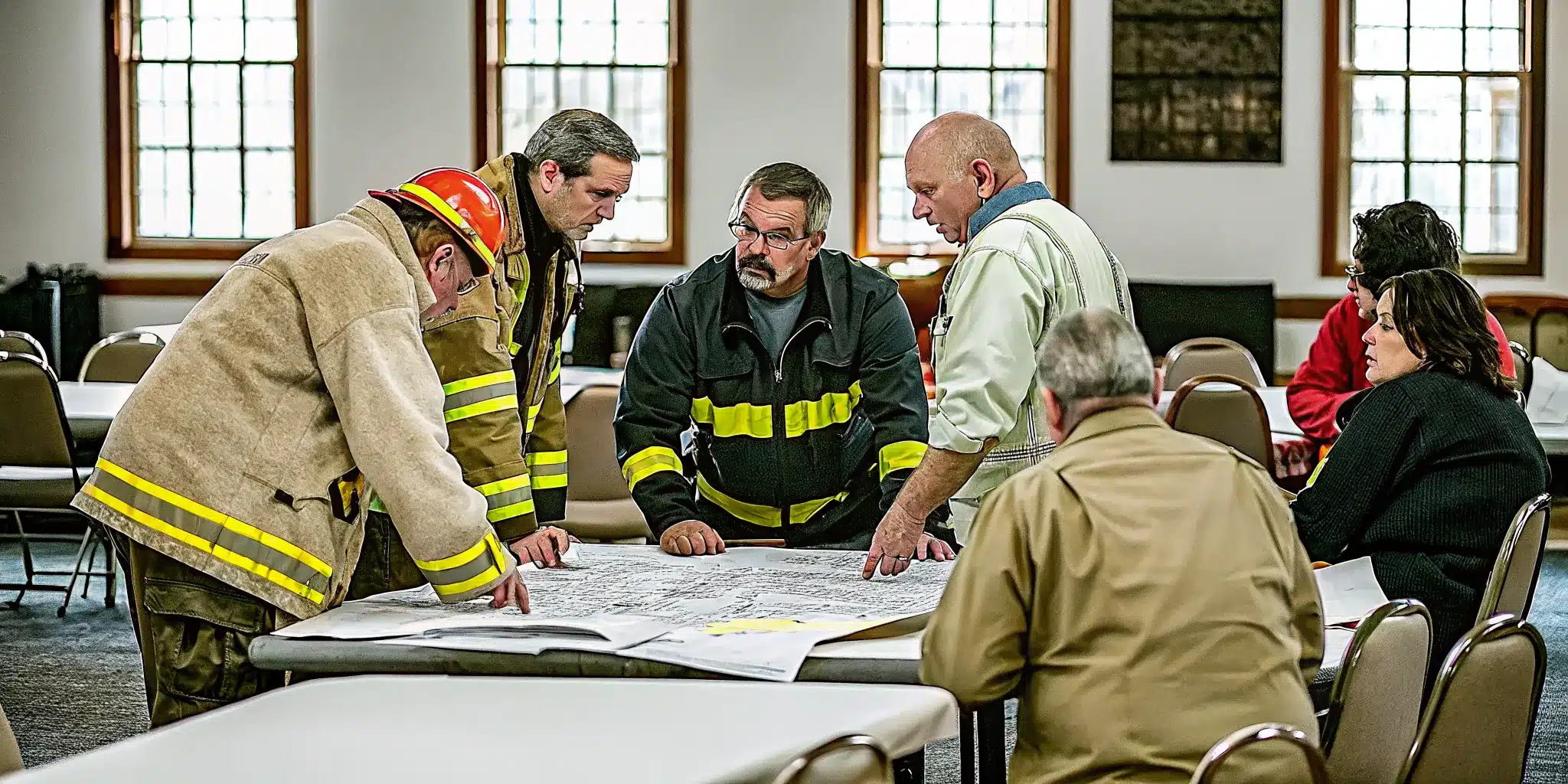
When a disaster outgrows one jurisdiction, the response depends on more than goodwill. Local governments, NGOs, and Community Emergency Response Teams must know which resources are available, who can deploy them, and how to share reliable updates as conditions change. FEMA notes that mutual aid agreements establish the terms for sharing personnel, teams, facilities, equipment, and supplies, while also helping jurisdictions expand capacity during high-demand incidents.
That shared structure matters because mutual aid is not a single transaction. It is an operational framework that can support every mission area and involve government, nonprofit, and private-sector partners. The first step is understanding what these platforms coordinate and how they fit into an established emergency management program.
What Is Mutual Aid Coordination Software?
Mutual aid coordination software gives local governments, NGOs, and Community Emergency Response Teams a shared way to organize resources. Communicate assignments, and maintain situational awareness before, during, and after a disaster. The right platform supports the agreements already in place while connecting teams that may use different tools in the field.
Mutual aid coordination software is a digital system that helps jurisdictions, nonprofit organizations, and response teams plan, request, share, and track resources during an incident. Instead of relying on disconnected spreadsheets, email threads, and phone calls, coordinators can maintain a shared view of available personnel, equipment, requests, approvals, and operational status.
Adopting a shared coordination platform turns mutual aid agreements from documents into operational workflows that every participating organization can act on during an incident.
Its value begins before an emergency. A community risk assessment can reveal capability gaps and potential shortfalls that a mutual aid agreement is designed to address. FEMA guidance describes mutual aid agreements as a way to strengthen resource capacity when a jurisdiction cannot manage an extreme or high-demand event alone. That makes the software part of preparedness, not merely a crisis-response tool.
How mutual aid agreements work under NIMS
Under the National Incident Management System, a mutual aid agreement establishes the terms for one party to provide resources to another. Those resources may include personnel, teams, facilities, equipment, and supplies. Agreements can support every mission area and may be established before, during, or after an incident between government agencies, nongovernmental organizations, and private-sector partners.
A workable agreement also needs operational detail. FEMA and the U.S. Fire Administration identify liability, compensation, reimbursement, credentialing, qualifications, licensure, certification, mobilization, and operational support as issues that should be addressed. Coordination software does not replace those agreements. It makes their requirements easier to organize and apply when time is limited.
Why digital coordination replaces manual processes
Manual processes make it difficult to keep resource information current, confirm who is qualified to deploy, and give every participating organization the same incident picture. A shared platform creates a practical record of requests and assignments while reducing duplicate outreach. It also gives local governments, NGOs, and response teams a consistent place to coordinate instead of forcing each partner to adapt to a separate workflow.
Adopting mutual aid coordination software typically follows these steps:
- Assess capability gaps. Use a community risk assessment to identify shortfalls a mutual aid agreement can help address.
- Formalize agreements. Ensure existing mutual aid agreements define liability, reimbursement, credentialing, mobilization, and operational support.
- Configure the platform. Set up resource inventories, credential records, and role-based access for each participating organization.
- Train partners. Ensure every agency, NGO, and volunteer team can access and contribute to the shared coordination environment.
- Activate and track. Use the platform during exercises and real incidents to process requests, assign resources, and document response activity.
Following this sequence helps organizations move from informal coordination to a repeatable process that builds trust and accountability across participating partners.
Sources: U.S. Fire Administration mutual aid guidance and FEMA NIMS components.
Why Do Local Governments and NGOs Need Mutual Aid Coordination Software?
Disaster response rarely stays within one agency’s boundaries. A county emergency management office may depend on municipal departments, nonprofit partners, private operators, and volunteer groups at the same time. Each organization brings different capabilities, terminology, communication habits, and systems. Without a shared coordination layer, leaders can spend valuable time reconciling updates instead of directing resources.
That is why FEMA describes a common, interoperable approach as essential to sharing resources, managing incidents, and communicating information across organizations and levels of government. Interoperability between different systems and agencies is not a convenience. It is the foundation for a response that can scale when demand exceeds any single jurisdiction’s capacity.
Interoperability turns separate tactics into one response
Local governments and NGOs often have distinct roles during the same incident. Government agencies may manage public warnings, shelters, transportation, or infrastructure. NGOs may provide food, medical support, spiritual care, or volunteers. Private-sector partners may supply equipment, facilities, or specialized services. FEMA notes that jurisdictions and organizations must integrate tactics, share resources, and act collaboratively to manage complex incidents.
Mutual aid coordination software gives these partners a practical way to share incident status. Requests, assignments, and availability without requiring every organization to abandon the tools it already uses. A common operating picture helps decision-makers see what has been requested, who is responding, and where coverage gaps remain. It also creates a clearer record for handoffs as an incident moves between operational periods.
Structured incident management reduces response friction
For local government, coordination must be more deliberate than a group text or an expanding email chain. Clear procedures for intake, approval, task assignment, status updates, and resource tracking help turn mutual aid agreements into action. PubSafe’s guidance on software for mutual aid coordination addresses the incident management practices local officials can use to organize multi-agency response.
The same structure helps NGOs contribute without being left outside the official response picture. When partners can receive relevant assignments, report progress, and share field information through an accessible system. Leaders gain better situational awareness while responders spend less time translating between disconnected channels. The result is a more coordinated response that supports both government-led operations and community-based capacity.
What Benefits Does Mutual Aid Coordination Software Offer CERT Teams?
Community Emergency Response Teams (CERTs) often operate with limited budgets, volunteer availability, and equipment. Mutual aid coordination software gives these teams a practical way to organize people and resources before an incident, then shift quickly into coordinated action when conditions change.
Coordinate volunteers around real needs
More than 2,800 local CERT teams operate across the United States, creating a significant network of trained community volunteers. That network is most useful when leaders can see who is available, what each person is qualified to do, and where support is needed. A shared platform helps coordinators move beyond informal group messages and assign tasks with a clear record of responsibilities and status.
During a disaster, a volunteer tasking framework can help leaders match people to practical assignments such as wellness checks, supply distribution, damage reporting, or neighborhood support. Clear task assignment and resource tracking also improve tactical coordination during volunteer rescue operations. Teams can learn more about coordinating resources via mutual aid when planning these workflows.
Extend capacity without enterprise complexity
Many CERT programs need accessible, affordable tools rather than a system designed only for large emergency management agencies. The right software should support everyday roster management and communication as well as rapid mobilization during an emergency. That makes the platform useful in both routine preparedness and high-demand response, without requiring volunteers to master a complicated technical stack.
Build resilience through shared coordination
Resilience depends on more than sending an alert. CERT leaders, local agencies, nonprofits, and other partners need a shared view of assignments, incident updates, and available support. PubSafe positions volunteer management as part of a broader coordination layer, connecting community responders with incident reporting and situational awareness. This approach supports collaboration across organizations while allowing existing communications tools to remain part of the response.
For CERT teams, the result is a more reliable path from volunteer readiness to useful action: organize people during normal operations. Activate them when needed, and maintain visibility as mutual aid resources move across the community.
Key Features to Look for in Mutual Aid Coordination Software
The right platform should make shared resources easier to understand, mobilize, and track across agencies, nonprofits, and volunteer teams. Evaluate each feature by asking whether it improves interoperability before an incident and reduces confusion during response.
Comparing platform capability areas
| Capability | What It Does | Why It Matters for Mutual Aid |
|---|---|---|
| Resource typing | Standardizes descriptions of personnel, teams, and equipment. | Helps jurisdictions request and offer resources with consistent terminology. |
| Inventory management | Tracks current availability, condition, and deployment status. | Prevents over-commitment and supports scalable asset sharing. |
| Credential visibility | Records qualifications, certifications, and deployment readiness. | Ensures personnel meet operational standards before assignment. |
| Common operating picture | Displays requests, assignments, status, and coverage gaps. | Reduces duplicate coordination and improves handoff accuracy. |
| Incident reporting | Captures field updates, damage assessments, and resource usage. | Supports documentation for reimbursement and after-action review. |
Not every platform delivers all five capabilities equally. When evaluating mutual aid coordination software, confirm which areas are native and which require workarounds or separate tools. A unified platform that covers more of these areas reduces the coordination overhead that slows response.
Resource typing and scalable inventories
Resource typing gives participating organizations a common language for describing the capabilities of teams, equipment, and units. FEMA defines it as categorizing resources by capability so they can be requested, deployed, and used more effectively. That shared terminology helps a requesting jurisdiction specify what it needs and helps a supporting organization identify what it can provide.
The software should also support current, adaptable inventories of shareable assets. Look for configurable records that can track equipment, facilities, vehicles, personnel, and availability without forcing every partner into the same rigid structure. FEMA recommends that resource inventories remain adaptable and scalable as operational needs change. This matters when a small local response expands into a multi-jurisdictional operation.
A unified platform for people, incidents, and information
Separate tools can create gaps between volunteer management, incident reporting, and situational awareness. A unified platform brings those functions together, allowing coordinators to assign people, record field updates, and understand changing conditions without manually reconciling multiple systems. PubSafe positions this combination as a way to reduce response friction while making coordination more accessible to volunteer organizations and public safety partners.
Integrated tools should contribute to a common operating picture, not just collect data. Coordinators need to see which resources are requested, assigned, available, or awaiting confirmation, then share that status with the appropriate partners. A platform such as mutual aid coordination platforms can help connect volunteer coordination with broader disaster relief workflows.
Credentialing and qualification controls
Credentialing is essential when personnel move between jurisdictions or organizations. The system should record qualifications, certifications, roles, and current availability, making it easier to mobilize people whose skills match the assignment. FEMA guidance specifically recommends qualifying, certifying, and credentialing personnel before including them in resource mobilization plans. This protects operational standards while helping leaders assign with greater confidence.
How Incident Management Platforms Strengthen Mutual Aid Coordination Software
Cross-jurisdictional response depends on more than sending an alert. Local governments, nonprofit organizations, and Community Emergency Response Teams may each use different radios, databases, volunteer lists, or field reporting tools. An incident management platform creates a shared coordination layer so those groups can exchange information, assign work. And maintain a common view of what is happening without discarding the tools they already rely on.
Connect everyday readiness with emergency operations
Mutual aid relationships are easier to activate when communication is already working. PubSafe supports bidirectional communication between citizens and responders during both “blue skies,” or daily operations, and “gray skies,” or emergencies. That continuity lets participating organizations maintain familiar workflows before an incident, then shift into coordinated response when conditions change.
This model also supports operational continuity when traditional infrastructure is disrupted. Cloud-based coordination software can keep incident information, volunteer assignments, and status updates accessible across participating organizations. Helping teams continue working when a single channel or local system is unavailable. PubSafe is designed as a resilient layer that ties together existing resources such as radio, mesh, and satellite communications rather than replacing them.
Bridge the gap between alerts and field response
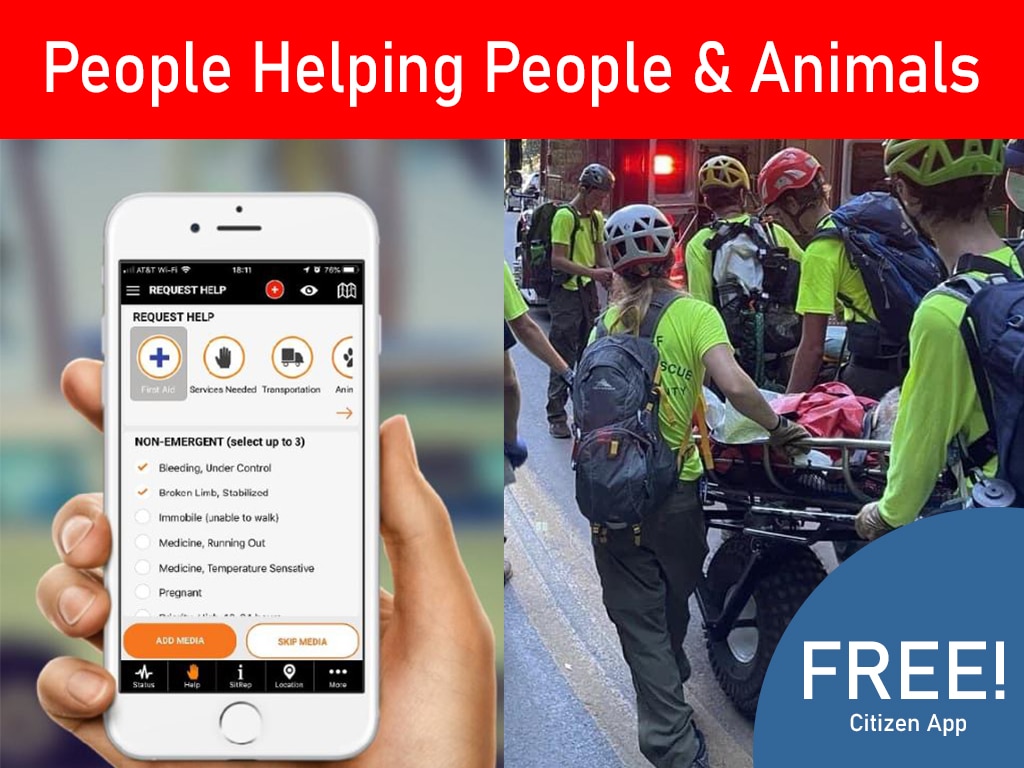
An alert only becomes operationally useful when someone can interpret it, assign responsibility, and confirm what is happening on the ground. PubSafe bridges alerts and real-world response by combining incident reporting, volunteer coordination, and situational awareness in one platform. A local emergency manager can share a need, a partner organization can offer an available team or asset, and responders can report progress through the same coordination environment.
That shared workflow is especially valuable when several jurisdictions or organizations are supporting one incident. FEMA explains that successful incident management depends on a common, interoperable approach to sharing resources, coordinating incidents, and communicating information. Using consistent terminology for resources and incident status gives decision-makers a clearer operating picture and reduces confusion during handoffs.
Make coordination usable across agencies and partners
Technology works best when every participating group can use it, including smaller NGOs and volunteer-led teams. A practical platform should support defined roles, straightforward reporting, and clear task ownership instead of adding another disconnected dashboard. For guidance on connecting communication systems, see this emergency communications interoperability guide. Organizations building their preparedness plans can also review these mutual aid coordination tools for NGO and Community Emergency Response Team planning.
By bringing partners into one resilient coordination layer, incident management platforms help mutual aid agreements function as operational relationships, not just documents stored for later.
Frequently Asked Questions
What is mutual aid coordination software?
It is a shared digital workspace for coordinating personnel, equipment, requests, communications, and response records across organizations. It helps local governments, NGOs, and Community Emergency Response Teams work from consistent information instead of disconnected spreadsheets, emails, and phone calls.
How does mutual aid coordination software assist during disaster response?
The platform centralizes resource requests, assignments, status updates, and incident documentation. Coordinators can see what has been requested, which organization can respond, and whether an assignment is still active. That creates a clearer operating picture and supports accountable handoffs as conditions change.
What features should mutual aid coordination software include?
Look for resource and volunteer management, configurable incident reporting, role-based access, inventory tracking, interoperable communications, and a shared operating picture. Useful systems also support resource typing and credential information, so participating agencies can describe capabilities consistently and match resources to needs.
Can local governments use mutual aid coordination software with NGOs?
Yes. A suitable platform can give government coordinators, nonprofit partners, private-sector contributors, and Community Emergency Response Teams an appropriate way to share requests and updates. Permissions should protect sensitive information while allowing each partner to contribute to the response process.
What benefits does it provide for Community Emergency Response Teams?
It gives volunteer leaders a practical way to organize members, assign tasks, track availability, and report field activity. That reduces coordination overhead and helps CERT teams connect their work with local government and nonprofit operations without requiring every volunteer to use the same specialized system.
Schedule a Demo of Mutual Aid Coordination Software
Effective disaster response depends on shared visibility, clear responsibilities, and a practical way for partners to coordinate. PubSafe helps local governments, NGOs, and Community Emergency Response Teams bring those efforts together in one incident management platform.